Solo DBR (De Bellis Renationis) Tweaks

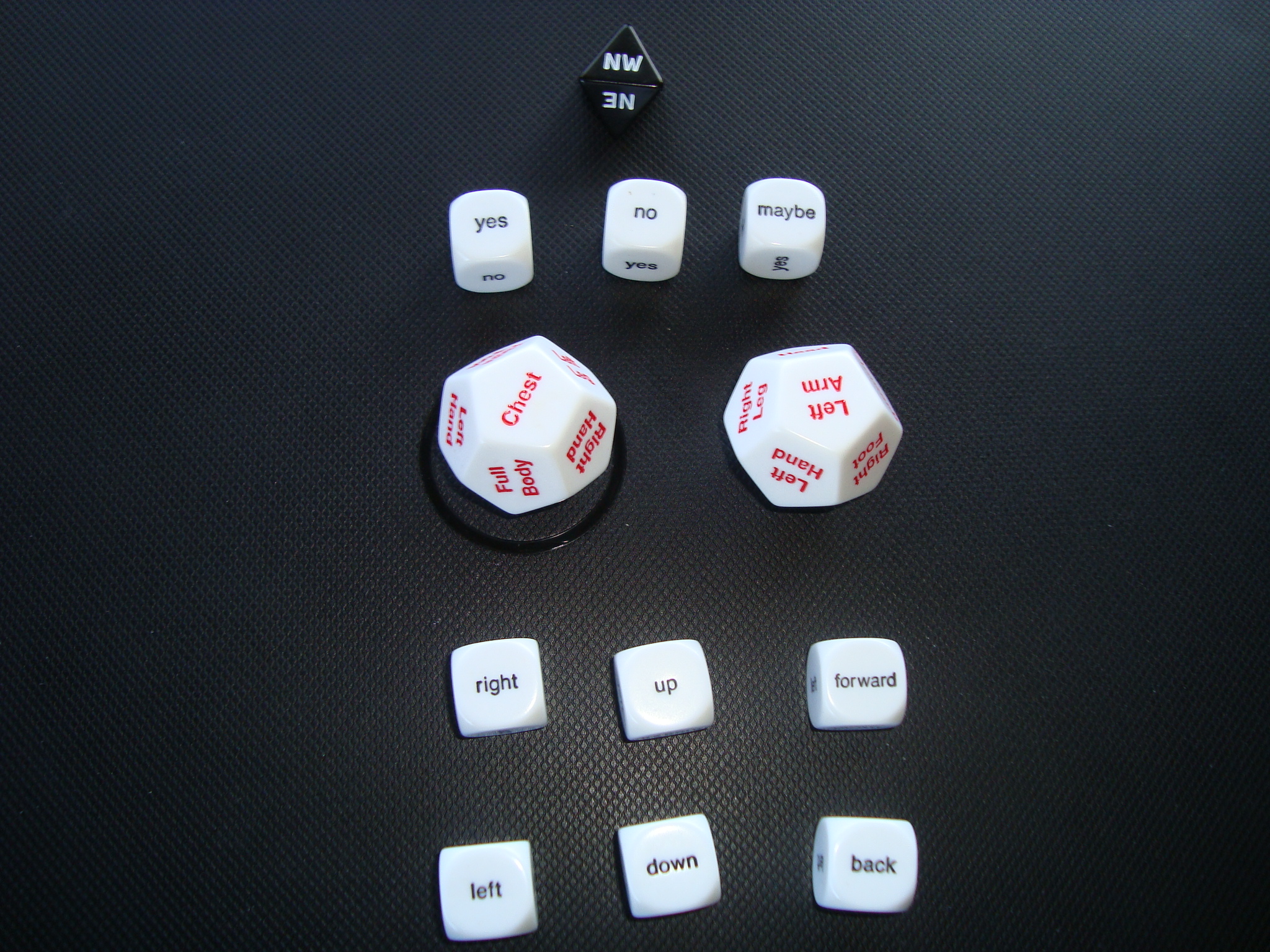
Been thinking about my solo play of DBR and ways to artificially interject some variety. By artificially I mean using random generators for a scenario, rather than just pre determining scenario inputs.

I won’t bore you with the overall thought process. What thinking that did take place was random and unfocused, flitting about with all types of tables and charts to reflect temperment, efficiency, and morale by CinC, sub-general, troop type and unit. After messing around with various and increasingly arcane methodologies, it dawned on me that I had to work “inside” the rules, not outside of them.

Let’s assume that Phil Barker is a superior game designer. If that assumption is made, then the parts are connected to the whole and his system, at the very least, abstracts many considerations that are presented in a far more granular manner in other rule sets. Think Gush’s (very good) Renaissance rules.

When this series of assumptions is made, then any changes reflecting my three criteria (temperment, competency, morale) must be inside, or within Rules as Written (RAW).

If the objective is to add variety, but directly and without undue complications, then some general assumptions have to be made.

First and foremost is that the army will reflect the temperment of their general. I’m playing games with about 150-200 points, so only need a CinC. There’s no way I want to get into the business of creating an AI to guide the behaviors of various types of generals. However, I can directly, and within, DBR’s rules guide how the army will behave.

The three categories for the CinC are rash, steady and cautious. Elements or groups in a “rash” army will always followup and pursue, regardless of troop type. A “steady” army will follow RAW, since Barker has built in typical behaviors into his troop types. A “cautious” army will not followup or pursue in any situation.

Individual unit competency will be reflected in their (as Barker puts it) “efficiency”. Units can be up or down graded from the “Superior”, “Ordinary”, and “Inferior” ratings contained in RAW. I did not mess with “Fast” since this seems to be heavily dependent on fighting style. A change in ratings effects combat outcomes, and for shooters, a decrease in effective range. I decided not to downgrade movement for “Inferior” shot units to that of a “Horde”, or from 150 paces to 100.

As with my CinC ratings and effects, morale will be army-wide.

Morale is reflected by changing the criteria for a “Beaten Command”, as well as the rallying and steadying units of a Beaten Command. RAW has an army becoming beaten when casualties exceed one-third of its individual element strength. When this threshold is crossed, groups of elements can be steadied (in that turn, only), if not steadied, the units rout, but can be rallied element by element during subsequent turns. All of this takes Player Initiative Points (PIPs), which are generated by a D6 roll for that turn.

An army with good morale will use the RAW over one-third element criteria. An army with high morale will become beaten with a threshold over forty percent, and an army with low morale will have its threshold drop to over twenty-five percent.

An army with high morale takes one PIP to rally an element or steady a group. An army with good morale takes the RAW two PIPs per, and an army with bad morale takes three PIPs per.

How all of this works in a campaign is another question. I’ll try this out once I finish the current Pole vs. Russian game.

Renaissance Wargame – The Action Pt 2

Solo war gaming can be either mundane or chaotic.  This is the latter.

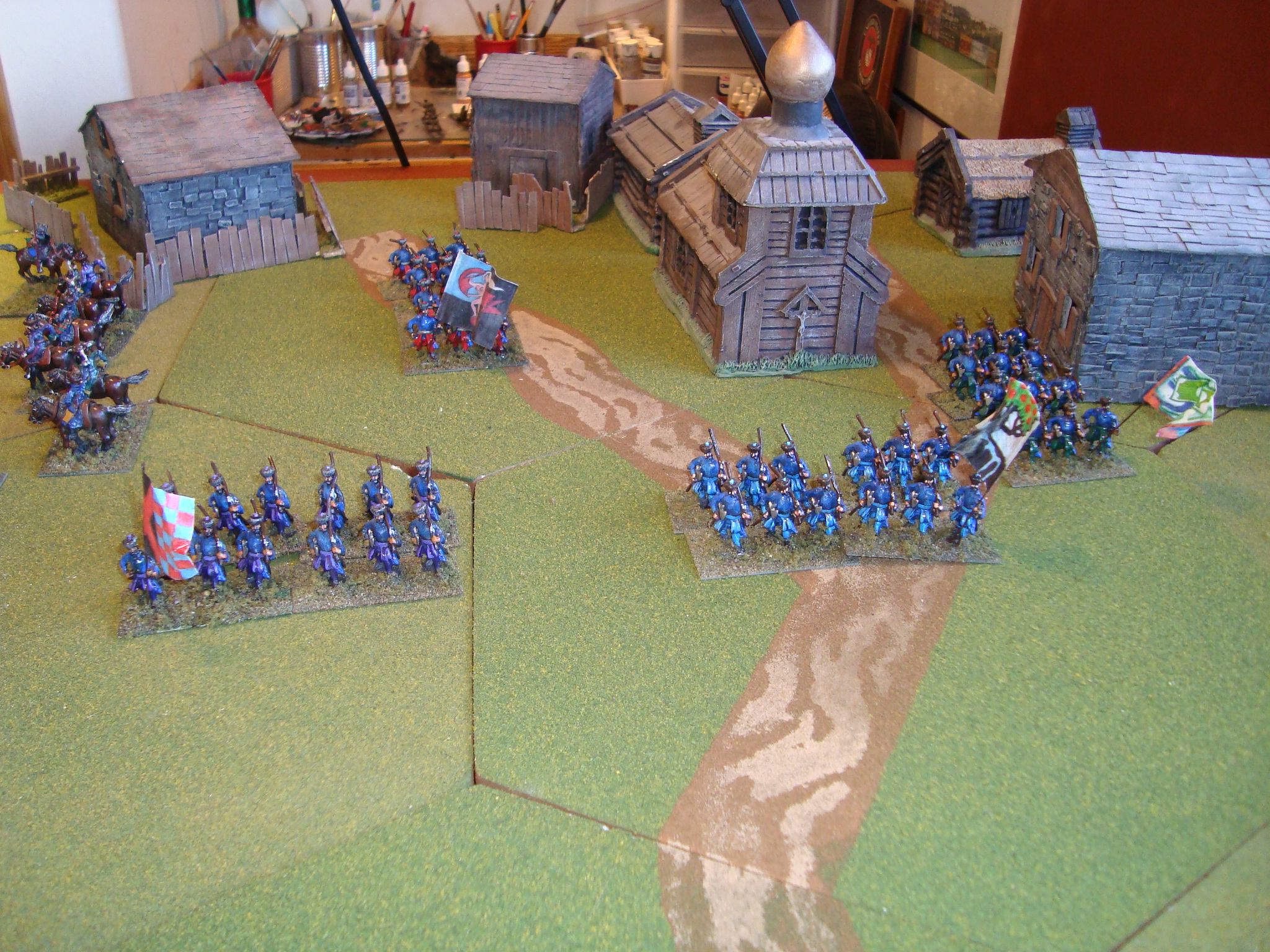
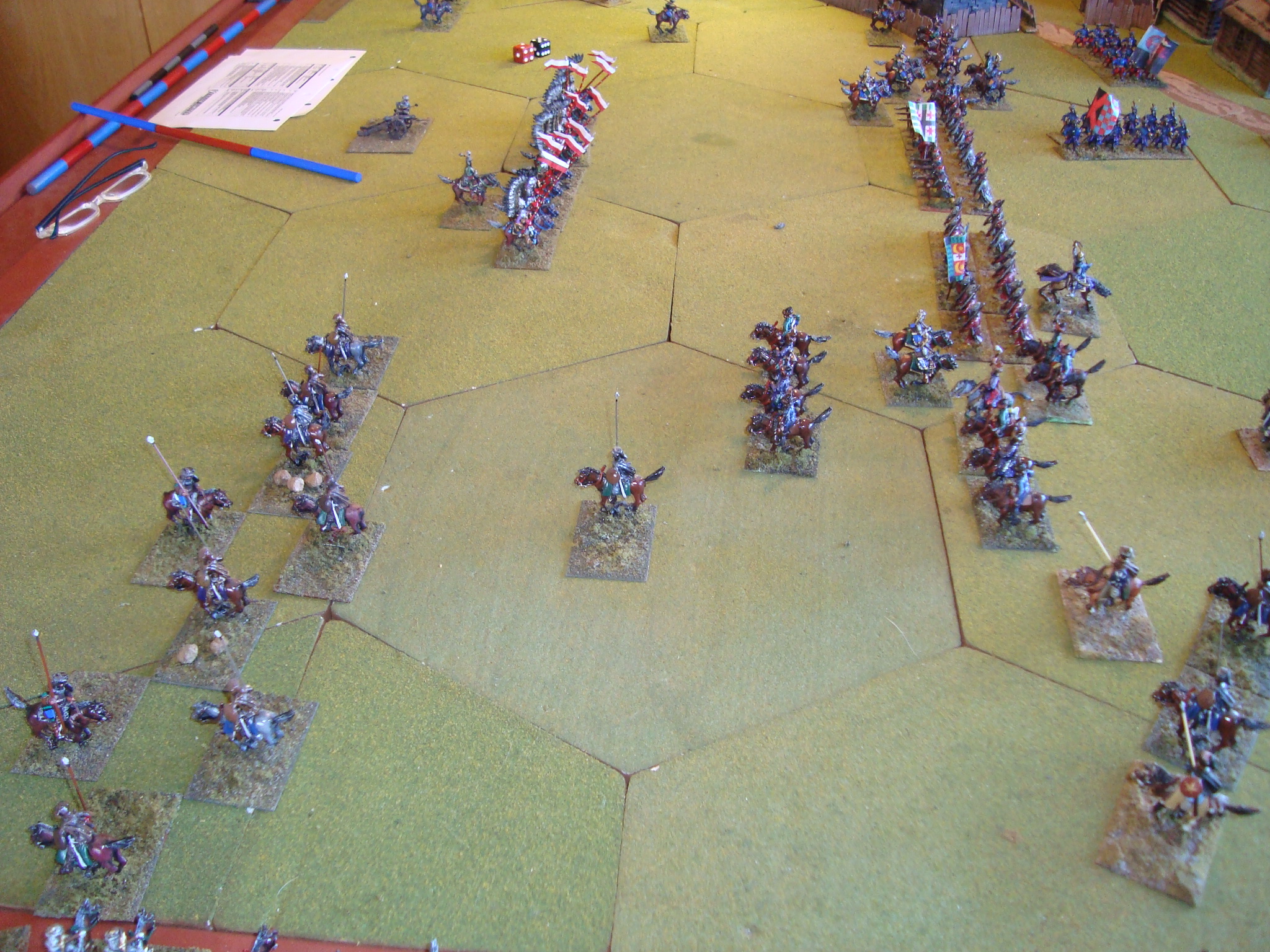
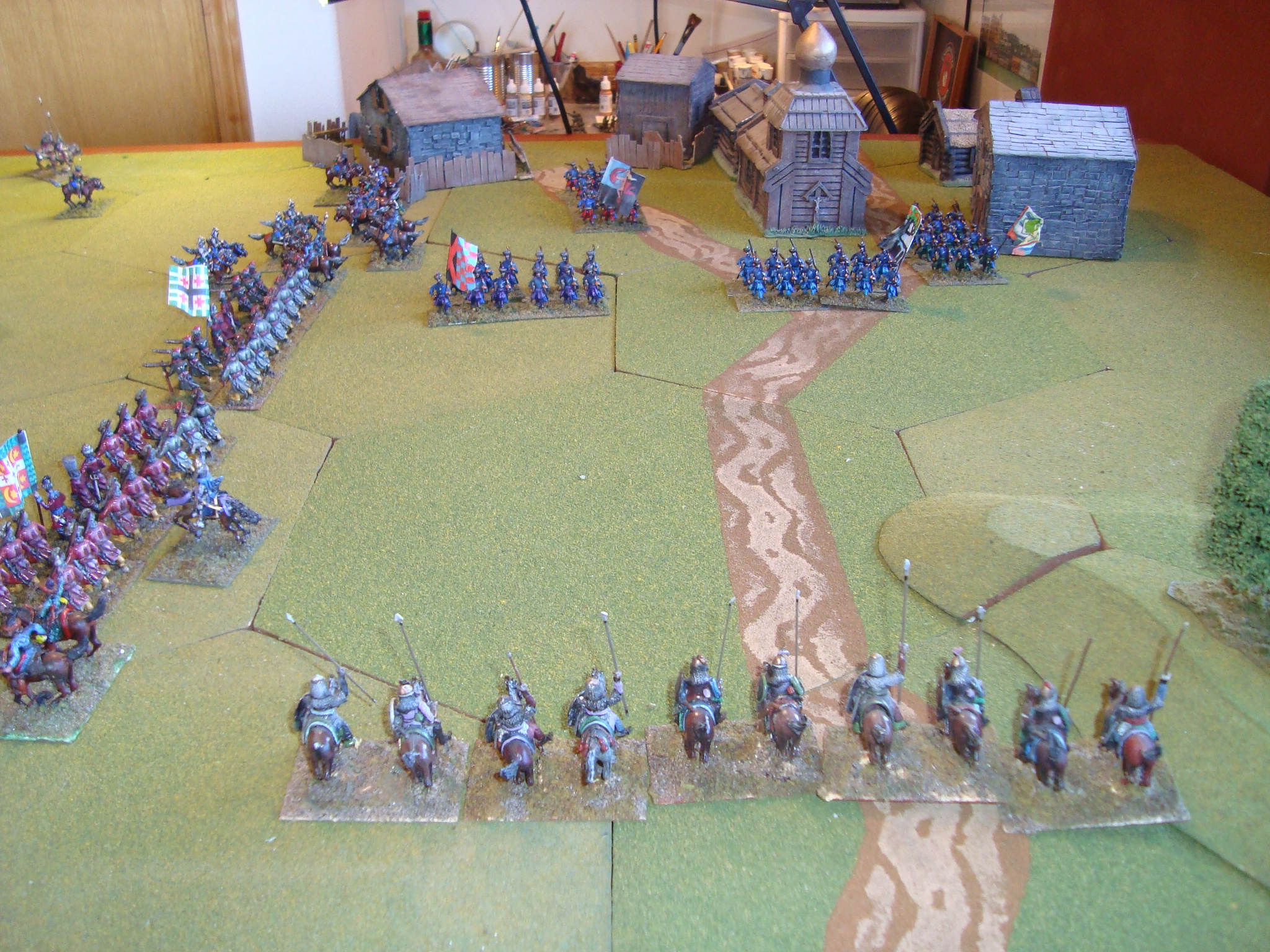
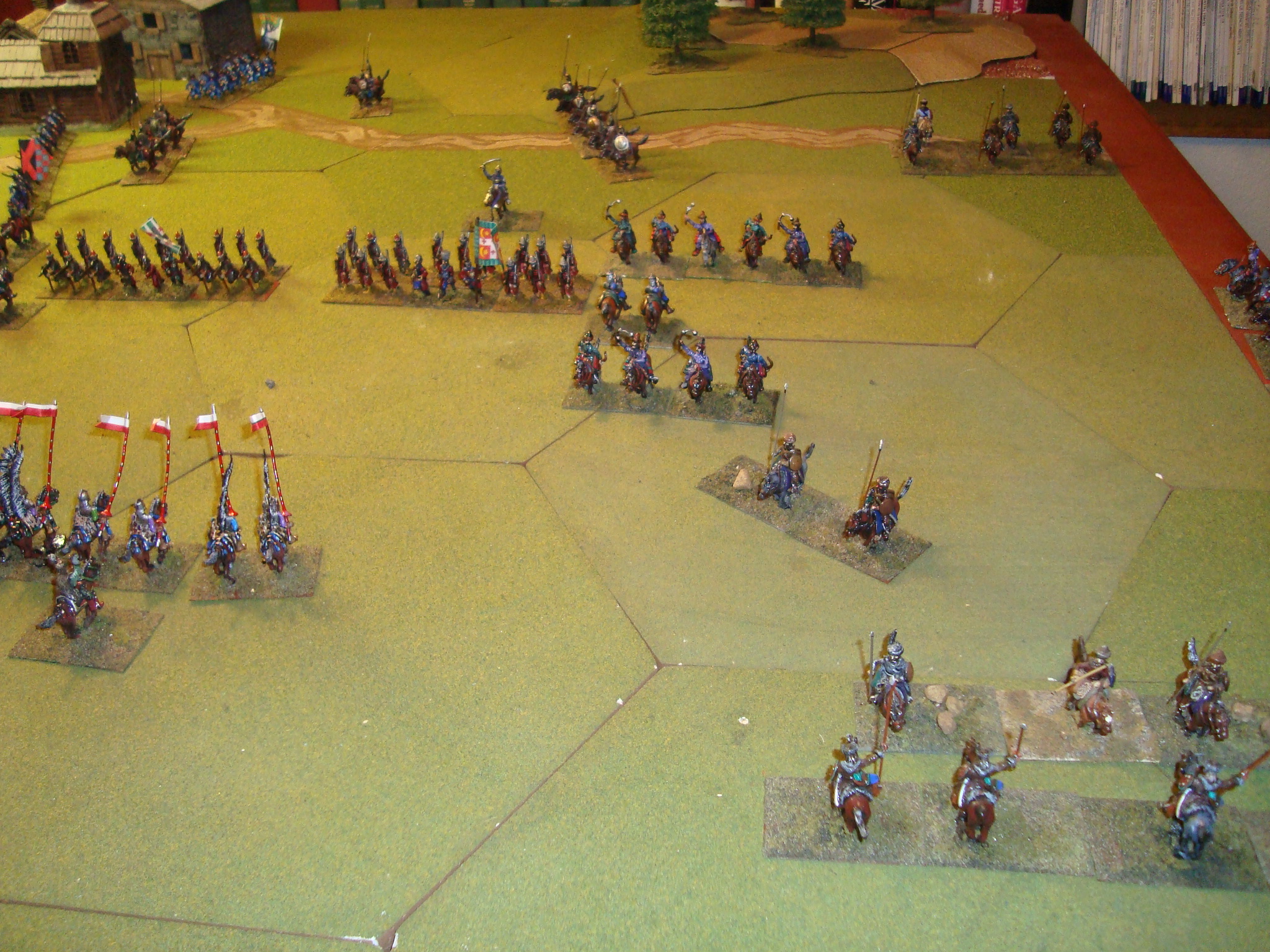
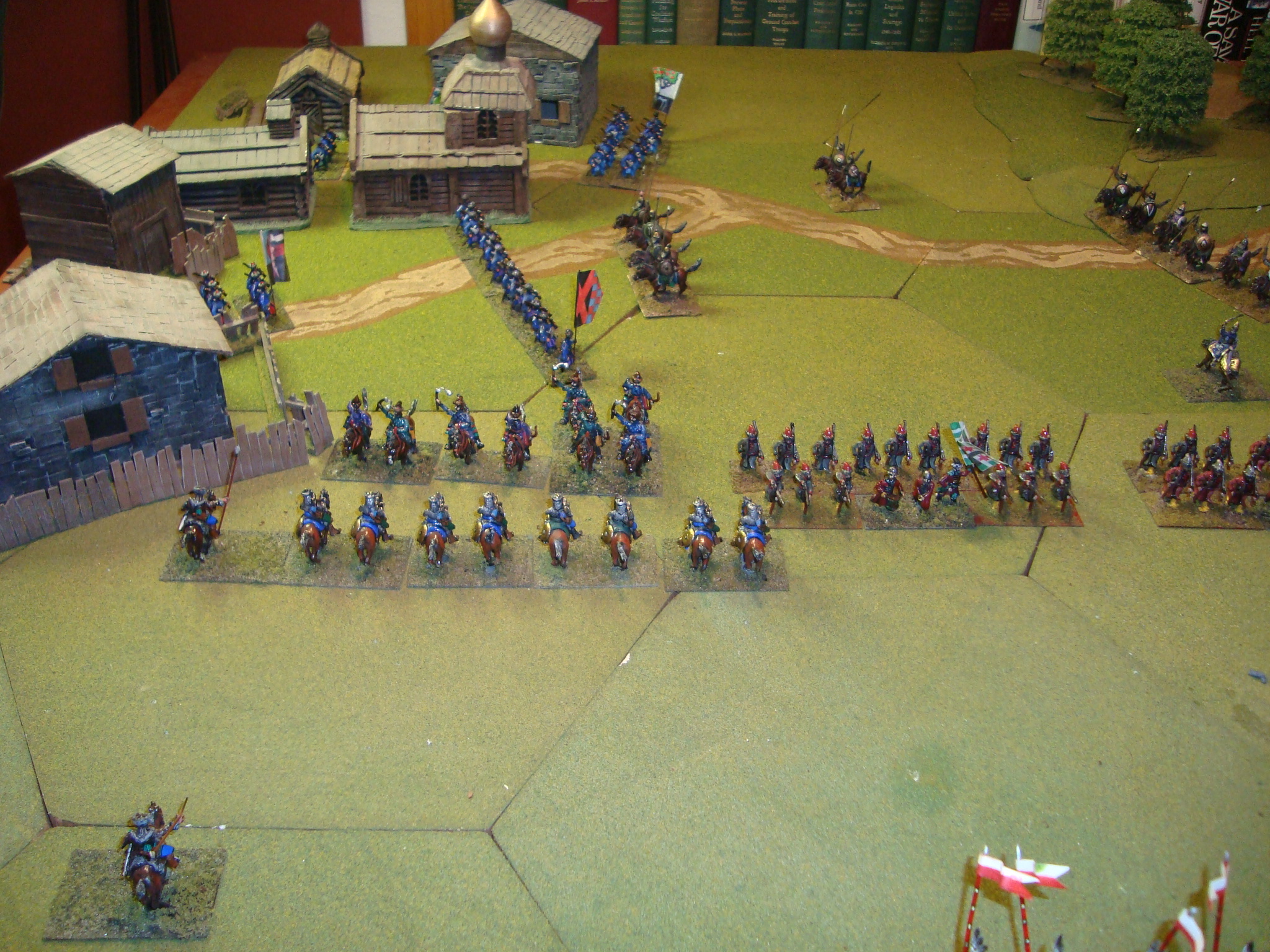
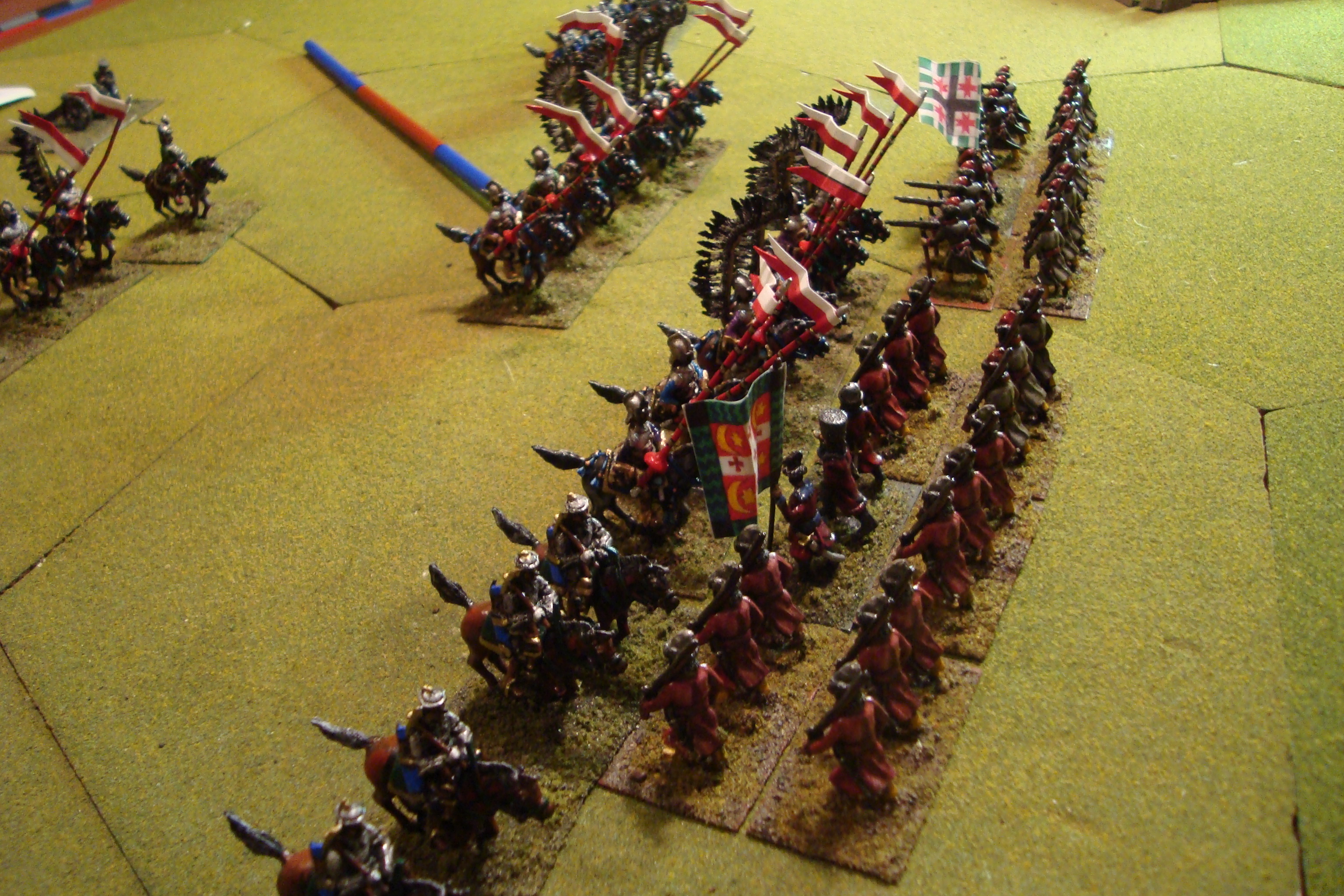
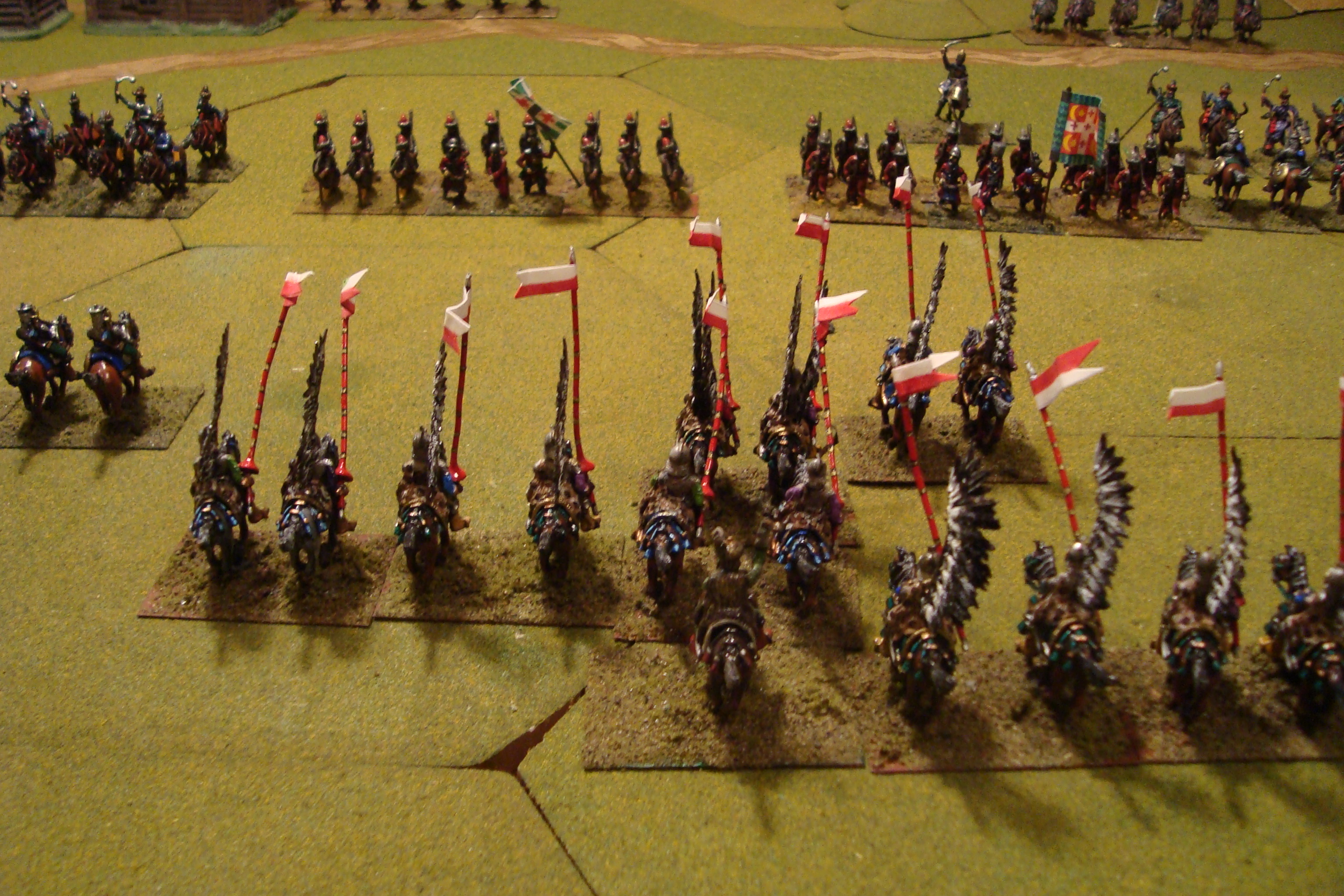
Poles right flank caves in and losses mount, with center Hussars in disarray due to musketry.  Still some hope, as Haiduks and Pancerni attack on the left.  A wacky tactical revolving door.

Polish Right Flank: Problems
Polish Left Flank: Haiduks Deploying and Pancerni Ready To Charge
Russians React and Poles Hope
View To The West:  Russians React and Poles Hope

RAF – Initial Thoughts

Finally comfortable enough with the rules to start the “Hardest Days” scenario.  This is a highly regarded solitaire game with great reviews.  I started out with “Lion”, playing the British.

For a solitaire game, it has a relatively low level of wristage.  The game process and progress is, to a large degree,  driven by cards; for targets, raid size, raid strength, approach events, target events and passage of time during a raid “day”.  Dice rolling is limited to combat results, bombing results, British ability to respond to attacks and weather.

Unlike many other games, the end of a raid does not mean the time clock advances.  There can be raid somewhere else over England, or a followup raid on the target just attacked.  Have a couple of “0” time advance results, and it makes for a damn long turn, and day.

As a result, the RAF is stretched thin and beat up from the get-go.  Their warning system is not good, and this restricts the ability of the RAF to respond in any strength – from adjacent sectors – to a raid.  Even a minor raid can leave the RAF out-manned, especially when a sector has been attacked several times during the day.   In most instances, the RAF cannot even get to the bombers, having all their assets engaged by German “Hunter” gruppen.

The instructions advertise that the 5-Day, “Hardest” scenario can be played in three hours.  Don’t think so.  One day takes about an hour, and that’s now that I can play without my nose buried in the rules.

Gonna keeping hacking at it, and see if the game play speeds up.  Keep hoping for those “2 Hour” time advance cards.  Both the Brits and I need them!


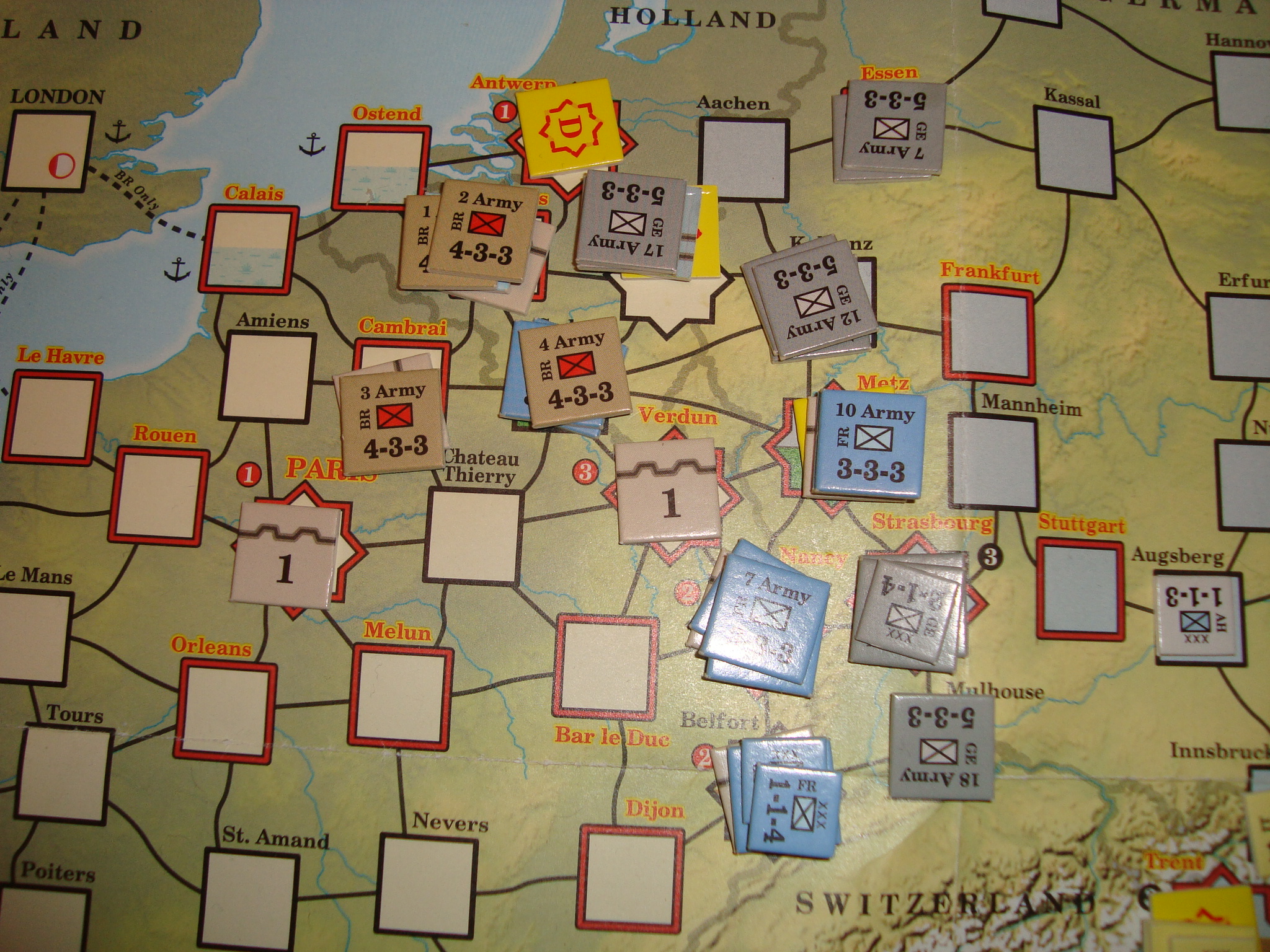
Renaissance Wargame – The Action Pt 1

Was able to play several turns of my Poles vs. Russians DBR game.

The initial Polish Hussar attack on the formed Russian Streltsi was repulsed, as was a Cossack charge against the Russian Tartar light cavalry.

Attempts by the Hussars to reform were continually frustrated by Streltsi musketry. Both the Polish  Pancerni (Armored Cossacks)  and Russian Boyars moved to support their comrades. The Russian charge on their left shattered the Pancerni and Cossacks. The right wing Boyars maneuvered to engage the Polish left’s Pancerni.

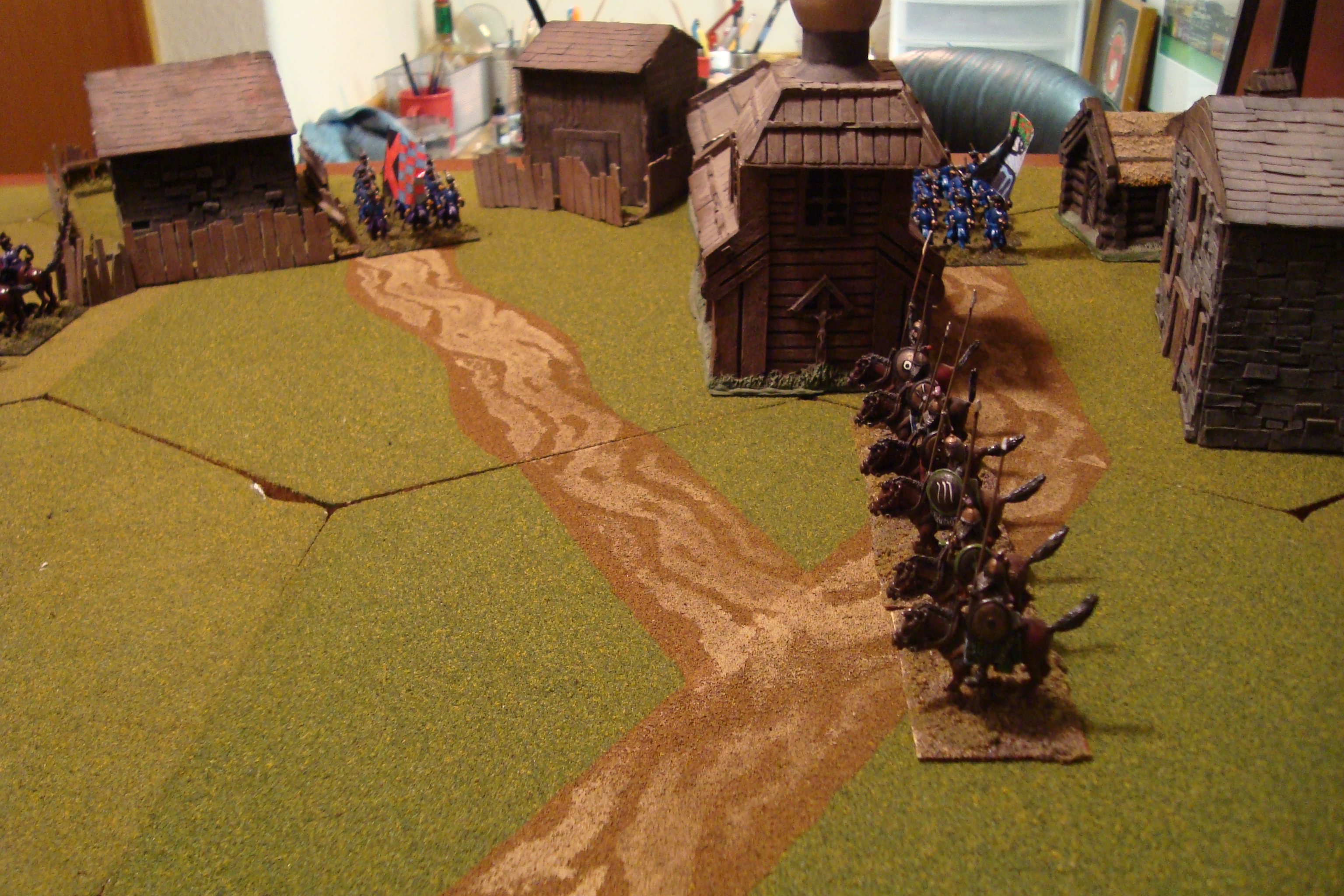
Engrossed by this action, I forgot to role for the variable turn entrance on the Polish Haiduk infantry. The first role allowed them to enter on both roads leading into the village.

This seemed like a good time to quit for the evening.

A sessions report would not be complete without impaired photography.

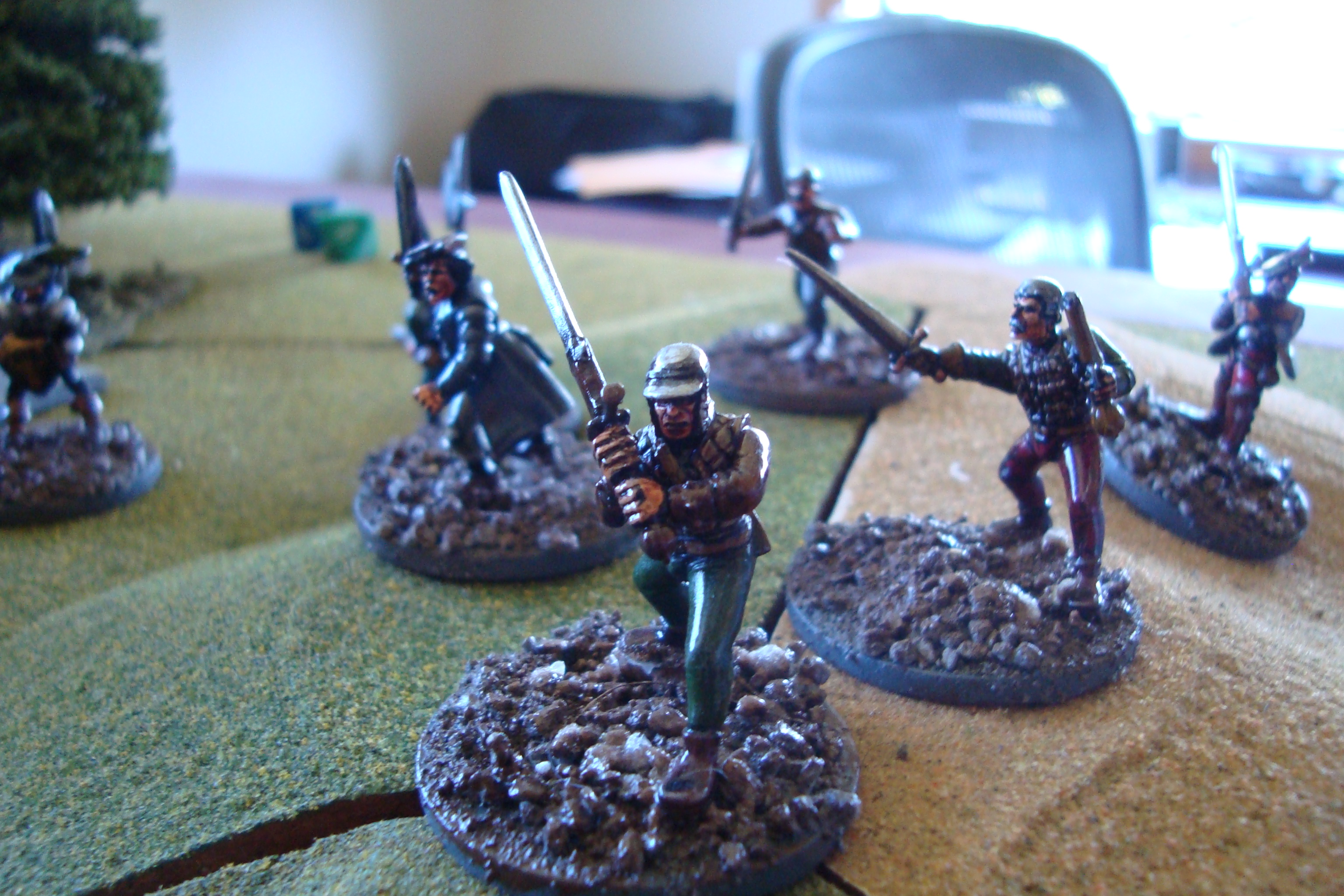
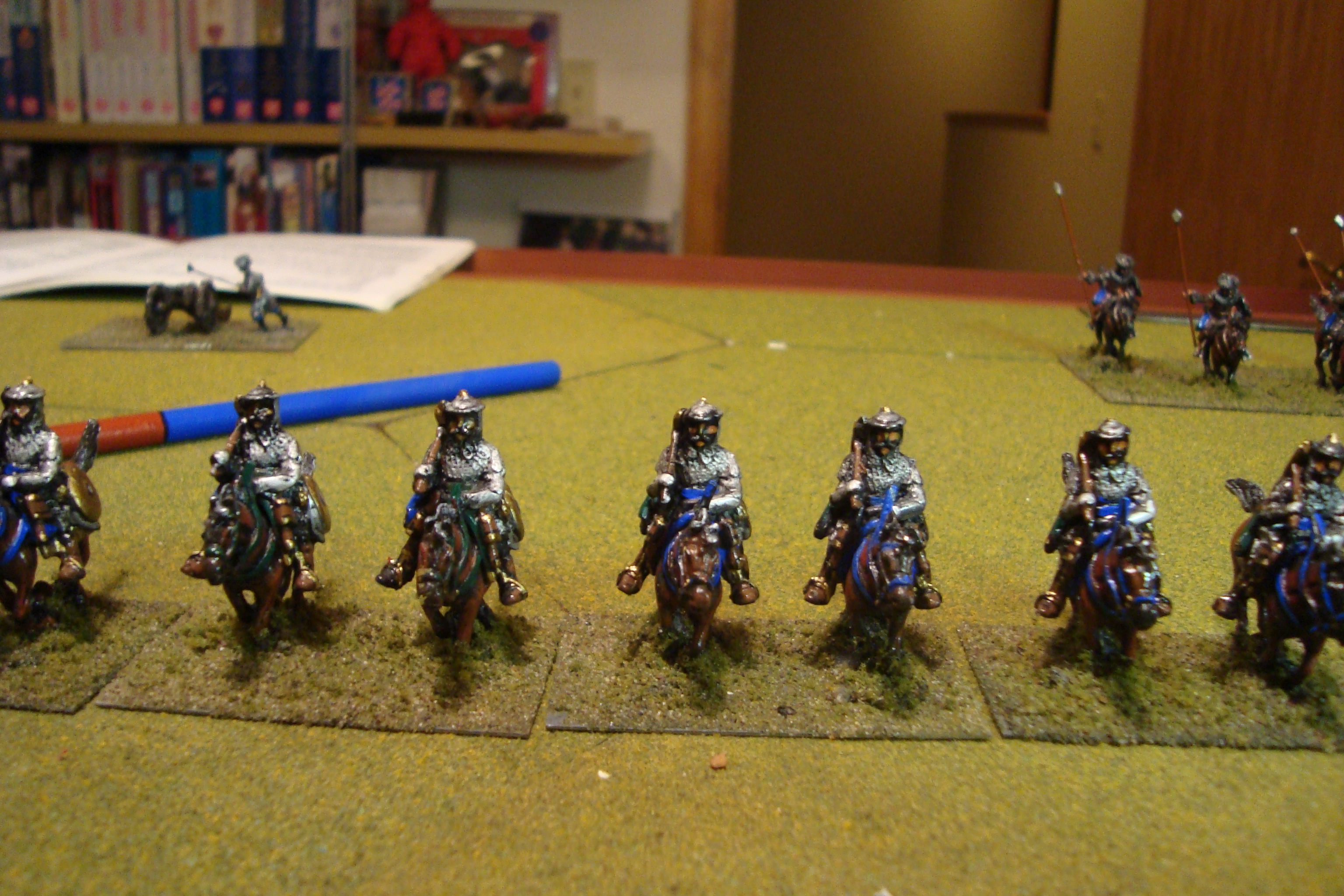
Polish Pancerni Advance
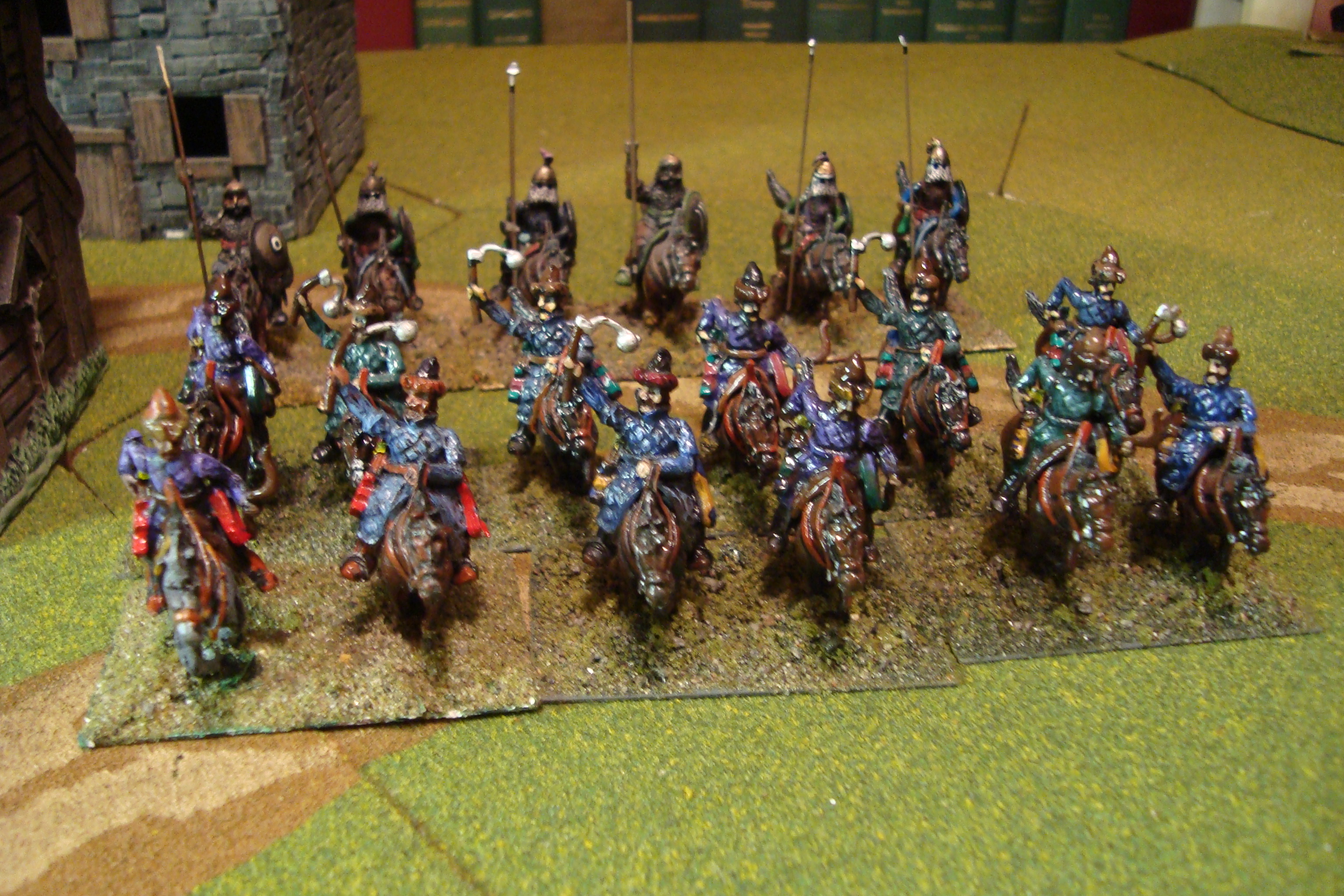
Russian Boyars Begin Their Advance
Hussars and Pancerni Unsuccessfully Melee with Streltsi
Winged Hussars Attempt To Reform For Another Charge
Haiduks Enter Through Village

Change In Plans

Finally made it to Portland for a wargaming weekend. The first two attempts were stymied by weather and family.

The plan was for a third playing of the “Fate of Nanking” scenario from War of Resistance (WOR). Set the scenario up, then just stared at it. Started talking, having a couple of beers, and three movies later it was time for a good night’s sleep.

Enthusiasm was limited Saturday morning, so we bit the bullet and took it down. Instead of WOR, we had fun playing Paths of Glory, which we hadn’t played for awhile. We didn’t get that far into it, but it was a lot more fun then doing the supply book keeping for KMT units fighting in the suburbs of Shanghai.

The plan is for Tim to come over to Central Oregon in March. We’ll get Wavell’s War out and play the East African campaign game. That will be something!

Something Different – Hordes of Dervishes – DBA Variant

Very cold, bad TV, no sports,  not even a movie to get excited about.  So, I dove into a DBA variant, Hordes of Dervishes by Bob Cordery,  that had been on the playlist for quite a while.  Bob is a wargaming stalwart, with his own interesting site.

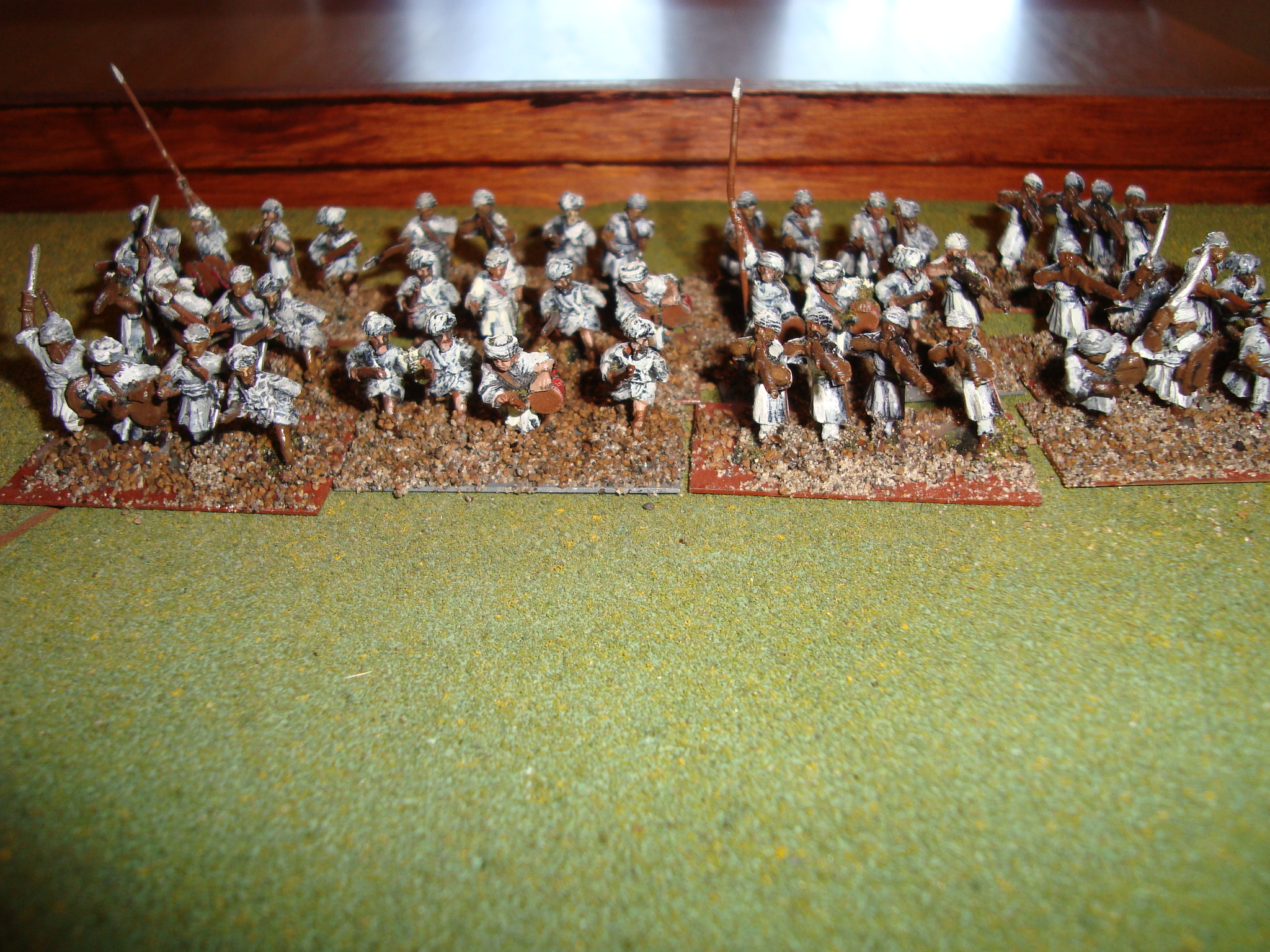
There are any number of DBA variants out there.  This one is colonial.  It’s an excuse to pull out the British 15mm troops that I’ve had for decades, and were lingering out in the shed,  patiently waiting for this opportunity.  They were all that was left of what had been a rather substantial force of British and French colonials, painted for the aborted World War 1896 campaign,  that I sold off a few years ago.  I used some of my 15mm figures painted up for the East African Renaissance as the “Dervishes”.

With all my usual finesse, I just lined them up at went at it.

As with DBA, there is a lot of wristage, and the Brits’ roles were horrendous.  If the Dervishes get into contact, there is real trouble.  While a Dervish element’s (I’m talking Lingua DBA here) combat factor is 3 as compared to 5 for the British, any favorable ratio – not the typical “kill” ratio of over half – will destroy the British element.  So it is  absolutely critical for the British player to roll well not only in melee but also for his rifle fire to be effective.  Especially because the Dervishes are rated as Warband, and can use 2 pips to move 6 inches (600 paces), if that puts them into contact.  Rifle range is 5 inches (500 paces).

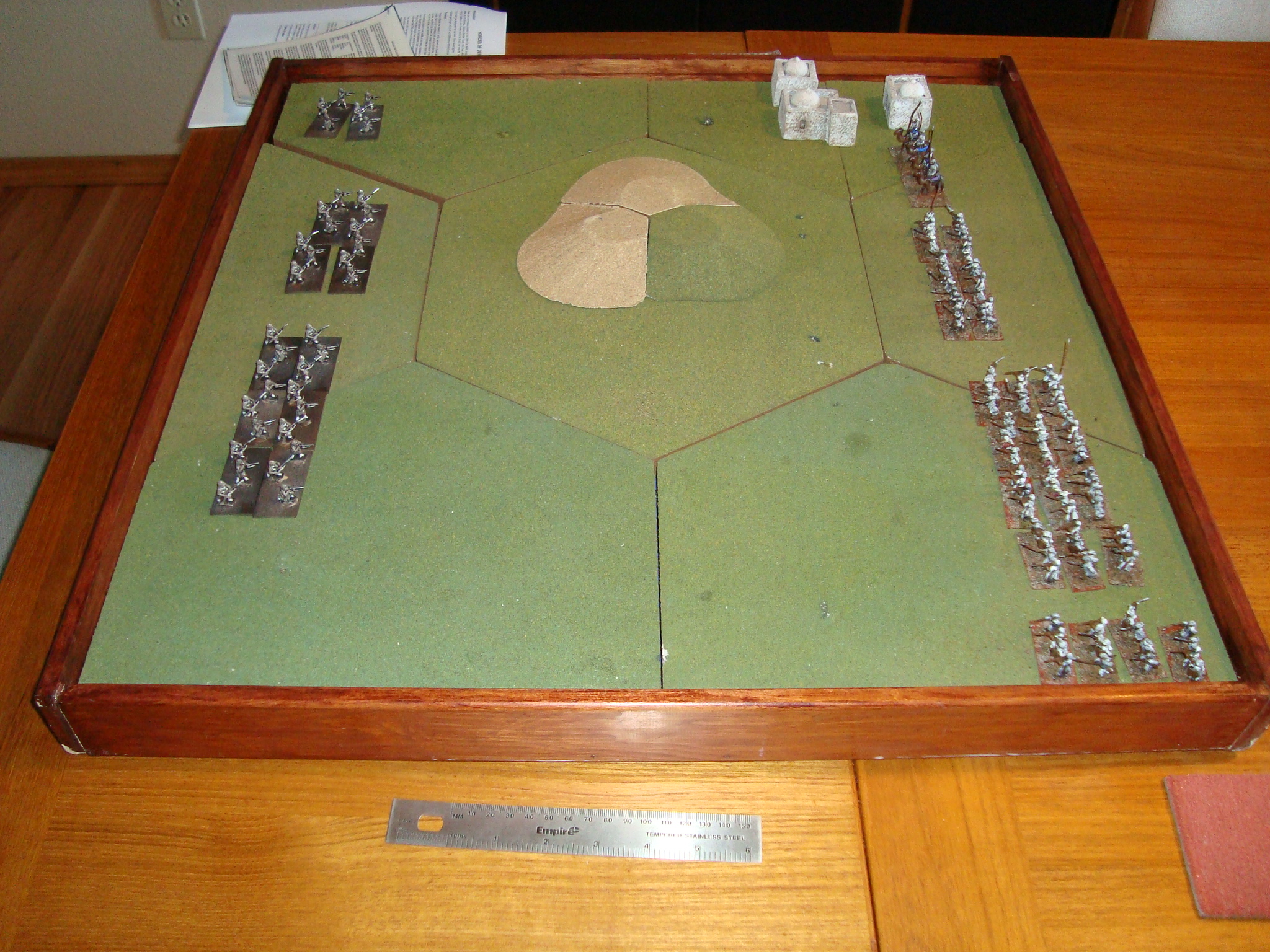
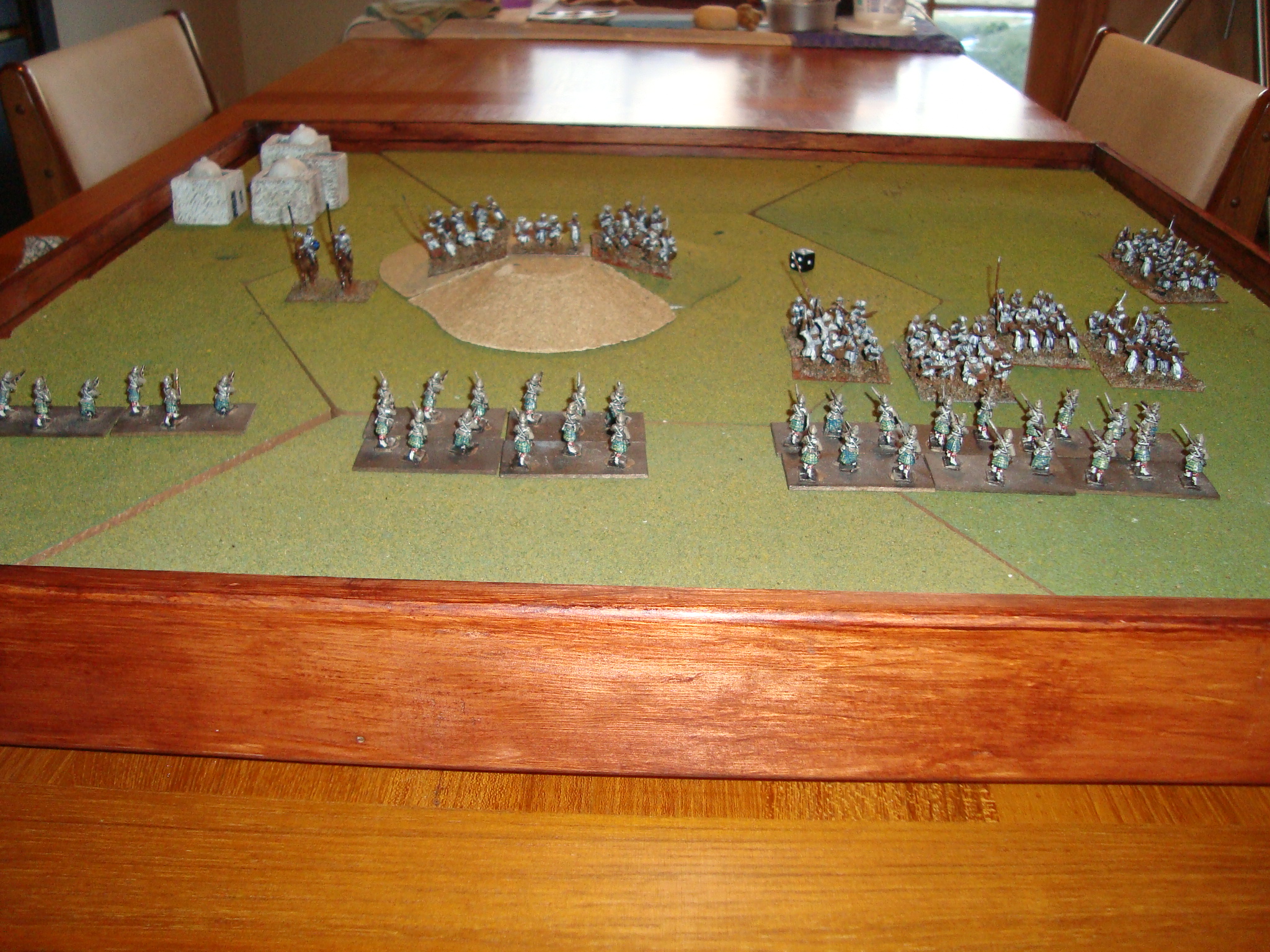
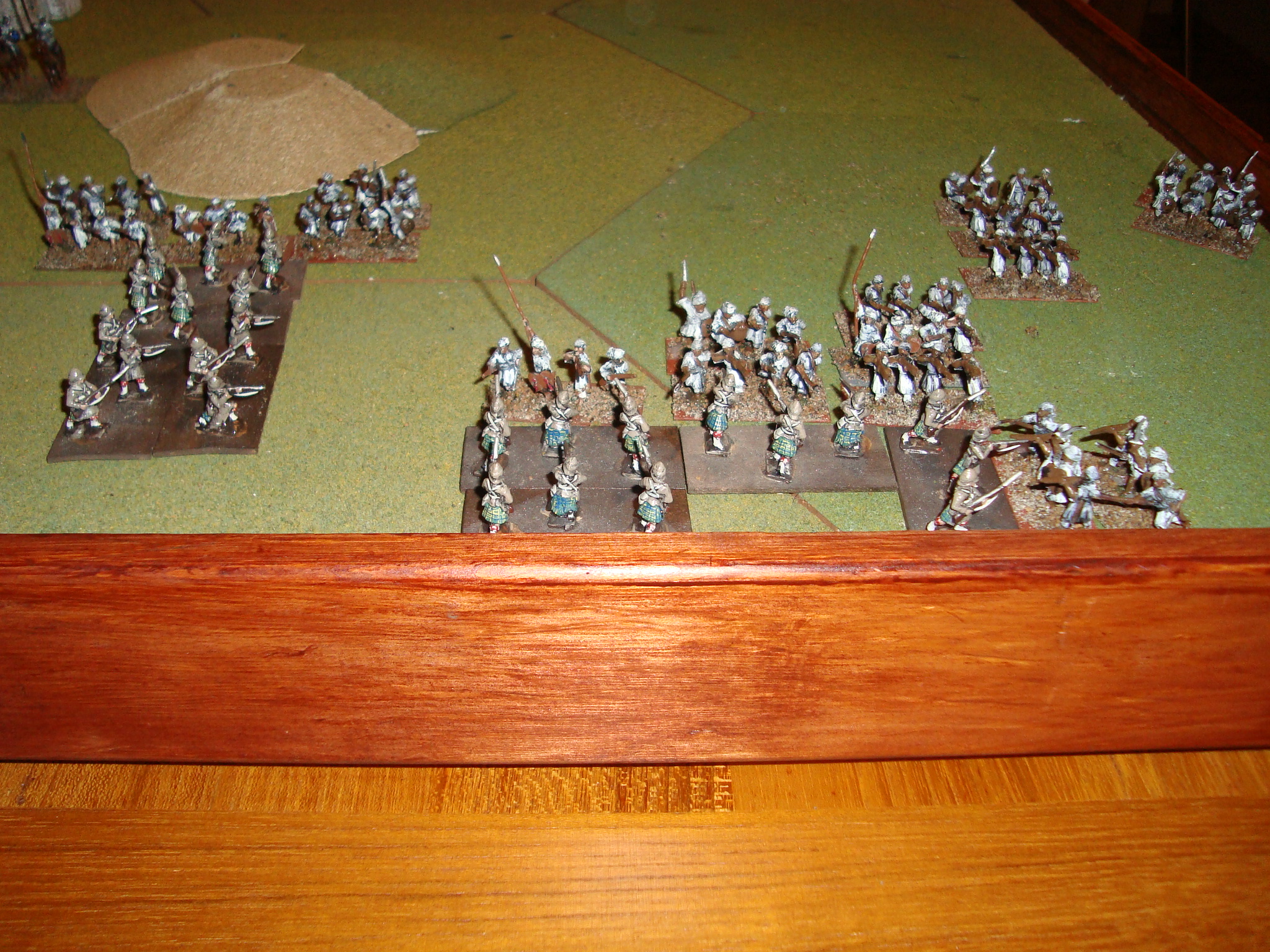
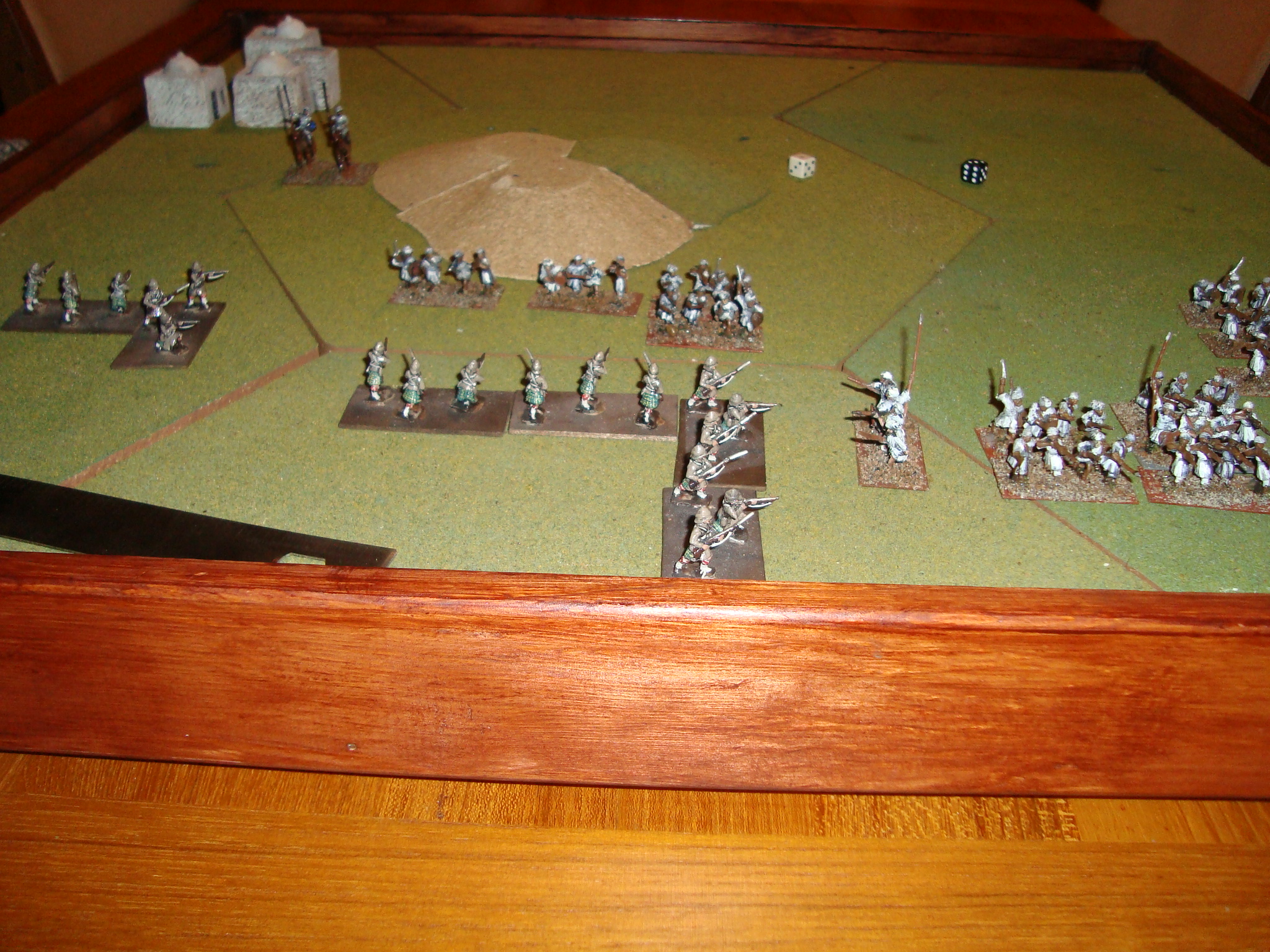
With the bad rolling, things did not go well for the Highlanders.  Here’s a flashbulb view of the battle (the game was played after dark in bad lighting in the dining room).  Good game, and I’ll probably play it again this evening.

Set Up.  Hill Rated Bad Going.  I Constructed The DBA Board Many Years Ago.
Set Up. Hill Rated Bad Going. I Constructed The DBA Board Many Years Ago.
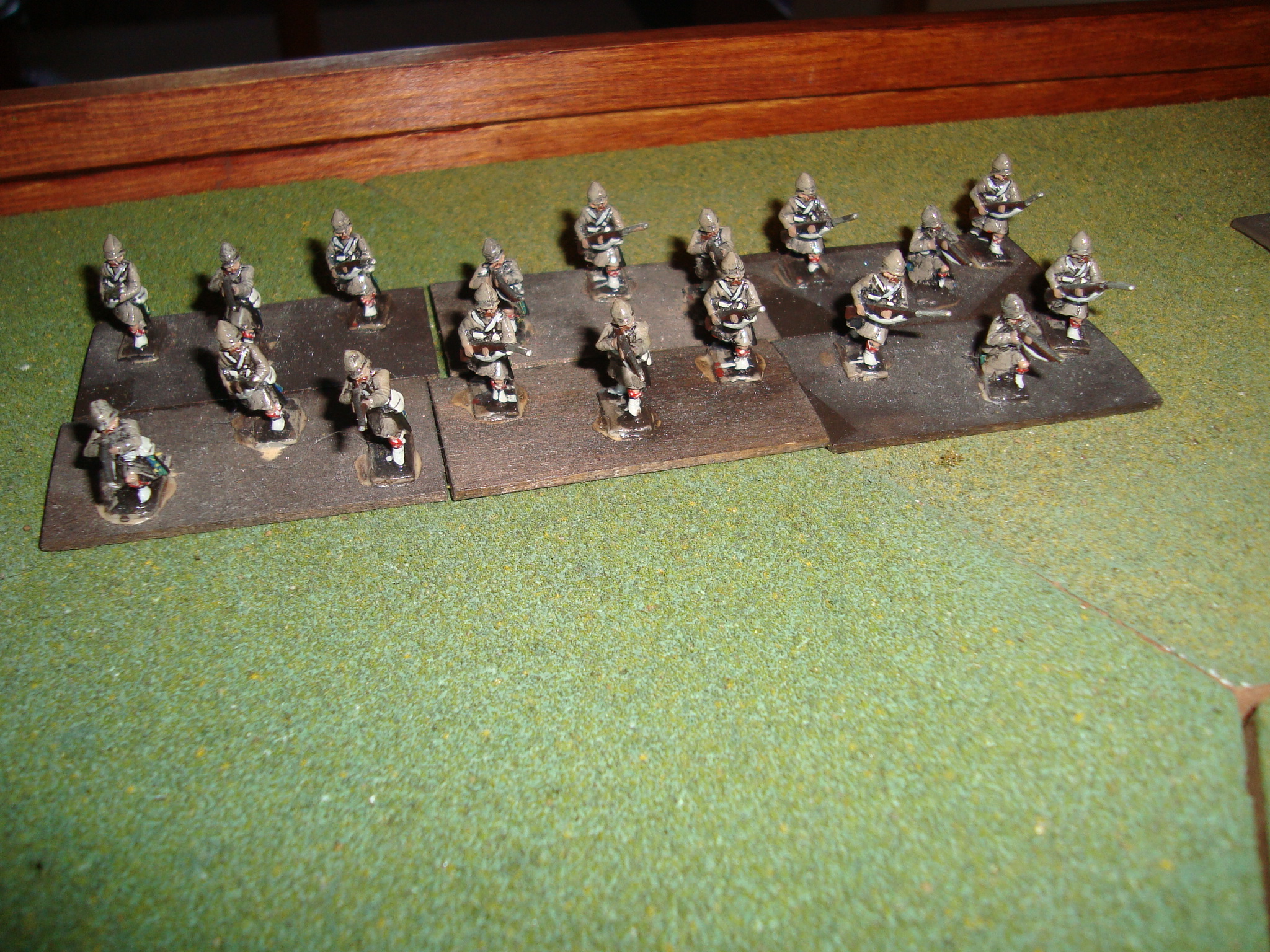
Highlanders.  Old MiniFigs.
Highlanders. Old MiniFigs.
Dervish Horde.  Old MiniFigs.
Dervish Horde. Old MiniFigs.
Closing To Contact
Closing To Contact
Contact and Flanked!
Highlanders Withdrawing.  A Dervish Victory.
Highlanders Withdrawing. A Dervish Victory.

Renaissance Wargame – The Battlefield

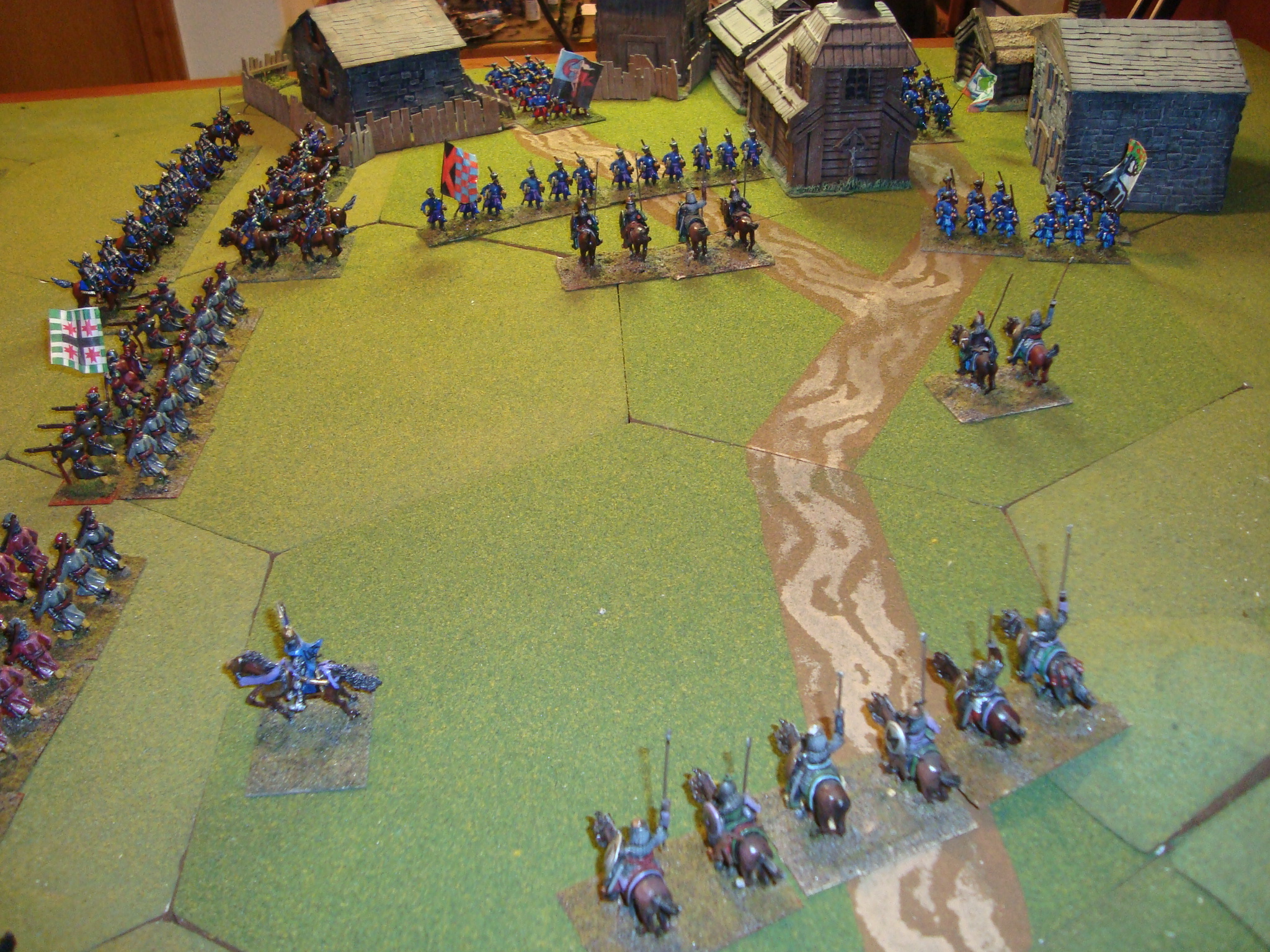
Took RedActions! off the table yesterday.  Cleared off the old and dug out some new terrain and buildings in preparation for a battle between Russians and Poles circa 1625.

I’ll use Phil Barker’s De Bellis Renationis (DBR) rules.  The scenario is based on the Battle of Roundway Down as diagrammed and described in C.F. Wesencraft’s “With Musket and Pike”.  Why?  Because the book was at-hand and it’s a interesting little challenge.

The Russians are besieging a town, with Polish mounted units advancing  to lift the siege.  The Russian command decides to meet and destroy the Poles in the field, and then finish the siege.  In the historical battle, the besieged brushed aside forces masking the town, and attacked their enemy’s flank.

I’ve tweaked the layout of the battlefield by substituting a village for Blagdon Hill.  Wanted to get the buildings out of their box!

While the published scenario calls for the flank attack forces to come on-table during the fourth turn, I’m going to come up with the mechanics for a variable arrival sometime after Turn 2.

Here’s a few photos

The Battlefield Looking South
Initial Dispositions.
Close up of The Village.  A mix of purchased and scratch built buildings.
Close up of The Village. A mix of purchased and scratch built buildings.

Convoy Ambush – Red Actions! Pt 2

Turn 1:  German machine gun engaged the lead Machine Gun (MG) Truck.  The MG Truck failed the ambush morale check, causing it to rout.  Machine gun fire resulted in a terror result.  The Partisans moved out of the woods, one group to attack the convoy, the other to act as security to engage the escort and/or any reaction force.  The second vehicle in line failed the ambush morale check.  It routed and took a terror hit from the German Infantry’s rifle fire.   The Warlord Escort carried in the trail vehicle dismounted.  The MG truck Rallied.  However, the routed cargo truck did not.

View From German Machine Gun Position As Convoy Approaches
Partisans In The Woods. Ambush Group to Left (one stand behind tree), Security Group to Right

Turn 2:  Germans again engaged the MG Truck, but failed to inflict any damage.  Likewise with the advancing Ambush Group’s fire on the stalled cargo truck.  The Security Group reached the crest of its objective.  The Warlord Escort advanced down both sides of the road towards the front of the column.  The stalled cargo truck again failed its morale check, but the MG Truck maneuvered to engage the advancing Partisans.  The MG Truck’s fire was ineffective.

Partisans Emerge From Woods After Machine Gun Truck and Lead Cargo Truck Retire Due To German Fire
Partisans Engage Convoy and Move to Security Position.  Warlord Escort has Dismounted.

Turn 3:  The Partisans advanced,  masking  the Germans’ field of fire.   Once again, Partisan fire at the stalled cargo truck was ineffective.  The security group attacked the nearest Warlord Escort, inflicting a terror hit.  The MG Truck could not hit the Partisan ambush group.  The Warlord escort maneuvered towards and ineffectively engaged the security group.  The other Warlord Escort continued to advance to the head of the column.

Partisans Engage Convoy Escort

Turn 4:  Poor die rolling continued, as the Partisans once again could not damage any of their targets.  However,  both the Partisan Security Group and Warlord Escort recoiled in the fight for the hill.

Partisan Security Team Pushed Off Hill. Assault Group Continues to Engage Convoy Escort

Turn 5:  The Partisans again attacked both the stalled convoy and the escort.  Again, their fire was ineffective.  While the MG Truck and Escort both inflicted terror hits on the ambush and security group.

Turn 6:  According to plan, the Partisans disengaged, falling back to the woods, and prepared to move to the rally point.  The Chinese did not pursue.

Partisans Withdraw Into Woods

Comments:  Fun little scenario, horrific die rolling for both sides.  I thought the Partisans would make short work of the convoy, but their low firepower (4 factors for each stand) was consistently ineffective.  The Germans should have been able to do more damage to the convoy, but again, the marksmanship (die rolling) was bad.  The Warlord unit engaging the Security Group did its job, and the resilient MG Truck forced the Partisan Ambush Group to retire.  A decisive victory for the Warlord’s forces.

Convoy Ambush – Red Actions! Pt 1

After much procrastination, started playing this scenario.  I posted up some preliminary thoughts and photos of a couple of turns  back in December.

The scenario involves a Chinese Warlord convoy carrying all classes of supply.  The mission of the ambush force is to destroy the convoy and, if possible, remove weapons, ammunition and medical supplies.

Since the best ambush point was near a Warlord controlled town, there is the chance that a reaction force will appear.

The first step was to construct a simple situation generator, which hinged on the awareness level of the convoy.  The levels were clueless, cautious, and, know something will happen.  This status was settled by a die roll.

If clueless, the convoy had little discipline, moving at maximum speed and bumper-to-bumper.  If cautious, distance was greater, speed lower, with armed vehicles at head and front.  If an ambush was suspected, there was a reaction team attached, in addition to an escort.

In each case, there was the chance of a reaction force coming to the aid of the convoy, but again, a die roll settled that with modifiers to decrease the size of the force the less “aware” the convoy was.  The number of turns it took the reaction force to arrive on table was again a function of the Warlord force’s awareness level and die roll.

The required wristage created the following:

A clueless convoy, moving at maximum speed, with little dispersion and an escort of only two stands of troops.  Feeling sorry for these poor bastards, I threw in a light truck armed with a machine gun.

The ambush force consists of two stands of Germans, one machine gun, along with five stands of White Russian partisans.

It is a classic “L” shaped ambush.  The Germans are to engage the convoy, bringing it to a halt, and if possible, continue to support the Partisan attack.  The Partisans are to attack the convoy from the wooded flank alongside the road.  Two partisan stands will move to the rear of the convoy occupying a small hill taking up a position to engage either the convoy escort, or a reaction force.  The remaining Partisans will, using fire and maneuver, destroy the convoy and, if possible, retrieve needed supplies.

The Partisans are low on ammunition and cannot engage in a lengthy firefight with the convoy.  If this occurs, they are to withdraw back into the woods, covered by the Germans.  All units will then proceed to a rally point.

I’ll post up the results tomorrow.

Demolition Derby

A couple of months ago, I posted up about using Matchbox vehicles for RedActions!

Need to fabricate destroyed vehicles, so I decided to experiment on a Matchbox truck that was too large for 25-28mm.  Here’s a picture.

DSC01335

Here’s what it looks like now, in the process of, shall we say, “modification”?

DSC01341

DSC01342

After I experiment with painting the destroyed vehicle, I’ll scour E-Bay for a couple of low cost trucks for similar treatment.  Now I just have to work out the explosion/flame/smoke effects.