Category Archives: World War II

Way Way Back Machine

Winter has finally arrived.  Gone are sunny skies and temperatures in the sixties.  Disorientation replaced by discomfort.

Home Alone, so wargames spread out all over the place.  As always, the problem is to avoid the avoidable distractions and just sit down.

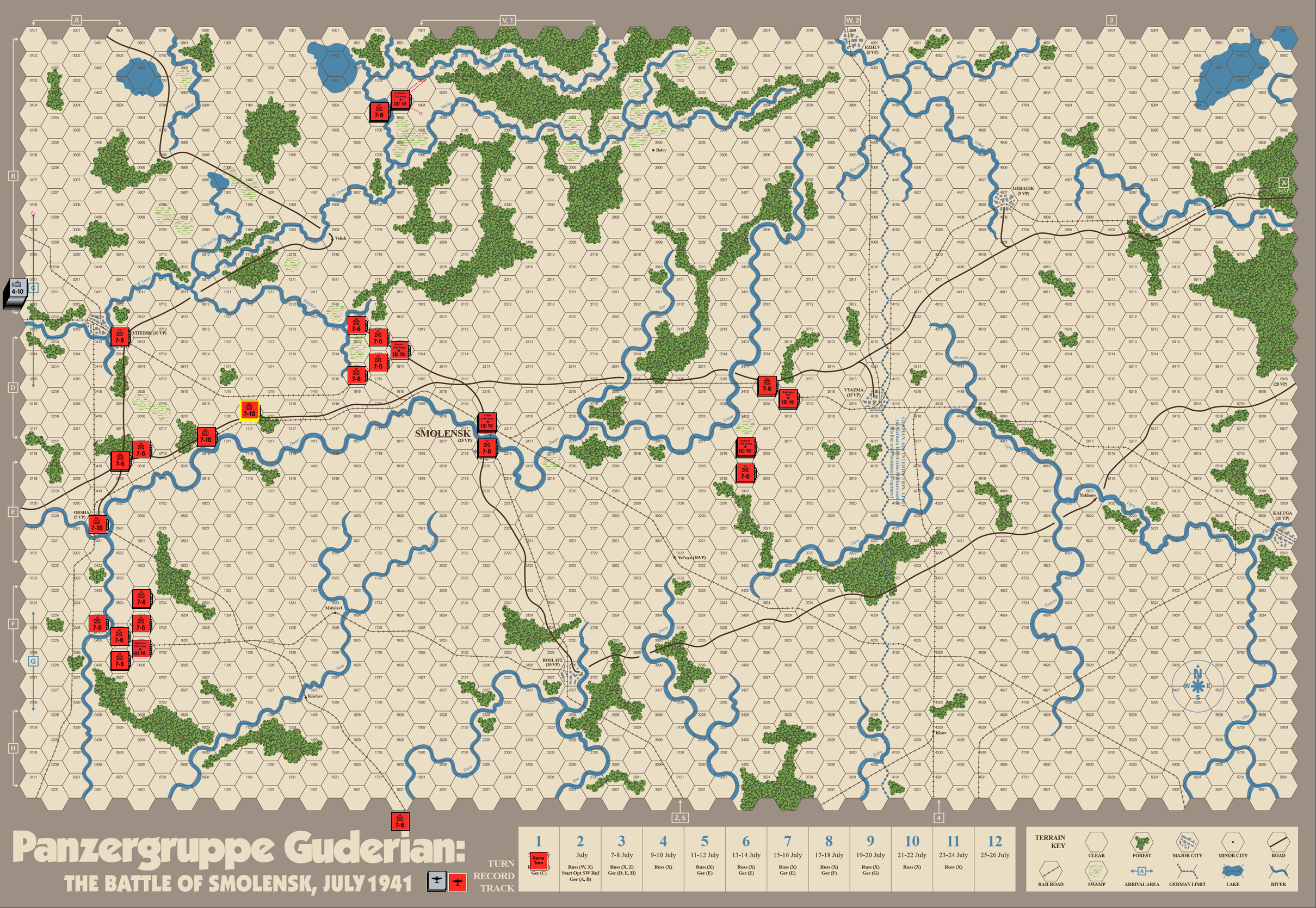
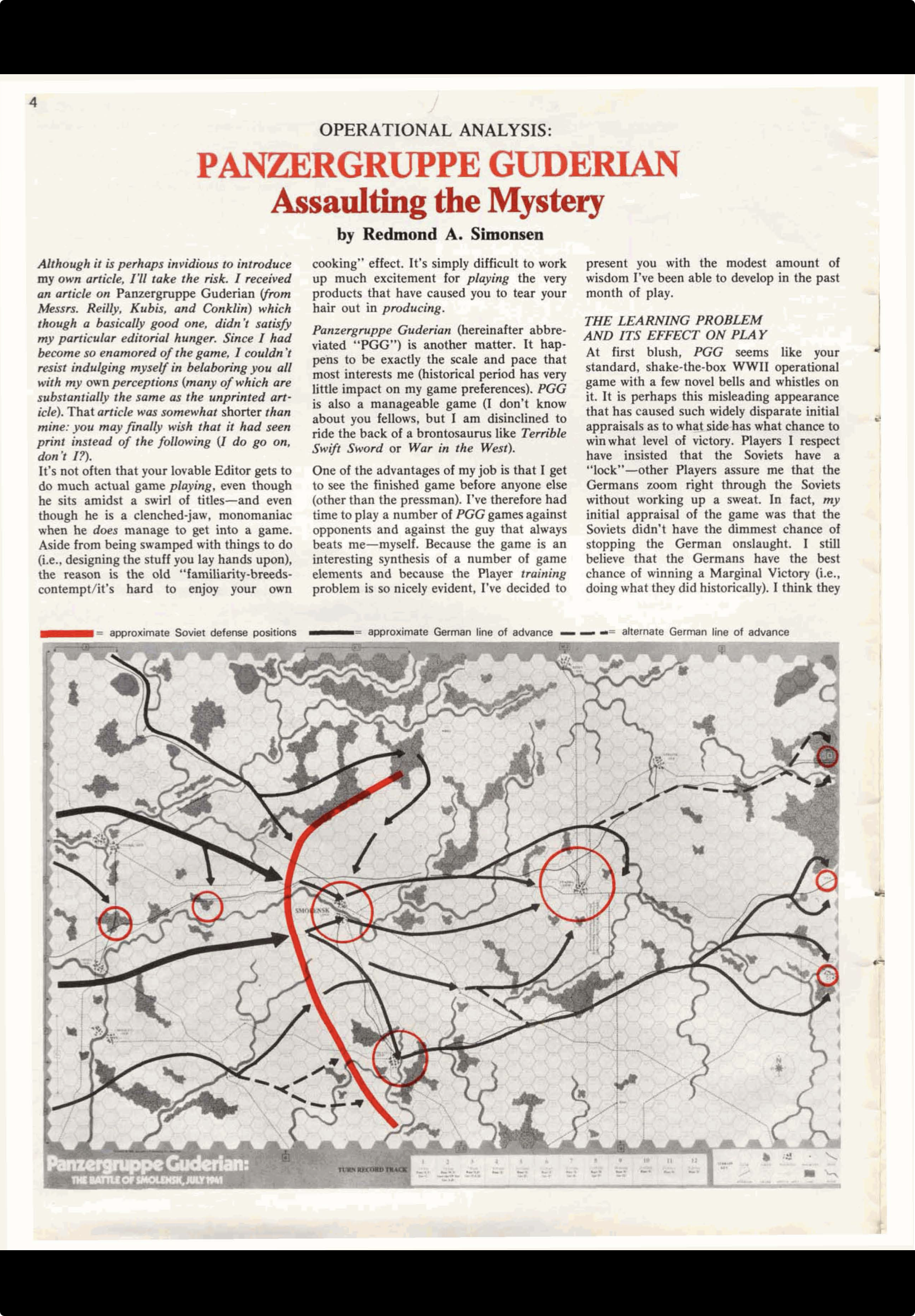
One project is a solo Vassal game of the venerable Panzergruppe Guderian.  To make things fun/different, and to learn a little more about how to play, I dredged up an old copy of Moves Magazine #29.

None other than Redmond Simonsen walks the reader through what to do.  So, I’m following his guidance.

Here’s the game board (or most of it) after Turn 1, along with a shot of the first page of the article.

Groza – Barbarossa Unleashed Rules

Tim and I both like the draft of this ruleset.

We didn’t use any of the optional or experimental rules, just the new Combat Results and Supply Effects  alternate rules.  We also found two changes to the basic rules that had an immediate impact on play.

The alternate combat results seem less bloody, and, according to Tim, simplify the replacement process. Units that are out of supply no longer roll for elimination (4th Turn), but continue to exist albeit in a very weakened state.

The  changes in airfield capacity and stacking had the most significant impact on play.

Full and Partial Hex Cities now have a maximum capacity of 3 air units.  With Minor Cities having a capacity of one air unit.  In the older rule sets,  the former had a capacity of six air units, with Dot Cities at three units and Reference Cities at one unit.  Apparently there will some changes in the categorization of cities when new maps are published.  We simply used a capacity of one for both Dot and Reference cities.

The total number of Regimental Equivalents remains at twelve, but in the new rules all twelve factors can be divisions.  The allowance for artillery remains the same.  This change allows for some very robust combinations.

I’ve sent my initial dispositions to Tim.  More on that later……

Groza – It Only Gets Worse

The remainder of this session report will focus on Romania.  There was  mutual nibbling up north, but the bulk of the action was to the south.

Here’s the situation at the end of the Soviet Exploitation Phase.

Not good at all.  Desperate Times…..

Here are my Desperate Measures……Strategic Rail Movement for German ground reinforcements and Transfer Missions for air assets.  Fortunately, Hungary is a benevolent neutral, so the Axis can use Hungarian rail and airspace, as well as trace supply through it. Unfortunately, Romania does not have many airfields, although I had engineers working diligently for more fields to be ready in the Aug I Initial Phase.  The supply access really helped withdrawing units.

Axis Movement…..

Up north, I tried to extricate units by moving west into the mountains.  Down south, the priority was to stop the Soviet advance from down the valley, while having German armor in position to move during the Exploitation Phase.  Some of the stranded units had no hope for a successful retreat, so they would buy time for the others.

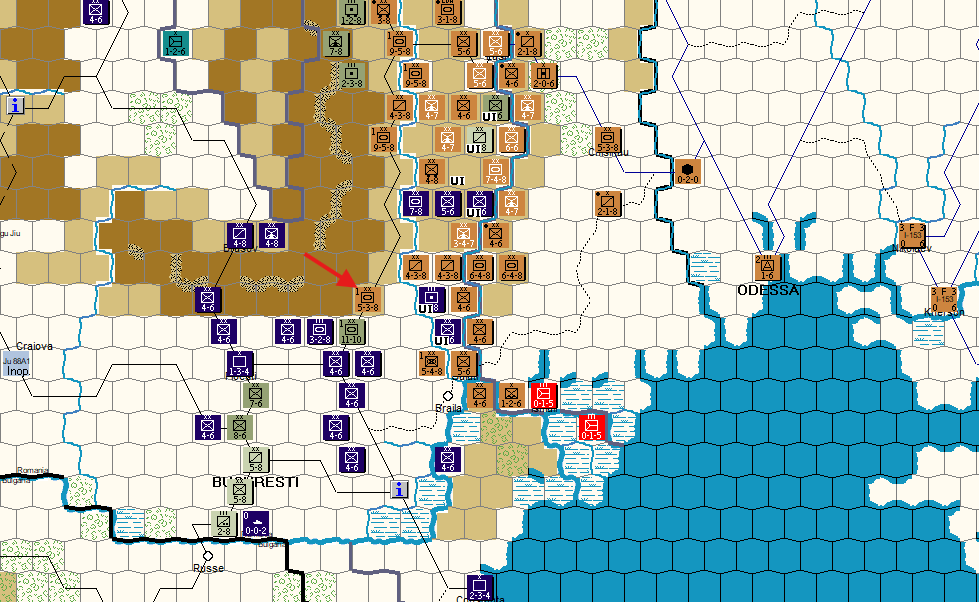
These two shots show the situation after the Axis Exploitation Phase.  A cobbled together perimeter defense with the panzers providing some depth.

The big problem is the Soviet unit identified by the red arrow.  Couldn’t reach it and establish a zone of control.

When Tim diplomatically suggested a re-set, I took up his offer.

Next, some observations we have about the Barbarossa Unleashed rules.  Plot Spoiler……..we like them.

Groza….Amateur Hour

My previous post covered the scenario’s basics.  Now to the gameplay.

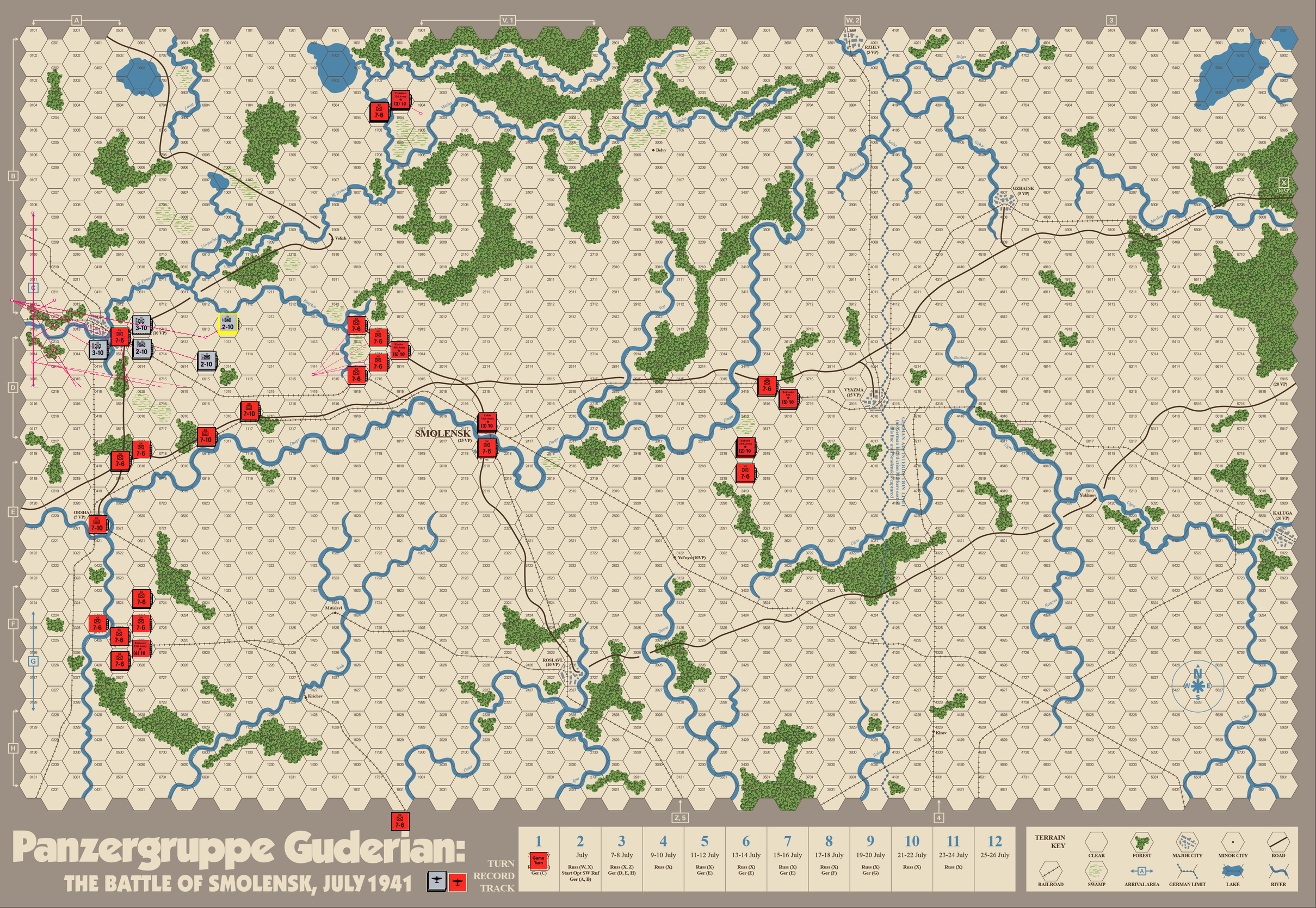
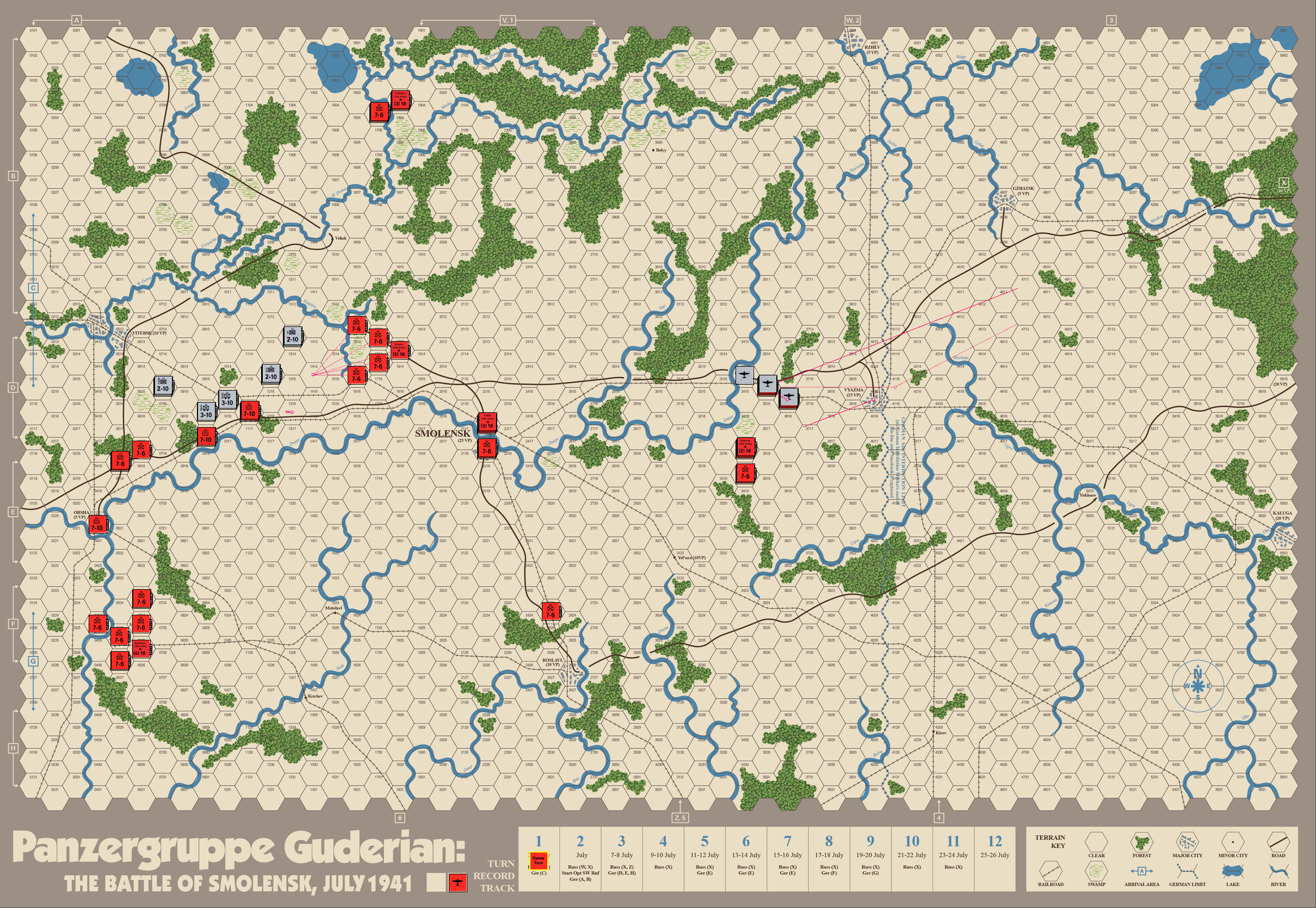
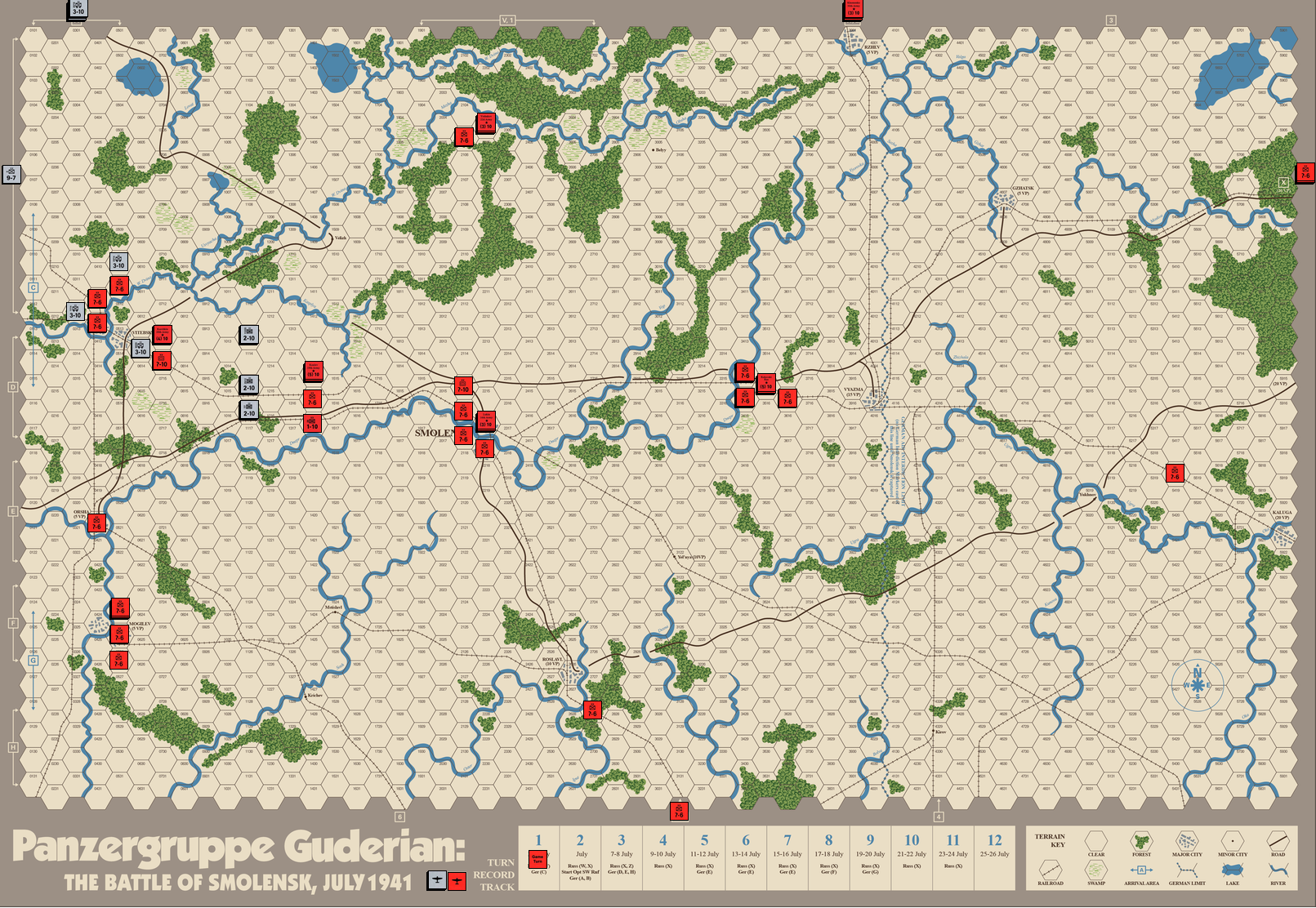
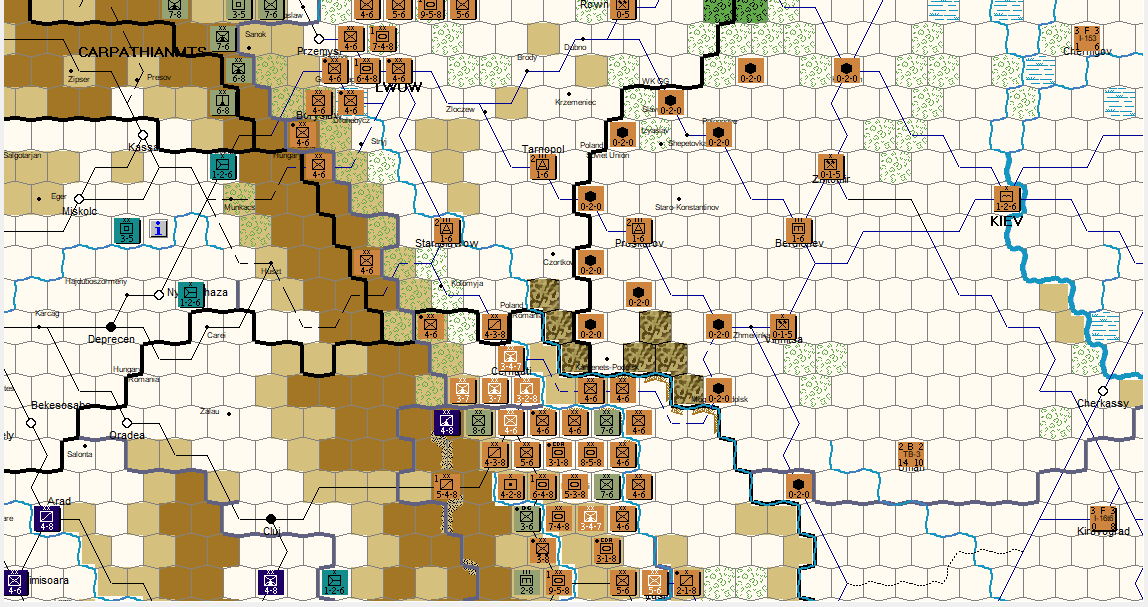
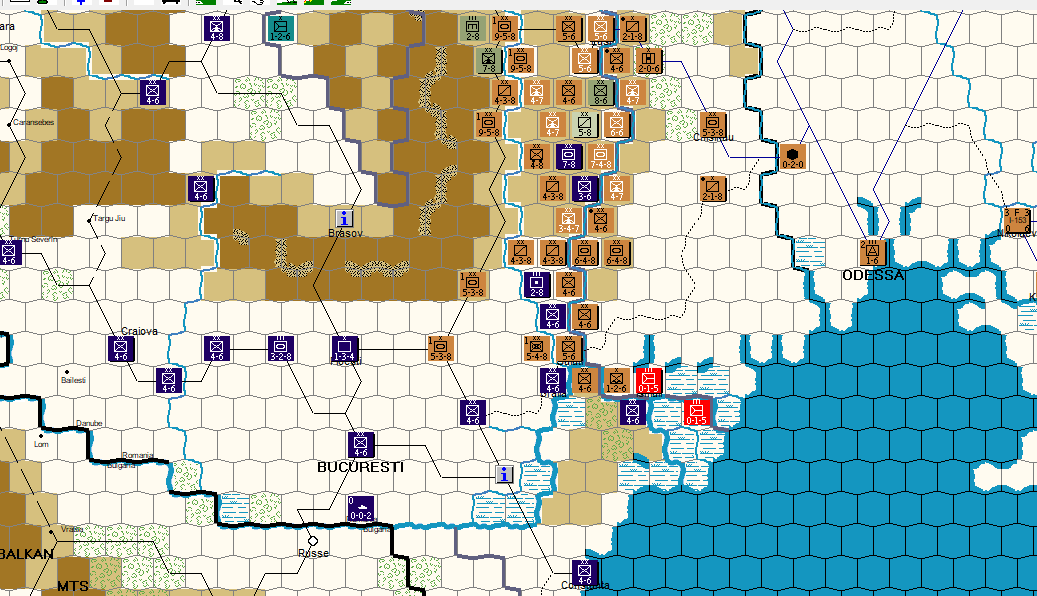
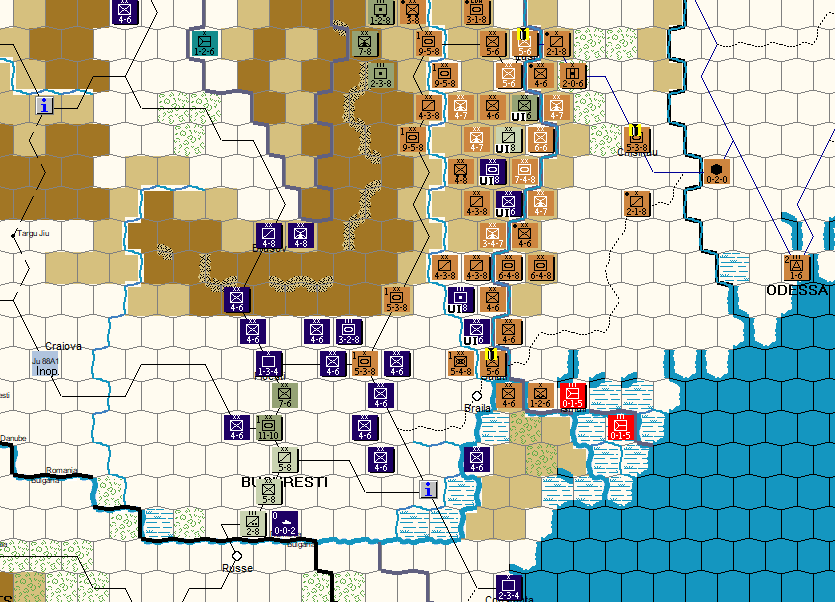
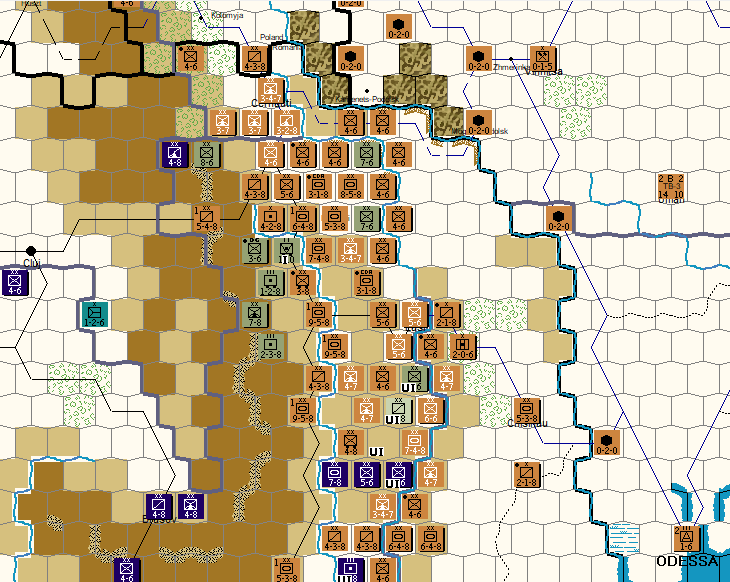
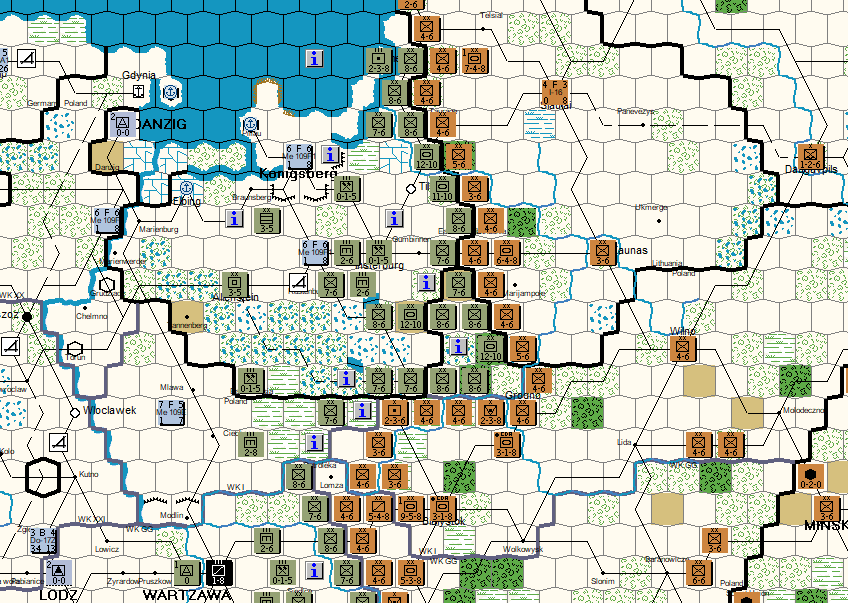
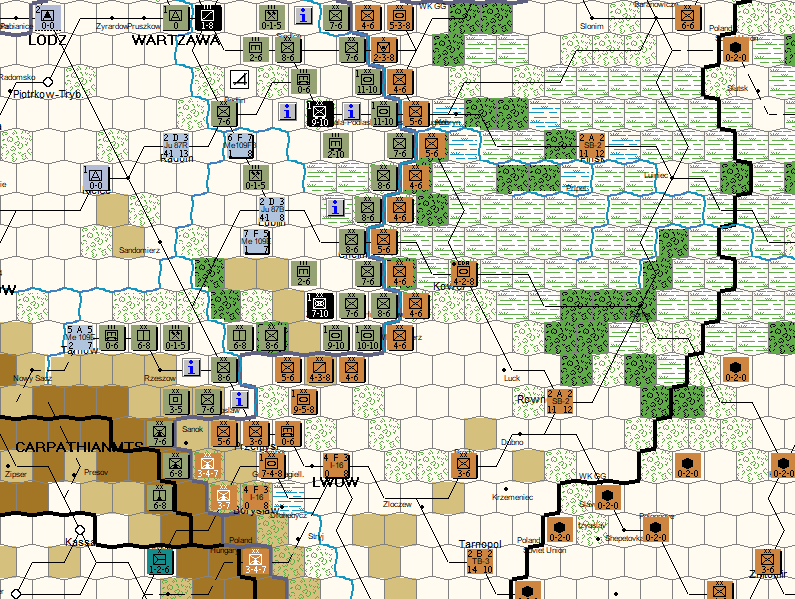
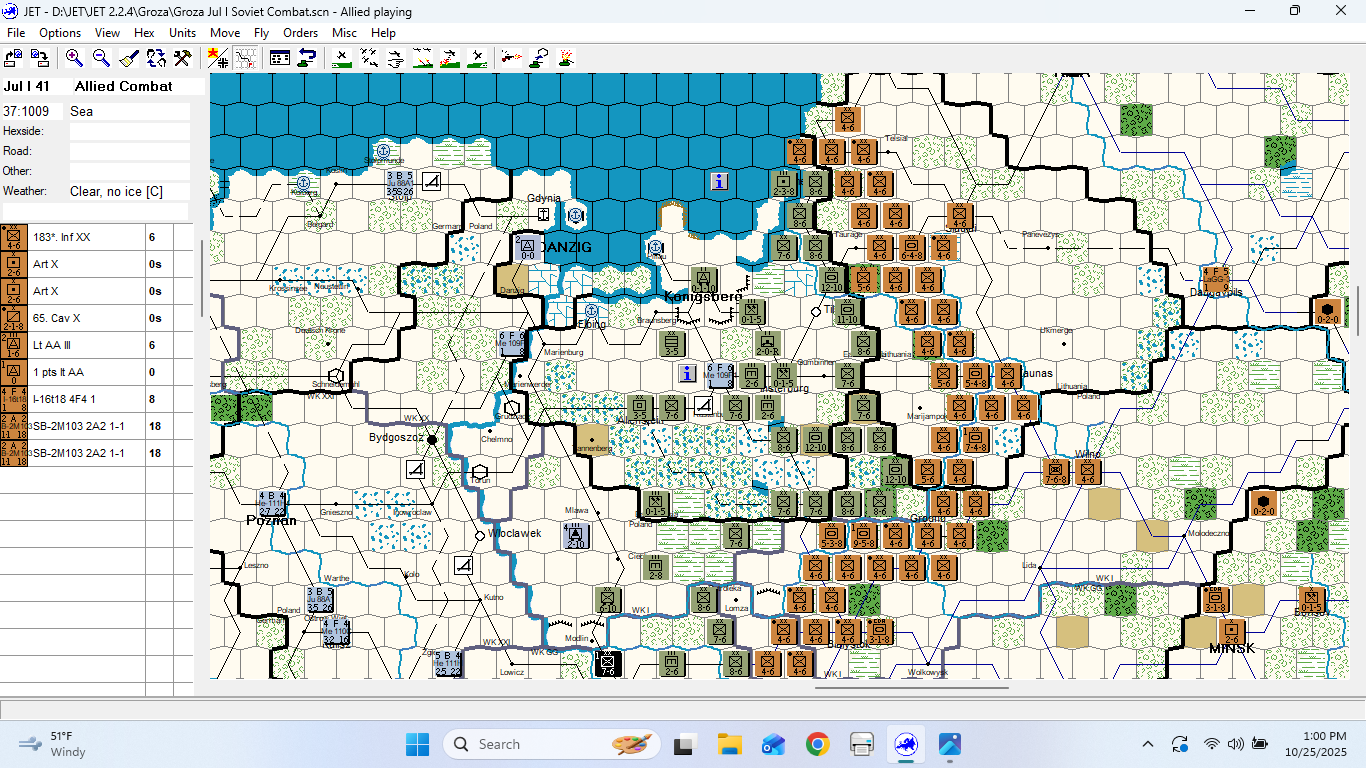
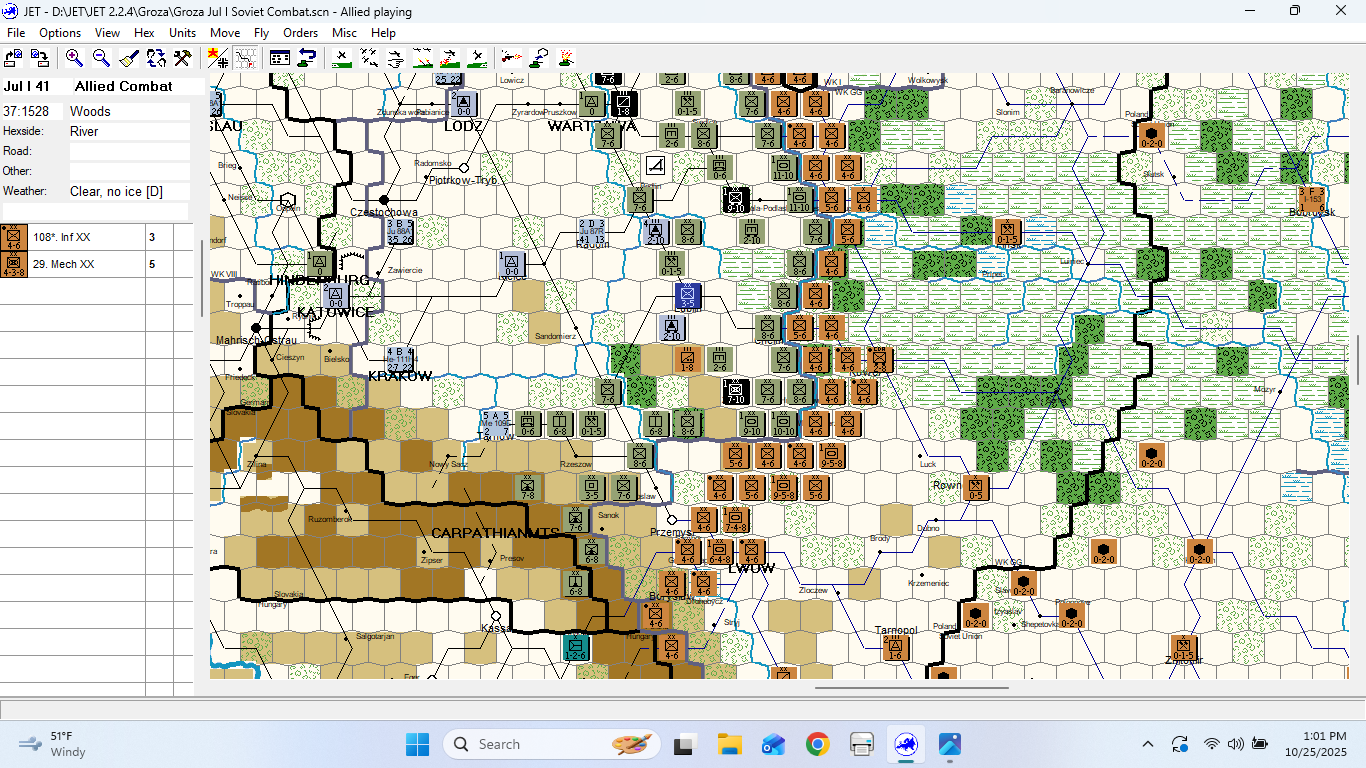
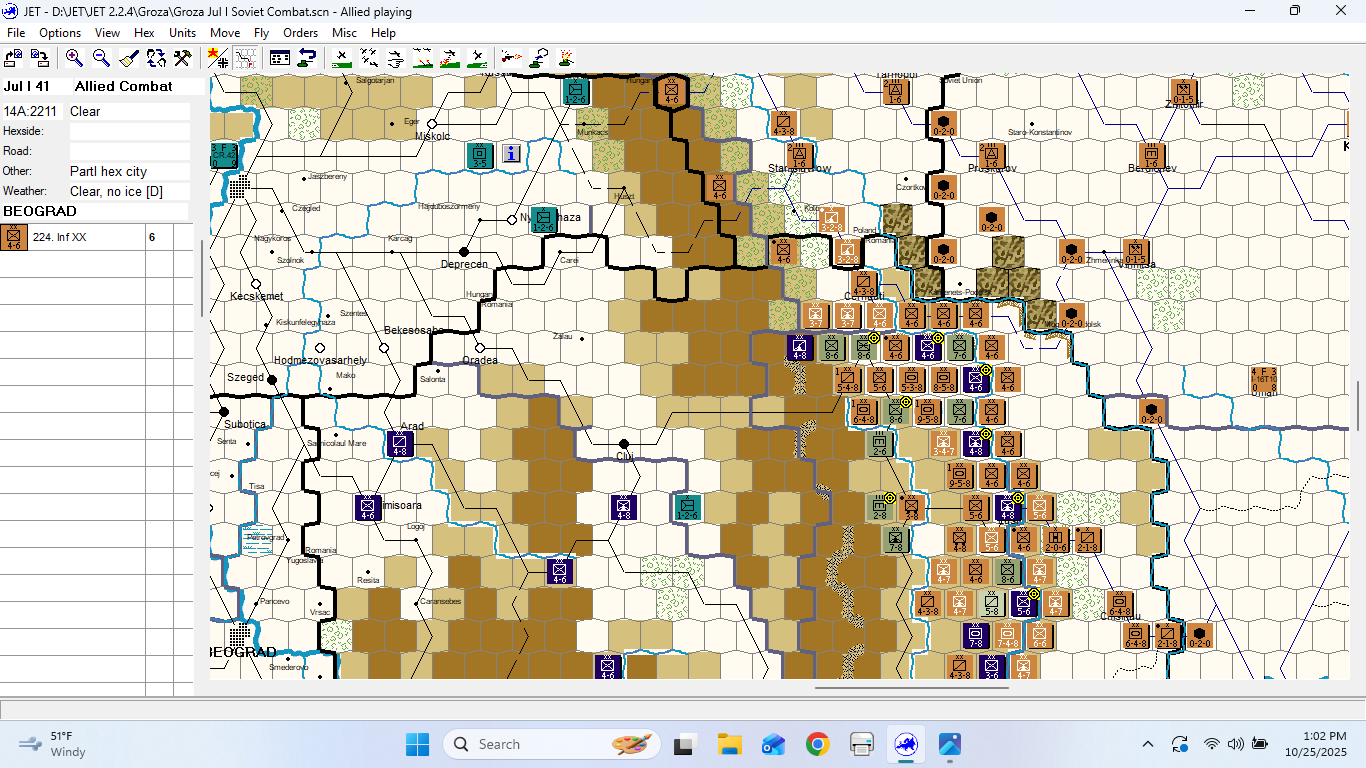
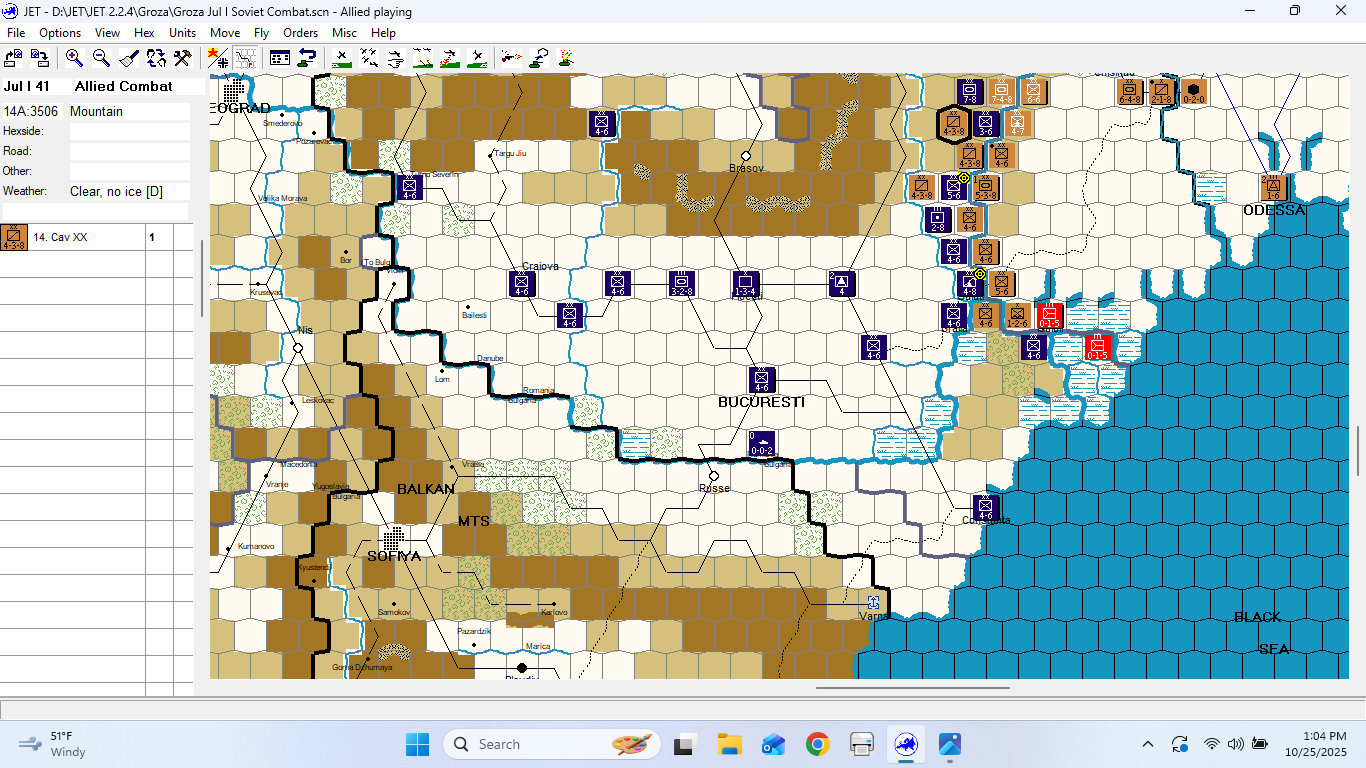
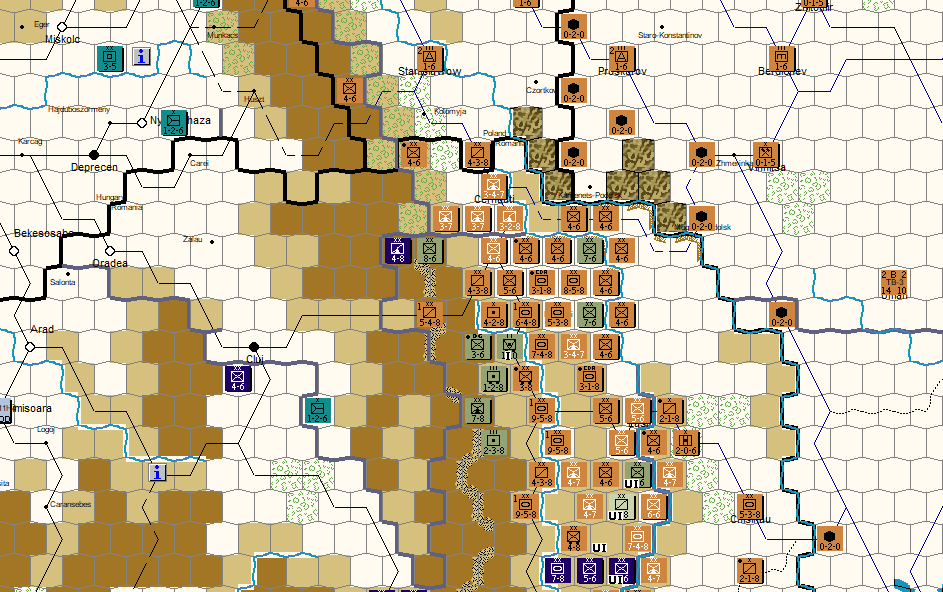
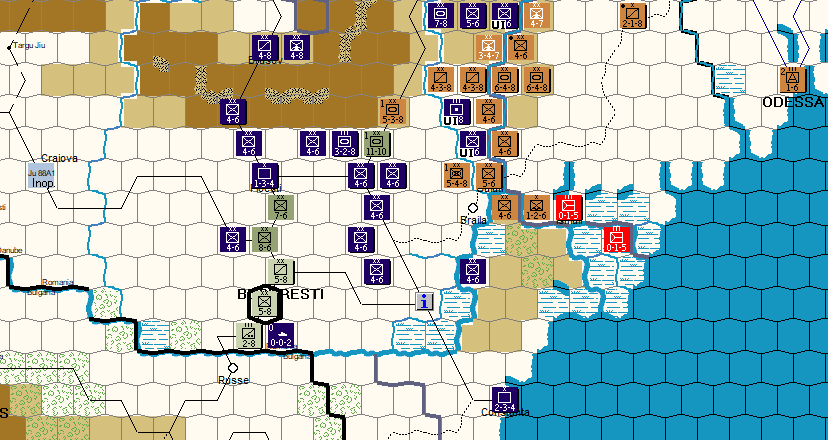
Here are shots of the initial dispositions (after the Soviet Jun II Special Turn) from North to South.  I discovered it takes four (4), not three (3) screen shots to cover all fronts.  This group is missing the southern tip of Romania.

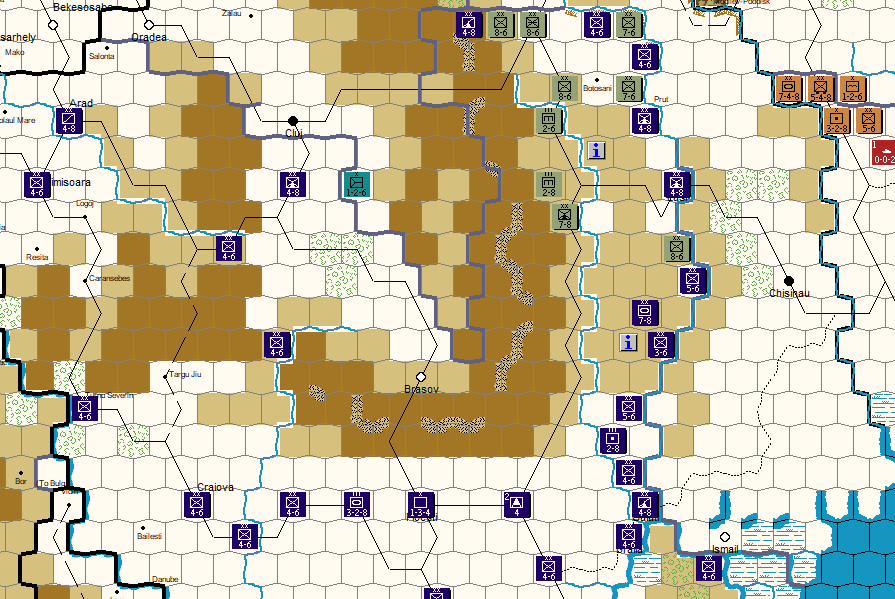
For some reason, I never “captured” an image with Tim’s Soviets dispositions in Romania.  But this is pic of mine is damning enough.  Just wait……

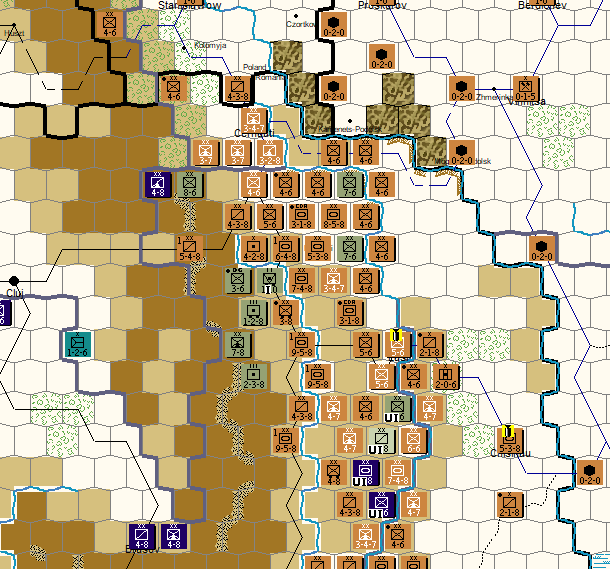
The following show Tim’s Soviet onslaught.  Not much going on in the northern and central pictures, but in Romania……whoaaa!!!

They say we create our own Hells.  Yes, my Romanian Hell was a product of failing to comprehend the interactions of two  Special Rules.

For the first turn, Zones of Control (ZOCs) are reduced.  And,  Axis units must be placed so as to either occupy border hexes or have them in a zone of control.  Too much of the latter, and not enough of the former.  I needed a solid front in Romania, with reduced border strength, but without gaps that, literally and figuratively, could (and would) be exploited.

To compound this error, I did not recognize the implications of the enhanced exploitation capabilities of Soviet units.  Here’s Romania after the Jul II Soviet Exploitation phase.

Gruesome.  Enough!  I’ll cover the rest of our game after my return from W.C. Fields’ (not so) favorite city.

Groza (Finally)…The Basics

Quick note:  If you are viewing this on an IPad or IPhone, scroll down to the bottom of your page.  This is where you will find the tags for Operation Groza and Europa.

Yes, it’s been a year since I  posted up about Operation Groza.  Why?  Sheer indolence.  But recent announcements about Europa provide new motivation.

To recap:  The Groza scenario was published in The Europa Magazine #23, with many special rules and modifications to the Orders of Battle (OBs) found in the Scorched Earth module.   Tim and I wanted to play Europa, were intrigued by the scenario, and anxious to try out the Barbarossa Unleashed draft rules published by John Astell.  Tim took on the herculean task of adapting the elderly, but still very serviceable (let’s just leave it there), JET Scorched Earth module for Groza.  This involved merging maps and creating supplementary counters.  We started play in late Winter 2025.

Might all of this involve confusion, numerous operator errors, and low levels of frustration?  Not to mention the usual screwing up?  Yes! So, here we go, starting with a summary of special rules with subsequent posts describing game play, observations about the rules, and lessons learned.

BTW…..We have reset, and are in the process of starting a new game.  But, back to old business.

The game begins with the Jun II 41 (Soviet) turn.  There are several significant factors affecting each side’s initial deployments.

Axis Player –

Deploys air and ground units first, with each Army having designated zones of deployment.  Units deployed include reinforcements for the Jun II and Jul I turns.  This placement simulates their movement during those turns the Axis player cannot move units.

Every hex along the Greater Germany (including occupied Poland) and Romanian borders must be either occupied by, or in the zone of control of, an Axis unit.

Note:  Hungary is neutral.  However, Axis units can overfly Hungary and use that country’s rail lines.

Soviet Player –

Deploys initial air and ground forces, with special modifications for each Military District (MD).  Again, each Army has deployment zones.

Can change four (4) combat/motorized (c/m) cadre units to full strength, and all 3-4 infantry cadre units to their full strength sides.

Places Jun II reinforcements on the map reflecting mobilization.

Game Play –

The Soviet player conducts a special Jun II turn limited to movement and exploitation phases (no combat).  For those  unfamiliar with Europa, c/m units may move during the exploitation phase. Movement is limited to within the Soviet Union (not occupied Poland).  Air units may move in either, but not both, phases.

The Soviet may designate NKVD units as Spetsnaz.  Ahhhh….Chrome!

After all Jun II movement/exploitation is finished, the Soviet Player begins a “normal” Jul I turn.  But, “normal” applies only to turn sequence as their are several special, and very significant, “benefits” ( per scenario designer) to be used during this turn, only.

The Soviet Player 1) ignores border river hexsides for purposes of combat and overruns (not movement).  2)  increases the attack strength of his artillery units by 50 percent.  3)  c/m units at full strength have full,  not limited, exploitation capabilities.  4)  conducts movement as though each Axis unit has a reduced zone of control (ZOC).  5)  Spetsnaz units are treated like commando units, and have an attack strength of “1” when used in conjunction with other units. Ahhhh…..Chrome!

The special Jun II move combined with the Jul I rules and inability of Axis forces to react simulates Groza’s surprise attack.

Next up…the game.
Up Front – Filling the Gap

This Summer I played Up Front (UF) both solitaire and face-to-face.  It’s a comfortable game.  I keep coming back to it.

What I like about UF is that it isn’t too complex (like Advanced Squad Leader), isn’t too simple (like many miniature tactical/skirmish games), and is more accessible than Advanced Squad Leader Starter Kit (ASLSK).  By “accessible”, I’m referring to a level of detail requiring numerous chart references, multiple plays for the requisite knowledge, or a savant-like memory.

Also….you don’t need the space required for a board.  ASLSK has a number of compact one- board scenarios…..but not that many.  UF doesn’t require  multiple boards to enjoy an involved experience,  but the number of scenarios provided are limited.  However, those scenarios can be tarted-up using different force mixes, different nationalities, or removing cards to create new terrain and obstacles.  Actually, if you could still buy the game (and why that is involves a strange and terrible saga that I am only vaguely familiar with), a case could be made getting a second box to add cards.

By the way, Chris Farrell has some very interesting observations about the game over at his blog.

To keep the game in its comfortable place, I add selected sections to enhance the  Basic Game which is limited to Sections 1-16.

17.  Flank Fire and Encirclement; Lateral Group Transfers

18.  Weapons Acquisitions

19.  Malfunction and Repair

20.  Infiltration and Close Combat

For Chrome, I will include – on a case-by-case basis –  the following sections.

21.  Demolition

22.  Flamethrowers

23.  Pillbox

24.  Minefield

39.  Troop Types

With these five additional rules, you can attack a pillbox; first without any additional weapons, then with demolitions and, finally, flamethrowers.  After that, assault the pillbox through a minefield.  Excellent for solo play.

Tanks? Artillery?   I’ll leave those for Advanced Squad Leader or the Starter Kit.  Tanks & Artillery rules make me uncomfortable.

Learning Curve Continues

Finished up ASLSK’s Scenario S2, War of the Rats.

I thought it would be an easy mopping up after the early punishments meted out by the Germans.  But, the Soviets were surprisingly resilient.  It all came down to a climatic melee in the last German turn, in the last hex, of the last building.

Given the weapon mix (demolition charges and flamethrowers), unit types (conscripts and elite) and urban terrain, the scenario is a great introduction/review of the system’s first infantry-oriented iteration.  As I’ve posted  before, ordnance and especially armored fighting vehicles slow things down.

Well, why not another play?  I’m curious if my “overload tactics” will work again.  And, if so, can I finish off the Soviets quickly?  As a teaching colleague used to say “Repetition is the key to knowledge.”  Then, perhaps, something with ordnance…..

Bits And Pieces

Continuing to fiddle with the Balkan/Central Europe 1938 scenario.

Latest bit of information is a Wikipedia article on the Yugoslavian army, particularly the interwar section.  I know…thin stuff, but there isn’t a whole lot of pre-April War information out there.

Yugoslavia had sixteen (16) infantry divisions, one (1) alpine division, as well as two (2) cavalry divisions in 1935. Mobilization would create another eight (8) infantry, one (1) alpine and one (1) cavalry division within 30 days.

Well, it’s something to work with.

The  mobilization parameters need to be refined, especially for the less-than-reliable Croat units.  My instinct is to stay with random die roles for the Croats, and, since Europa uses two-week turns, having those mobilizing units attaining cadre status at the end of Turn 1, and divisional status at the end of Turn 2 if they do not move or are involved in combat.

Why not?

Vaporized

Over to Tim’s earlier this week for Up Front.

We’d played it once before a long time ago.  Was surprised, but happy,  when he suggested this for my July visit; especially since I had played it recently.

We set up the first scenario.  Since it does use all of the infantry rules it was perfect for our levels of (in) aptitude.

Since we weren’t using the Flanking Fire or Melee rules, the game became a lengthy positional gunfight.  The only incentive for moving forward was to increase each group’s firepower.

It took over two and one-half decks (scenario ends after the card deck has been played three times) for Tim to break my Americans with fifty percent casualties.

Emboldened by our “success” (which I define as an enjoyable experience without the mind aching turmoil that accompanies, let’s say, Pursuit Of Glory), we set up the same scenario with the  French fighting Italians somewhere in The Alps.  Both these crews have some real limitations when it comes to card draw and discard.  However, I didn’t realize my Italians also have some real weapon deficiencies.  They have to get to Relative Range 2 before their bolt-action rifles have any effect.

It was a short and violent.  I dutifully advanced, he fired, and my two groups were vaporized.  It took only three “hands” and the Italians (who will break at 40 percent casualties) were done.  Here’s a bad pic of the battlefield after it was over.  Notice the Italian casualties (cards) at the bottom left of the photo.

The cards with figures were those that panicked.  The others were KIA.

Regardless, it was a lot of fun and should be more fun using the advanced infantry rules.  Despite my focus on ASLSK, I think Up Front will be on the table quite a few times in the upcoming months.

Learning Curve

Continuing to work on my ASLSK skills with a reset on Scenario S2, this time using my own German dispositions, with a rough approximation of the Soviet dispositions used in the Basic Training magazine’s replay discussed in an earlier post.

I loaded up the west side of the board with German units.  It seemed to work.  The Soviet Conscript units melted away due to some really bad morale die rolls.  Aggressive German advances kept the broken units under Desperation Morale with the very tough -4 modifier to any rally dice rolls.    Here’s an impaired pic taken at the end of Turn 2.

In theory, the DM units have little or no chance to rally and should be destroyed, or at least suffer Casualty Reduction, by German Prep Fires at the beginning of Turn 3.  But, this is ASLSK and anything can happen.