Not Again

Just can’t do it.

Strange preoccupations die hard, but my System 7 fixation is over.

All that research and calculating…..started playing but no enthusiasm.  Here’s photo of a portion of the battlefield, with the French menacing the Spanish in mixed order.  I really dislike overhead lights.

I can understand why the game never caught on.  Movement of the cardboard bits is annoying.  You can at least grab miniature bases.  So many charts.  Petty, but I’d rather play Kriegspiel.

I’ve always wondered how much of this hobby is the preparation, and how much is the actual playing?  In this case, about 99.9 percent of the former.

Time wasted?  No.  I revisited what I did (kinda) know about Napoleonic tactics, and learned some more.  And, was exposed to  new information.  I enjoyed that.

All of it is put away.  When tax season ends, and if I summon up the wherewithal, the whole lot will go on the market.  It fits in a compact box, easy to ship.

Still, I’m wistful.

Way Way Back Machine

Winter has finally arrived.  Gone are sunny skies and temperatures in the sixties.  Disorientation replaced by discomfort.

Home Alone, so wargames spread out all over the place.  As always, the problem is to avoid the avoidable distractions and just sit down.

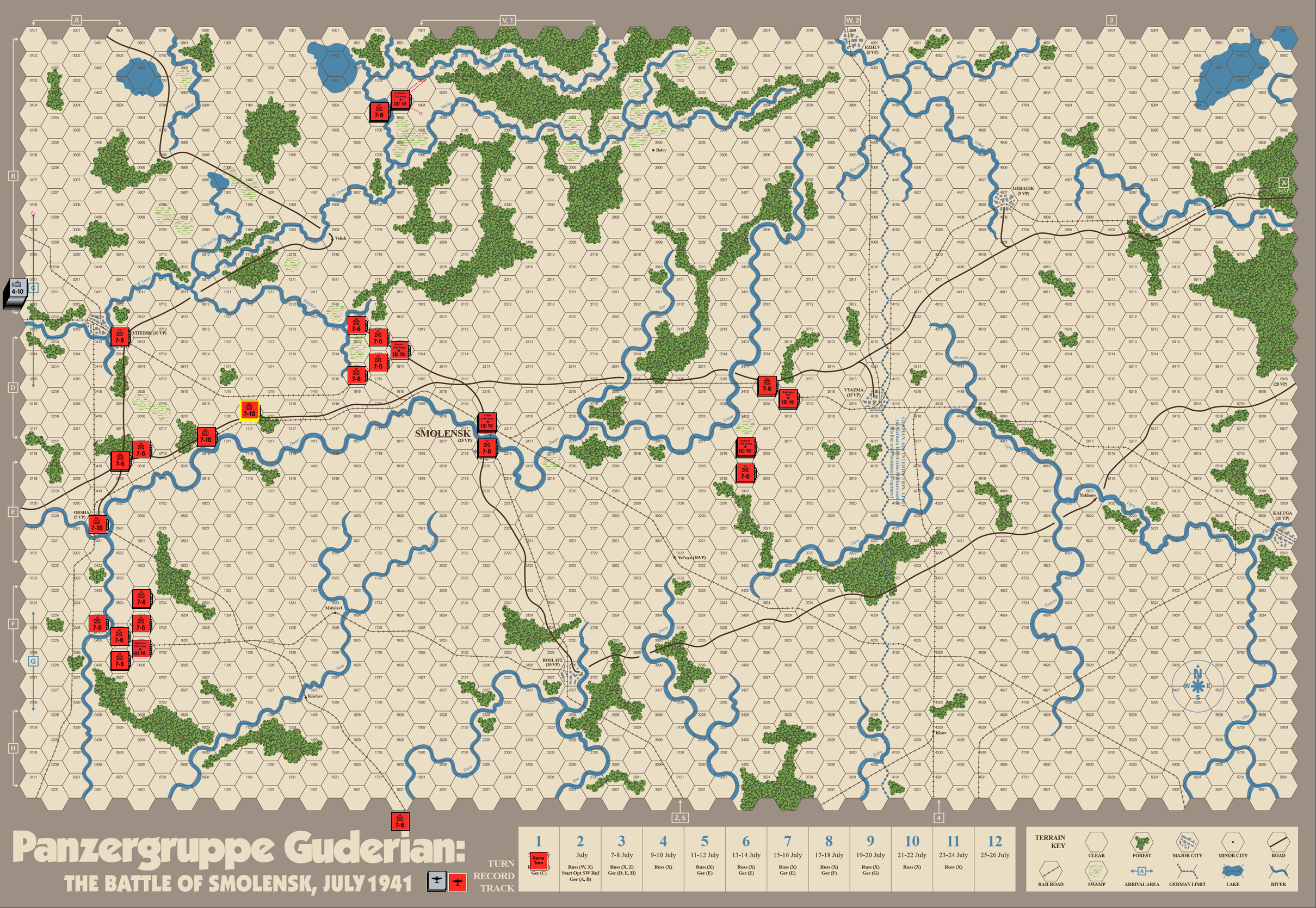
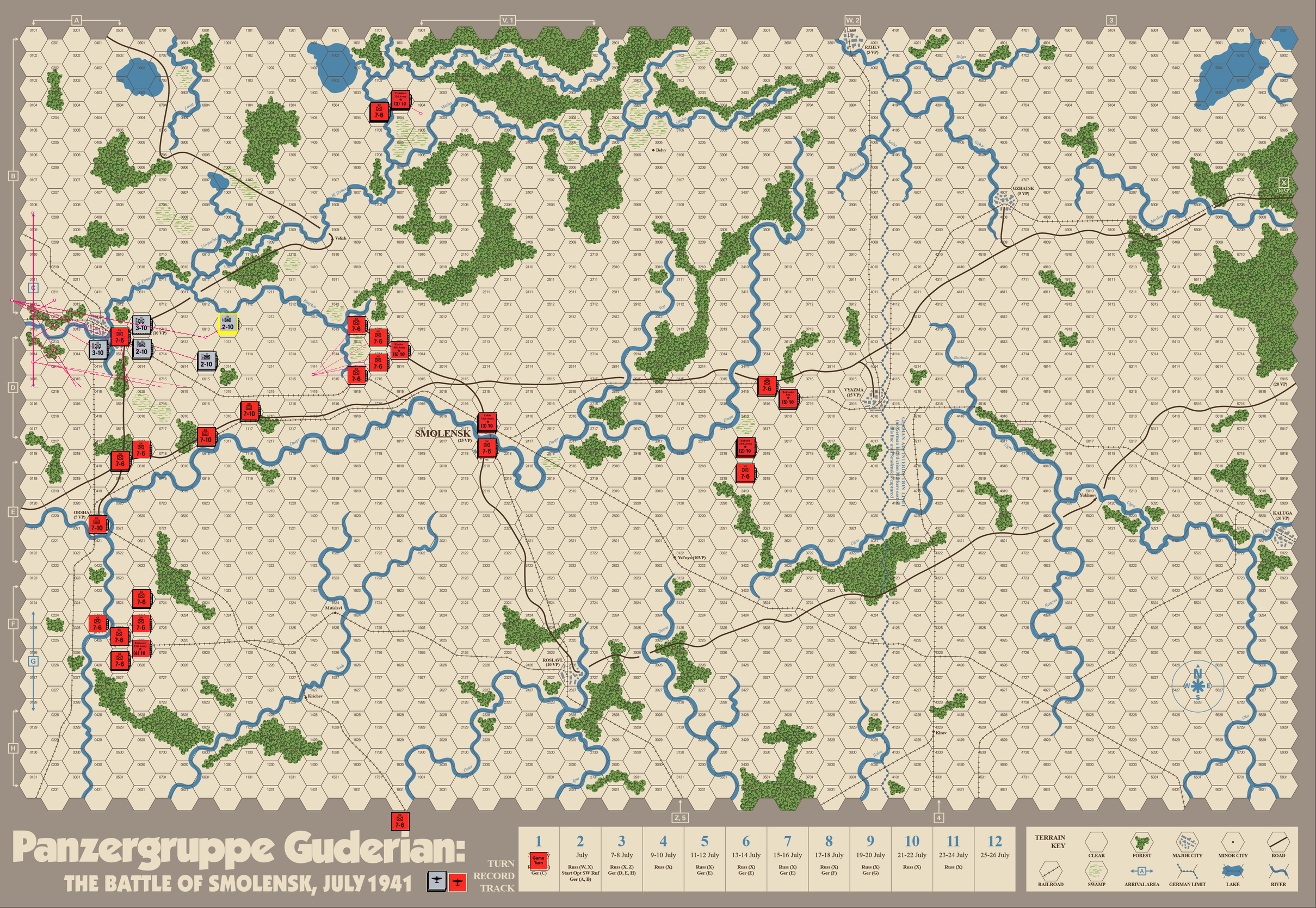
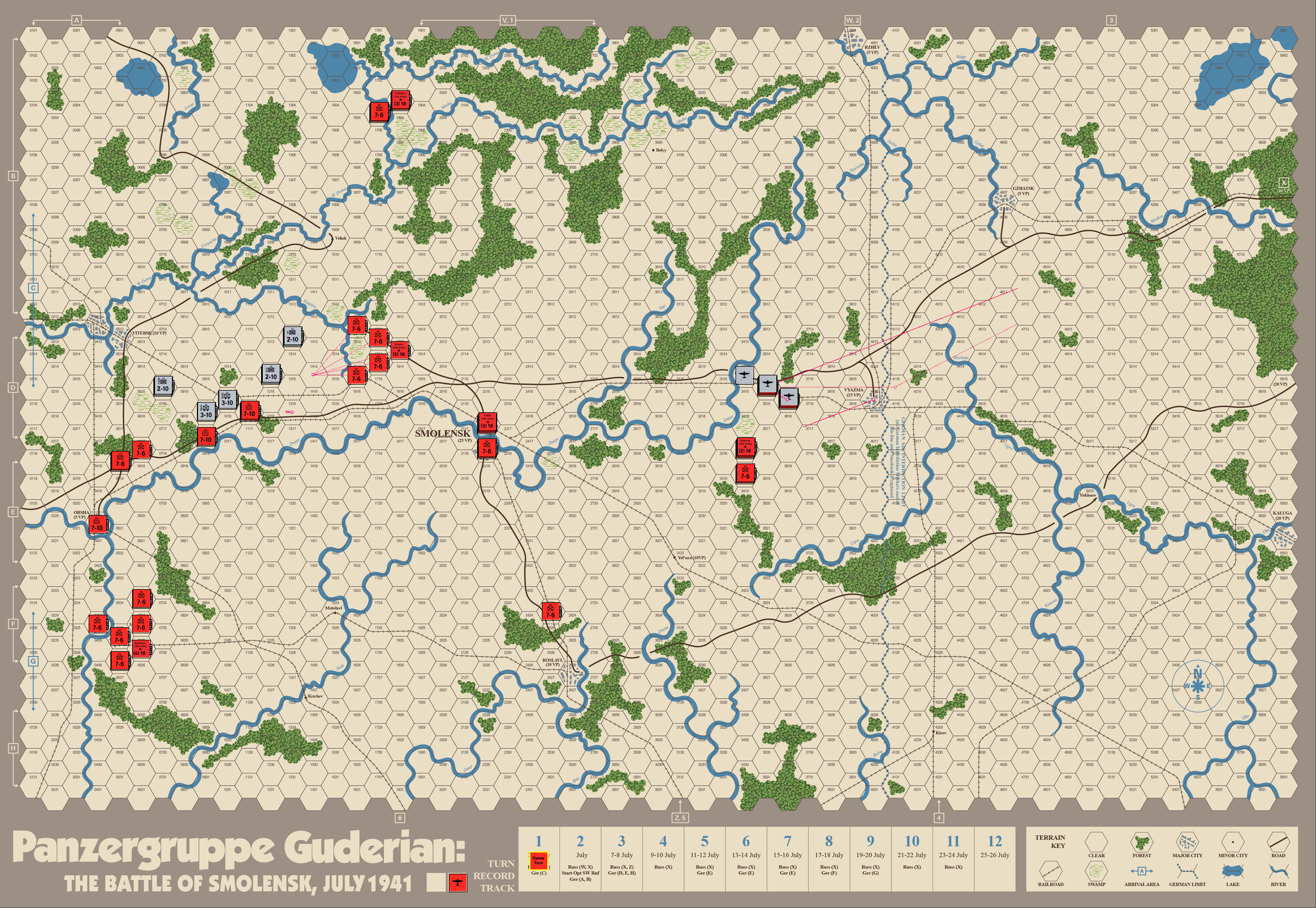
One project is a solo Vassal game of the venerable Panzergruppe Guderian.  To make things fun/different, and to learn a little more about how to play, I dredged up an old copy of Moves Magazine #29.

None other than Redmond Simonsen walks the reader through what to do.  So, I’m following his guidance.

Here’s the game board (or most of it) after Turn 1, along with a shot of the first page of the article.

Again?

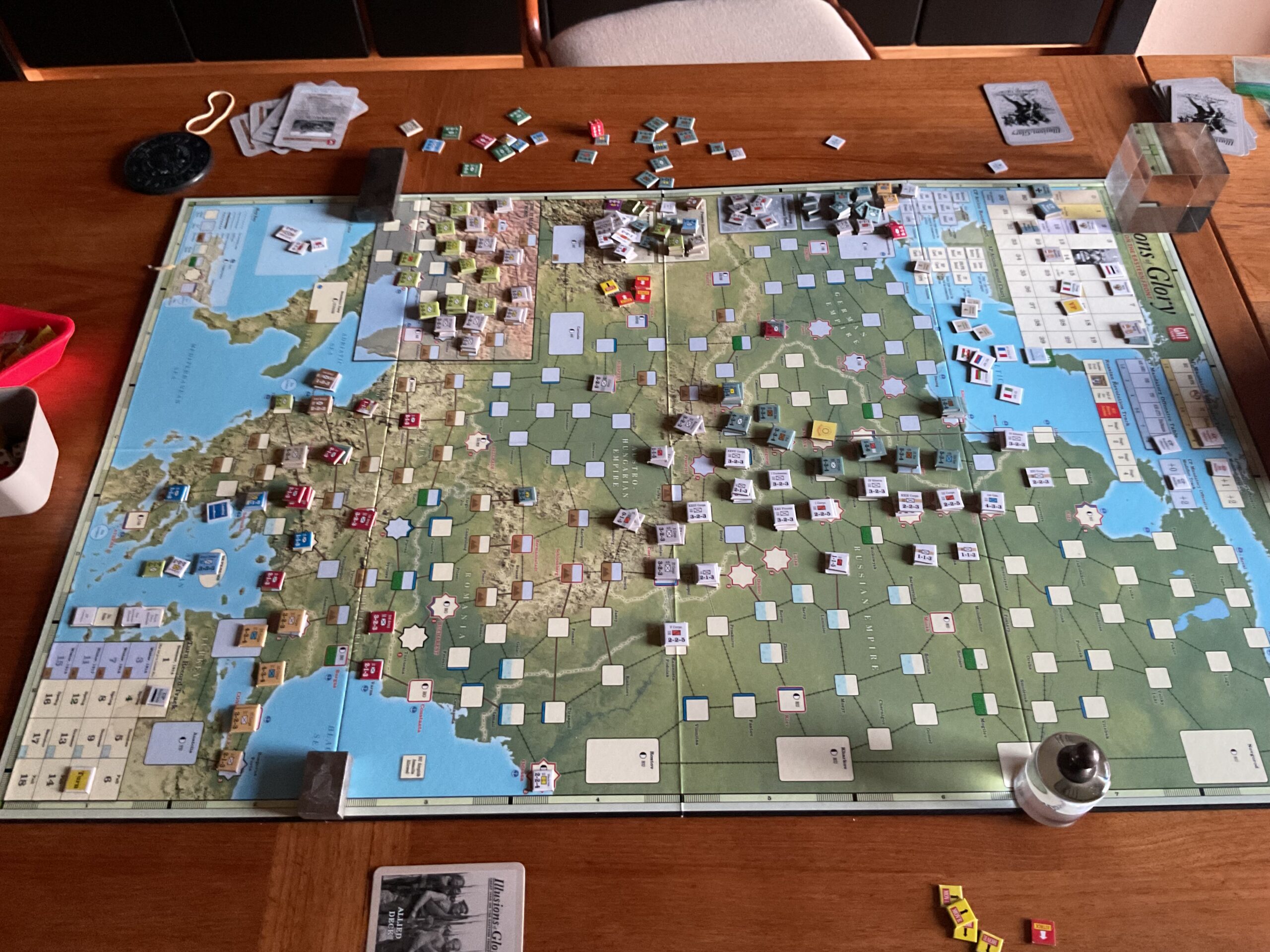
Couldn’t resist the rogue synapse that compels me to pull out my System 7 Napoleonics components.

I had a partial jolt back in 2023, with my  last full synaptic jolt several years ago.

It was as though time had stood still.  Still thrashing on scale and unit rosters.

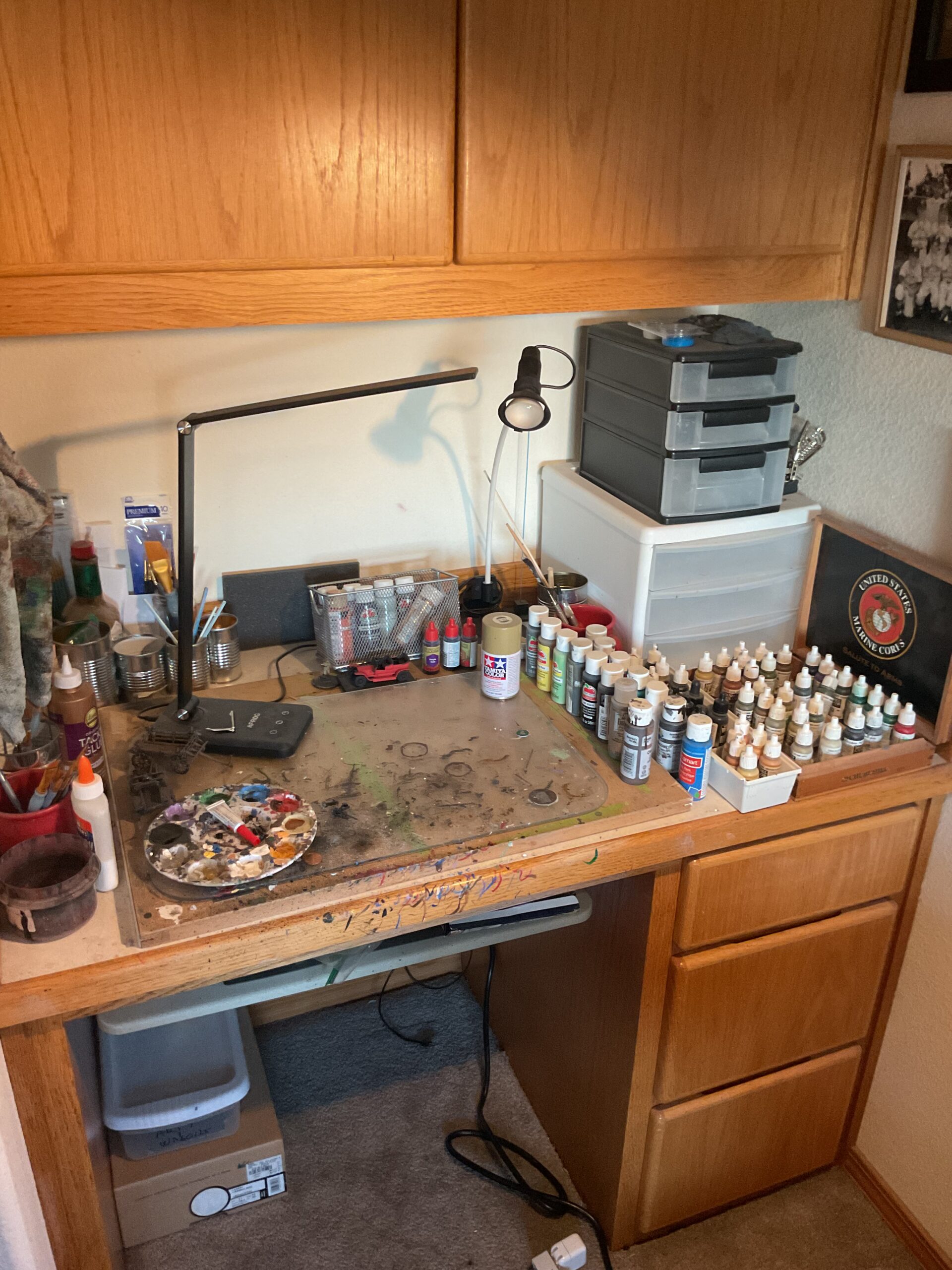
Here’s how I operate.  Not pretty.

Finally figured it out, with the help of Balagan and Griffith.  Scale using Squad Leader maps is approximately  2:1, so movement and firing ranges are doubled from rules as written.

I worked out a cut and paste template for each/most unit sizes and morale ratings.

Now I can assemble a roster based on force composition.  Haven’t tried it, but it might work.

As usual, the real problems are a) getting it all to the table and b) playing.

Kids!

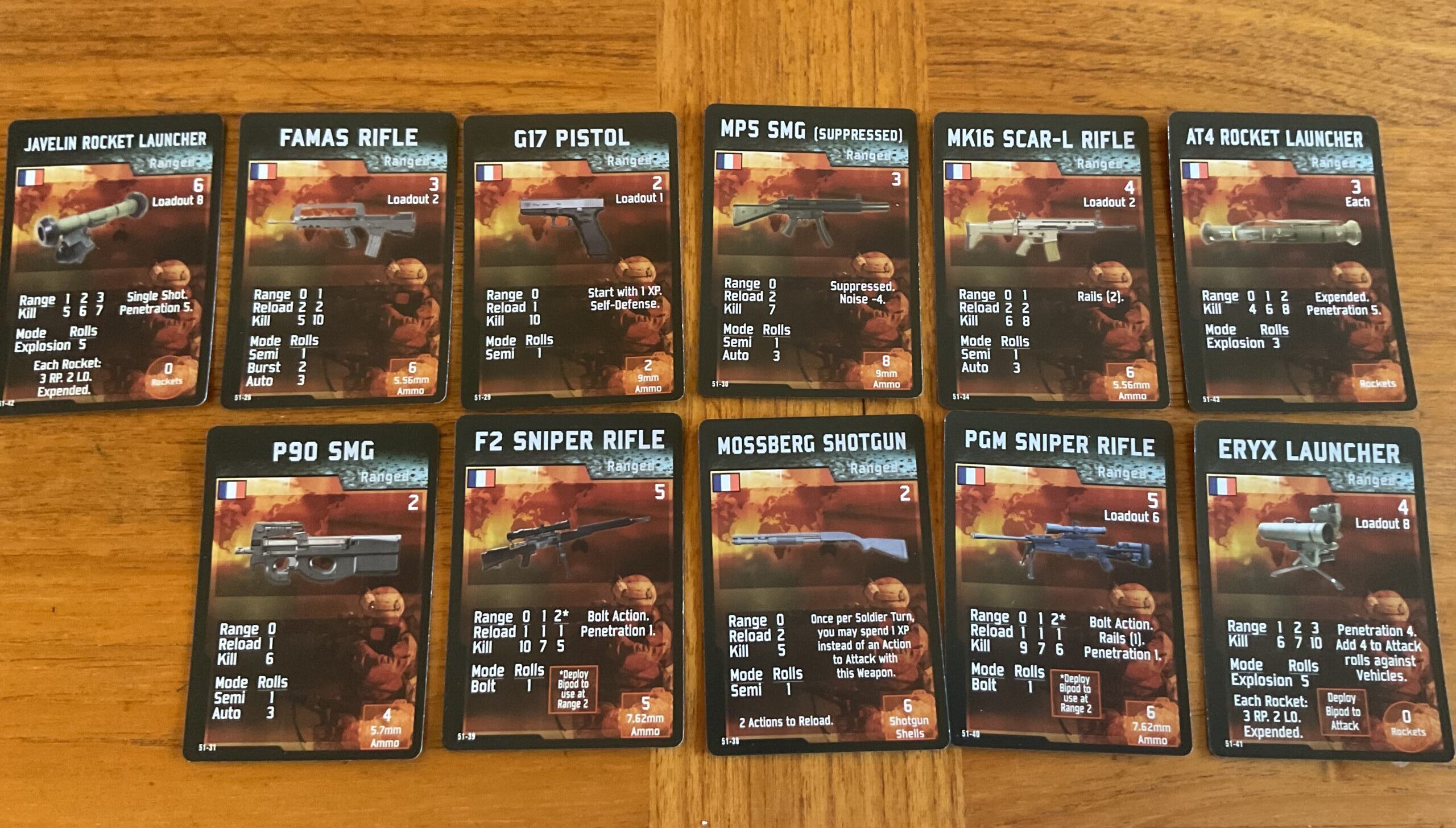
Now  playing this great solitaire game.  I had forgotten just how good it is.

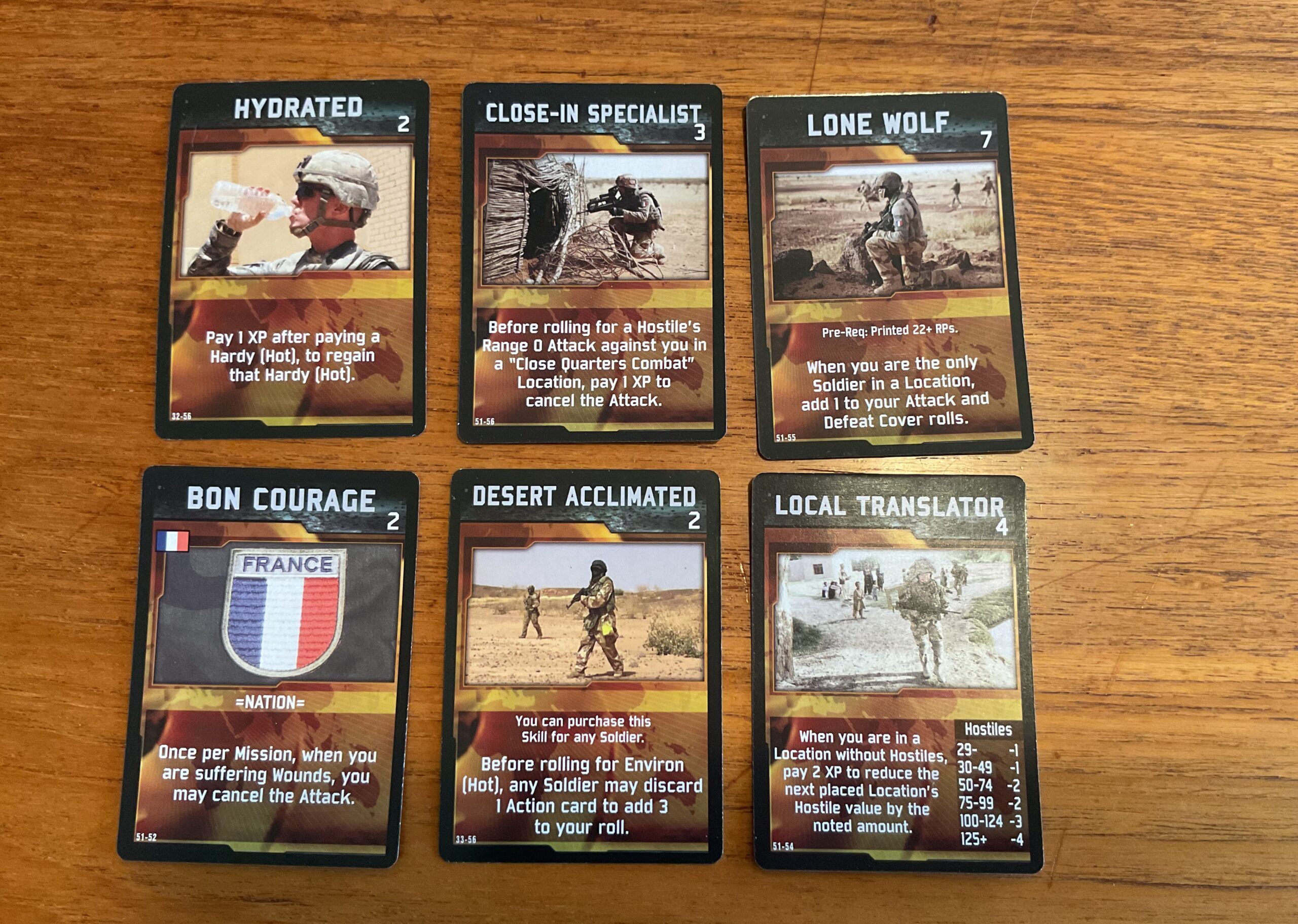
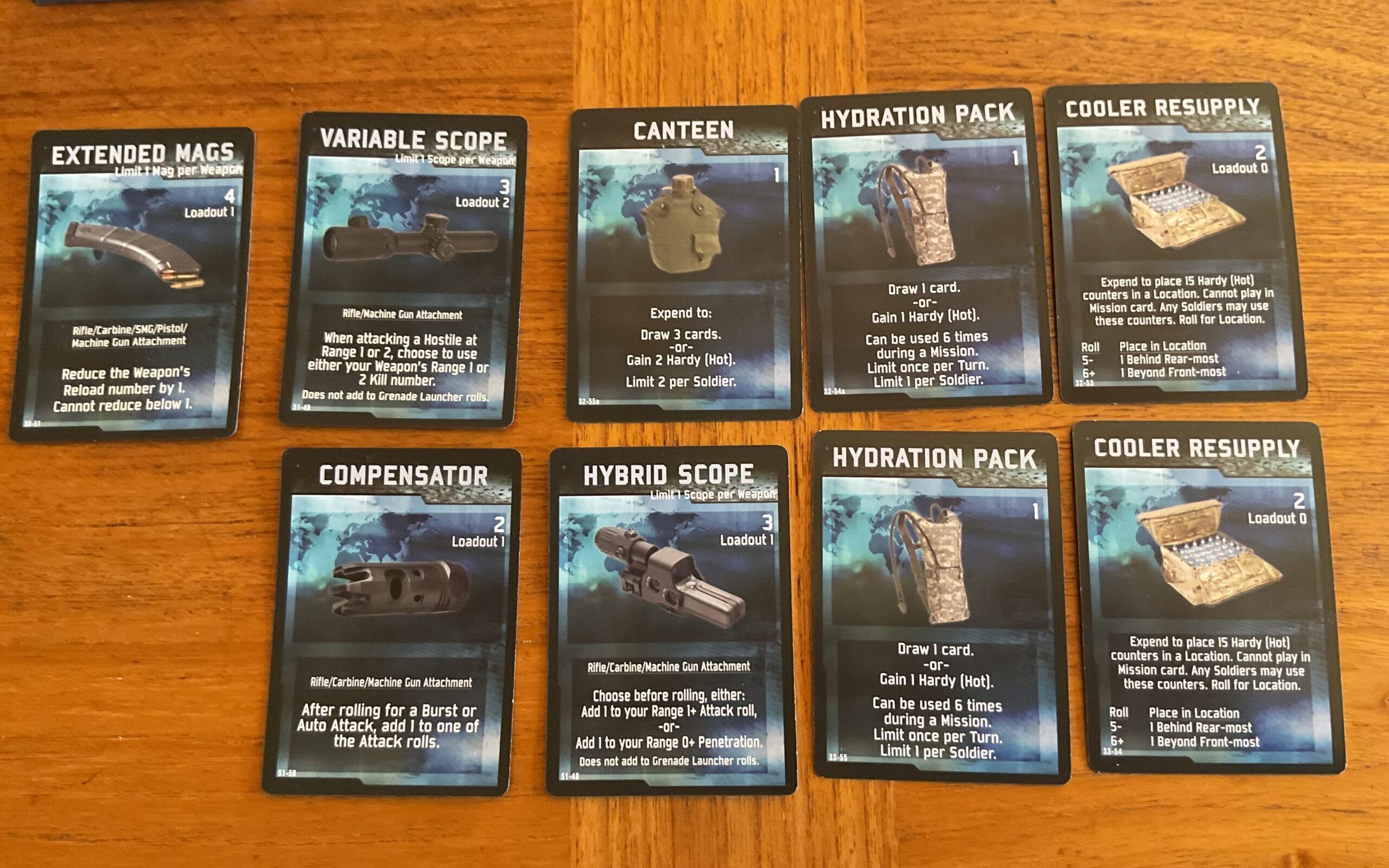
Went over to its Boardgamegeek page and downloaded this mini-mat.  Saves so much space!  Now I can comfortably play it at my desk, with the Soldier Player cards and loadout on a small side table.

The usual re-entry fits-and-starts with the rules.  This narrative discussion really helped.  So, with this, the 2nd Edition rulebook, downloaded key terms and universal rules, I had all the resources required to play.

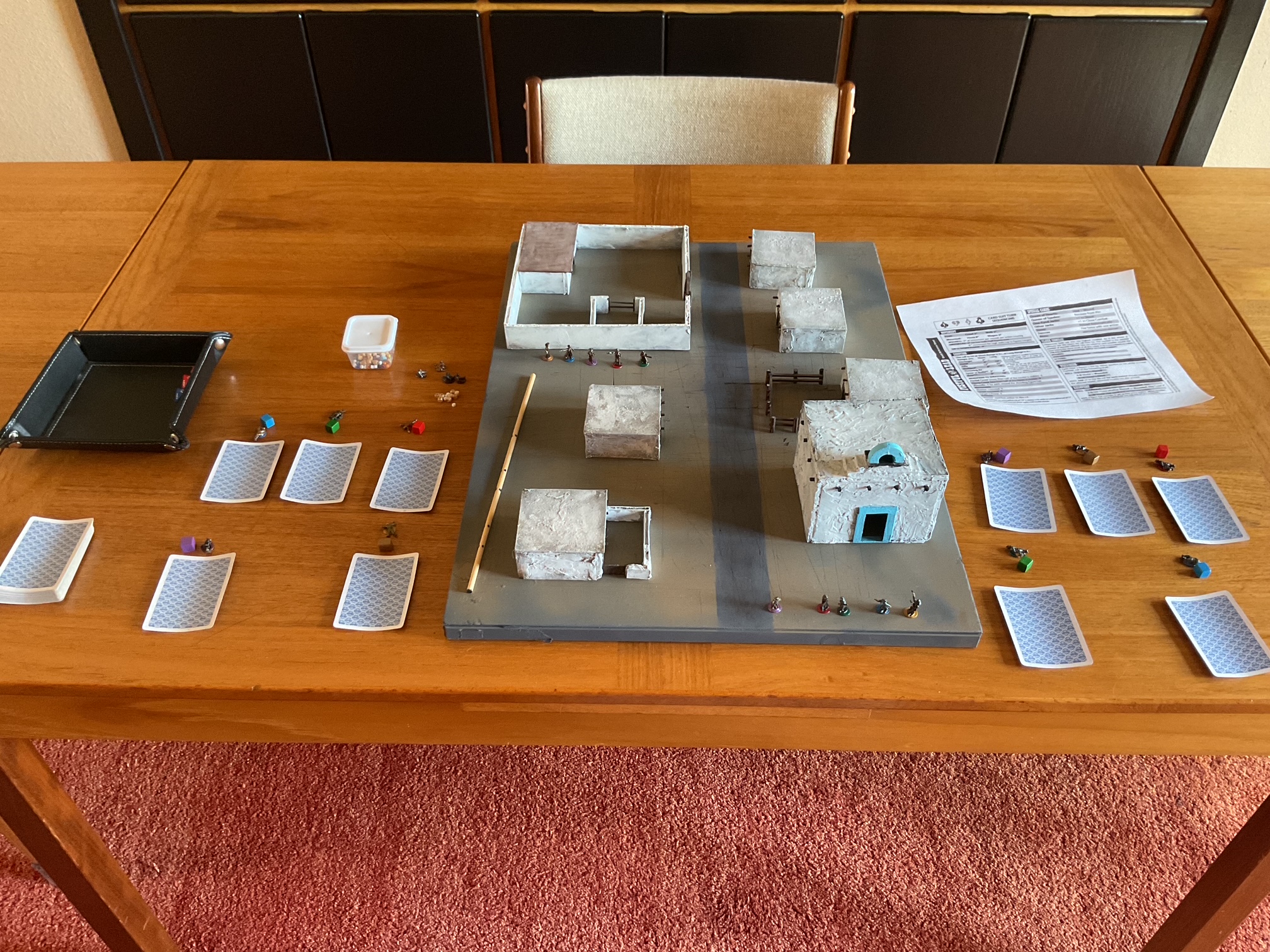
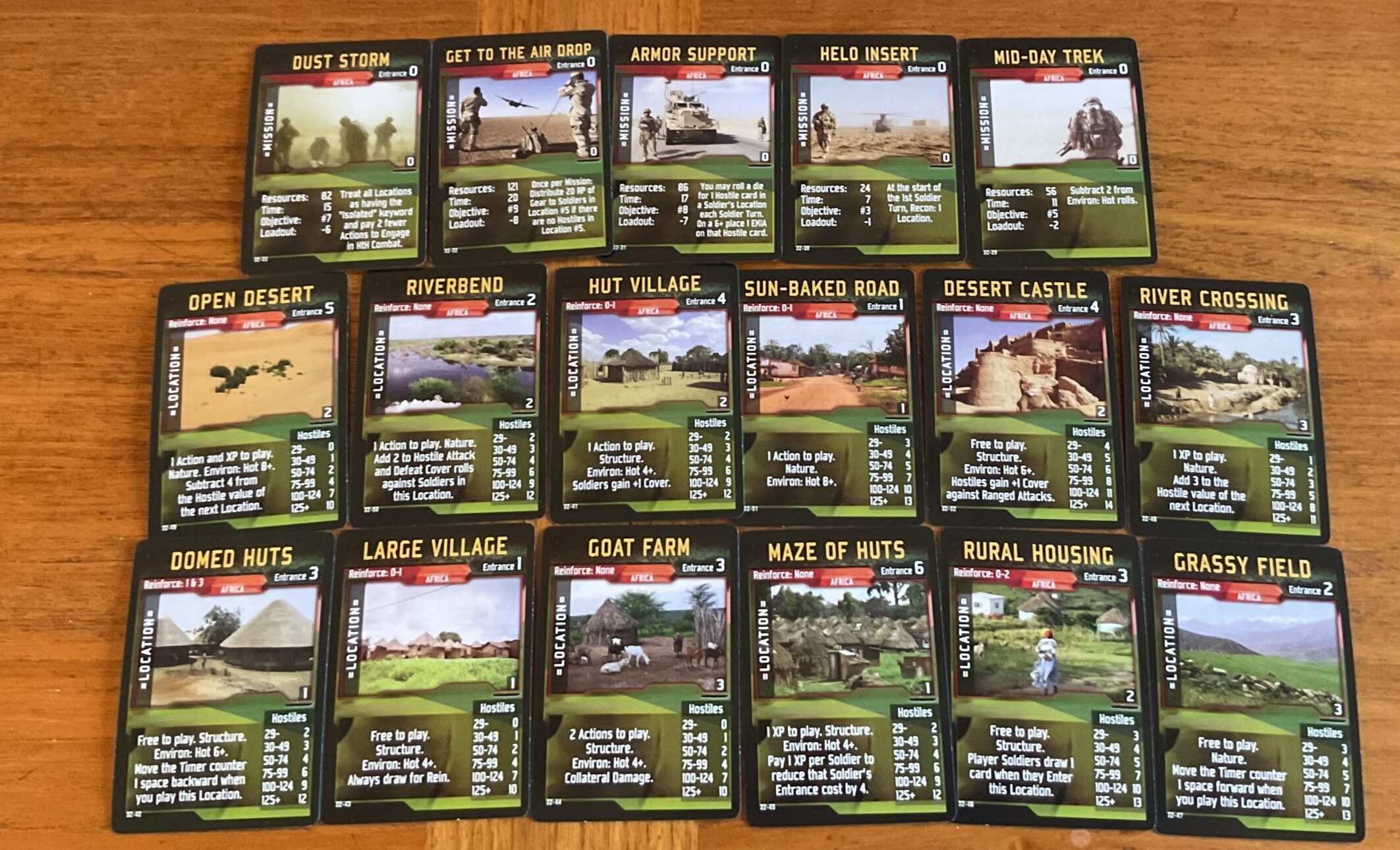
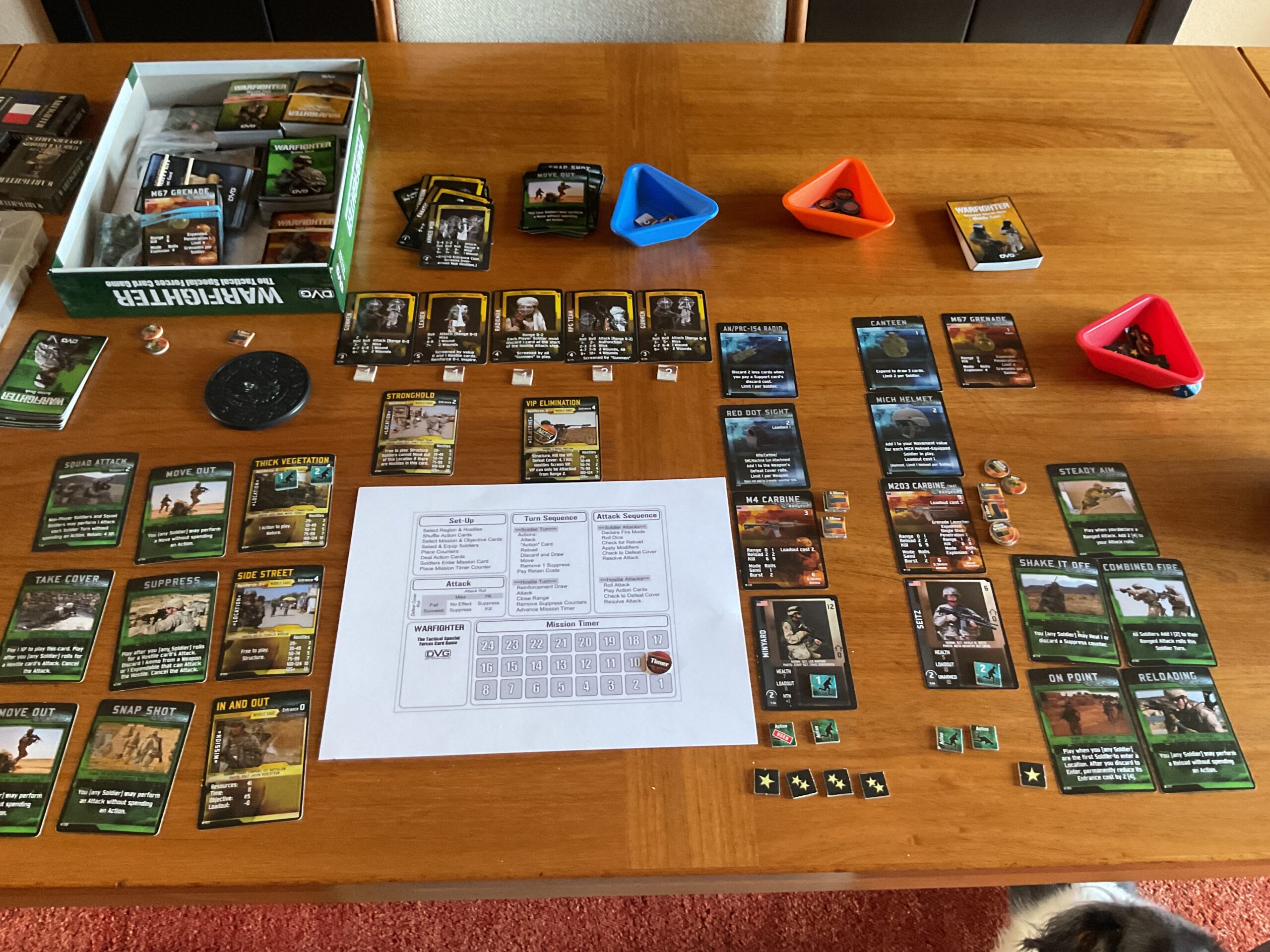
Here’s a quick snap of the first mission of my campaign game.

Notice the Refugee Card?  That ruined everything.  Damn Kids!!!  No auto bursts or explosives.  My M-203 – which I’m counting on to kill the mission’s VIP target and to kill multiple bad guys, is useless.  So, I became bogged down in a gunfight characterized by my die rolls that suppressed, but did not kill.  After one Player-Soldier was wounded twice and  my Mission Timer clicking down, I went into abort mode.

Granted, it is a tough mission with low (41) resource points. But, I’m sure an experienced player would have figured things out.  I’ll use this as a negative score, and do my usual reset.

Lots of fun, though.

Groza – Barbarossa Unleashed Rules

Tim and I both like the draft of this ruleset.

We didn’t use any of the optional or experimental rules, just the new Combat Results and Supply Effects  alternate rules.  We also found two changes to the basic rules that had an immediate impact on play.

The alternate combat results seem less bloody, and, according to Tim, simplify the replacement process. Units that are out of supply no longer roll for elimination (4th Turn), but continue to exist albeit in a very weakened state.

The  changes in airfield capacity and stacking had the most significant impact on play.

Full and Partial Hex Cities now have a maximum capacity of 3 air units.  With Minor Cities having a capacity of one air unit.  In the older rule sets,  the former had a capacity of six air units, with Dot Cities at three units and Reference Cities at one unit.  Apparently there will some changes in the categorization of cities when new maps are published.  We simply used a capacity of one for both Dot and Reference cities.

The total number of Regimental Equivalents remains at twelve, but in the new rules all twelve factors can be divisions.  The allowance for artillery remains the same.  This change allows for some very robust combinations.

I’ve sent my initial dispositions to Tim.  More on that later……

Groza – It Only Gets Worse

The remainder of this session report will focus on Romania.  There was  mutual nibbling up north, but the bulk of the action was to the south.

Here’s the situation at the end of the Soviet Exploitation Phase.

Not good at all.  Desperate Times…..

Here are my Desperate Measures……Strategic Rail Movement for German ground reinforcements and Transfer Missions for air assets.  Fortunately, Hungary is a benevolent neutral, so the Axis can use Hungarian rail and airspace, as well as trace supply through it. Unfortunately, Romania does not have many airfields, although I had engineers working diligently for more fields to be ready in the Aug I Initial Phase.  The supply access really helped withdrawing units.

Axis Movement…..

Up north, I tried to extricate units by moving west into the mountains.  Down south, the priority was to stop the Soviet advance from down the valley, while having German armor in position to move during the Exploitation Phase.  Some of the stranded units had no hope for a successful retreat, so they would buy time for the others.

These two shots show the situation after the Axis Exploitation Phase.  A cobbled together perimeter defense with the panzers providing some depth.

The big problem is the Soviet unit identified by the red arrow.  Couldn’t reach it and establish a zone of control.

When Tim diplomatically suggested a re-set, I took up his offer.

Next, some observations we have about the Barbarossa Unleashed rules.  Plot Spoiler……..we like them.

Groza….Amateur Hour

My previous post covered the scenario’s basics.  Now to the gameplay.

Here are shots of the initial dispositions (after the Soviet Jun II Special Turn) from North to South.  I discovered it takes four (4), not three (3) screen shots to cover all fronts.  This group is missing the southern tip of Romania.

For some reason, I never “captured” an image with Tim’s Soviets dispositions in Romania.  But this is pic of mine is damning enough.  Just wait……

The following show Tim’s Soviet onslaught.  Not much going on in the northern and central pictures, but in Romania……whoaaa!!!

They say we create our own Hells.  Yes, my Romanian Hell was a product of failing to comprehend the interactions of two  Special Rules.

For the first turn, Zones of Control (ZOCs) are reduced.  And,  Axis units must be placed so as to either occupy border hexes or have them in a zone of control.  Too much of the latter, and not enough of the former.  I needed a solid front in Romania, with reduced border strength, but without gaps that, literally and figuratively, could (and would) be exploited.

To compound this error, I did not recognize the implications of the enhanced exploitation capabilities of Soviet units.  Here’s Romania after the Jul II Soviet Exploitation phase.

Gruesome.  Enough!  I’ll cover the rest of our game after my return from W.C. Fields’ (not so) favorite city.

Groza or Gorza?

I’m spittin’ tacks right now.

Went to the web to find a picture of The Europa Magazine #23.  This is the issue with Groza.  But wait!  Look at the cover!!!

What?  Gorza?  Jeez, did I get it wrong?

Backpedaling furiously, I changed EVERYTHING in the site to “Gorza”.  After this 20 minute frenzy I took another look.  Ahhhhhh…..it is “Groza”.  Either Winston or one of his minions jerked the cover up.

And,  a side note. Is it Romania or Rumania.  Here’s the scoop from our Beloved Google AI.

“It’s Romania, the official and current spelling, though Rumania (and French Roumania) were used in English previously, especially before the 1970s, influenced by historical spellings, but the “o” spelling aligns with the native Romanian language and is now the standard in English.

Never Mind……

Groza (Finally)…The Basics

Quick note:  If you are viewing this on an IPad or IPhone, scroll down to the bottom of your page.  This is where you will find the tags for Operation Groza and Europa.

Yes, it’s been a year since I  posted up about Operation Groza.  Why?  Sheer indolence.  But recent announcements about Europa provide new motivation.

To recap:  The Groza scenario was published in The Europa Magazine #23, with many special rules and modifications to the Orders of Battle (OBs) found in the Scorched Earth module.   Tim and I wanted to play Europa, were intrigued by the scenario, and anxious to try out the Barbarossa Unleashed draft rules published by John Astell.  Tim took on the herculean task of adapting the elderly, but still very serviceable (let’s just leave it there), JET Scorched Earth module for Groza.  This involved merging maps and creating supplementary counters.  We started play in late Winter 2025.

Might all of this involve confusion, numerous operator errors, and low levels of frustration?  Not to mention the usual screwing up?  Yes! So, here we go, starting with a summary of special rules with subsequent posts describing game play, observations about the rules, and lessons learned.

BTW…..We have reset, and are in the process of starting a new game.  But, back to old business.

The game begins with the Jun II 41 (Soviet) turn.  There are several significant factors affecting each side’s initial deployments.

Axis Player –

Deploys air and ground units first, with each Army having designated zones of deployment.  Units deployed include reinforcements for the Jun II and Jul I turns.  This placement simulates their movement during those turns the Axis player cannot move units.

Every hex along the Greater Germany (including occupied Poland) and Romanian borders must be either occupied by, or in the zone of control of, an Axis unit.

Note:  Hungary is neutral.  However, Axis units can overfly Hungary and use that country’s rail lines.

Soviet Player –

Deploys initial air and ground forces, with special modifications for each Military District (MD).  Again, each Army has deployment zones.

Can change four (4) combat/motorized (c/m) cadre units to full strength, and all 3-4 infantry cadre units to their full strength sides.

Places Jun II reinforcements on the map reflecting mobilization.

Game Play –

The Soviet player conducts a special Jun II turn limited to movement and exploitation phases (no combat).  For those  unfamiliar with Europa, c/m units may move during the exploitation phase. Movement is limited to within the Soviet Union (not occupied Poland).  Air units may move in either, but not both, phases.

The Soviet may designate NKVD units as Spetsnaz.  Ahhhh….Chrome!

After all Jun II movement/exploitation is finished, the Soviet Player begins a “normal” Jul I turn.  But, “normal” applies only to turn sequence as their are several special, and very significant, “benefits” ( per scenario designer) to be used during this turn, only.

The Soviet Player 1) ignores border river hexsides for purposes of combat and overruns (not movement).  2)  increases the attack strength of his artillery units by 50 percent.  3)  c/m units at full strength have full,  not limited, exploitation capabilities.  4)  conducts movement as though each Axis unit has a reduced zone of control (ZOC).  5)  Spetsnaz units are treated like commando units, and have an attack strength of “1” when used in conjunction with other units. Ahhhh…..Chrome!

The special Jun II move combined with the Jul I rules and inability of Axis forces to react simulates Groza’s surprise attack.

Next up…the game.

From Set-Piece To Re-Set

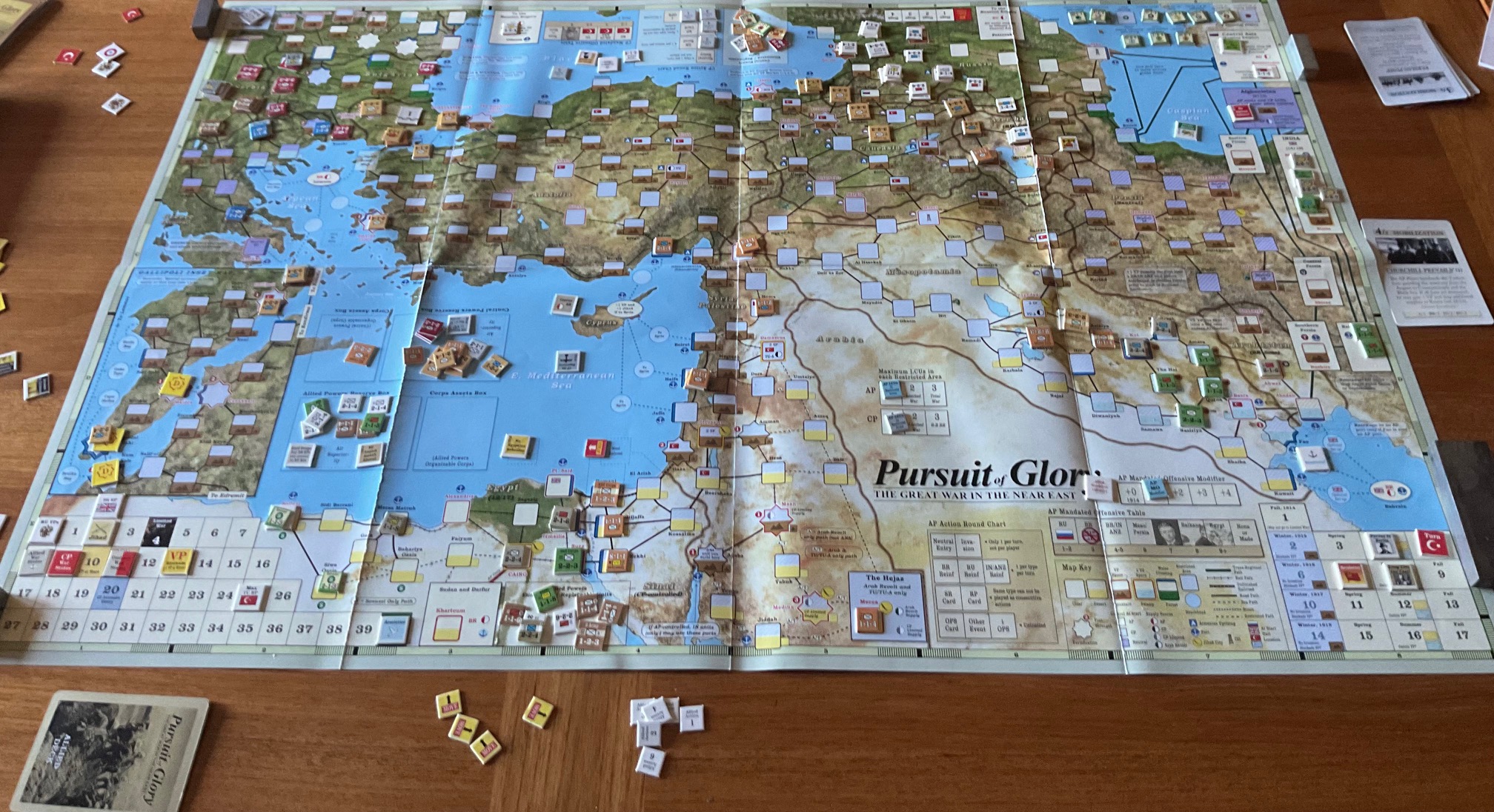
Set up another Gaza scenario.  This one covers Allenby’s 1918 campaign.

Yes, more set-piece battle action, but with the enhanced possibility of a decisive  Allied breakthrough.

Why?  A special rule for one turn.  The Allies can ignore the effect of enemy entrenchments, and add a +2 to their D6 roll if supported by two factors of artillery,  to an attack using at least 20 factors.  Also, any cavalry not involved in the attack can “exploit” (after combat is completed) up to their full movement allowance and launch an attack (no special modifiers) of their own.

Later That Same Day

Reread the scenario rules.  The special rules cited above hold for any attack (with at least 20 factors) during one turn, just not “an” attack.

How typical.  An error of omission.  I will avoid descending into a public display of self-castigation.

So, here’s the result of my misguided efforts.

The breakthrough took place along the coast, with two cavalry units exploiting.  An opportunity, but probably not as good as one generated by two attacks with these favorable modifiers.

Also, an additional cavalry unit is hiding under a headquarters situated along the coast.  Jeez! Sloppy staff work!

I may play this one out for another turn or two, but will set it up again to take full advantage scenario rules to see if I can completely “unhinge” the Ottoman defenses.