Tim and I had an enjoyable session with Pursuit Of Glory (PoG) last weekend.
Enjoyable….PoG? Oxymoron. This game has a history of breaking my mind. So, why the change? Great Weather and Bad Football (USC vs UW and Seahawks vs. Chargers). We took significant breaks from the action. That’s why we managed only six turns. And, I must mention the always amusing and distracting banter generated by the Official Playlist Of Wargaming In Central Oregon – Pandora’s 10cc Channel.
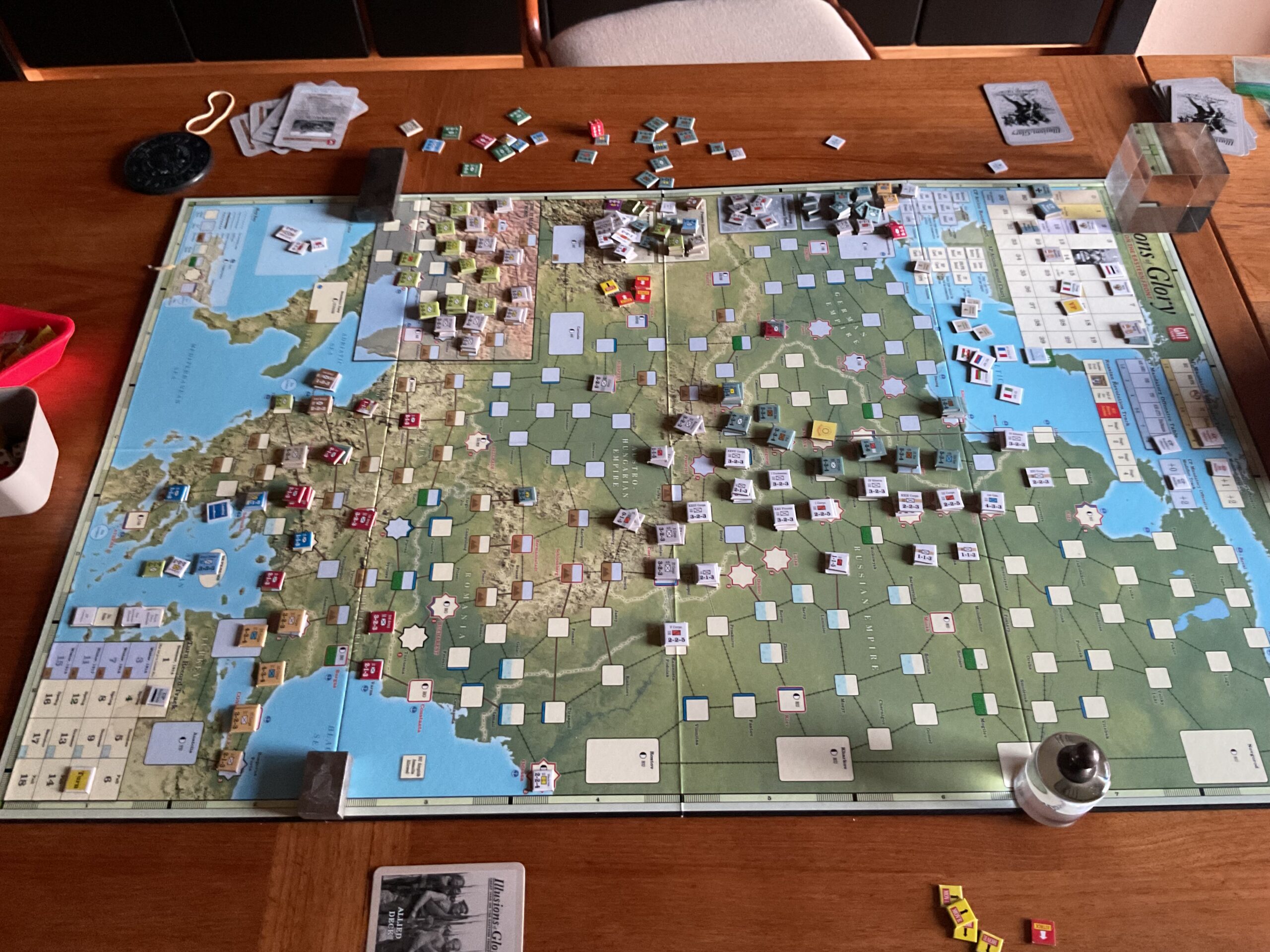
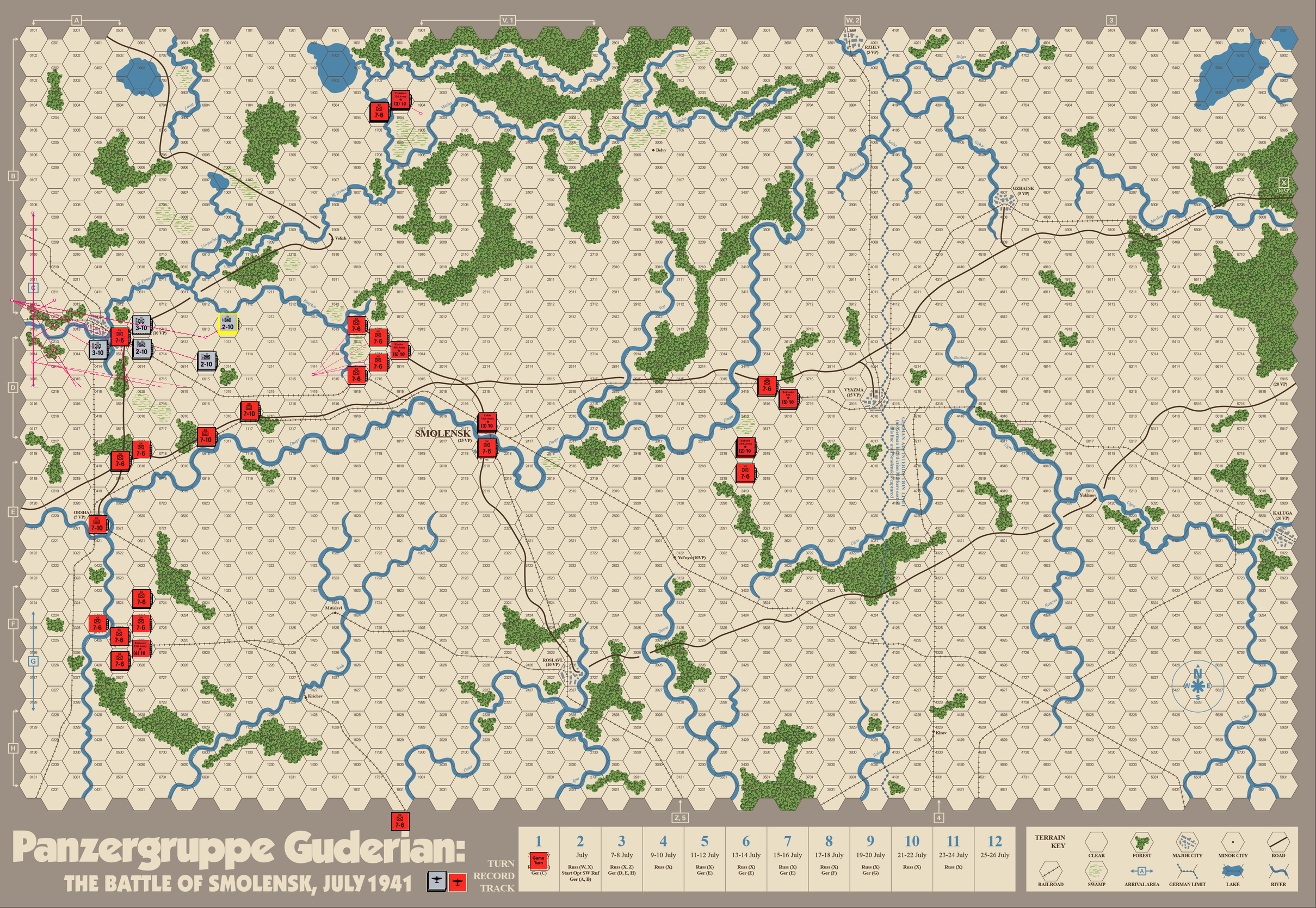
Here’s a situation photo after our last turn.
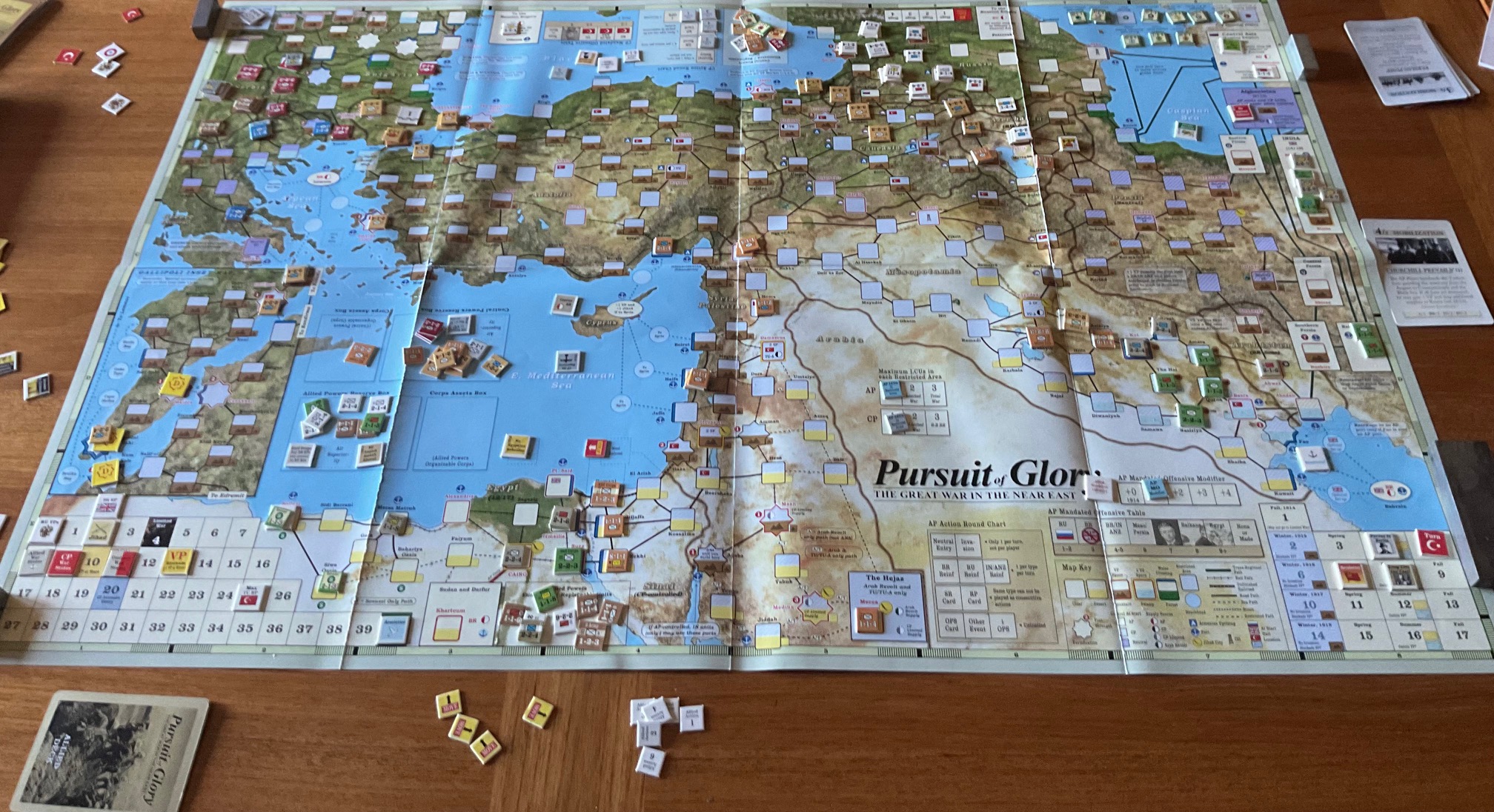
The Central Powers control the Balkans, the Allies are advancing in Mesopotamia, both sides are staring at each other across the Suez, with the Russians and Turks pondering what to do in the Caucasus and Persia. The Allies can conduct invasions, and the Central Powers have opened a rail route between Germany and Turkey, so German replacements can be used by the Turks.
As usual, the stage has been set for some interesting gameplay….. right when we shut it down.
We had good discussion about the game the following morning. I asked Tim to send me his thoughts on important strategies to employ. I thought it would make for an interesting post. The more I thought about it, I decided to look at the Playbook. Never read or, if I did, I didn’t retain anything (as you will read).
The important points are summarized below, as our observations about the game.
Russians: Be aggressive because you will probably lose. Delay the inevitable Russian Revolution by getting Victory Points (particularly in Persia) and attrit the Ottomans, who have limited replacement points.
I did a bad job of this. Passive with both. Tim had a full complement of Turkish replacement points (25) at game end. Not good for the Allies.
British Empire: Protect Suez by moving divisions from other parts of the empire. Invade Mesopotamia as early as possible. Support the Russians in Persia. Deny the CP Jihad points. Invade Salonika early to support the Serbs and perhaps stop the railroad connection from Germany to Turkey. Invade other regions to spread out the Turks.
Neither Tim or I were particularly aggressive in Egypt, although we both built Corps and were ready to assault across the Suez.
I invaded Mesopotamia in the first turn and subsequently focused on my play there…..at the expense of the Russians and other invasions. Tim observed that the Ottomans need to reinforce Baghdad and Jerusalem sooner rather than later, and perhaps wait until the Allies are “strung out” in their advance towards Baghdad before deploying tribes.
Again, we both avoided Persia. Tim thinks he should have been more active there.
I did manage to clean out the Mesopotamia tribes as part of my advance towards Baghdad, despite my incredibly stupid play that allowed Tim to cut off and destroy (by attrition) an understrength Corps – a rare Allies asset.
I always shy away from Salonika. Must be a product of my knowledge of what happened. As the guidebook states, invasions take a lot of planning – especially reinforcements and accumulating cards to use for operations. For me, that’s a distraction from the 10cc station.
Tim was aggressive – as he should be – in Bulgaria. I was able to stall the advance, but did allow the Serbs to collapse, with the railroad line completed to further bolster the Ottomans.
Turkey: Build corps, as they are much more powerful than divisions. Use divisions to delay any advances. Use entrenchments (easier to build than in Paths of Glory). Garrison beachheads. Get Bulgaria in the war as soon as possible. Likewise, and most importantly, start the Russian Revolution as soon as possible.
Tim did a good job with all of these play suggestions.
My biggest “takeaway” is the realization that the Russians will lose and their role is, by being aggressive, supporting British efforts in other theaters.
I’m looking forward to our next game…..hopefully in November.