More Heroes

Still having lots of fun with Heroes of Normandie (HoN).

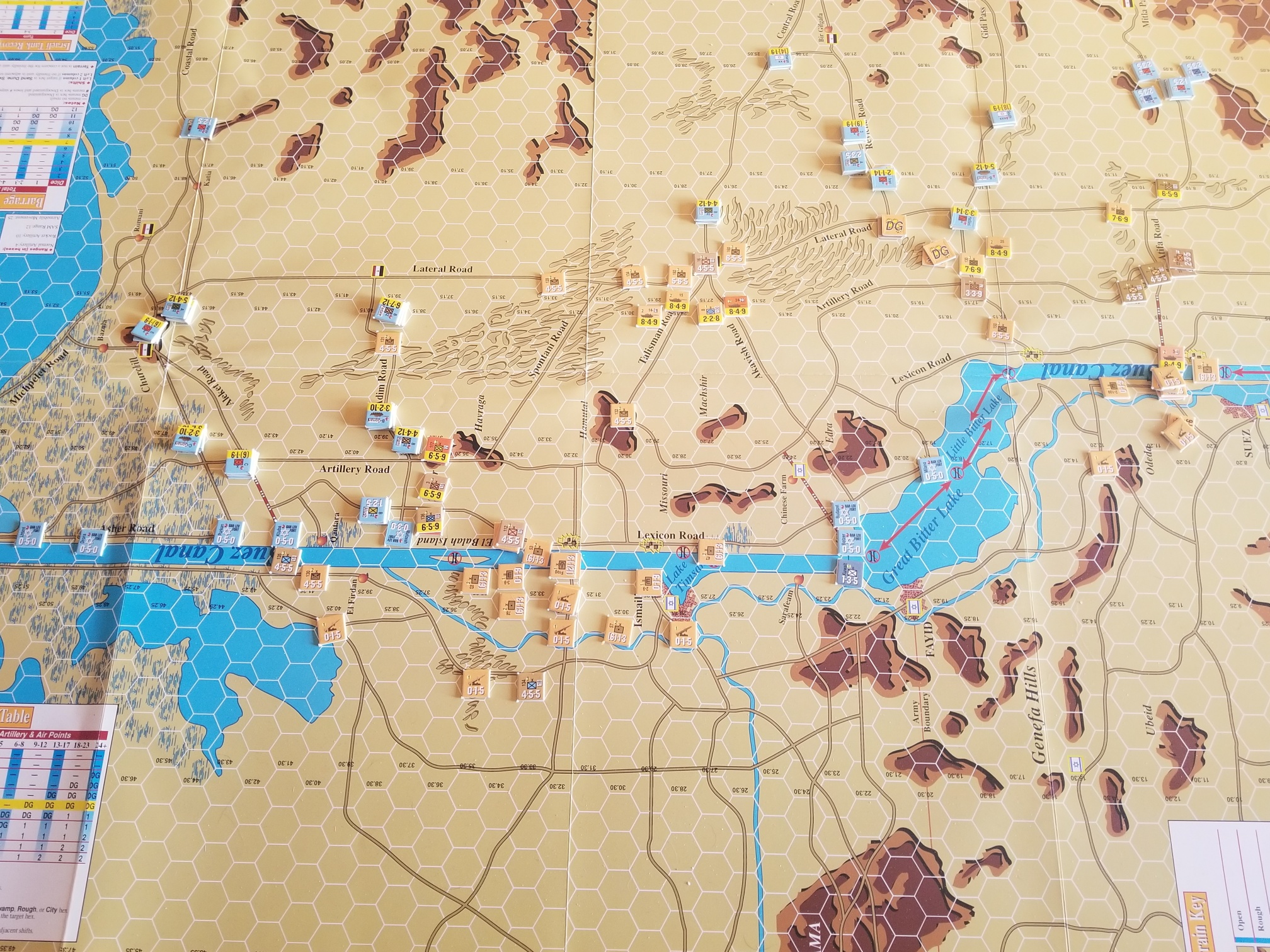
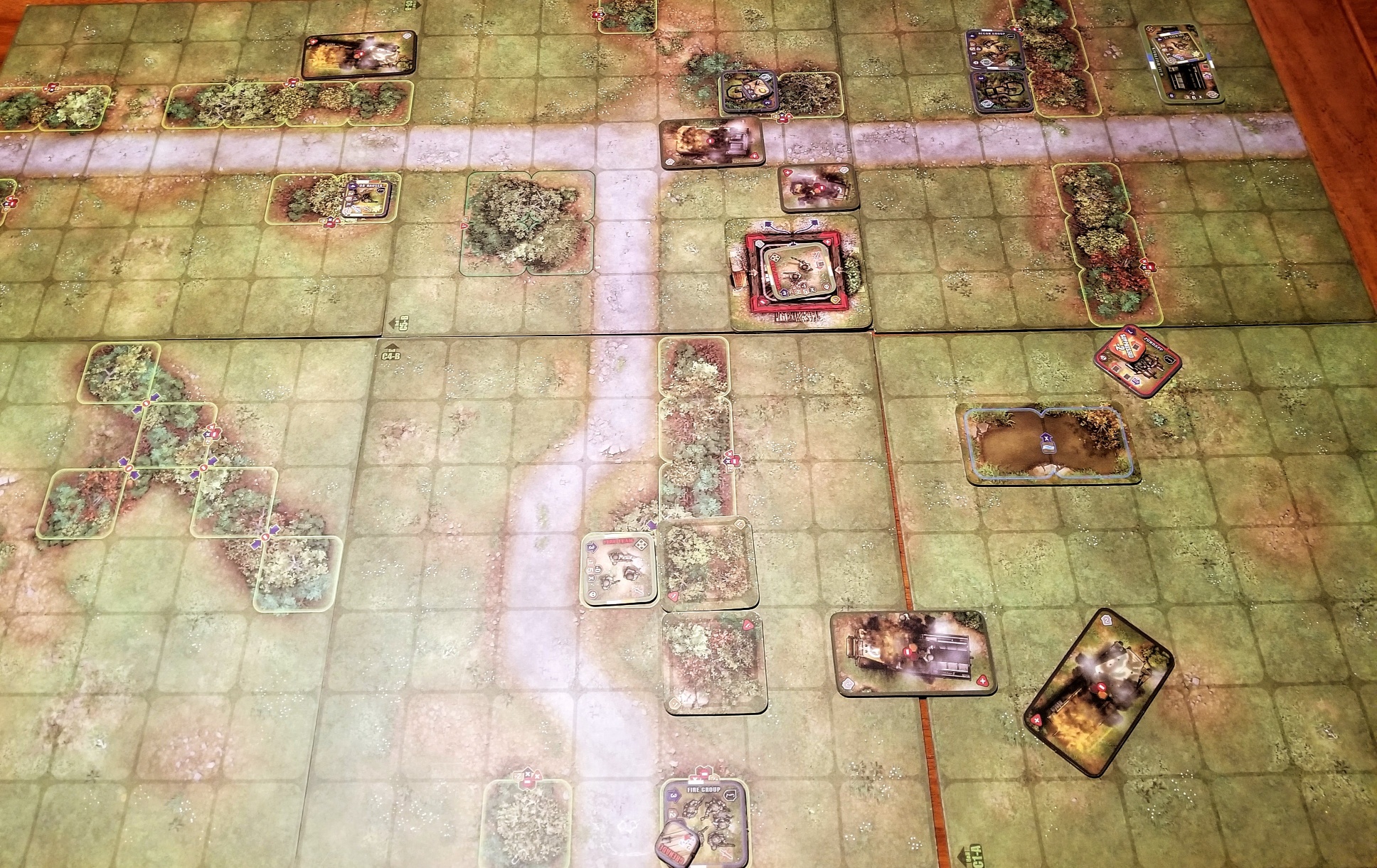
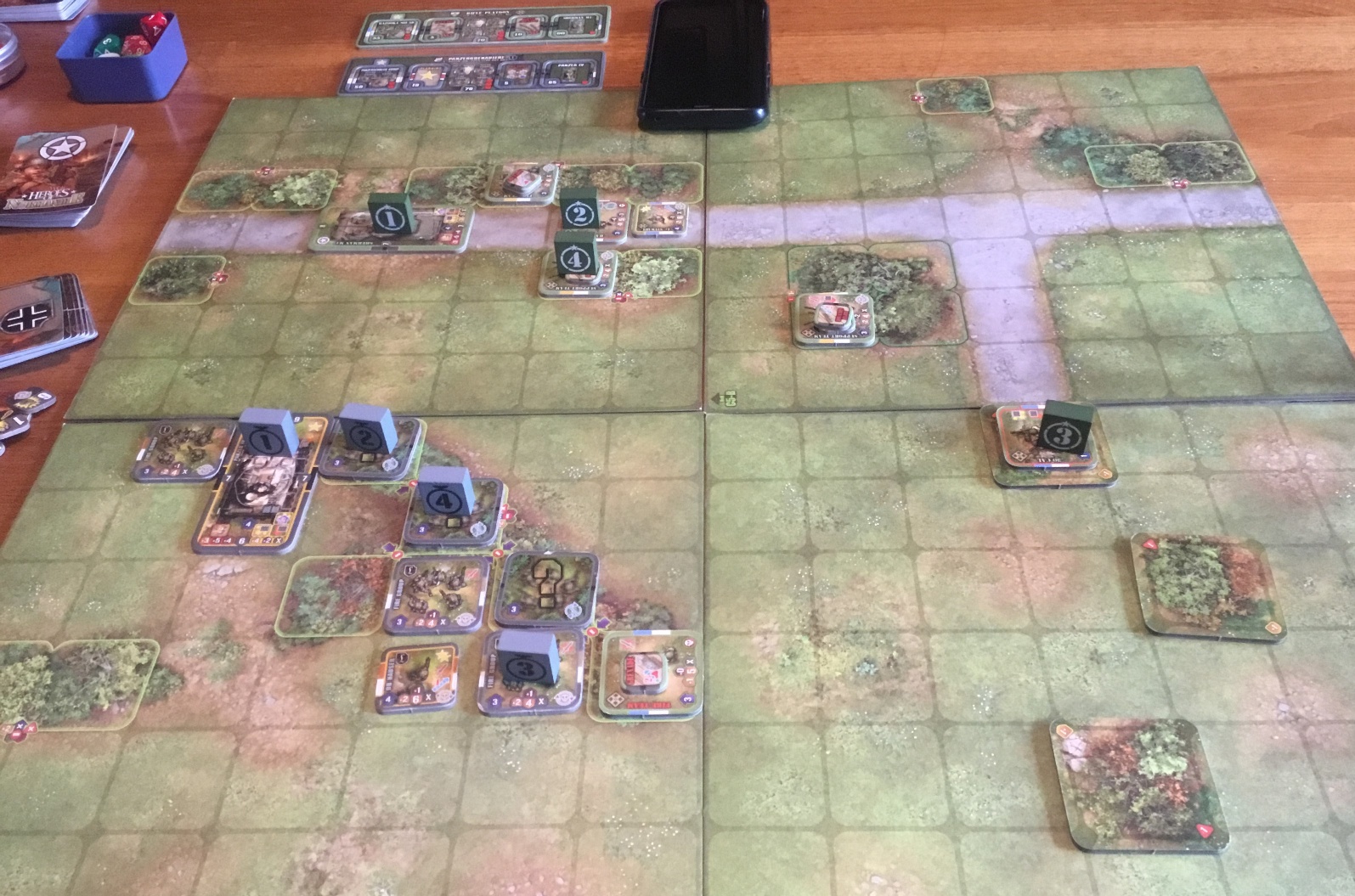
Set up a quick scenario the other night.  Simple objective for the Americans; Get your armor across two boards.  Six turns, but Germans already in  ambush positions.  Same basic forces for both sides, except each now has a tank.

Played it through a few times.  It all boiled down to the last turn or two.  That’s when the German Pz IV and panzerschreck each get a shot  at the US M4 Sherman.  However, the US advance sequence during the preceding turns is critical in order to get infantry in position to support.  To make things even more difficult, I ran a scenario where the US had to also get an infantry unit off-board.

Did not use cards.  Drew them, though.  What wild outcomes they could have produced!  Need to reconcile my need for order with even more possible fun and confusion.  I’m not in a hurry to resolve this psychological conundrum.  I think a reading of the solitaire rules published on Boardgamegeek may be in order.

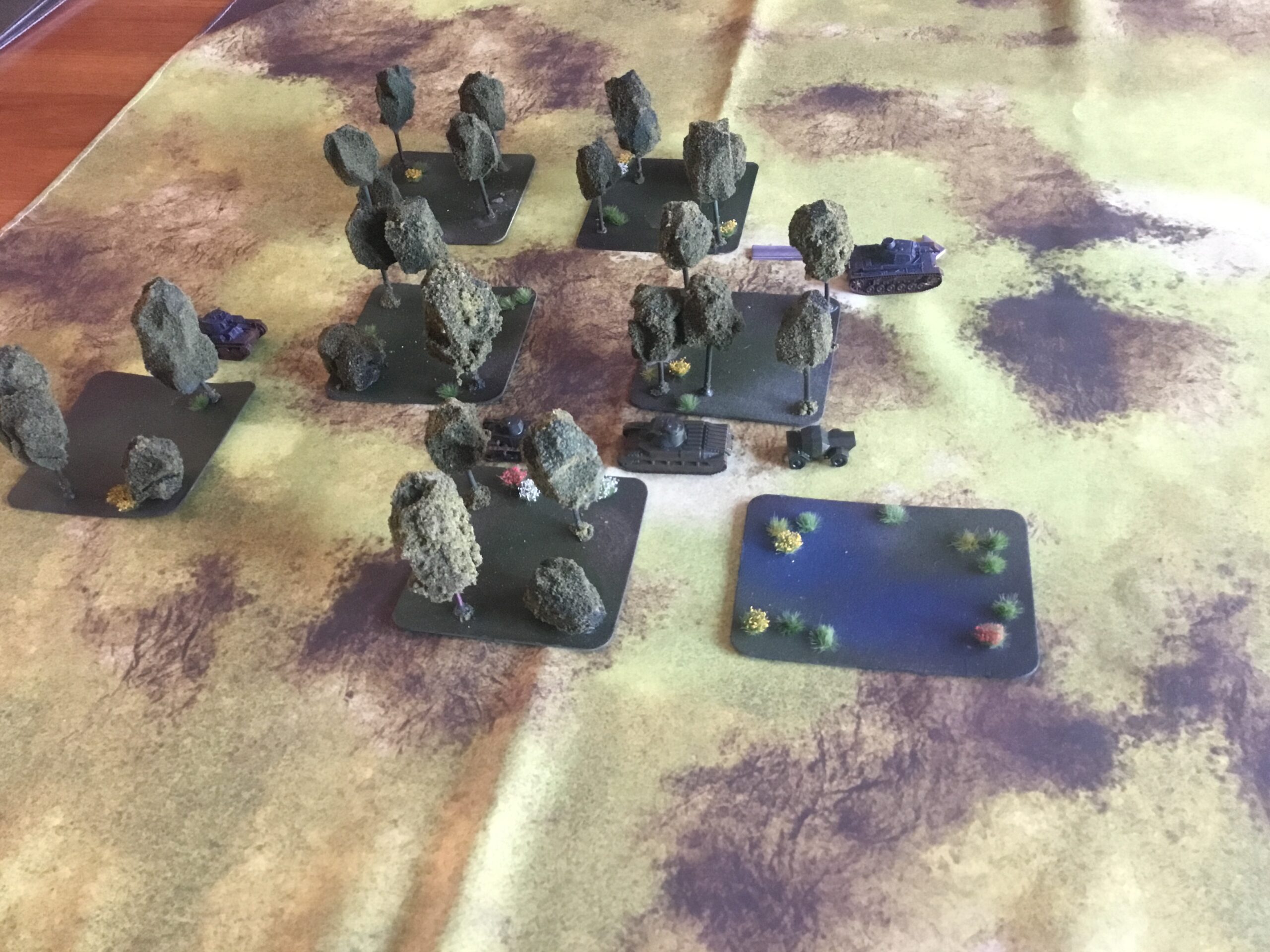
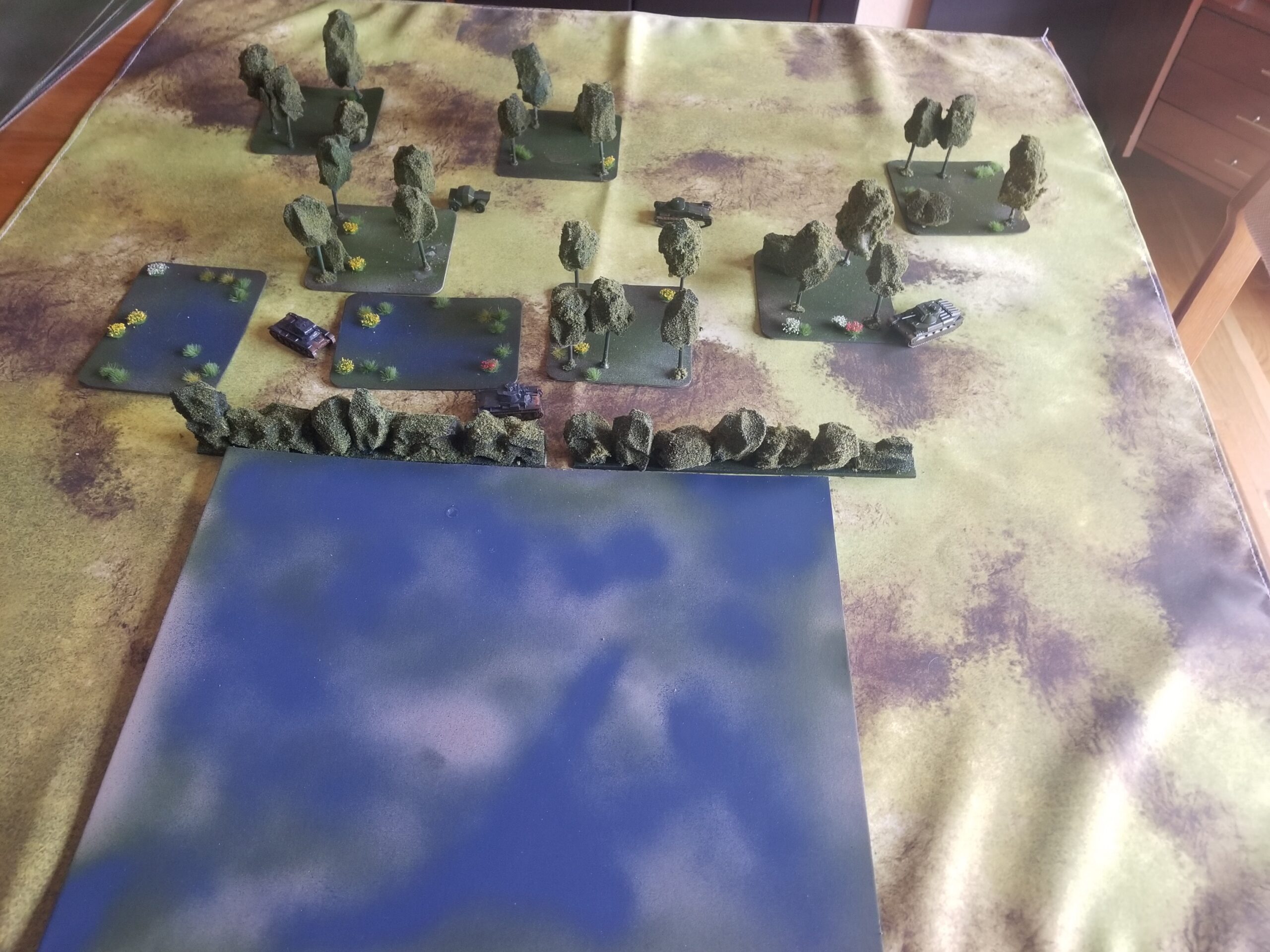
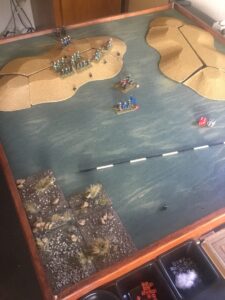
Simple, but interesting and fun.  Here’s a bad pic taken before the final game turn, with the Germans having initiative and Americans hoping to get to their turn with the tank still operational.  Cell phone is holding down a non-compliant map corner.

Ottomans Repulsed

Instead of rallying, the Ottomans should have marched back to their ships……..

Although it will take some time for the bad news to make its way East, there will be hell to pay in Constantinople.

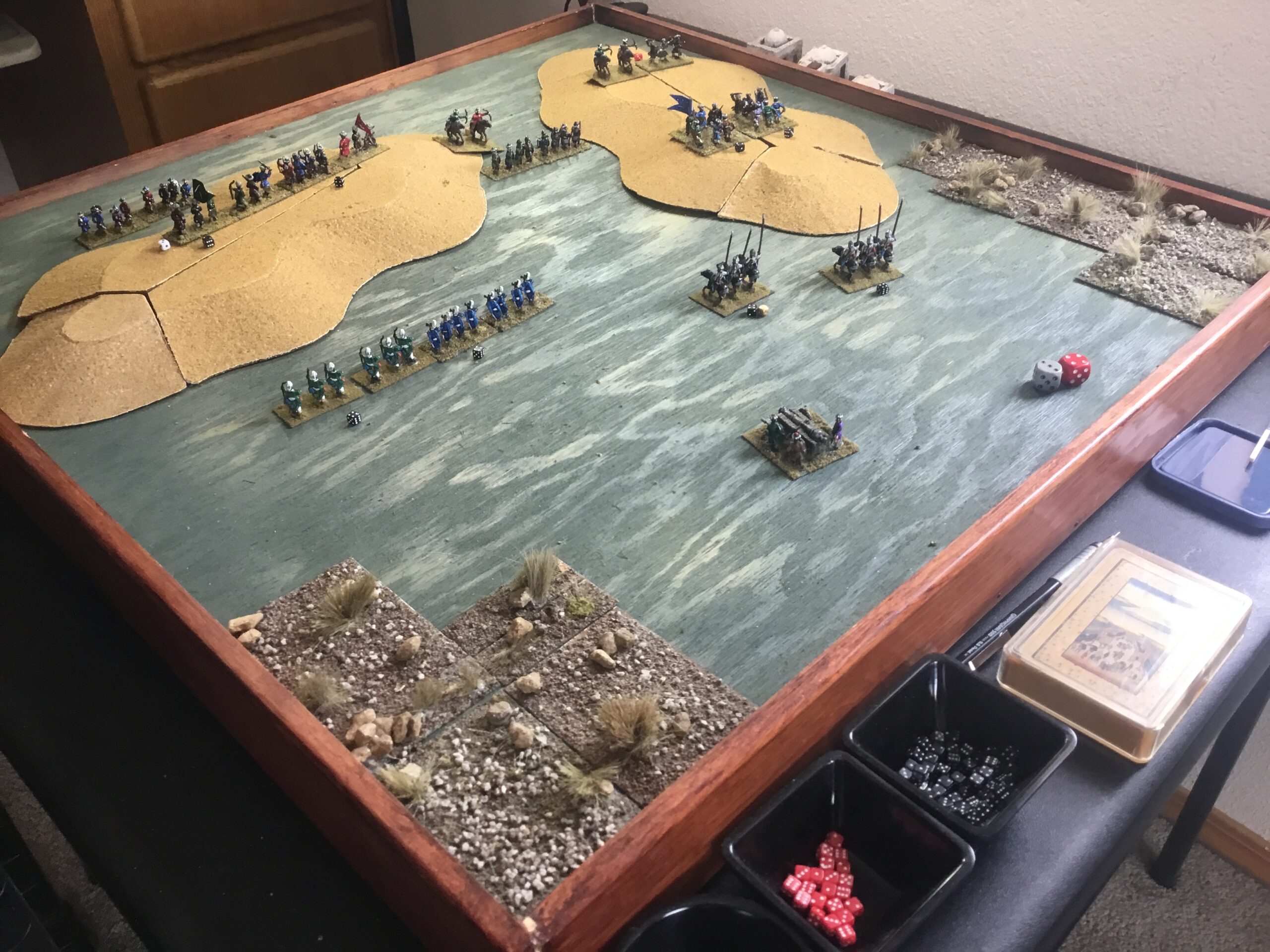
Ottoman ambitions in the Horn of Africa suffered what could most kindly be termed “a setback” at a nameless defile just outside of Aden.

A motley group of civic guardsmen, mercenaries and neighboring tribesmen defeated an Ottoman force comprised of elite Sipahis and Janissaries.

Why? Overconfidence. The Ottoman Commander, Osker Boz, determined a frontal attack would scatter the opposition, assuming his army’s  high resolve ratings  would wear the Yemenites (what someone from Aden is called -today) down. Boz forgot, or ignored,  his Janissaries were missile (bow/shot) troops with low melee capabilities, and that he had just two units of Sipahis.

His scheme of maneuver seemed sound. Launch a demonstration with his Azabs against the east ridge (pinning the Yemenite forces), and a measured attack, with the Janissaries shooting as they advanced, against the west ridge. When these attacks had developed, and his artillery had reduced Yemenite resolve, a Sipahi charge against the long spear armed civic guardsmen holding the defile. This was a risky business since long spears have a +2 DRM against cavalry.

The Ottomans advanced after regrouping and restoring resolve.

The assault on the east ridge initially pushed back the Yemenites. But they rallied, scattering the Ottoman Azabs. One unit, through both pursuit and being out of command, and rolling for impetuous actions, even charged and scattered the Ottoman artillery unit.

The Janissary missile unit advance/shoot tactics wore down the Yemenites holding the west ridge. In desperation, the Yemenites pulled back to the reverse slope. This was the decisive event of the game. The Janissaries continued their advance while the Yemenites rallied, charging the Ottomans as they crested the ridge. Now locked in melee, it was a matter of time, and decent die rolling, until the Janissaries wavered or scattered.

Meanwhile, the Sipahi initial charge failed to dislodge the long-spear armed guardsmen. Again, locked in melee, the Ottomans were at a disadvantage.

The Sipahis wavered and scattered, leaving the Janissaries to fight a “last stand” against what remained of the Yemenites on the west ridge, eventually breaking under the  pressure.

Quite the fight.

Much of the defeat can be attributed to Osker Boz’s characteristics (inexperience and cowardice) and his employment of an incompetent physician who exacerbated the effects of some poor Disease and Mishap rolls.  As a result, the Ottomans rarely won an initiative die roll, had trouble rallying troops to restore resolve, and had significantly lowered resolve due to illness going into the battle.

Add an attack plan that called for some good fortune, and the outcome cannot be considered a surprise.

Recent rumors from Constantinople indicate that the Sultan has put his plans for naval expansion into East Africa on hold, pending successes by his overland forces working south along the both coasts of the Red Sea. Osker Boz has been ordered to return home. Given this blow to Ottoman prestige, it’s unlikely he will survive the trip.

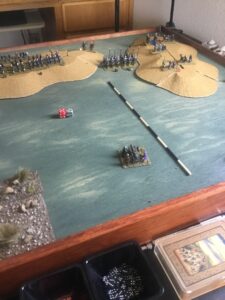
As usual, a series of marginal photos with incoherent captions.
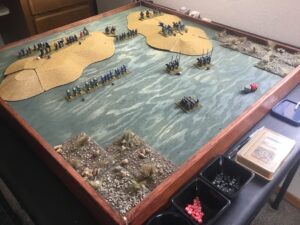
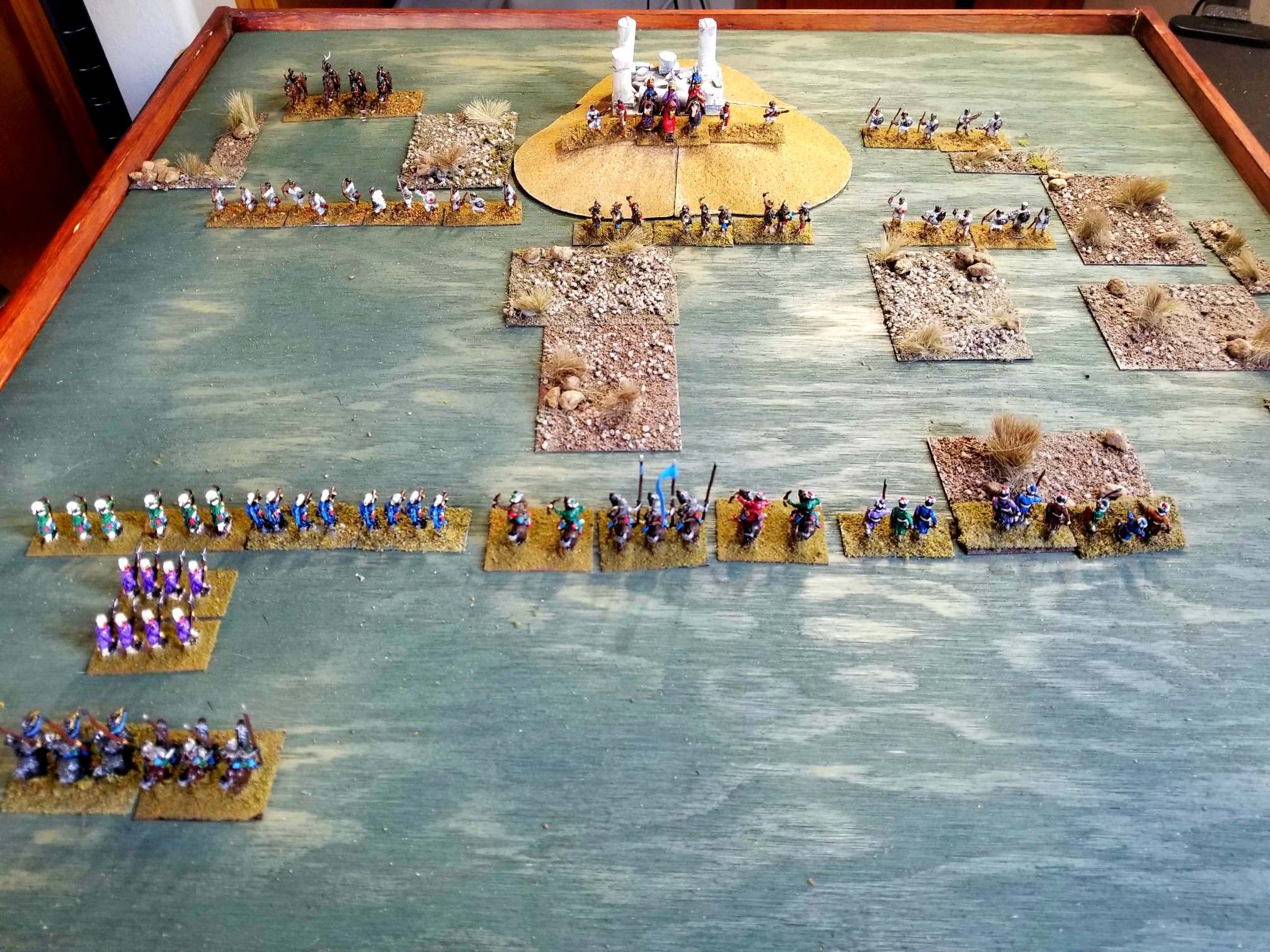
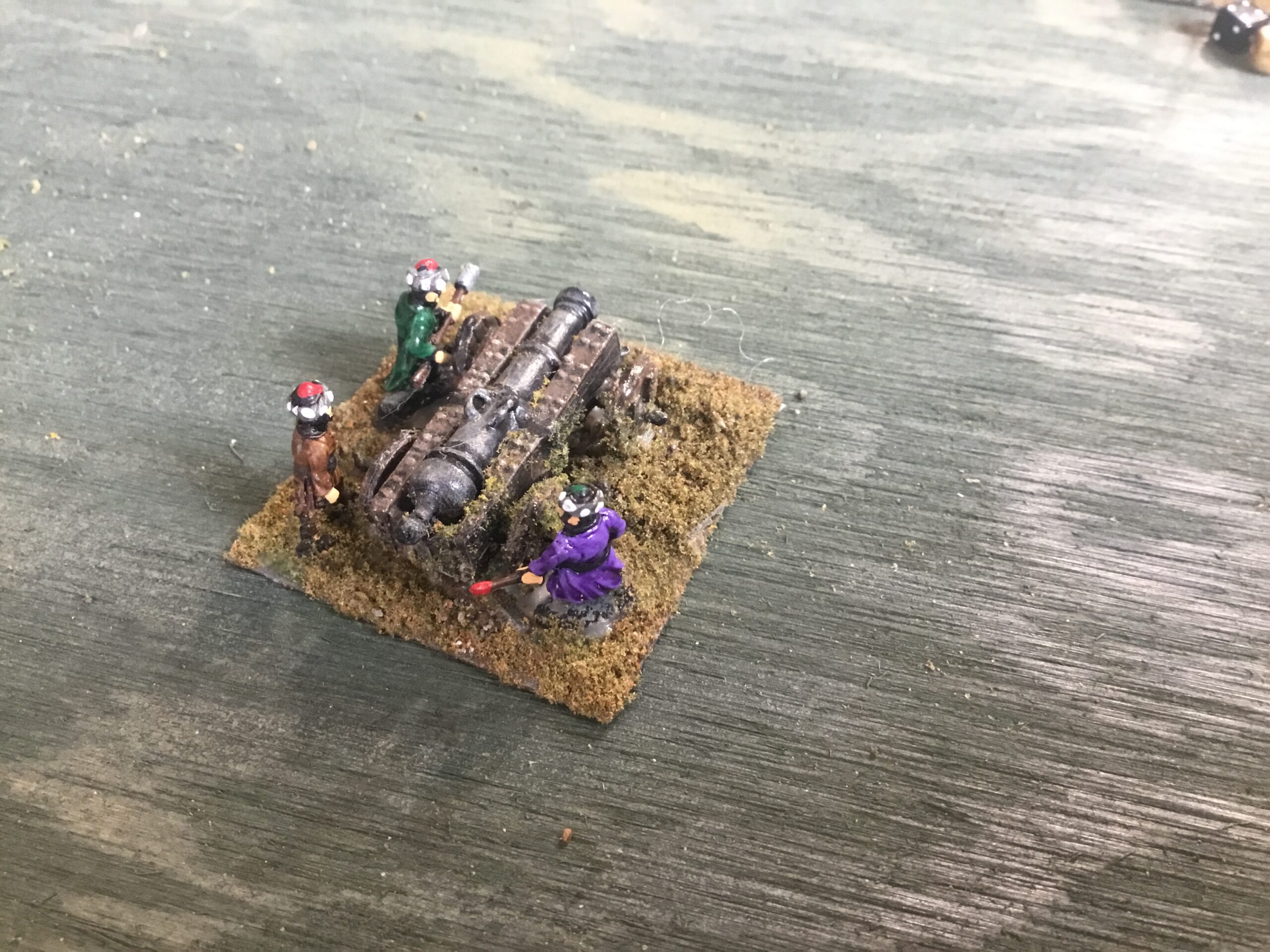
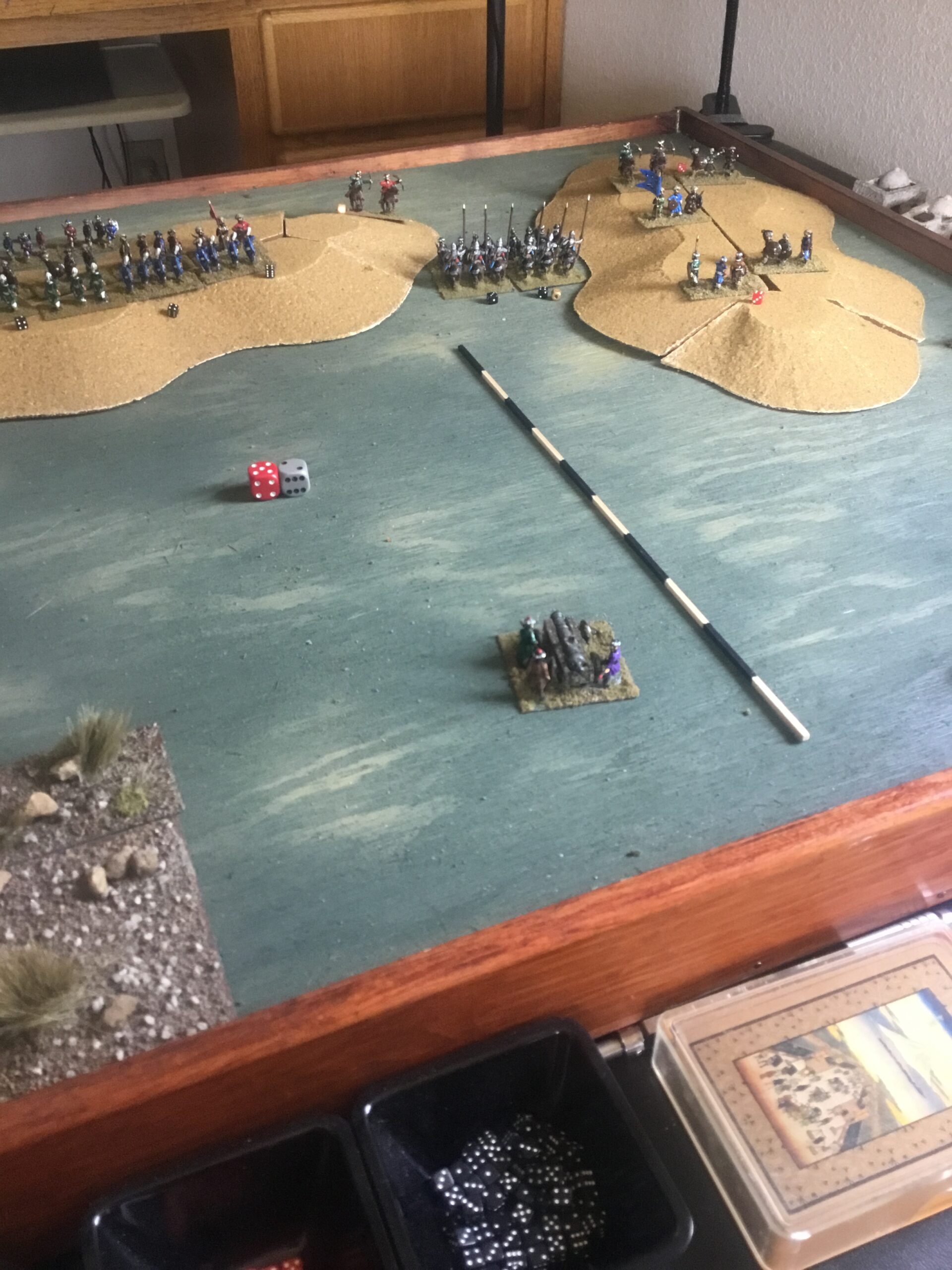
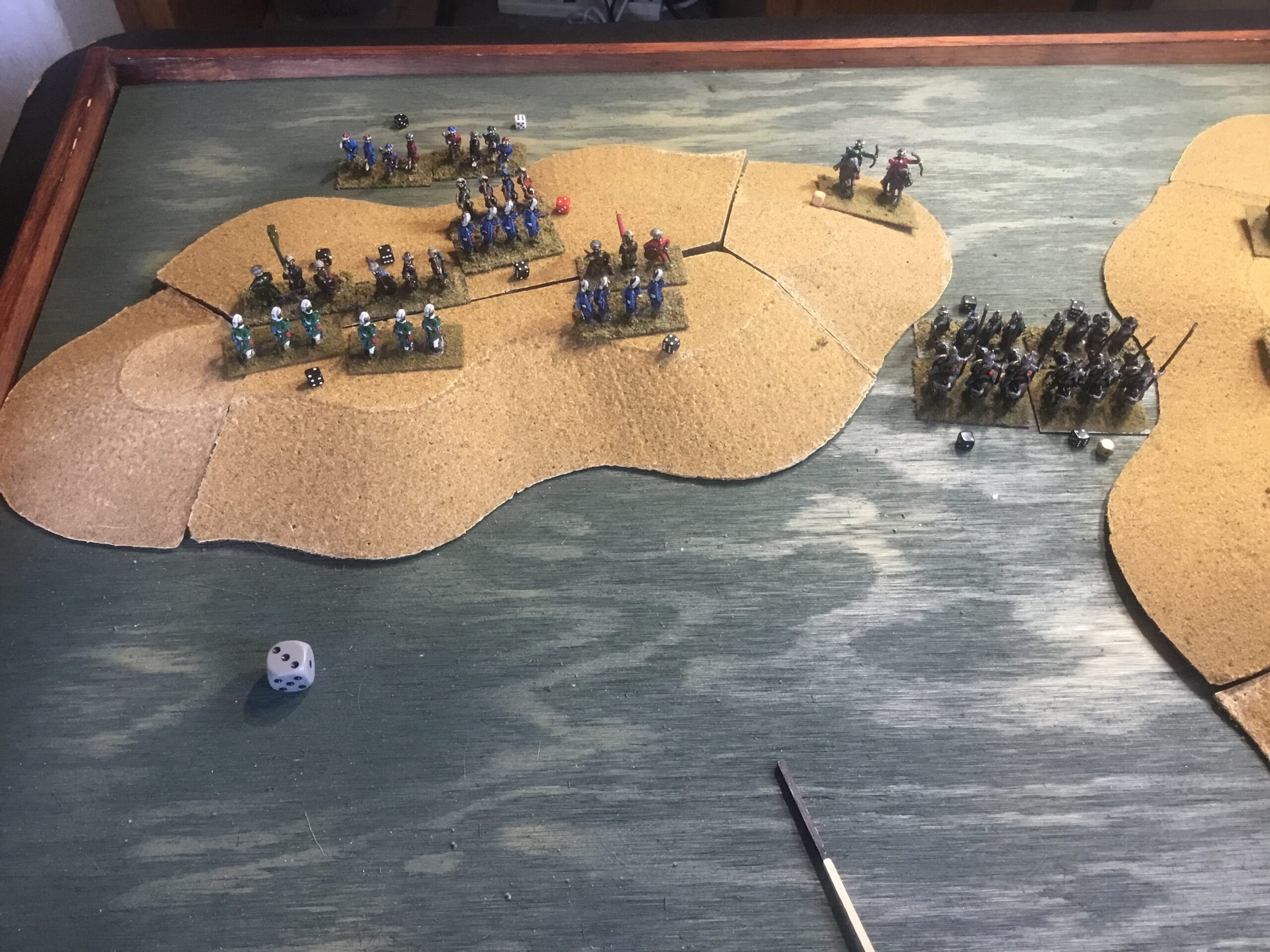
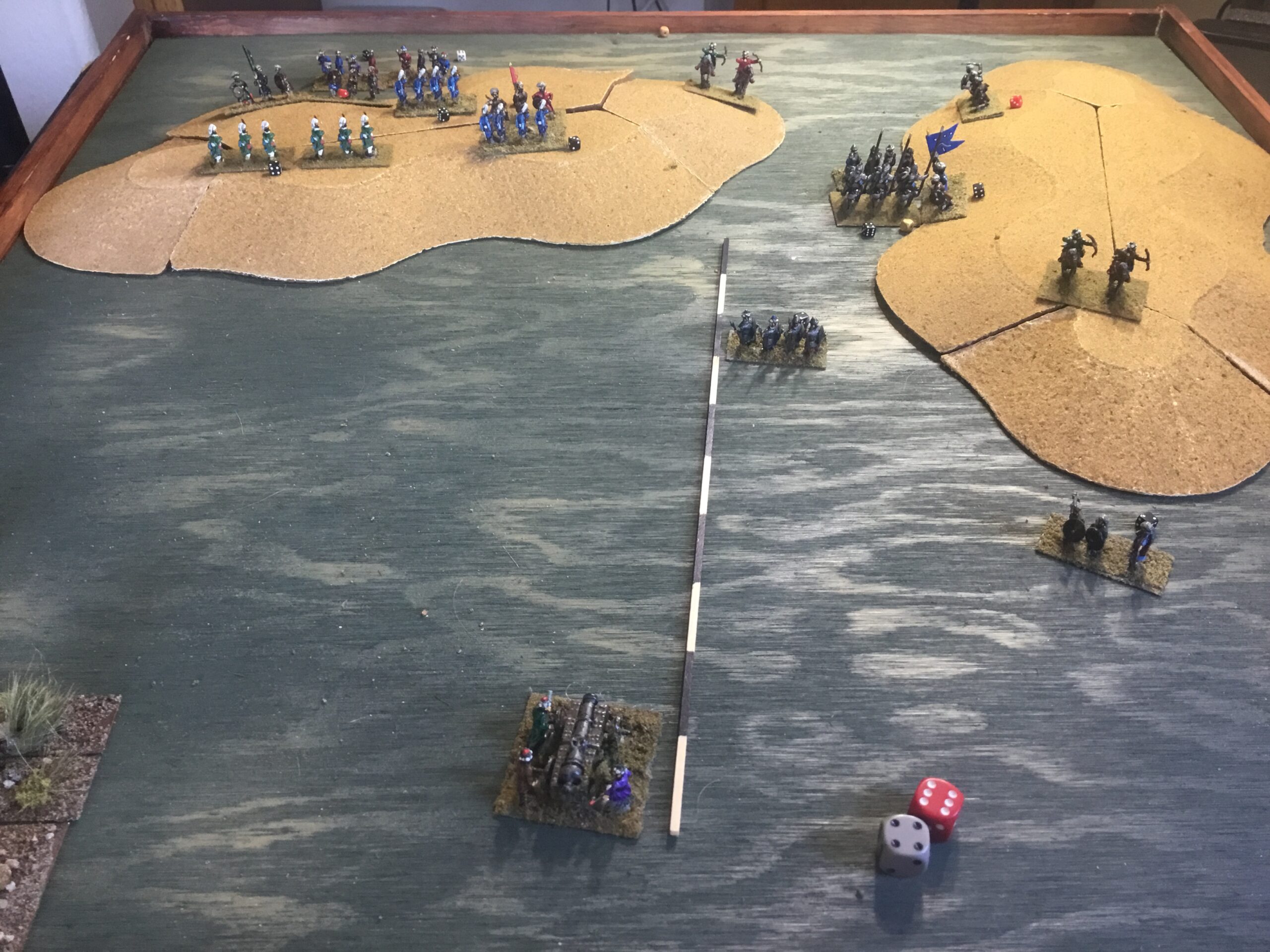
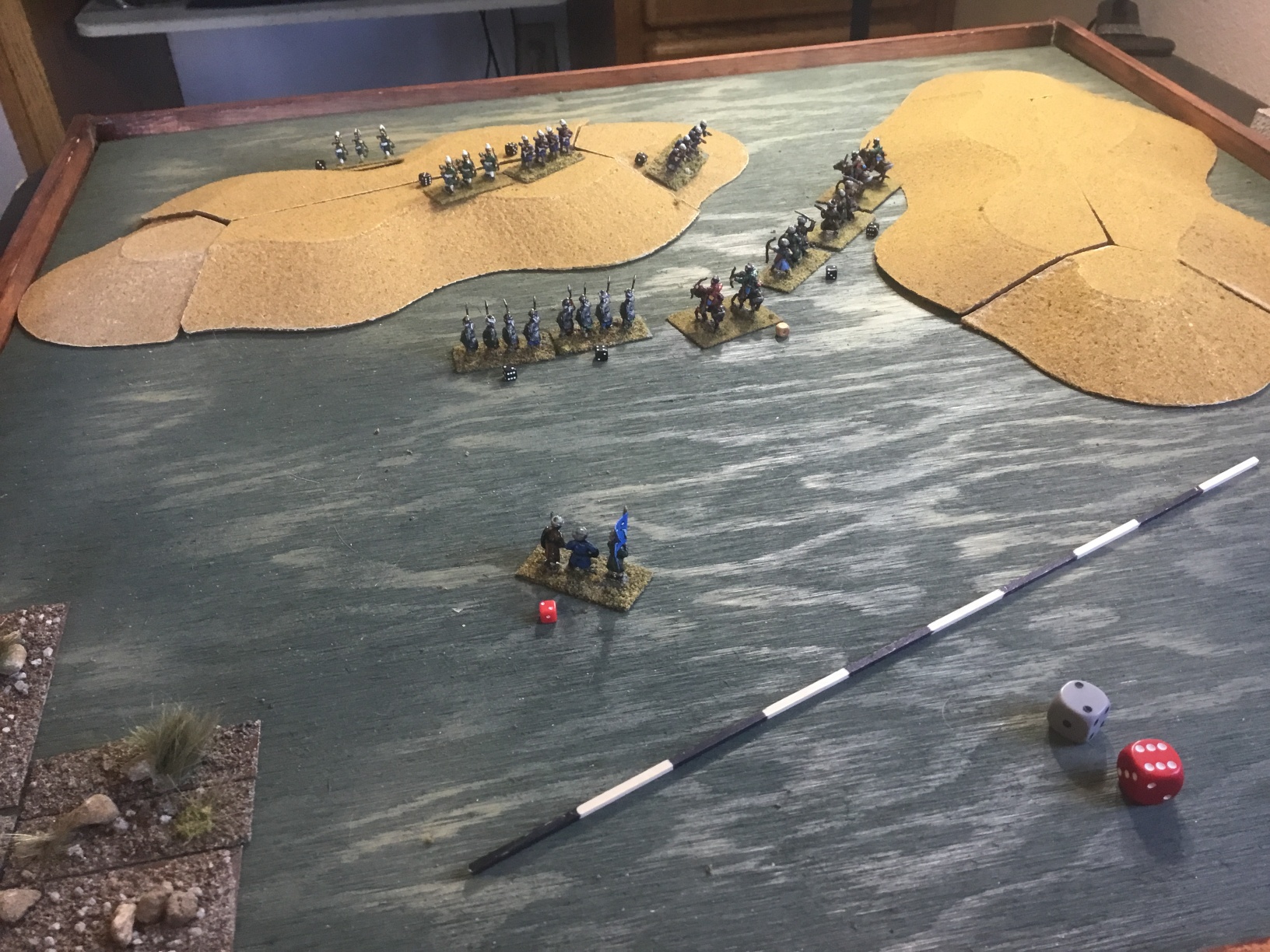
The Ottoman Attack Develops.  Top of picture is NNE.
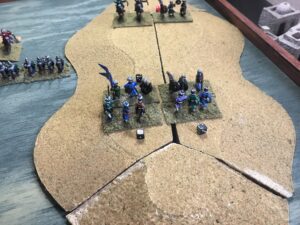
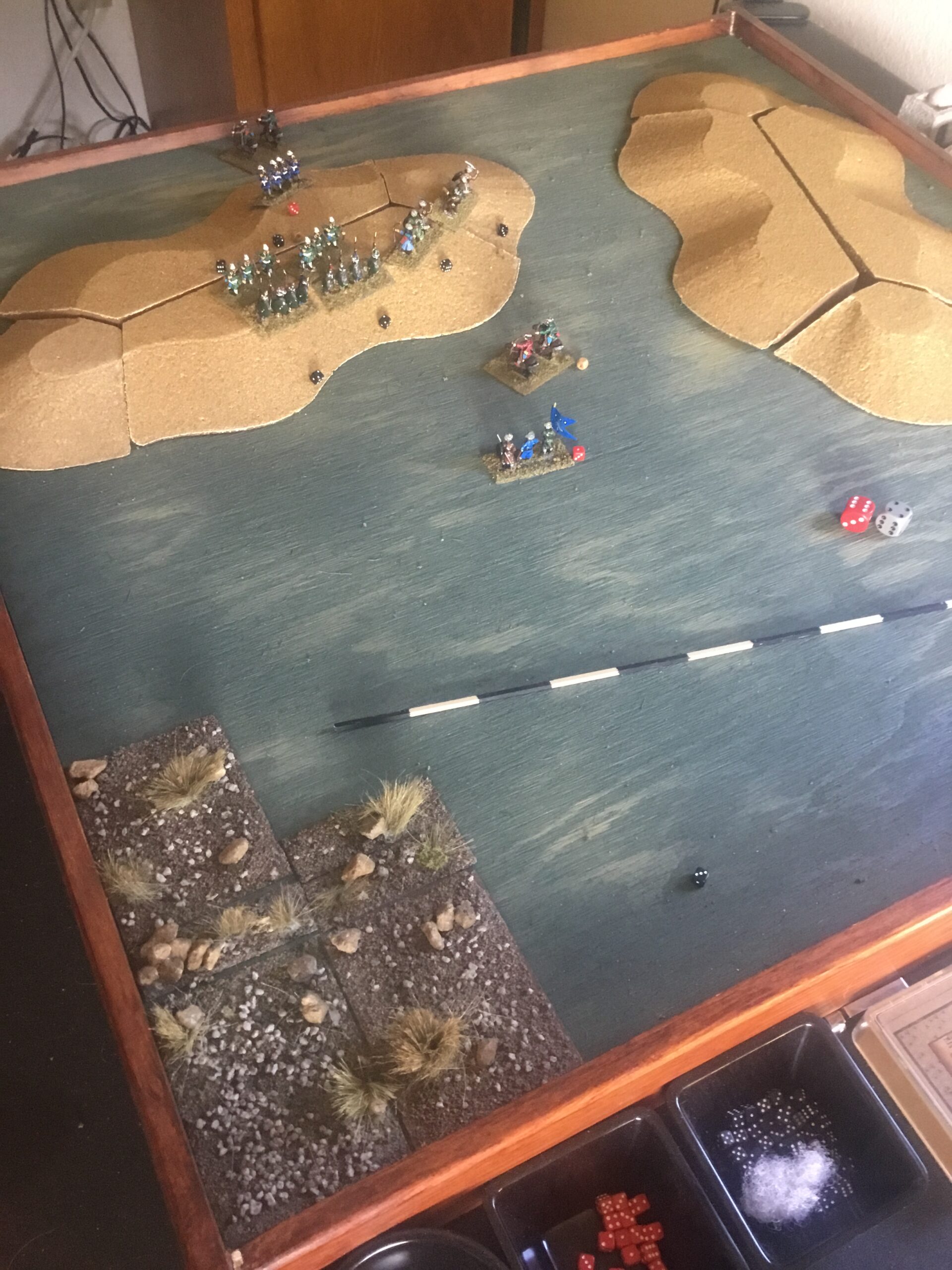
Melee on East Ridge
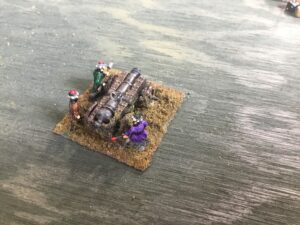
Ottoman Artillery Support Ineffective
Melee
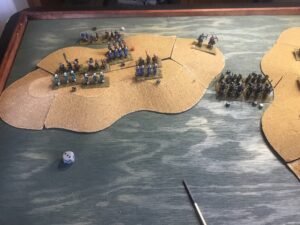
Melee Continues
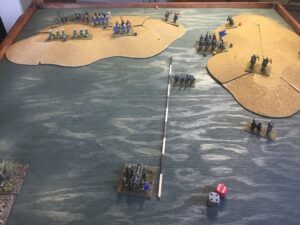
Sipahis Scatter With Yemenite Pursuit Threatening Artillery
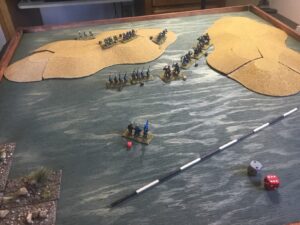
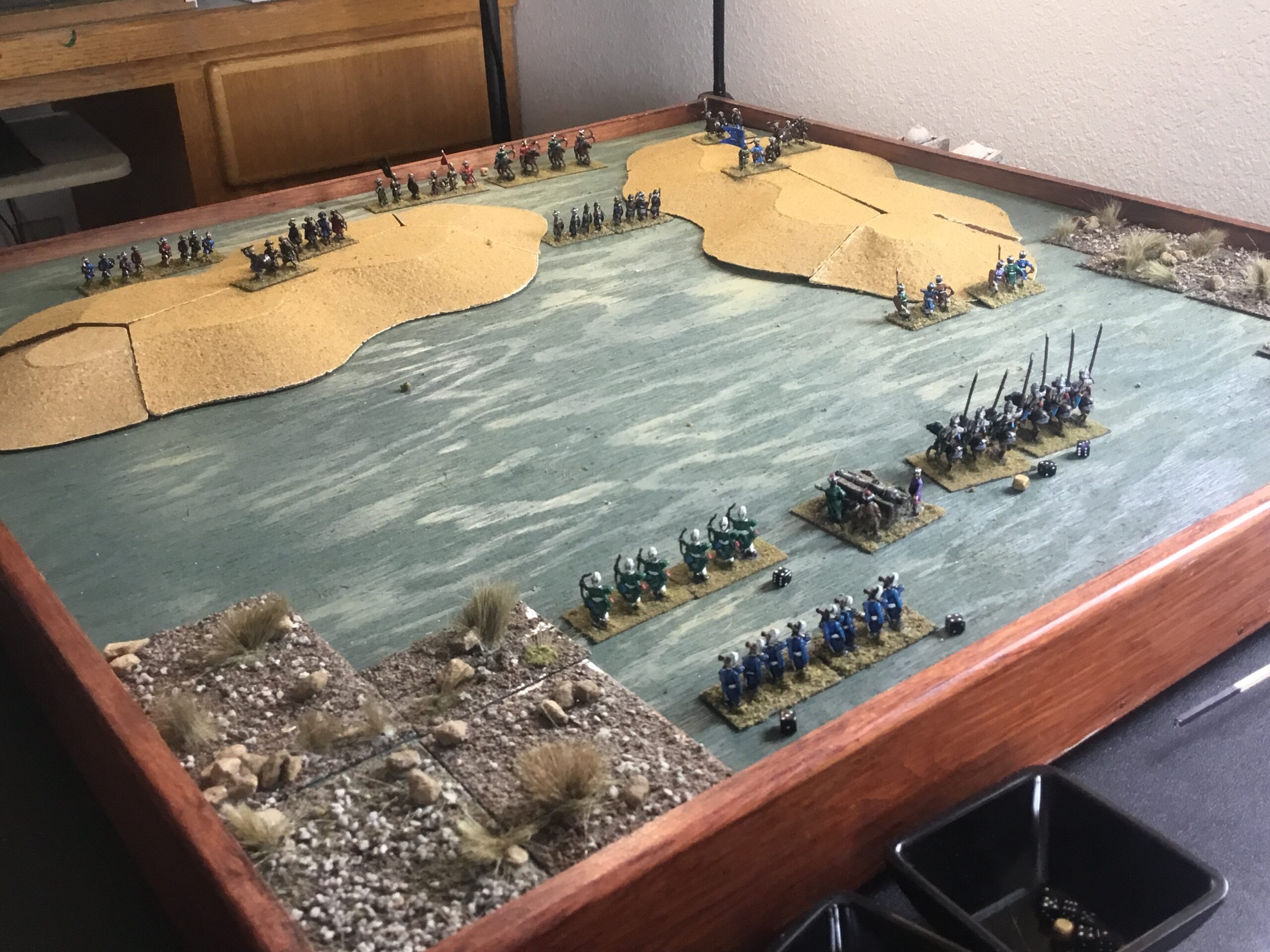
Preparing For The Final Assault
Final Melee.  Light Cavalry Ready To Flank Janissaries
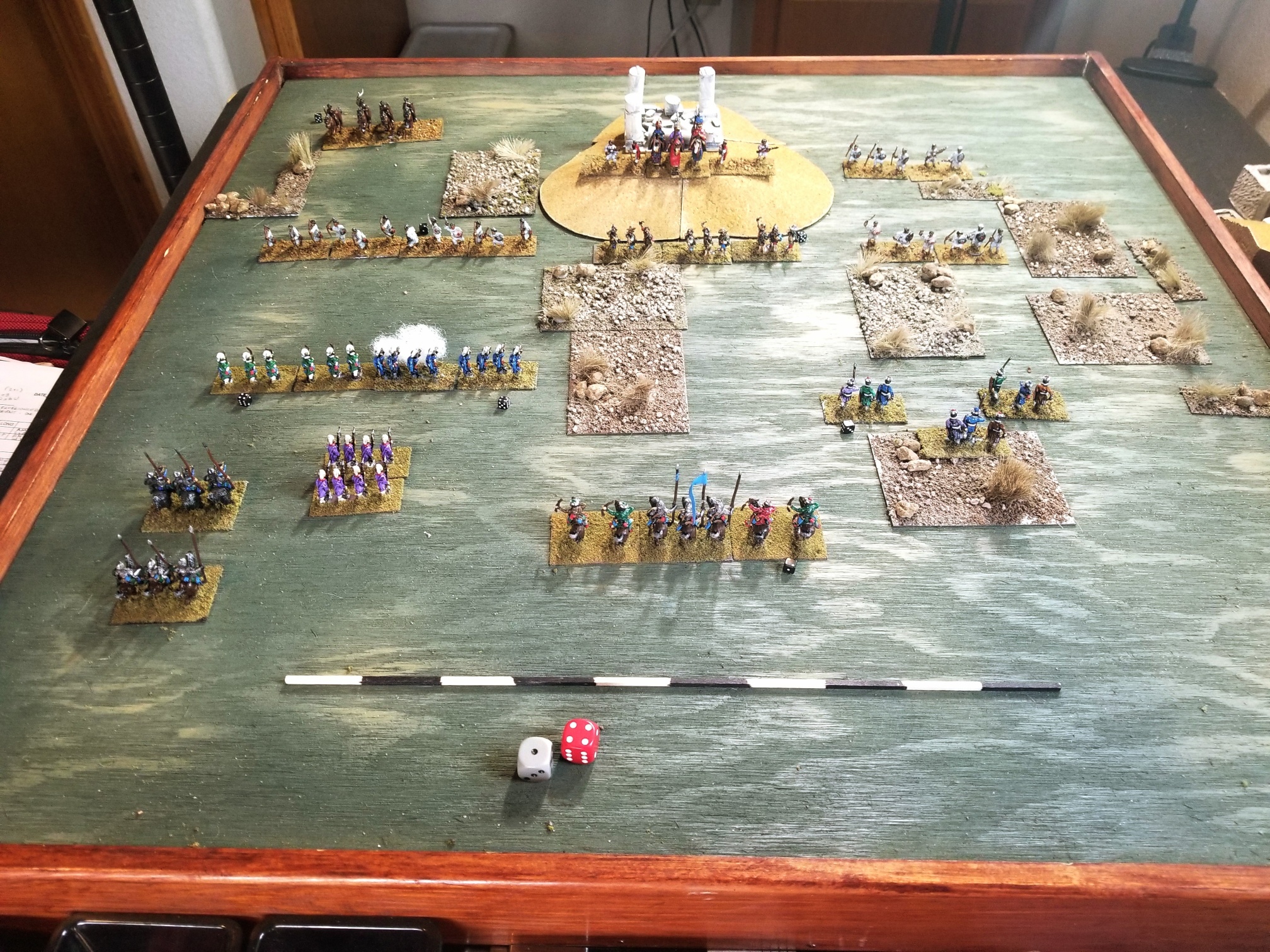


Not Bad

Back from a fun 2+ week trip to (and recovery from) Joshua Tree NP and Organ Pipe NM.  Weather could have been better.

Have started playing Heroes of Normandie (HON)again.  I like this game, and I stress the word “game”.  Not a simulation, but still a challenge.  Beautiful components.  Just follow the Tag for my earlier impressions.

I realized during this latest play iteration that understanding the game’s rules and flow was all about the symbols.  In a typical hex and counter game, counter symbols are sparse, and aside from attack/defense/movement, provide little information concerning the  connection with the rules.  In HON, the unit counter is loaded with symbols involving literally every action that unit can take.  Understand the symbols, and you just play.  Very similar to Kriegsspiel, and makes for a far different  learning curve.

I’m using the updated, and cleaned up, rules found in the HON Compendium, as well as the Action Cards.  Need to read up on the solitaire guidance concerning the cards as how to handle them has been a little problematic.

Going to enjoy this for another week and then probably shift over to WW2 coastal naval combat.

And It All Seemed So Simple

Before I get into the mayhem, here’s a summary of the Game Modifiers.

Coastal Arabs:  Well Laid Plans – Allowing all companies to be in Command for one phase; and Ill Chosen Bedfellows – A -1 DRM for Disease and Mishap Rolls.

Ottomans:  Enterprising Captain – one Company always in command; the aforementioned Ill Chosen Bedfellows, which combined with their incompetent physician will cause real Resolve problems; and Miraculous Cure – good to add one to a unit having lost one Resolve due to disease.

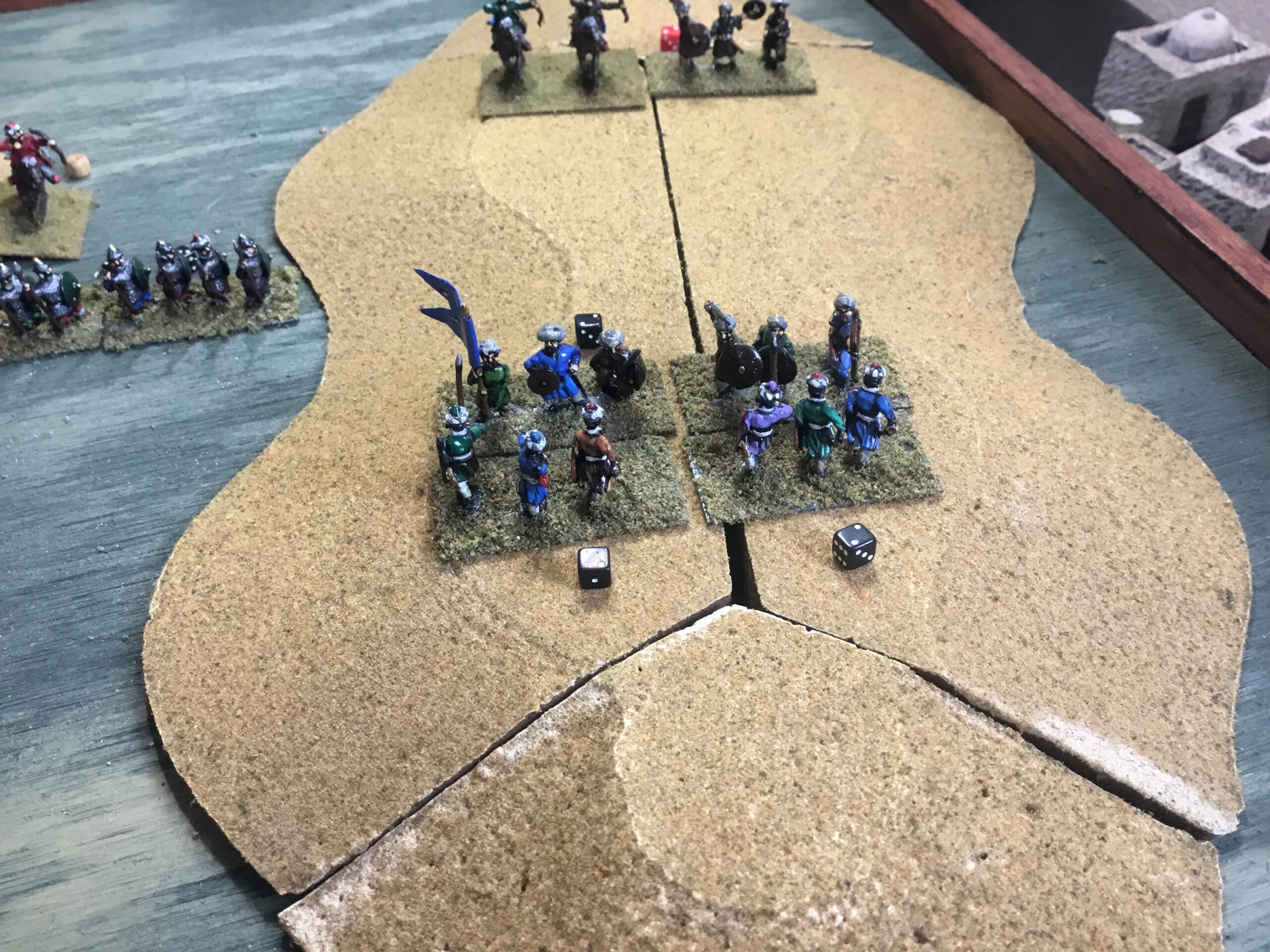
The Disease and Mishap rolls were really something.  Each side lost a company through bribery (Bought Off), the Ottoman right became too Enthusiastic and moved well forward of their initial dispositions, while Coastal companies arrived late.  Both sides were affected by disease, with the Ottomans ravaged.  Two companies lose two Resolve!

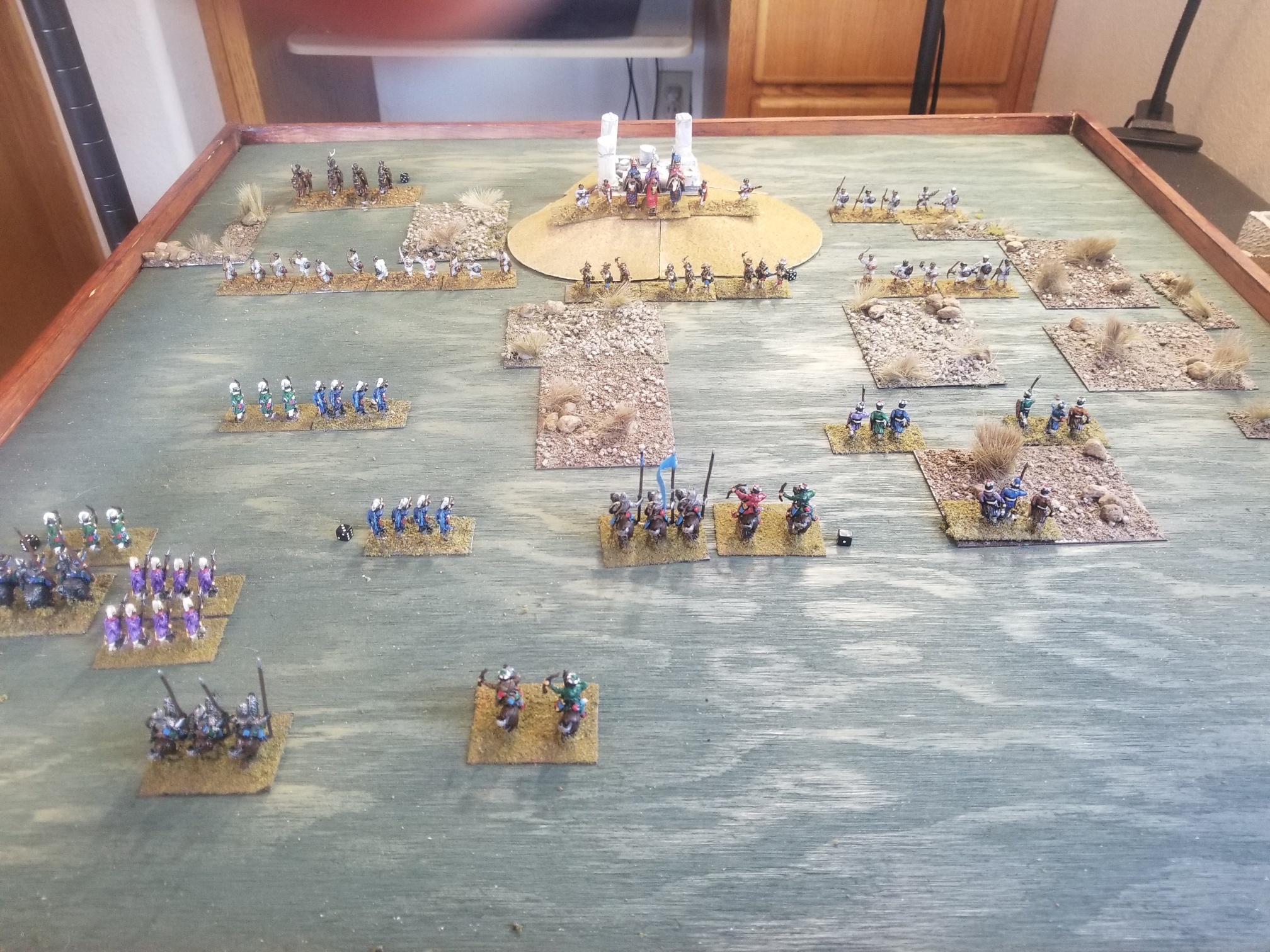
Here’s a picture of a not quite so tidy battlefield.  The black die indicate units that have already lost Resolve.  This is not a game system for The Orderly & Systematic General!

Both sides need to spend a few turns regrouping……

Tanks! Redux

Watched Dunkirk the other night.  Not the new one, the good one.

Duly inspired, I dug out my 1/100 armor with accompanying terrain, and set up a mini-campaign for Tanks!.

Basic premise was a pack of misfit British armor, caught up in the backwash of the Arras counterattack, tries to get to the coast.  Set up random parameters for German opposition, and British crew capabilities.

Since the campaign was “based on a true story”, the rag-tags had an interesting set of crew skills and helpful equipment.  These add-ons provide the abilities to shrug off misfortunes of all kinds. The Germans were faceless, robotic drones.

The tricky part was what each force could see, and if they saw something, how/could that information be communicated.  Did some basic research on tank radios and found there is not that much out there.  So, just had some fun with it, using yes/no, directional, and other random dice.

The British had an armored car for scouting; an A12 Cruiser,  a Mk 1 Matilda and a Mk 2 Matilda.  The German mix could include Pz II, III or IVs.

The unintended consequence of all of this was another trip into the world of computer graphic design.  I’d designed some Tanks! cards with GIMP in the past, but had lost all of my chops.  Downloaded a template over a Boardgamegeek, and  floundered.  Wound up using my old mock-up cards.  Hopefully, I’ll continue to slog away at the new cards.

Again, it’s a real challenge to resist ginning up too many house rules.  Sure, I had to make spot judgments on backing up, Matilda frontal armor and others, but resisted the need to codify them.  Here’s photos of the first two scenarios.  Lots of Hide N’ Seek trying to work through woods along roads/side roads.

Had to pick up this AM.  I’m thinking coastal operations later in the week, or Heroes of Normandie.

Underrated Fun

Quick and semi-gratuitous post.  Set Fistful of Lead up on the dining table.  Couple of shootouts.

Can’t recommend this rule set enough.  Easy to read through, and the Play Aid Sheet covers about 95 percent of what you can run into.

Just turn the little guys loose, and see what kind of mischief ensues.  Only level of control I impose is whether or not they can see/are aware of what’s going on around them.  For that, I use the trusty “Yes/No” die.

This Spring – if that ever gets here – one project is to assemble some paper buildings.

Unintended Consequences

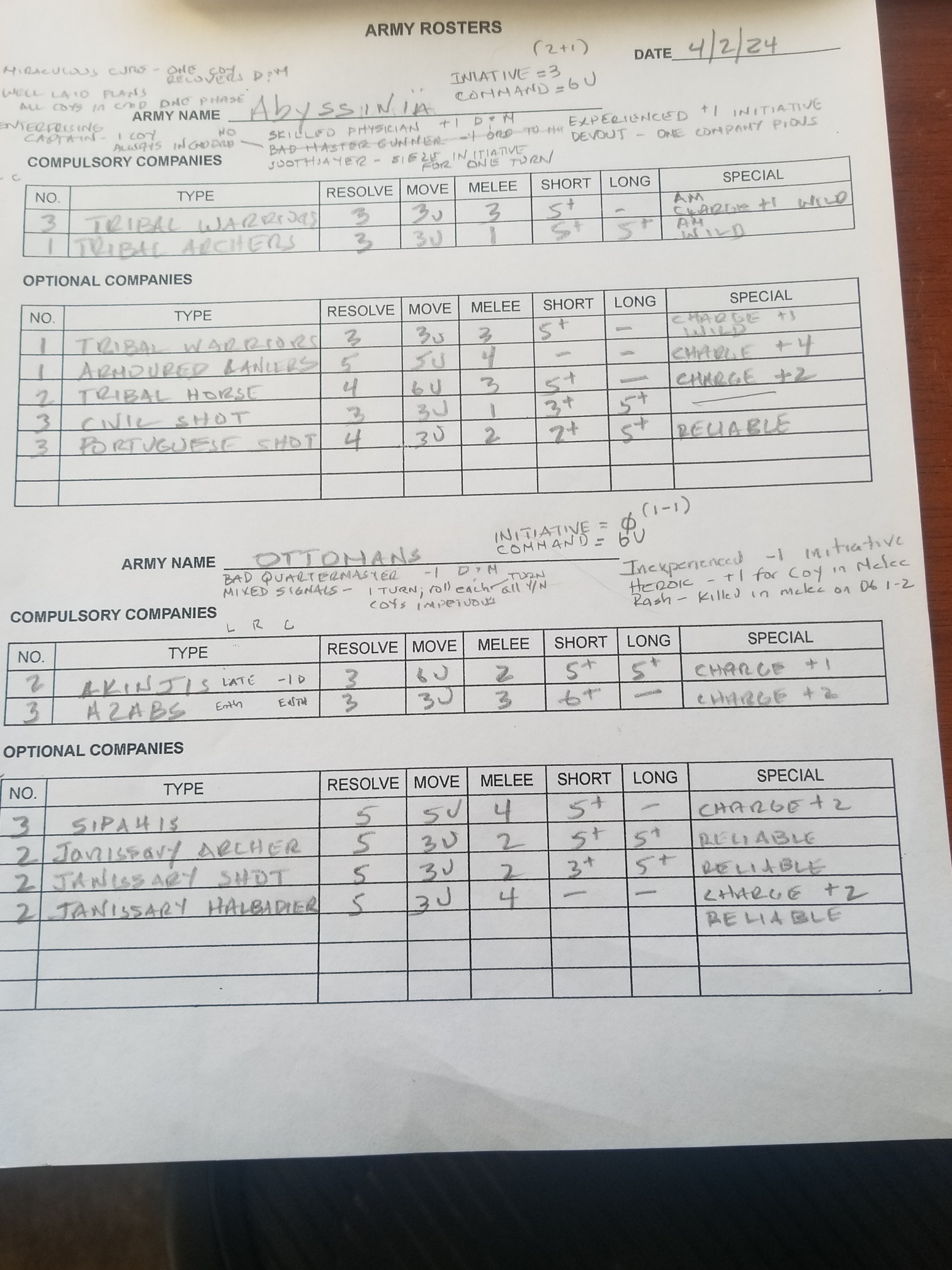
Put together the Army Rosters and rolled for Commander and Staff  characteristics.

Wanted to play a quality (Ottomans) versus quantity (Local) scenario, with both  forces built using an equal number of points,  and using the same terrain as last time.  Why same terrain?  I want to see if that defensive position can be forced.   The attacking Ottomans do have an advantage as the Locals don’t have as many shot or archaic missile (bow) units as the previous game’s defenders.

However…………

The Ottomans have a real leadership problem.  The dice dictated an Inexperienced Lord that is also Cowardly.  His staff has an Incompetent Physician.  These are a lot of negative DRM modifiers.    On the other hand, he is considered Dashing.  All that means is that he can get into trouble quicker.  This all begs the question, “How did someone like this get command”?  Well, it does happen, and we will see what Bey Osker Boz can do.

On the other hand, or side of the hill, the Local Commander, Taaj el-Burki, has no strengths or weaknesses, but does have a Bad Gunner on his staff.  But, since his force has no artillery, it’s of no consequence.

Here’s a photo of the Army Rosters Sheet.  Before I get started, I’ll have to come up with a name for the “Local” place.  I’ll go over the “Game Modifiers” in my next post.

Movement Or Motion?

Decided to get the new Ottomans on the table, so focus for the Irregular Wars campaign will shift to the North.

Working premise is fighting for control of a port in/about Aden between Ottomans and Local Bey.  This involves creating some new characters.

I stumbled on an old post while revisiting my fragmented methodology.  What I had scribbled down or previously posted didn’t reflect my currenting thinking, so I set about reinventing the wheel.

The basis of all this is the game’s Chance Cards, but modified to provide solo campaign variability for The Lord (Commander), his Staff, and a specific battle.

Here’s a link to the revised chart.  I’ll be working with it later today.

At Last

After finishing up the Italian Wars and Husaria figures in early January, I decided to get on with it and take care of the last of my  15mm Ottomans.  I was on a painting roll, and they were the last of my projects.

Yes, the last.  I may augment what I have, but that’s it for any large scale endeavours.  I know;  Never Say Never….

Here they are.  Now, they won’t stay in a cardboard flat.  Gave that up some years ago.  Hundreds of dollars in figures and countless hours of work left in flimsy cardboard.  No, they’ll go into a tool box.  A nice home….They’ll make excellent opponents for my late Medieval/Early Renaissance (@1450 CE) Europeans.

Going to give painting/constructing  a rest for awhile.  Work on my East Africa Renaissance Campaign, as well as get out some skirmish figures and terrain that need to see the light of day.

Action At Neo – The Battle

It ended so quickly.  What some might find to be the weakness of the Irregular Wars’ rule set was on full display during this action.

Over at Boardgamegeek, there’s a on-going (and increasingly pedantic) thread discussing fog of war and randomness.  While Irregular Wars doesn’t have much in the way of fog, it certainly can provide plenty of randomness.

First off, the tidy initial dispositions featured in the previous post were immediately disrupted by the designed randomness of the Disease and Mishaps die rolls.

Some companies pushed forward, led by over-enthusiastic Captains.  Others formed up ravaged by disease, with reduced Resolve (companies with black die).

It took a couple of turns for the attacking Sanwanians to sort themselves out and advance towards the Neons.  Their attack plan called for Archers to neutralize the Neon center, while Warriors assaulted the small ridgeline on their right.  The flanked Neons would then be subjected to a general assault.

However,  Neon archery took its toll.  After several exchanges, many Sanwanian units were wavering (red dice).  And, it only took one misplaced Company’s (left within archery range) scattering to unhinge the Sanwanian center and left.  Again, a Scattering Company reduces the Resolve of any friendly unit within 80mm (2U)by one.  Wavering companies are down to their last Resolve.  They lose that, they Scatter.  And, that’s what happened – en masse.

The companies facing to the rear are those that scattered in just one turn.  Here’s what the battlefield looked like after they were removed.

While the Sanwanian Warriors on the right made a last valiant effort to close with the Neon Archers, the latter companies were able to disengage.  The Warriors withdrew.

A notable victory for  Neo, with all due credit to the help provided by Bey Mahir of Behefe.