Where was I? Why worry? – Part II

Reached a stopping point at Serbia The Defiant.   And yes, I made a hash the rules.

The new combat results table (CRT) worked just fine. Once again, operator error. Well, the new CRT is based on column shifts, as opposed to die roll modifiers.  But, the die roll modifier for attacking across  rivers still holds. Well, I didn’t grasp that pesky detail, and since the Austrian avenues of approach to Belgrade cross rivers, their attritional successes are now suspect.

Rather than the classic re-do,  I’ll pick it up and continue playing the series.  This is a topic I’ve brought  in the past:  Play a game/system and then move on to another game/system, or focus on getting better at one particular series of games.

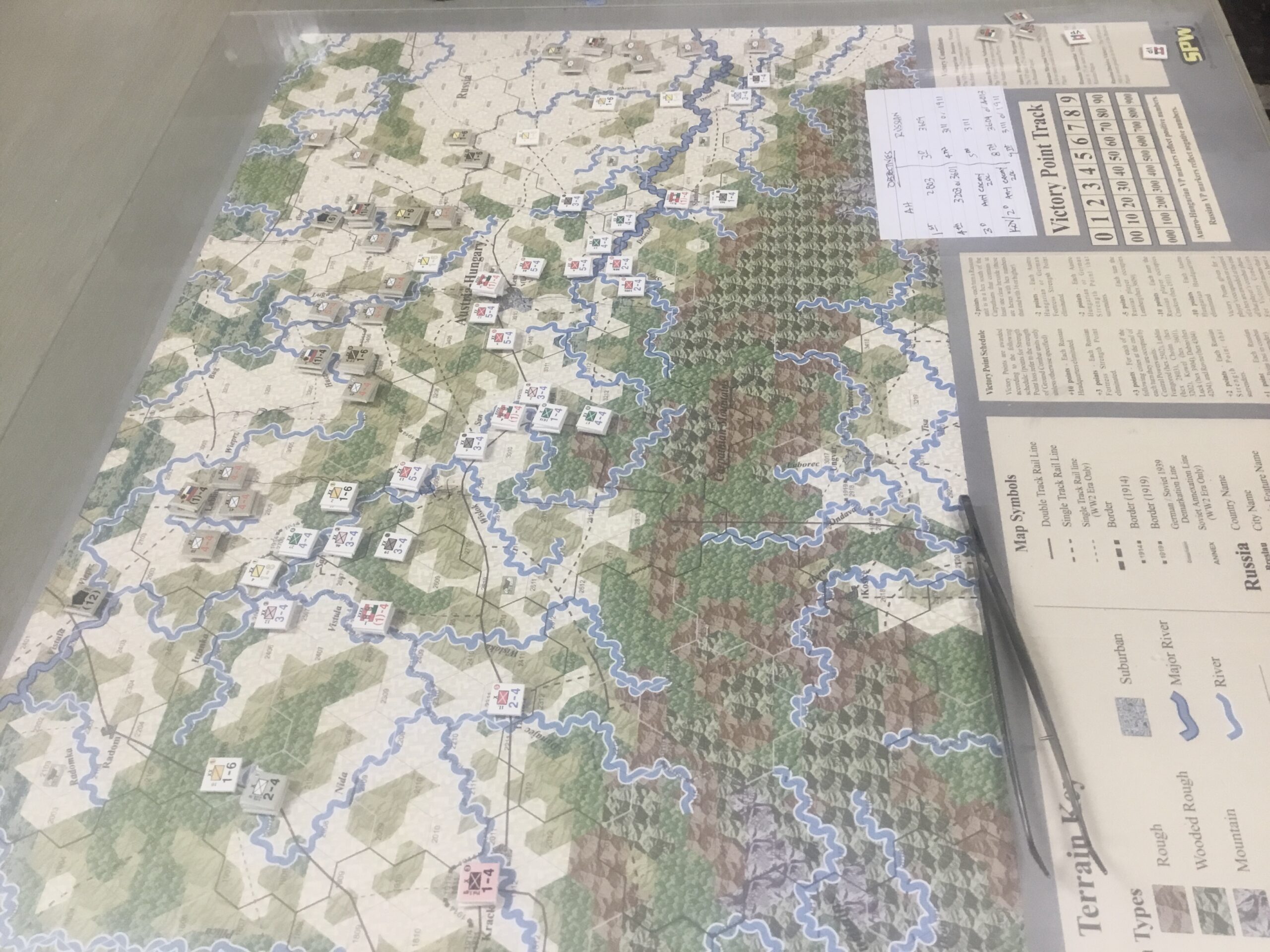
In this case I’m not going to be an omnivore, but focus on Der Weltkrieg.  So, it’s time to set-up Galicia:  The Forgotten Cauldron.

Change Of Pace

Took a long time to recognize the benefits of Kindle.  Light-weight, portable and saves a lot of shelf space, especially when there is no shelf space left.

There are countless really good, cheap,  military books out at Amazon.    Boardgame Geek’s  Daily Kindle Deal is a great resource that identifies on-sale titles.  It makes dropping cash way too easy.   I’ve set a limit of $2.99 for a book, but that has to be a really good one, with most of my purchases at $1.99.

Which brings me to the point of this post…..

A few years ago I started seriously reading about naval warfare.  At first, it was historical, but now I am equally interested in current naval affairs.  The genesis of that interest must have been my cruise experiences arriving in ports and seeing warships berthed there.

One of the leaders in both historical and current naval affairs  is Seaforth Publishing.  Many of their titles have been available on Kindle for pennies on the dollar.  Yes, the format may not be that great as the books are illustration heavy, but the scope of their titles is fantastic.  Print copies are available from time-to-time at a significant discount, also.

Another great source is Naval Institute Press.  The books are spendy, so it’s an annual resource for me.   They have a Holiday Season sale in December where many of their titles are fifty (50) percent off, with free shipping!

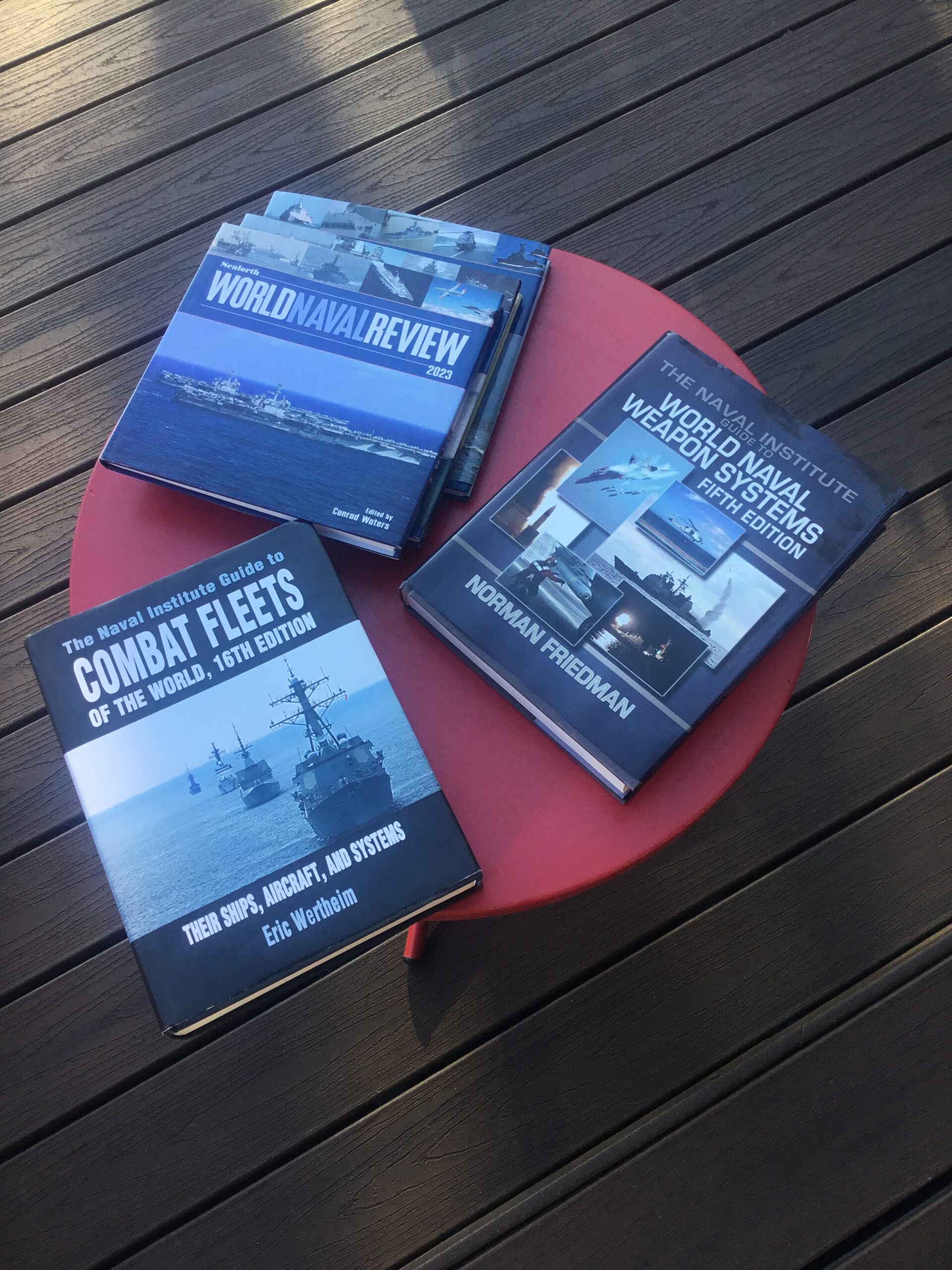
Here’s a quick picture of my modern naval purchases.

Where Was I? Why Worry…

Sat down with the “Serbia The Defiant” module of Der Weltkrieg last night.

Hadn’t played for quite some time.  In fact, the chits for the turn/phase record appeared to have no connection with the positions of the counters.  Reset?  Synapses started firing off in hyper-mode.

Hell No!  Just start playing.  I’ll make a hash of it anyway since my rules knowledge is shaky, at best.

It worked out fine.  Had an enjoyable hour or so pushing counters and listening to the perpetually offensively challenged Seattle Mariners.

I started using an alternate Combat Results Table (CRT) advertised as being better for lower counter density/fewer attack factor games/scenarios.

While many gamers take issue with the system’s unique depiction of terrain, I have no problems.  However, I do take exception to the very faint lines used to outline hexes.

As to the game, I’m being very aggressive with the Austro-Hungarian units and attempting to attrit the Serbs.   However, I’m not going to go “All Conrad“.

Modeling Realities

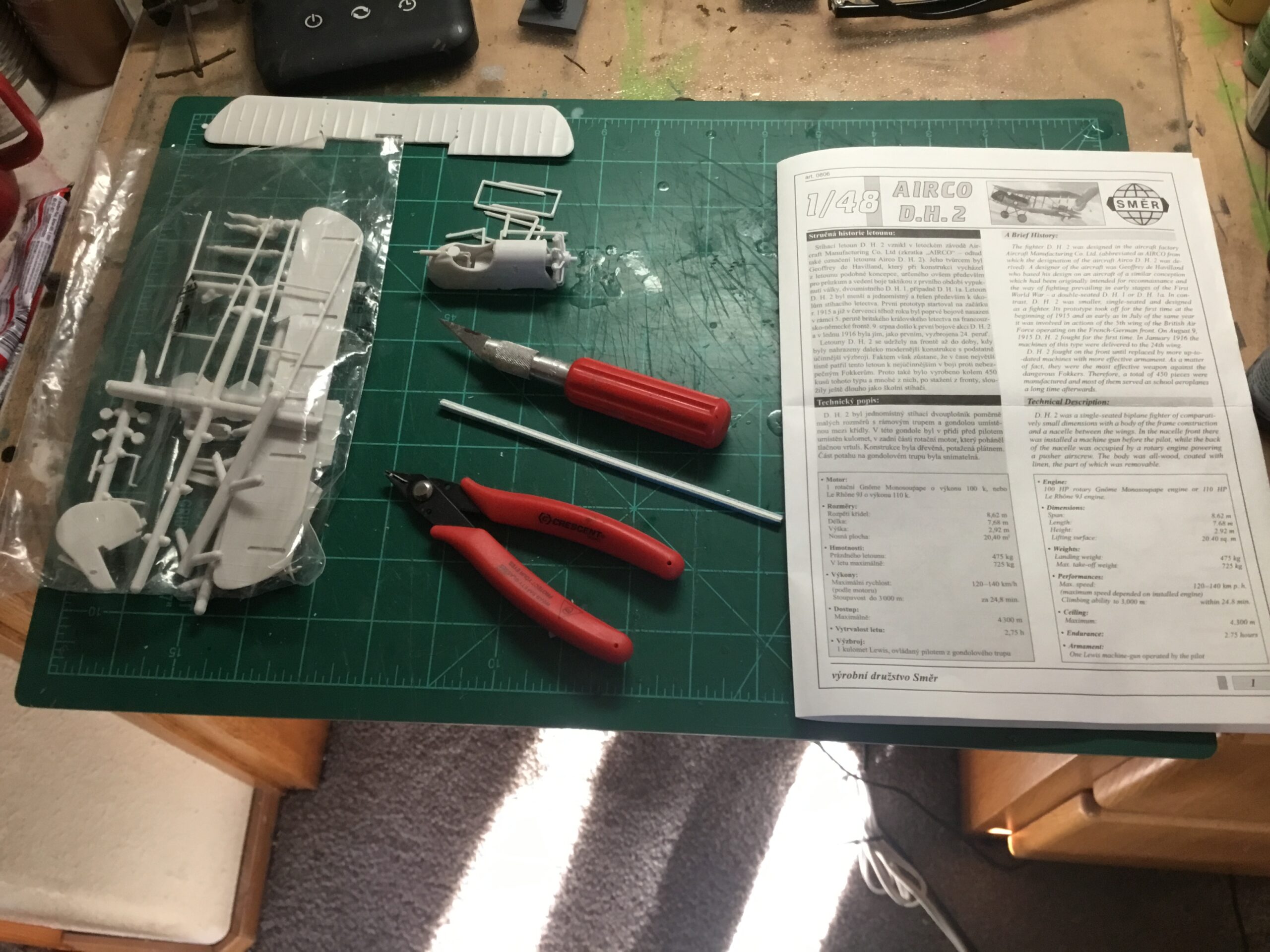
Proceeding with the DH-2 kit, and it is turning into the same old story.

In the beginning it all seems so easy.  Read the instructions, snip the pieces off the sprues, remove flash,  and start assembling the kit.  It’s so easy to imagine the  process proceeding smoothly.

Then, pieces go astray, glue goes where it shouldn’t,  and what you thought attached to one piece should really go somewhere else.

Not that I’m making things easier by trying to do some “basic” rigging with 3.5 pound test monofilament leader, hole drilling, and super glue.   Infinite possibilities for foul-ups.

Taking a short break before girding up my loins to attach the top wing (with monofilament glued in) and thread the lines through the bottom wing.

I need to zen my way through it.

Never Know

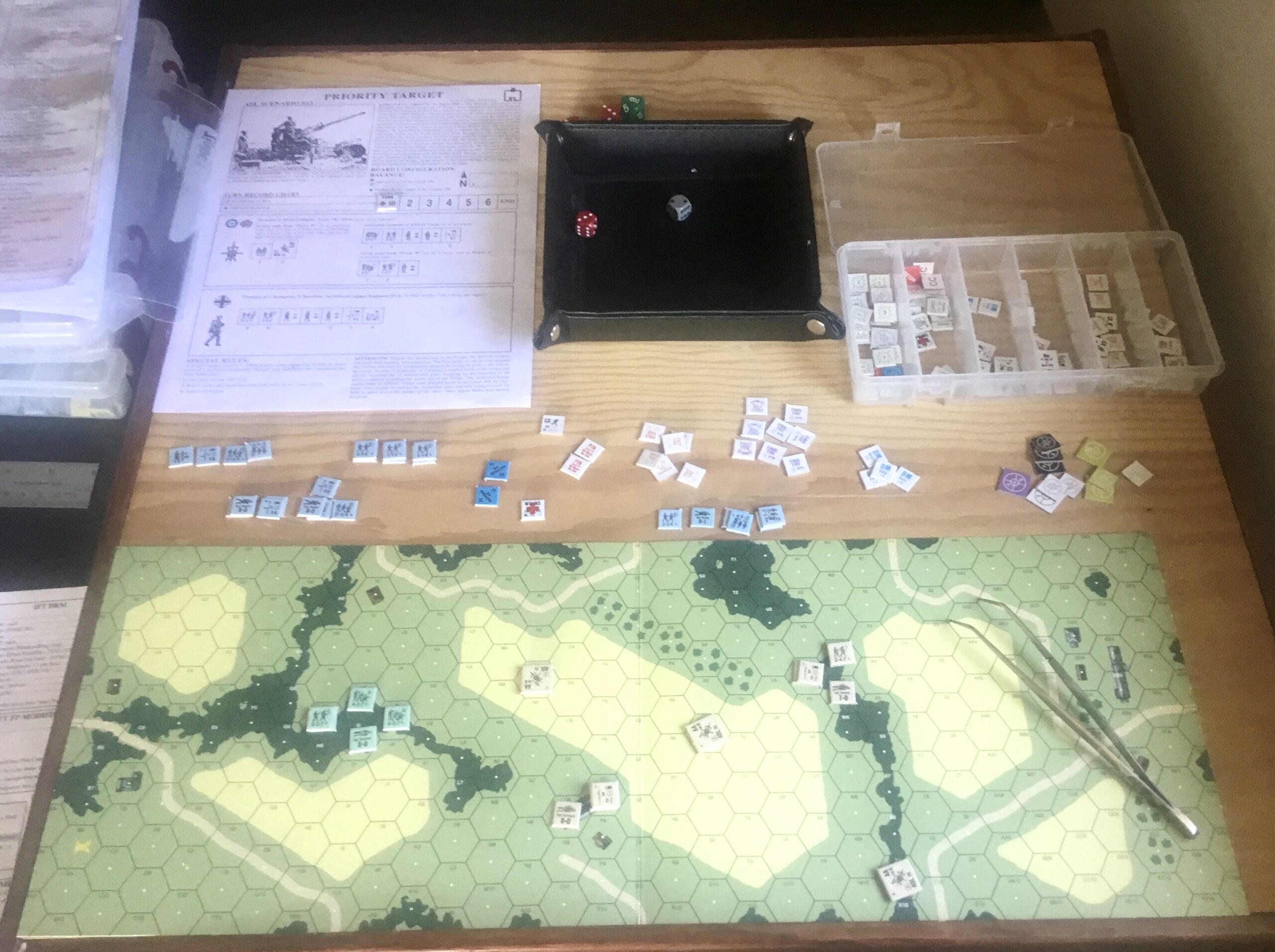
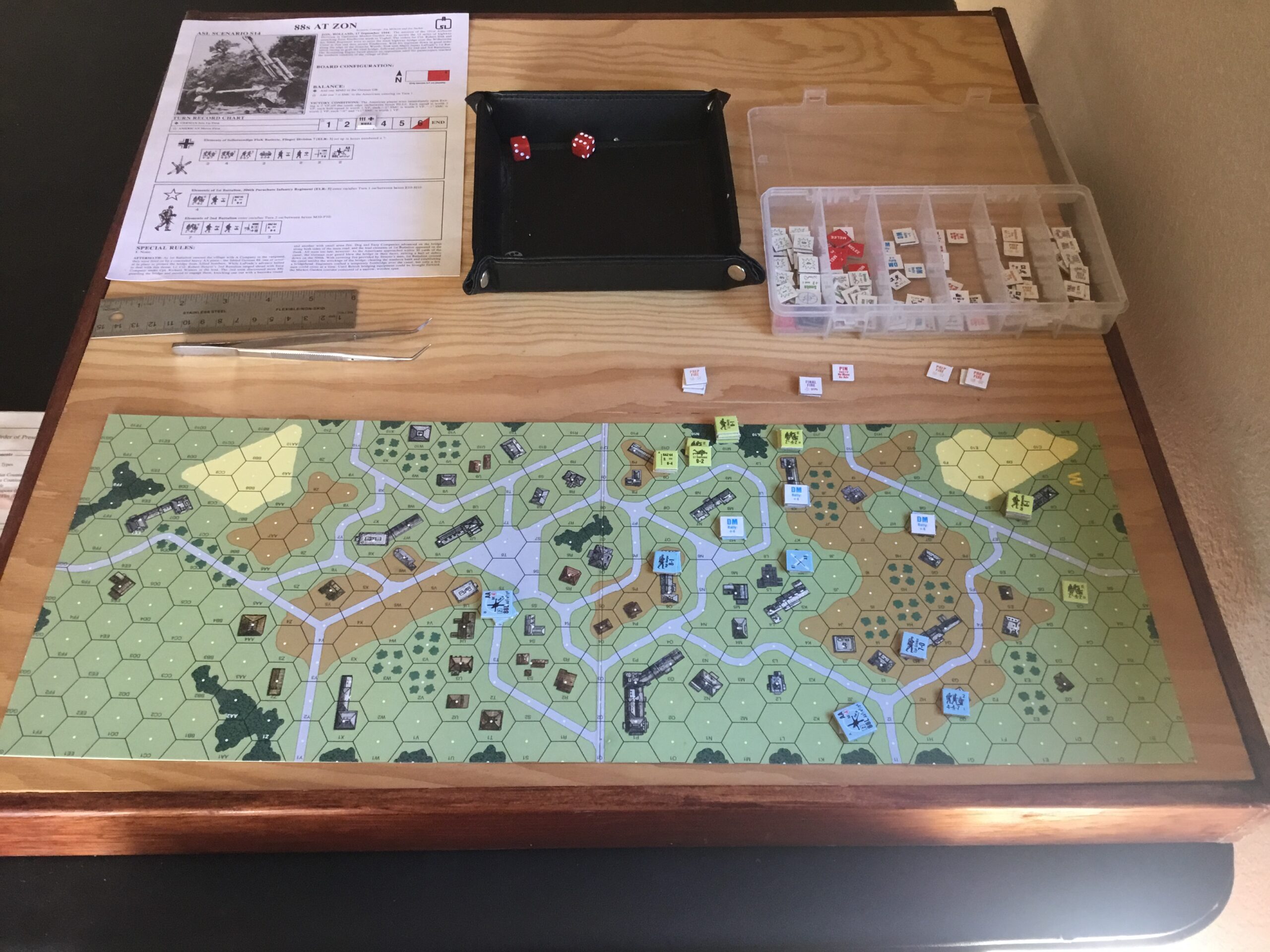
Having fun with Advanced Squad Leader Starter Kit (ASLSK).  Time spent studying rules was time well spent, as game flow is much smoother, with fewer breaks for references.

The game’s ebb and flow would drive me crazy if I was playing an opponent.  However, it is really entertaining when playing solitaire.

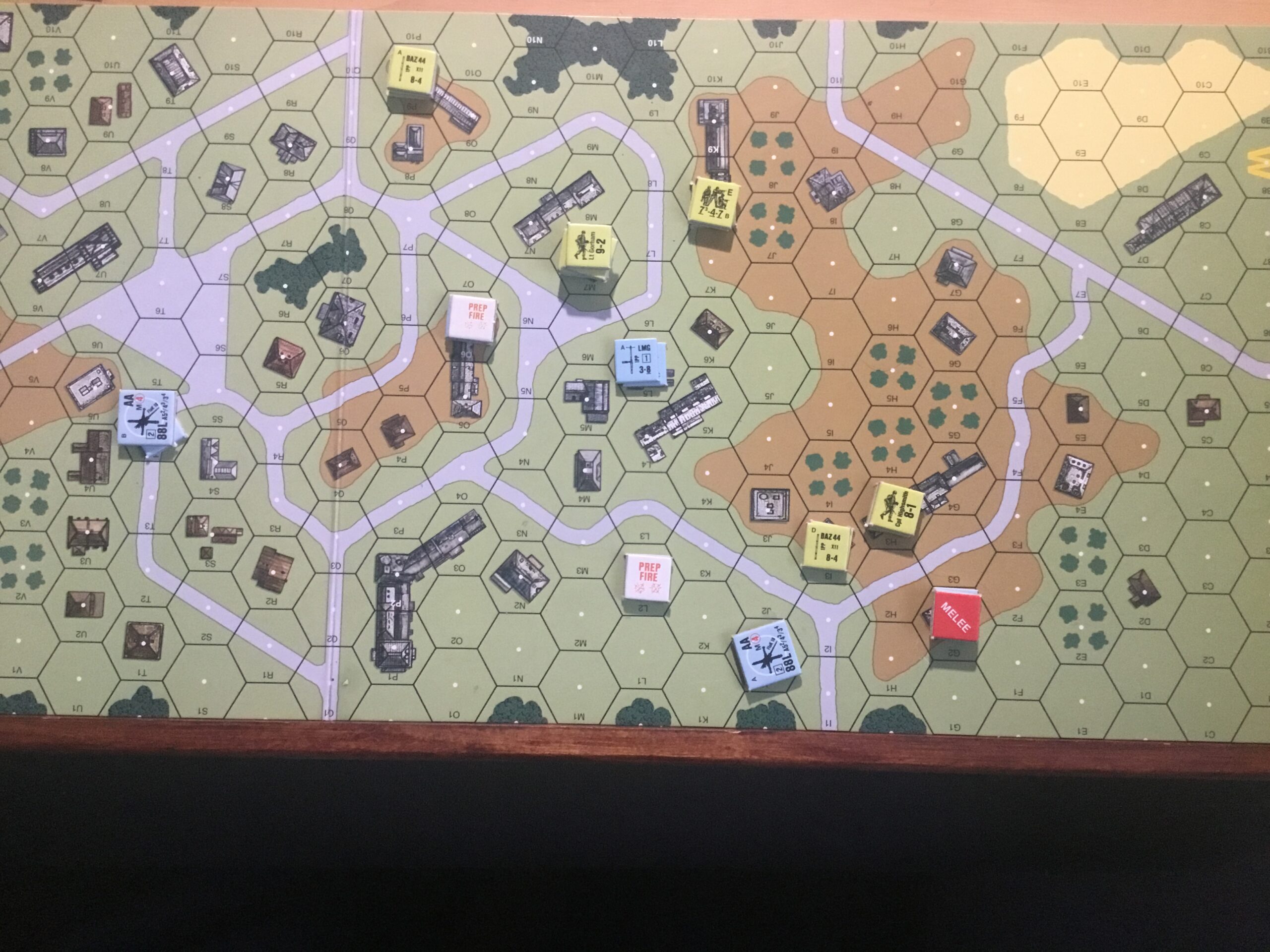
An example from “88’s At Zorn” (S12), last German turn, with US having one turn after that.  To win, US has to exit at leasts 3 squads and one leader from hexes due south of their current positions in the lower right hand corner of the photo.

The Germans appear to be in good shape since they can finally bring one of their 88’s to bear (BTW, good fields of fire for the 88’s are limited, so they can only cover a part  of an avenue of approach).  But, what happened during their Prep Fire?  I rolled a “12”, weapon malfunction!  With that, and a US win in the melee, game over!  The US is able to exit the needed number of units from the map without any opportunity fire.

Now I’m all fired up to play another game.  But, another round of “Zorn”?  I did botch the rules for the first half of the game.  I somehow decided stone buildings were two-levels, completely changing lines of sight (LOS) and several fire combats. It would be interesting to find out if this gaffe really made a difference.

Or, another one-mapper.  I prefer the smaller scenarios, especially when ramping back up on the rules.  I also enjoy playing only one or two moves a session.  More than that and I start suffering from brain-strain.  Speaking of brain-strain……am I ready to dip into the AFV madness of ASLSK #3?  Gently, gently, gently……

Back Home

It’s Summer!

Not the best time to wargame.  Too much fun to be had outdoors.  But,  you can’t spend all of your time outside.  So, a couple of lightweight endeavours for the next couple of months.

The Irregular Wars campaign is on hold, and the “Small Table” is now set up for Advanced Squad Leader Starter Kit (ASLSK) scenarios.  My philosophy with ASLSK is that one has to keep playing it or lose all rules chops.  There is enough rulebook referencing when conversant, so a prolonged absence can make things painfull.  I’m going to take it easy and cherry-pick one-mappers, and maybe maintain momentum into the Fall.

While  figure purchases are on  indefinite hold,  but  I have the itch to build something, I dug up an aircraft model to use in my Red Actions game.  To do it right I need to learn how to “rig up” a biplane.  Things could get frustrating, but what the hell…….

Almost

Was going to title this post “Abject Failure”, but decided that was a little harsh and I need to cling to some shreds of self-respect.

I didn’t finish the game.  In fact, I couldn’t even finish the Central Powers’ turn.  I just had to role for the attacks.  I could use guests as an excuse, but it was probably  the prospect of failure, as the outcomes were grim, and I was hoping for an (more fun) ahistorical outcome.

Here’s where I’m at.

Despite my malingering, I am intrigued by this game.  Lots of options for the Central Powers.

The intriguing peripheral strategy is constrained by a limited ability to move reinforcements to Salonika much less the Middle East.  Yes,  Allied resources can be diverted from the Western Front, but the chances for the Central Powers to force game altering outcomes outside of the West seem very limited.

Maybe their chances are improved using the optional East Front rules, creating additional victory point possibilities, or by playing the 1919 scenario, putting the onus on the Allies to conduct attacks, with the possibility of losing victory points due to losses, and allowing additional time to develop strategies in the east.

Well, to be continued (sure, easy to say) in September when I return to the Sunfish Capital of the World.

The Kaiser’s War – Allies Turn 2 and Central Powers Turn 3

The Allies added three (3) Italian and one (1) US Army during their mobilization phase.  The Italians will arrive at the beginning of Turn 3, with the US Army not arriving until Turn 4.

Arriving Allied units were fed into gaps on the Western Front and Italy.  A French army sailed to and arrived in Salonika. The Allies did not mount any attacks, content to remain on the defensive this turn.

At the end of the turn, the Victory Point count was Central Powers @ 132 and Allies @ 60.  This would be a significant Allied victory if the game ended.

The calculation of victory points is a little different.  Each country has a basic victory point production of 43 points.  I had to figure that out myself.  These points are for Major Capitals, Resource Centers and Political Cities occupied at the beginning of the game.  My understanding is that these points (+/- points for enemy capitals, resources, political cities taken) are added at the beginning of the turn to the net victory points calculated at the end of the preceeding turn.

Here are the three major theaters and the end of the game turn.

The Central Powers started Turn 3 by mobilizing one shock army and deploying the few units they had (or could) mobilize at the beginning of Turn 2.  Another series of shock army attacks on the Western Front drove back the newly arrived US Army.  They managed to avoid elimination by a fortunate die roll.
To the East, continued attacks drove Allied units back into Rome and Genoa.  These will be tough cities to capture, but are needed for victory points.
German, Austrian and Bulgarian armies continued to advance in Salonika, eliminating the original French Army.
One aspect of the rules that takes some getting used to are Zones of Control (ZOC).  Unlike many other games,  friendly units (except those representing fortified zones, or trench lines) do not negate enemy zones.  So, a unit can be eliminated if retreating through a friendly hex in a enemy ZOC, or if a supply line runs through a friendly unit, but that unit is in an enemy ZOC.

The Kaisers War – Central Powers Turn 2

The Central Powers continued their attacks both in Italy and along the Western Front.

In Italy the attacks came up just short of capturing Genoa, but did expand Turn One’s gains along the Adriatic.

Two British armies were pinned along the coast and destroyed near Calais.  German units are now adjacent to Paris.

Combined German and Austrian attacks captured Salonika, cutting off Allied armies from that port.

Here are photos of each front showing dispositions at the end of the turn.

The Kaiser’s War – Allies Turn 1

Unlike the Central Powers, the Allies have no limitations effecting their Turn 1 Mobilization Phase.  Italian, French and British armies are mobilized (cannot enter until Turn 2), and a US army with Pershing’s headquarters, already mobilized, is sailing to France.  This will all cost victory points, but the situation in Italy is bordering on the desperate, and additional units are needed for operational flexibility (that’s a nice euphemism for “jeez I have no idea what might happen next”).
In Italy, a very weak defense has been strung out to (hopefully) delay the Central Powers until reinforcements arrive.  In the West, a fairly strong defense has been established north of Paris.  British forces are advancing towards Beirut and moving west of Baghdad.
Here’s the situation in Salonika, Italy, and Western Front