Category Archives: Miniatures

Leaning In – Husaria Initial Impressions

Had enough of WRG 6th for the time being.  Still have to finish the game today, but I’ve started reading a  new set of late Renaissance rules.

Husaria was written by Ian Wilson, and published by The Pike and Shot Society in 2003. Past tense is used because Husaria is no longer in print.  The exact circumstances are now fuzzy, but I snagged a copy some months ago after reading complimentary reviews, and thinking that they could work well for my 25mm Ottomans, Russians, Cossack, Poles and Transylvanians.

The rule set addresses combat in Eastern Europe from 1558 to 1699.  It is specific in that regard because, according to the author’s introduction,  combat in that region differed from Western Europe (and I paraphrase), in that the Military Revolution had stalled;  the predominant cavalry was still lance armed and prepared to charge home, with gunpowder weapons extensively used, but unable to dominate the battlefield.

Troops are categorized as Elite, Veteran, Professional, Experienced and Raw.  Fanatics can be added to the troop mix when deemed appropriate.

The turn sequence is straight-forward:  Roll for who moves first, movement, combat, second side movement, simultaneous firing, response, and new orders (dispatched by messenger).

Initiative and Response Checks are used to reflect morale.  Initiative is checked when a unit must do something “different”, and Response as a result of an action taken against the unit.  There are many, many, many circumstances for which a check of some type is necessary.  One circumstances that promises to be interesting is the Initiative Check required for the first time a unit attempts to move or fire during the game.   Chaos!

Each unit has a Firing Ability Rating (FAR) as well as Close Combat Rating (CCR).  These ratings are applied, along with modifiers and 2xD6 roll, with results determined by a Combat Results Table (CRT).

There are also rules to reflect unit orders,  risk to the general, disorder, and terrain effects.  In short, the usual suspects.

The rules set includes army lists.  Each army has a core group of 6-8 units.  Additional army capabilities and units are added through die rolls.  This promises some variety for each army.  My hope is that this variety does not lead to additional lead purchases.  I’ve started lead mountain again (on that in another post), and I want it to remain a foothill.

There is one glaring omission!  Each unit is assigned a CCR reading something like this:  CCR 4/3/3, with dividing slashes.  There is nothing in the rules that explain these slashes.  I’ve read the bloody rules about ten times (only 24 pages) and cannot find a bloody explanation.  Ugh!  Will probably wind up sending a bloody message to the bloody Pike and Shot Society to see if someone can explain it.  My guess is that each number refers to a round of close combat.

These rules seem to occupy the middle ground between Gush’s Renaissance Wargaming’s super detailed approach and the more abstracted De Bellis Renationis (DBR).  Should be interesting.
Contact!

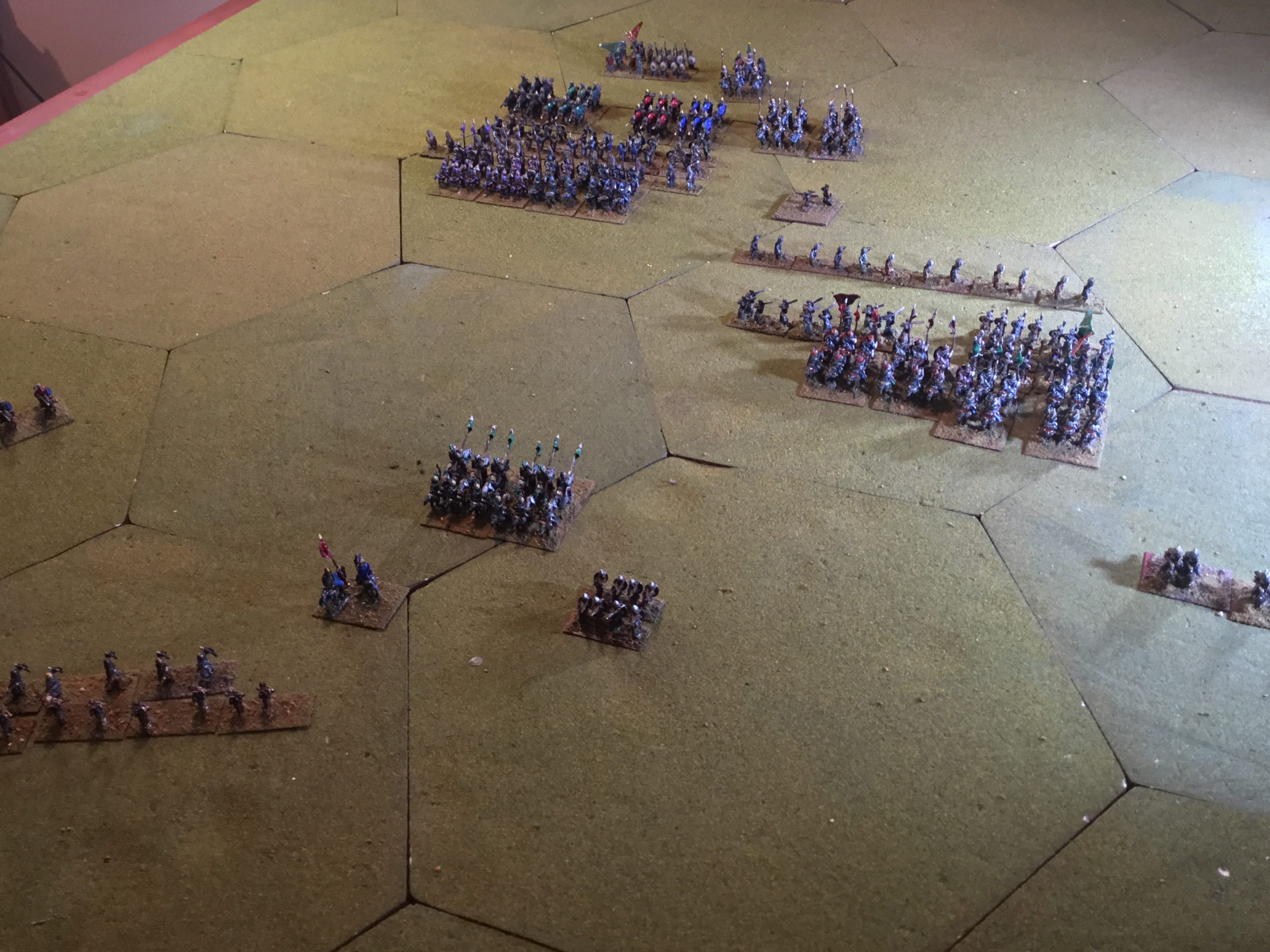
The Byzantine Extra Heavy Cavalry (EHC) have gone to work, breaking the Arab infantry units to their front.  Problem is, when the EHC tried to rally, they went impetuous.  No stopping them now, that is until the infantry’s movement rate goes to zero.  Then the EHC can try another rally attempt.

That’s what the Arab cavalry is waiting for.  Their best chance is to hit the Byzantines while rallying and disordered.  However,   the Byzantine Heavy Cavalry (SHC) are in reserve and moving forward with their general.

Unfortunately for the Arabs, there’s  no help from their flanks.  These infantry units either broke (right flank), or became shaken (left flank)  after seeing their companions in the center of the line break.  The remaining Byzantine light troops continue to pressure these flank units, forcing them to take reaction tests under unfavorable conditions.

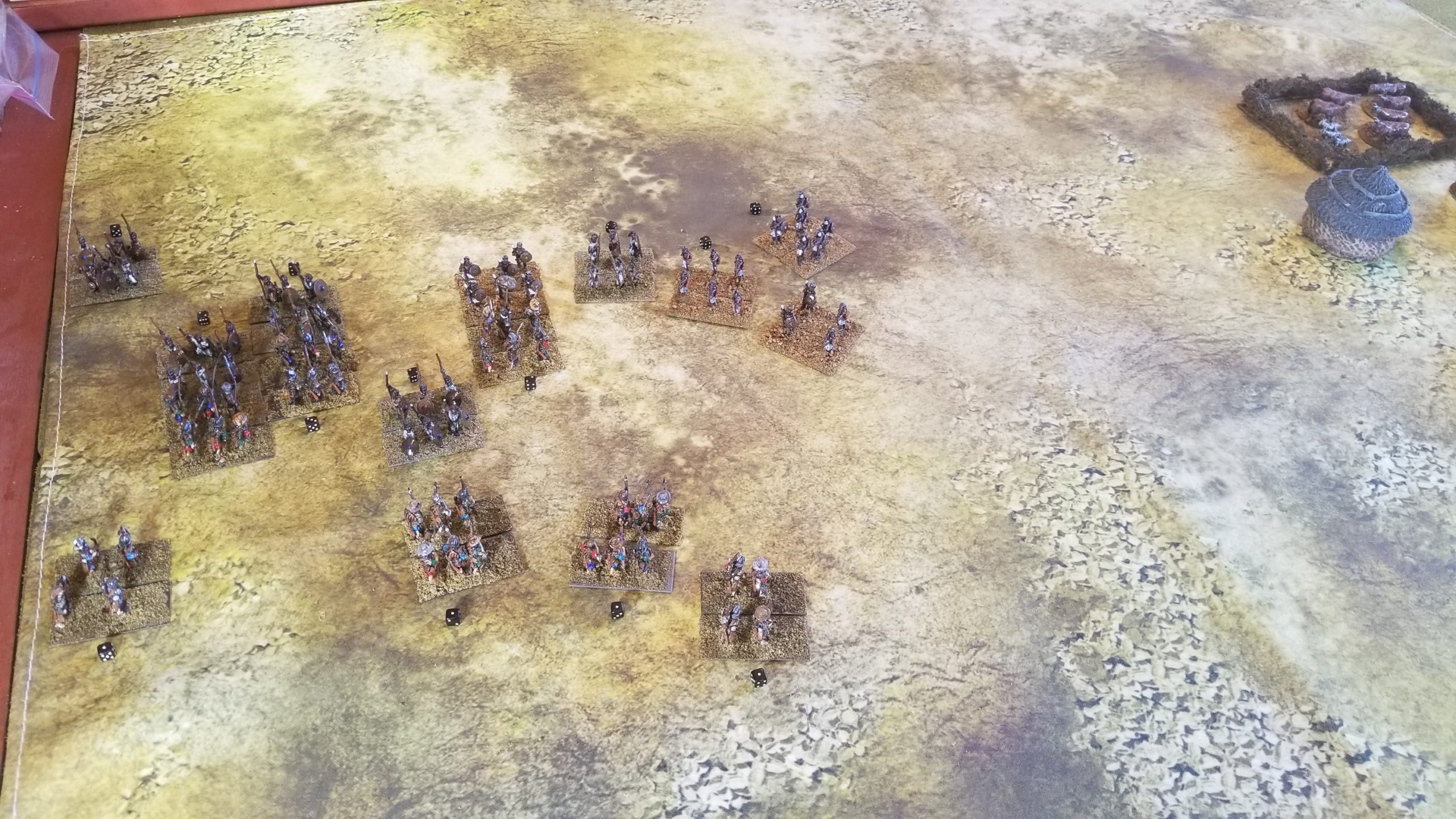
It will be quite the scrum in the center.  A quick ugly pic of the situation.

Dead Pile In The Upper Left Hand Corner

I’m A Strong Person…Yes I Am….Really

In the latest WRG thread, I whined about not being strong enough to put together a workable synopsis/cheat sheet for the rules I find most challenging (read obtuse).

I channeled a TardMuse, and put one together.  Here are  the links to this work in progress.   Any corrections, other ideas are welcome.

Page 1       Page 2

Just click on the small(ey) images and the normal ones will appear.  Jeez… another thing to figure out.


More 6th Edition

Now in Turn 10 of my latest WRG 6th Edition game.  As hoped for, the going is smoother.  Not just rules knowledge, but my tactical sequencing has improved.

By this I mean the staged use of troop types.  Light infantry is given time to skirmish, heavier infantry deploys methodically and, most importantly, the cavalry (especially the Byzantines) wait for the proper time to advance and charge.  I know, basic stuff, but that’s what I lose sight of when grinding through a new rules set.

This sequencing seems especially important with WRG 6th Edition.   If you miscalculate distances between those three troop types, you wind up with units stacked up, without room to maneuver.  The results are ugly and, to paraphrase Dean Wormer “Disordered, Shaken, Burst Through and Routed is no way to go through a WRG 6th game.”

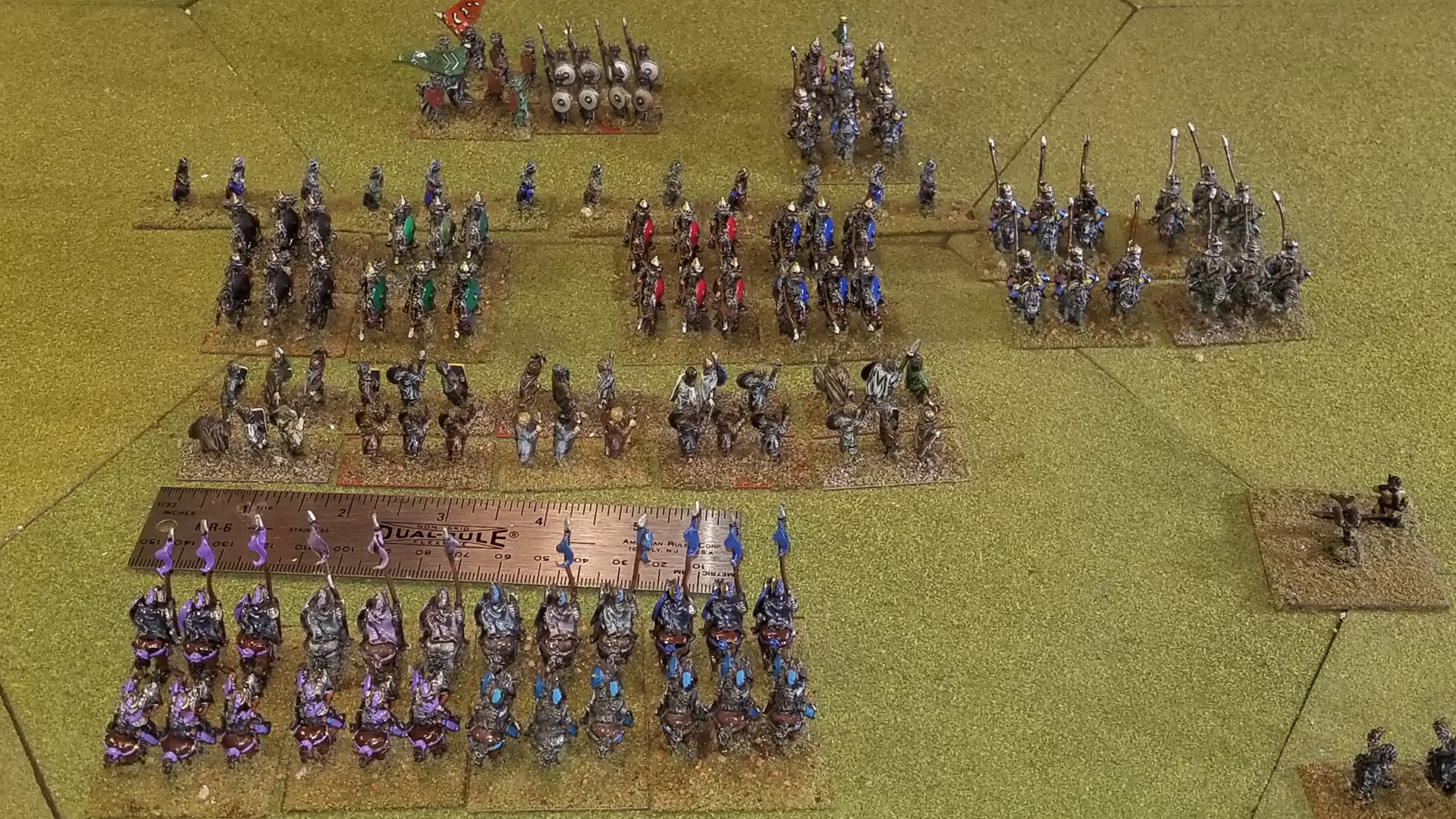
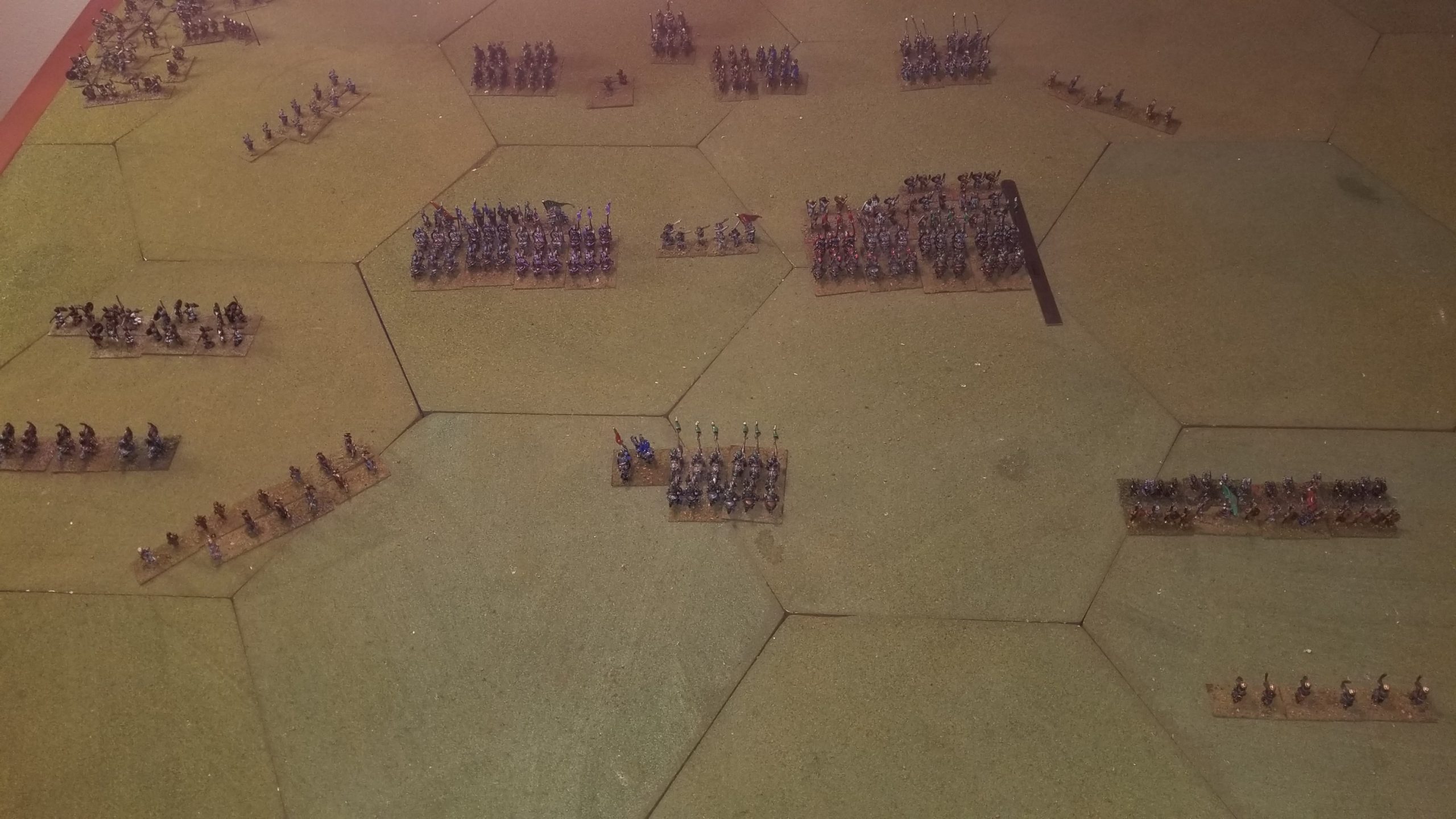
This crummy photo from my first game illustrates what can happen.

I kept the ruler in the photo (all how-to-do-it references for wargame photos stress not to leave game paraphernalia out of any shot – which I don’t get because any table I’ve played on is covered with rulers, dice, tables, charts and rule books) spatial reference.

The Arabs are at the top of the photo, Byzantine cavalry at the bottom.  The light infantry has evaded through the heavier infantry and cavalry , with the infantry now blocking any cavalry response without disruption, either by a countercharge or rout.  And, what the hell will the body guard at the very top of the photo do?

For better or worse, 6th Edition RAW (Rules As Written) won’t let you just slide units all over the battlefield.  No “fast and furious” here.  Sloppiness has its consequences.

As mentioned in my earlier posts, these rules are difficult.  At this point on my learning curve the big problem is that answers to tabletop situations are often spread out through two or three rules sections.  This is especially true for rout, pursuing, and rallying.  While there are sections focused on each topic, the nuance is buried in movement, or dicing for arrival or some other sections.  If I was a stronger person, I’d track all of this down and consolidate into a situation-specific write-up.

Anyway, I’m fortunate that I can enjoy the game at a leisurely pace and not pressed to finish in, let’s say, an afternoon.

Details, Details

Now in my 12th turn of my first real WRG 6th game. This is where all the shortcomings become apparent. Rules problems effecting play, various combinations of errors of omission and commission, bad tactics, a record keeping system that is not effective, and the creeping feeling that I’ve had enough and need to either reset or try something else.

The latter is, to me, the real challenge in wargaming. Who wants to slug it out, pay attention to logistics, grind through an attritional slog, go to the rulebook one more damn time? Too much like real life.

But, right now, is when you really start learning a game. You have to dig through those rules and read them very, very carefully; looking for nits, buried fractions, lengths and percentages.

Hopefully, this will all make the next game a lot more fun. Because, this one is now dragging

Regardless of this low pitched whining, it is a fun game. Light units have skirmished and scattered, the Byzantine Heavy Cavalry is blasting through the enemy infantry, just about to come into contact with their Arab counterparts. Their Super Heavy supports lagging behind, with Arab light cavalry lurking on exposed flanks.

It’s mayhem that should end in about four turns.

Here’s a representational photo.

Underway

Finally have the WRG 6th edition armies discussed some time ago on the table. As usual, the process was not smooth.

I’ m older than when I first started playing this system, but not wiser when it comes to matching up figures and economically compiling an army list. Always was problem. Neat listings very quickly rendered illegible with cross outs and scribbled notes.  Thought I had these things worked out when I ordered the new figures. But, once based and consolidated into an army list using the finished painted figures, the results were less than optimal. Workable, not not approaching optimal.

 Of course, I had the immediate wargamer reaction that the solution was  buying more figures, expanding what I had. But, that was madness given cost and shipment time. Also, the thought of another larger scale painting project just makes me cringe. So, instead of that, it was back to rebasing and finagling the unit mix.

Fortunately, I came up with a very satisfactory mix for each army, minimal figure wastage (only 4 painted figures not used) and a workable 1,200 or so point total for each side. Just right for a game with each side commanded by a single general.

In between sessions of rebasing figures – which for me always includes the nerve wracking prospect of an Xacto knife blade snapping and flying into my eye – gluing and re-flocking, I found time to really dig into the rules.

When you Google up “WRG 6th Edition Rules” the narratives are not positive. There is some feeble recognition that this rule set was once state of the art but the emphasis is on complexity and the availability of newer rules.  However, I find the procedural nature and author Phil Barker’s mannered and arcane presentation (with critical elements of information sometimes taking the form of a single buried sentence) oddly soothing. These rules whisper “Take your time, there’s no hurry, this action doesn’t have to be ‘fast and furious’”.

My first walk through lasted 3 turns on a terrain-less surface. Lessons were learned, some figures rebased (again), lists reorganized and I re-set, again without terrain. I ginned up  army rosters to keep track of orders, casualties, and other miscellany.

Now, three turns into my second game, I’m impressed on how smoothly the system plays.  Especially when there are no Rules Lawyers to deal with – and in my distant memory this system was notorious for attracting/creating them.

Sure, the checklists of reasons to test Reaction, and those for Shooting and Combat modifiers are lengthy, but not so onerous that a quick glance through takes care of any adjustments that need to be made.

All in all, I’m glad to playing WRG 6th again. No need to find a “better hole”. For Now.


Finally

Finished up the Wargames Research Group (WRG) Byzantines and Arabs, after way too much discussion and too little action.

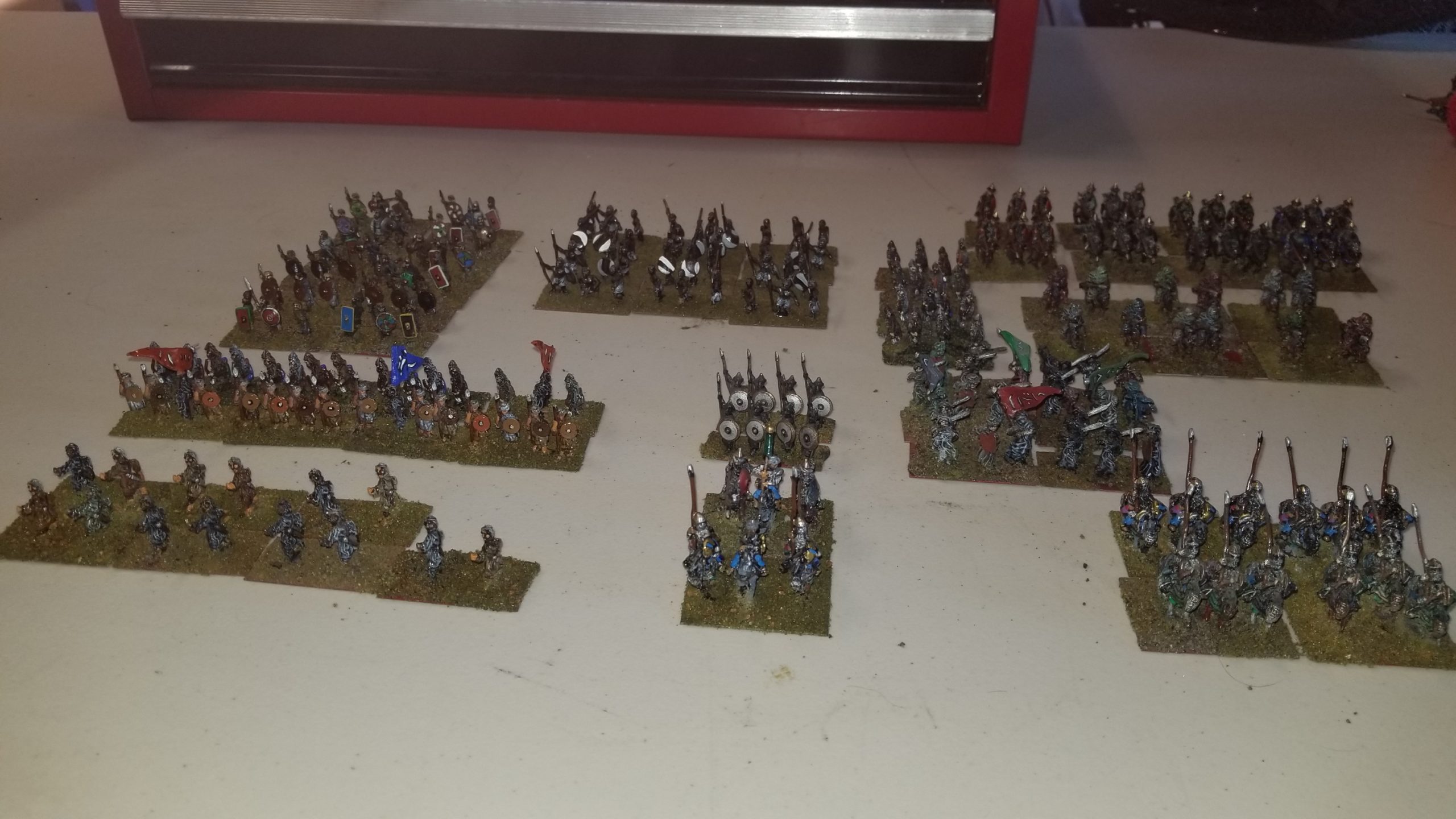
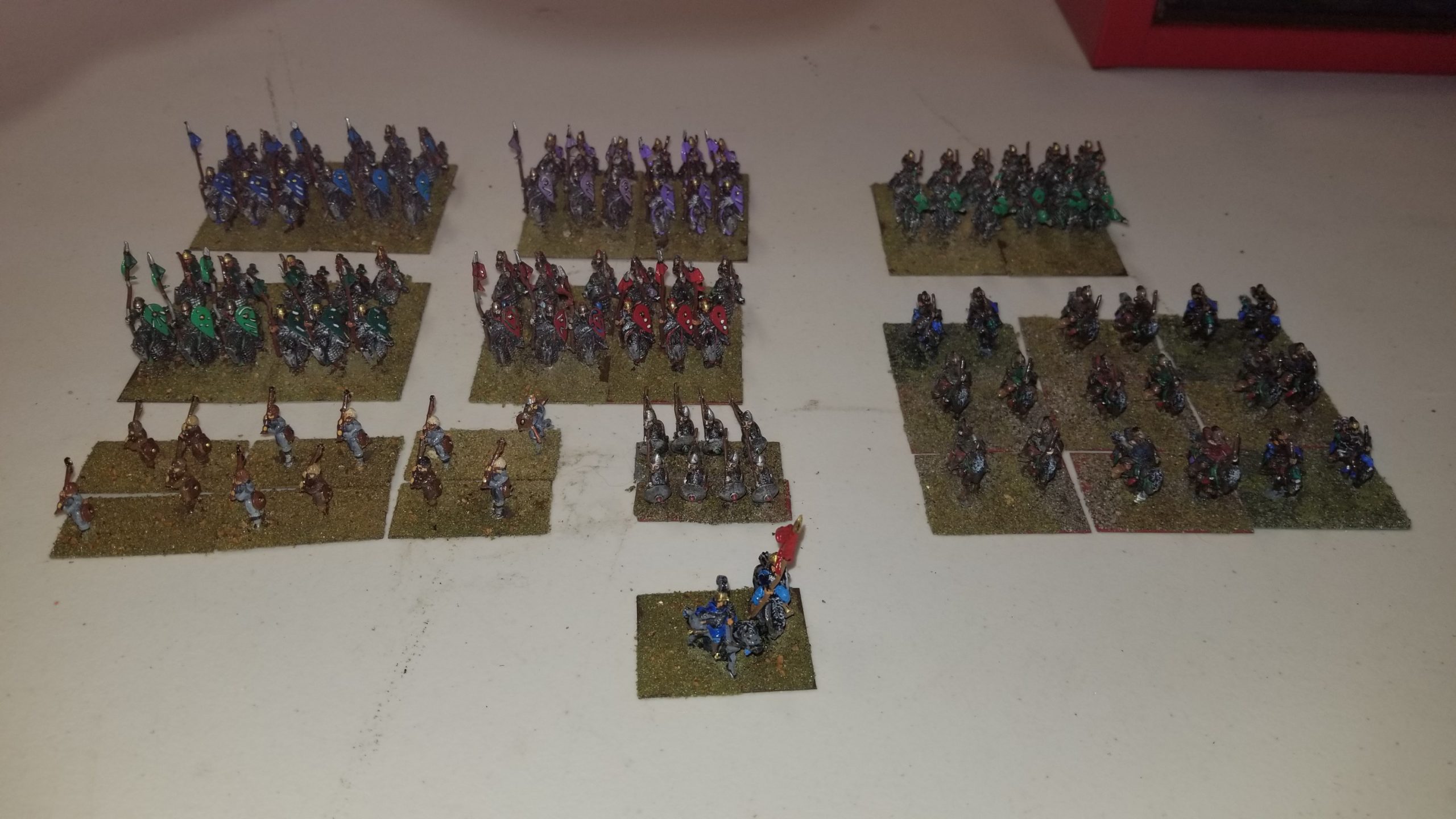
Two different forces.  The List #117 Niekaphoron Byzantines with heavily armored cavalry, skirmishers and Pechneg light cavalry.  The List #100 Arab Conquest Army is  a more colorful group with cavalry, Russ, Sudanese and Arab infantry.

A fun match up.  But, like most armies, they go straight from the gloss coating to a storage drawer.  I think Fall will be a good time to get them out.

Here are some poor photos taken in the garage, site of organizing and basing.

Arab Army
Byzantine Army

Progress

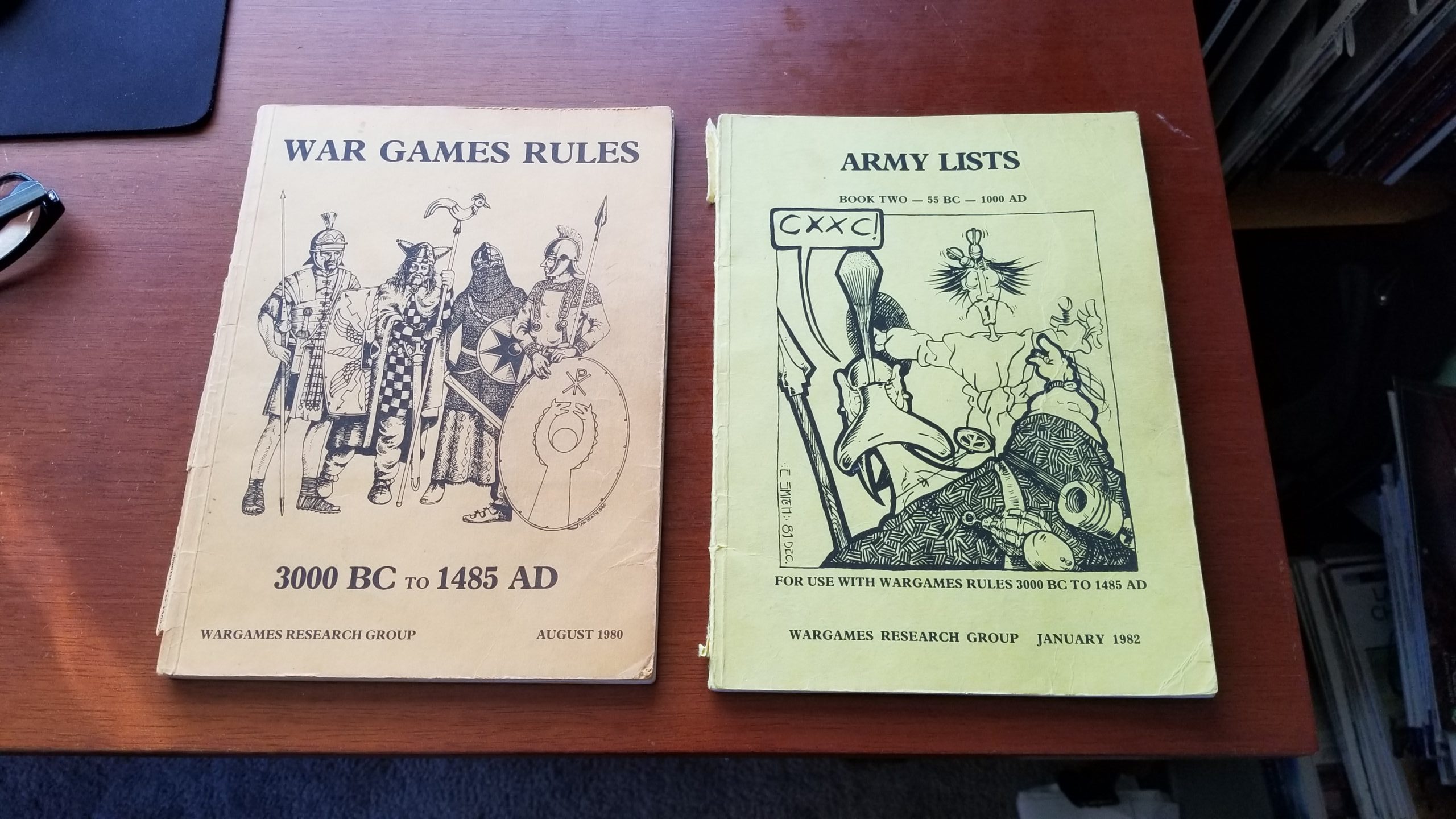
One of this summer’s ongoing projects is finishing up my 15mm ancients to use with Wargames Research Group’s (WRG) 6th Edition rules and Army Lists.  So retro.  The rules were published in 1980, and  used by the old Kansas City Society of Ancients group.

The figures are old Tabletop Miniatures figures, which became Alliance Miniatures, and are now marketed by Alternative Armies.  My collection started back in 1991 when Tabletop figures were cast in Des Moines, IA of all places.   I stumbled upon their small industrial space when I was living in Cedar Rapids, IA (of all places).

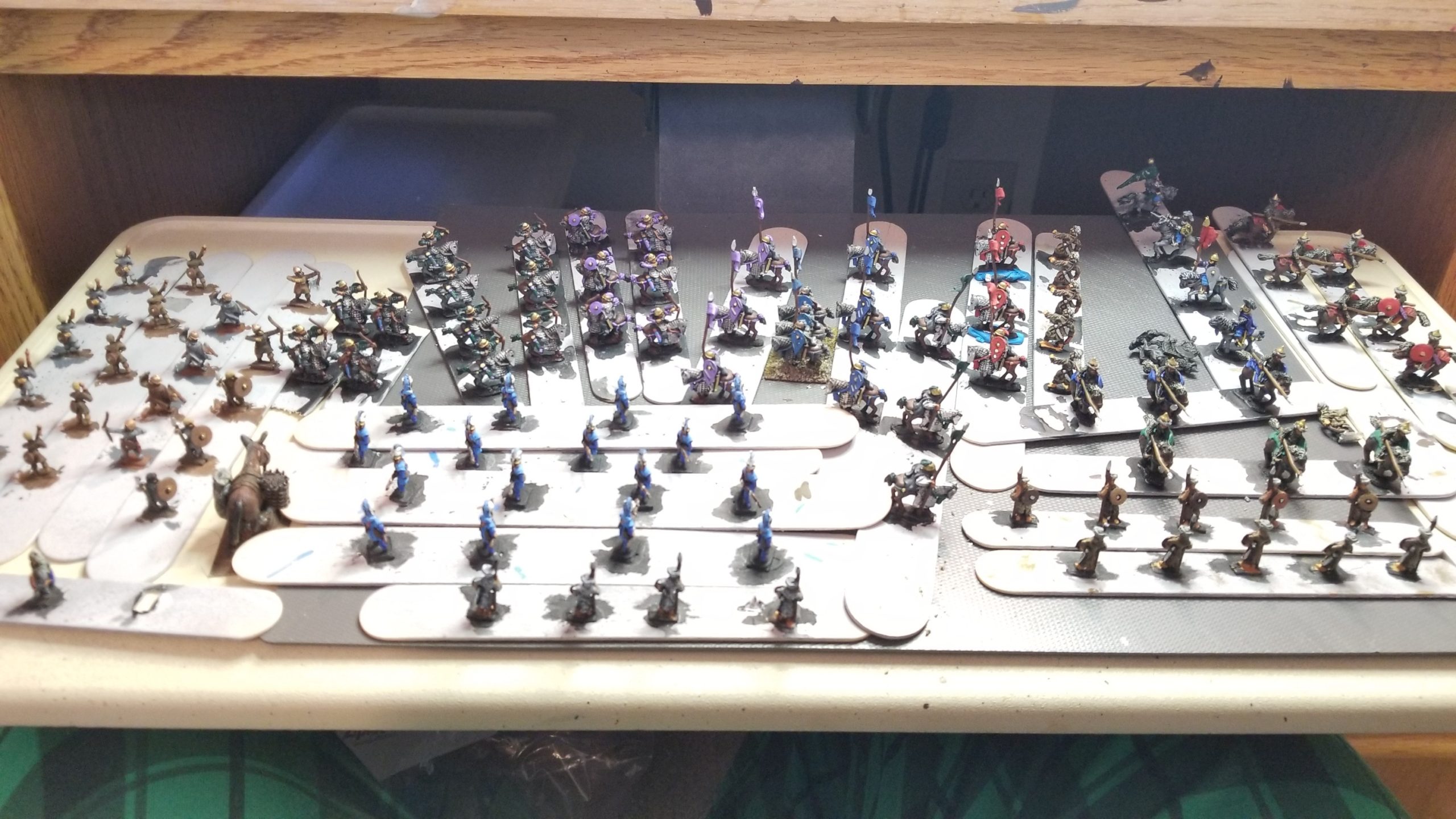
The initial plan was to use them for DBA.  And, they were.  But my interest in DBA has waned and I became interested in reviving the WRG rules.  So, some purchases had to be made at Alternative Armies to fill in the gaps for the Arab Empire (List #100) versus the Nikephorian Byzantines (List #117).  These two armies provide  options that fit what I had already painted, so the new purchases were – thankfully – limited.  Here’s a photo of the latest recruits.

I have nine figures left to paint.  Outside of refurbishing my Medieval 15mm figures, and supplementing my TSATF Boxers, this is the last painting project I have planned.  My limited skills have eroded and I have more than enough painted figures from more than enough periods to keep me more than enough busy.

Next  the necessary drudgery of basing/re-basing.  I hope to start  next week.

Always The Last To Know?

The good news is that this isn’t another relationship situation.  The bad news is that it looks like the Tanks! franchise has been discontinued.    No posts in quite a while and no merchandise in the store.

While I use the less expensive Zvezda models, I did enjoy checking out the site for scenarios and information.  I guess I will go over to Flames of War for news updates.

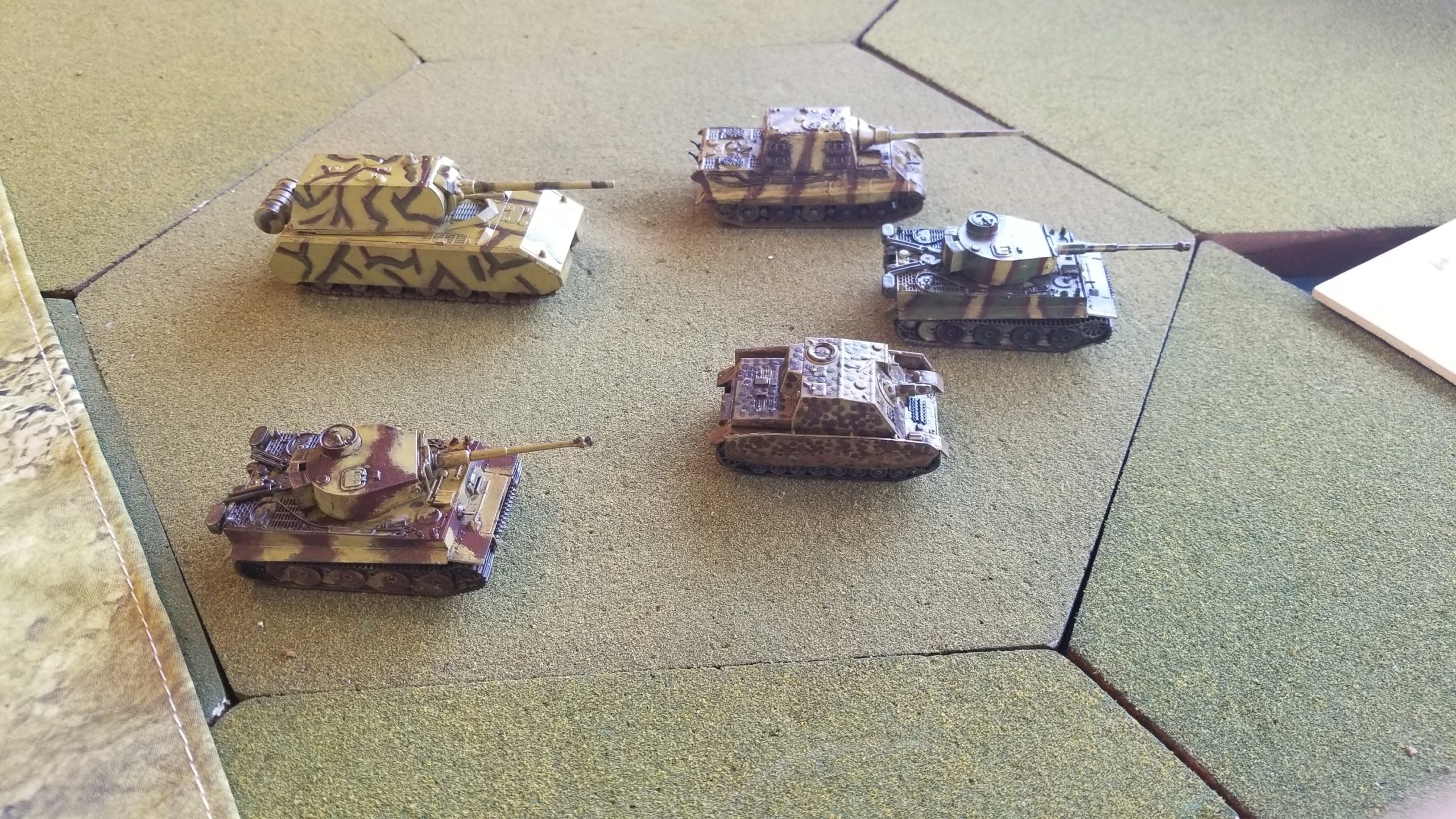
Meanwhile, I continue to build up my late war Germans in anticipation of creating some urban combat scenarios.  Here’s the latest additions.  One more traunch of kits to finish up for a representative set of both German and Soviet AFVs.


Rout At Kattego

The short story is the Kattegoans routed Lord Renaldo’s Portuguese in a hard fought battle.

At the end, few of either side’s companies (units) were capable of movement to contact since their Resolve had dropped to one, as both leaders were either involved in melee or too far away to effectively rally the affected companies.  With low Resolve, a company cannot enter into melee, but can still shoot.

This problem was mitigated by my failure to role for Impetuous Actions for those units outside of command radius.  However, I can partially rationalize this oversight because each company kept to their original plan.  An exception was the Kattegoan leader taking his company on a wide envelopment.  While in the short term this placed him out of touch with his companies, the end result was to flank and scatter (rout) Lord Renaldo’s company, putting an end to the battle.

I can’t rationalize my failure to use a leader’s +2 die roll modification in all but the last round of melee.  This had a significant effect on the Portuguese, as Renaldo’s company was in a melee marked by a series of Inconclusive Draws (no effect on either side) for almost the entire battle.

Only the dogged Pikemen and a lone Crossbow company remained cohesive enough to cover the Portuguese withdrawal to Ekene, where they will remain for some time after this failure and accompanying loss of prestige.  While Lord Renaldo will remain in command for the time being, that may change after word of the debacle reaches Lisbon.

Oumar, the Kattegoan leader, proved to be a somewhat unorthodox commander, leaving his companies to flank the Portuguese force.  While aided by my rules omission, this tactic proved decisive.  He is now considered an Experienced Lord ( proven leader)and will now receive a +1 die roll modification for Initiative.

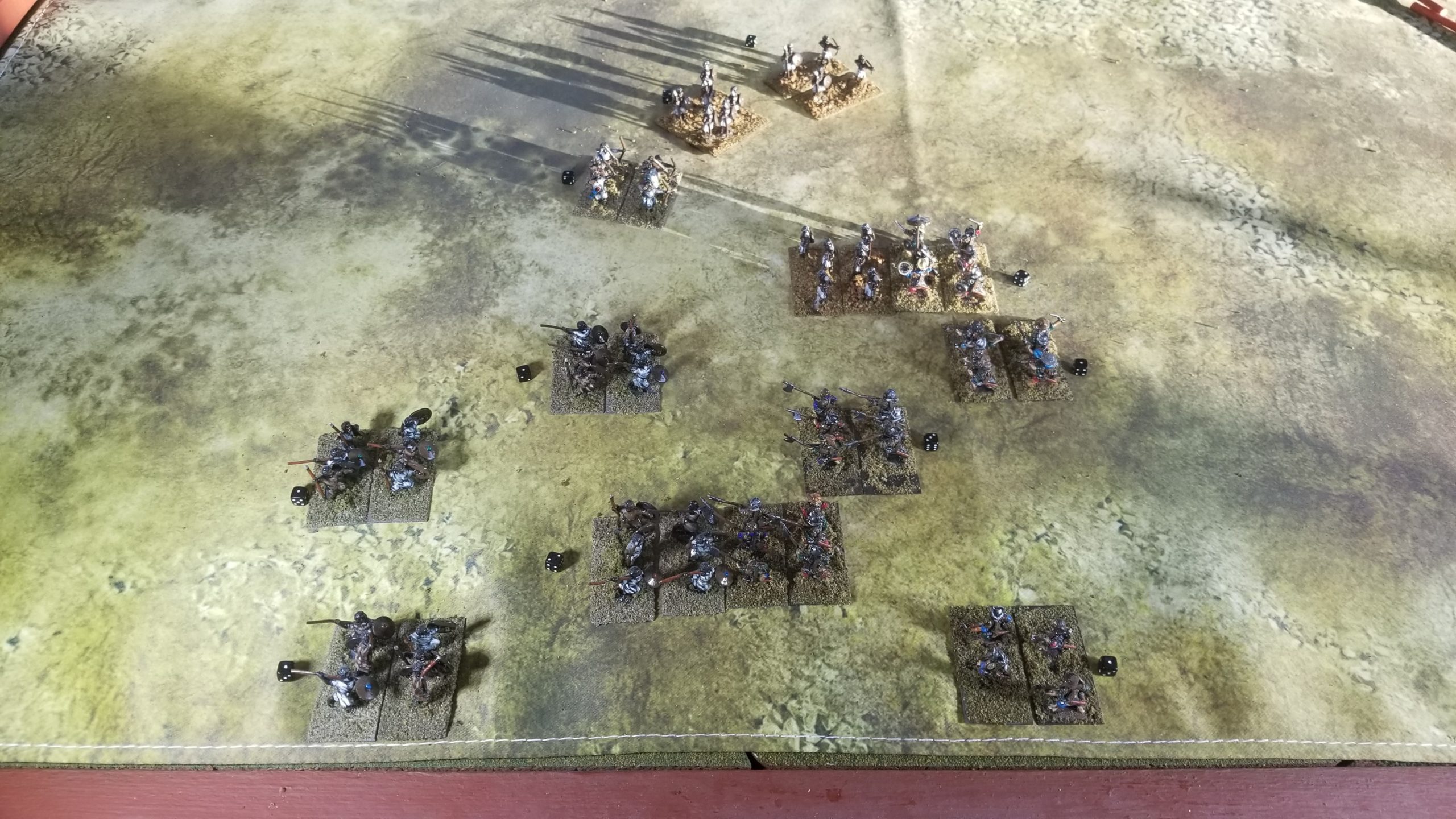
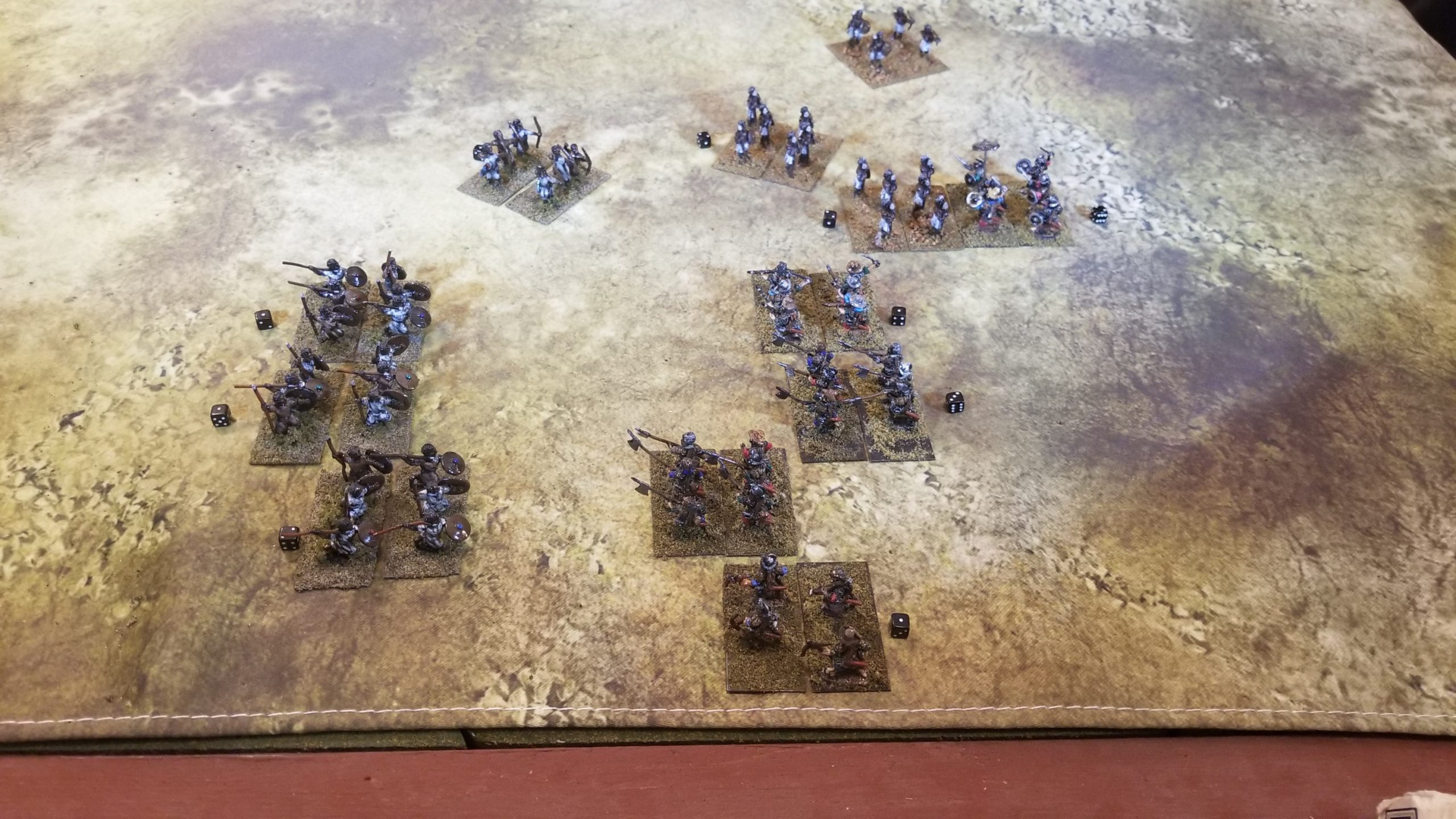
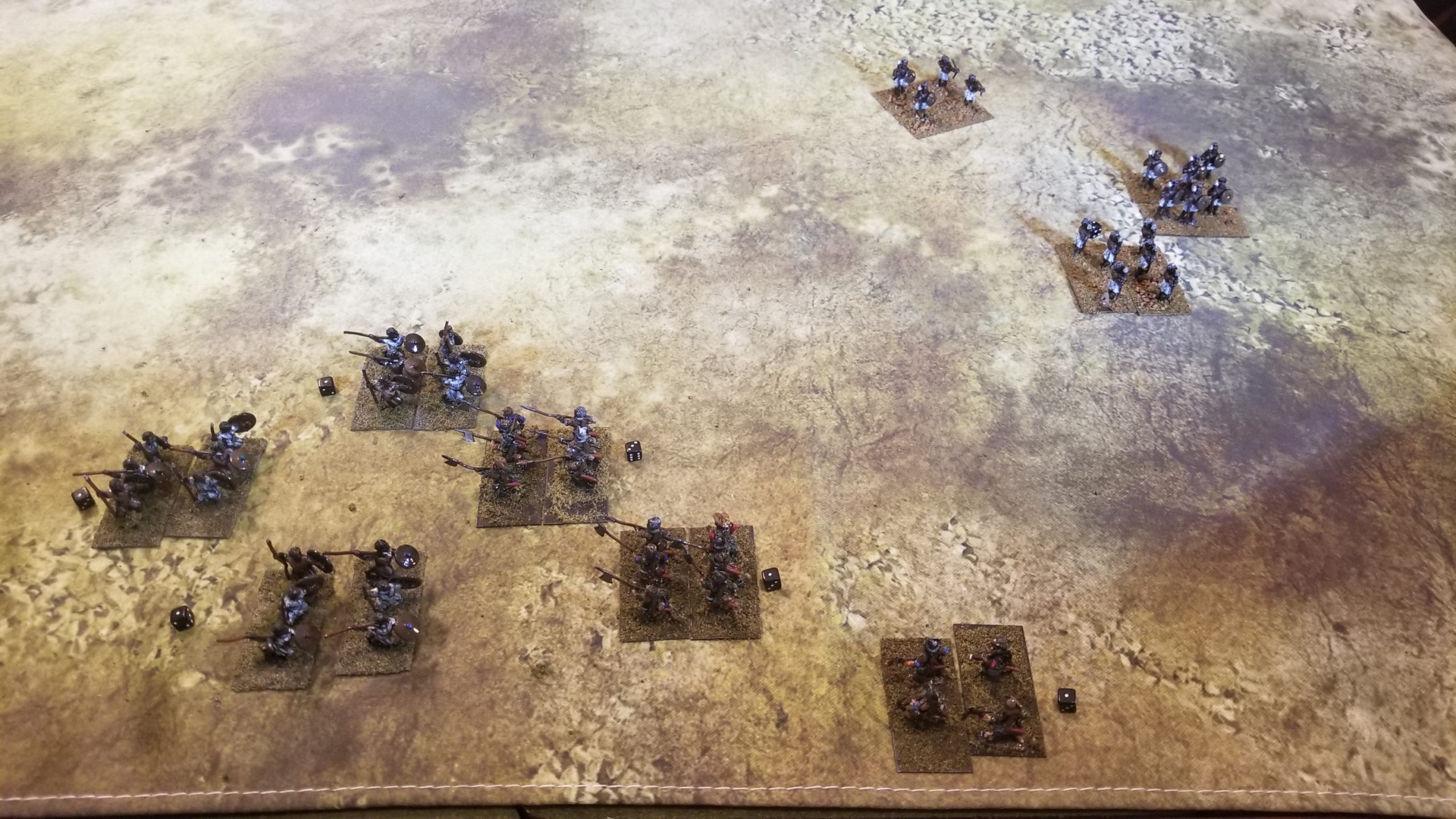
Here’s a series of poor battle narrative photographs.  I also need to figure out how to change the font/size for the captions.

End Turn 6. Looking West. Note the number of “1” Resolves for the Portuguese. Pikemen on left. Lord Renaldo’s melee in center. Oumar’s company at the upper right behind archers.
End Turn 7. Looking North.
End Turn 8. Looking North. Oumar’s company moving towards contact with Renaldo’s Company. Kattegoans now with low Resolve.
End Turn 9. Looking North. Carnage in center. Both sides’ companies scatter. Renaldo’s company scatters, also.