Quick note: If you are viewing this on an IPad or IPhone, scroll down to the bottom of your page. This is where you will find the tags for Operation Groza and Europa.
Yes, it’s been a year since I posted up about Operation Groza. Why? Sheer indolence. But recent announcements about Europa provide new motivation.
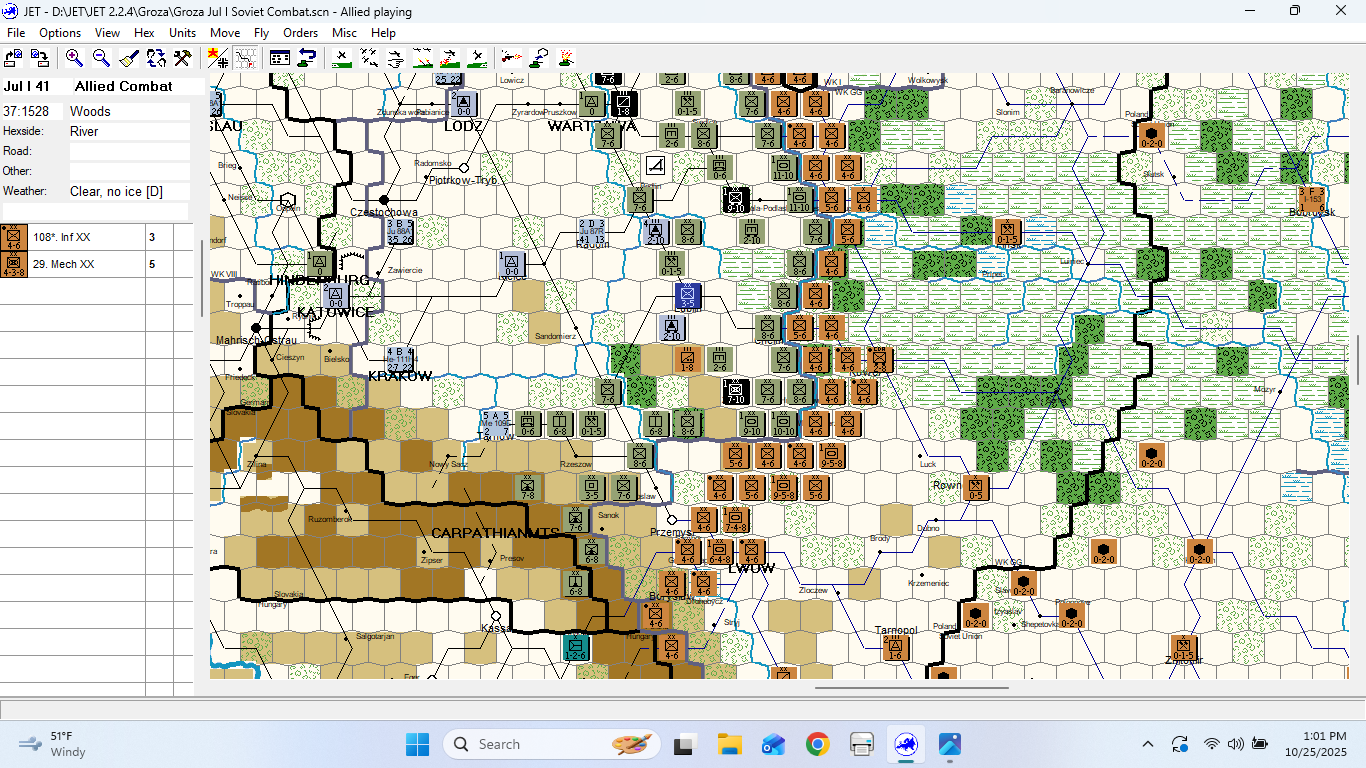
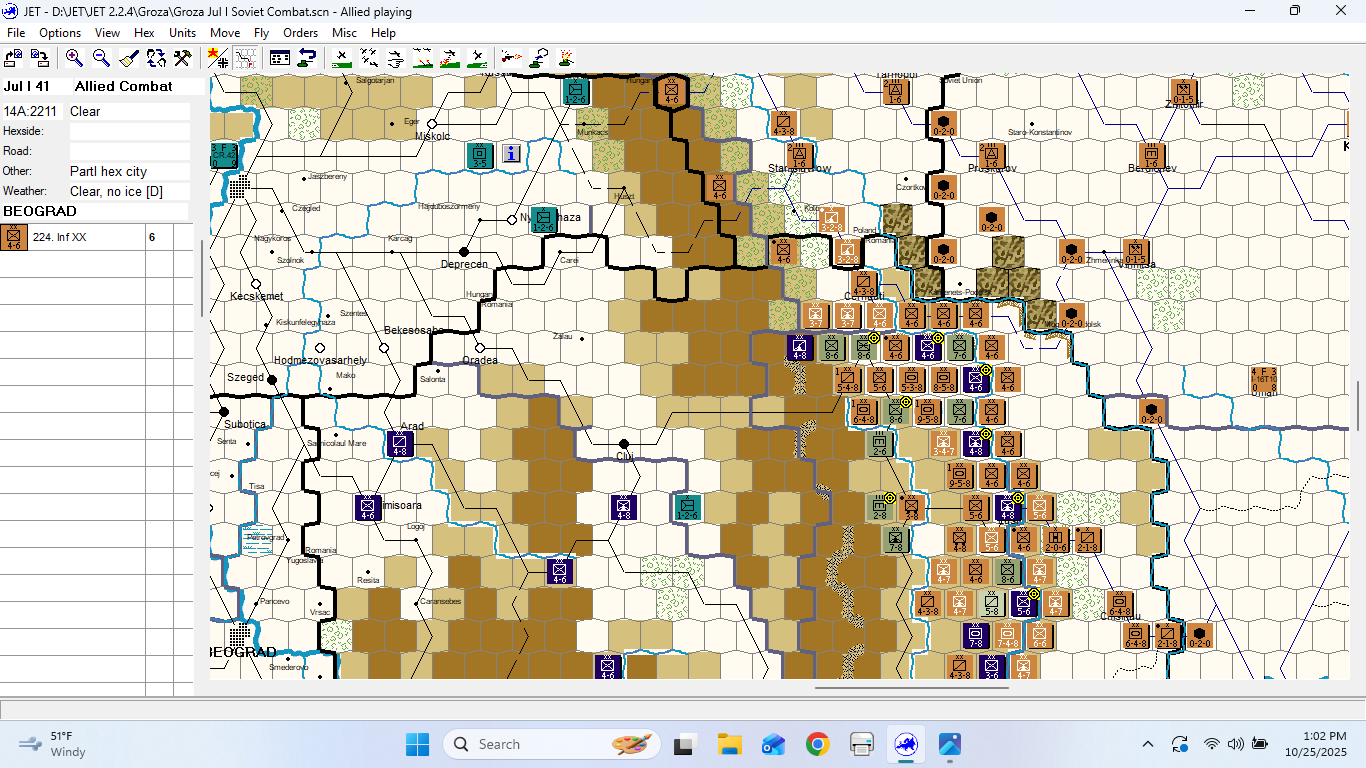
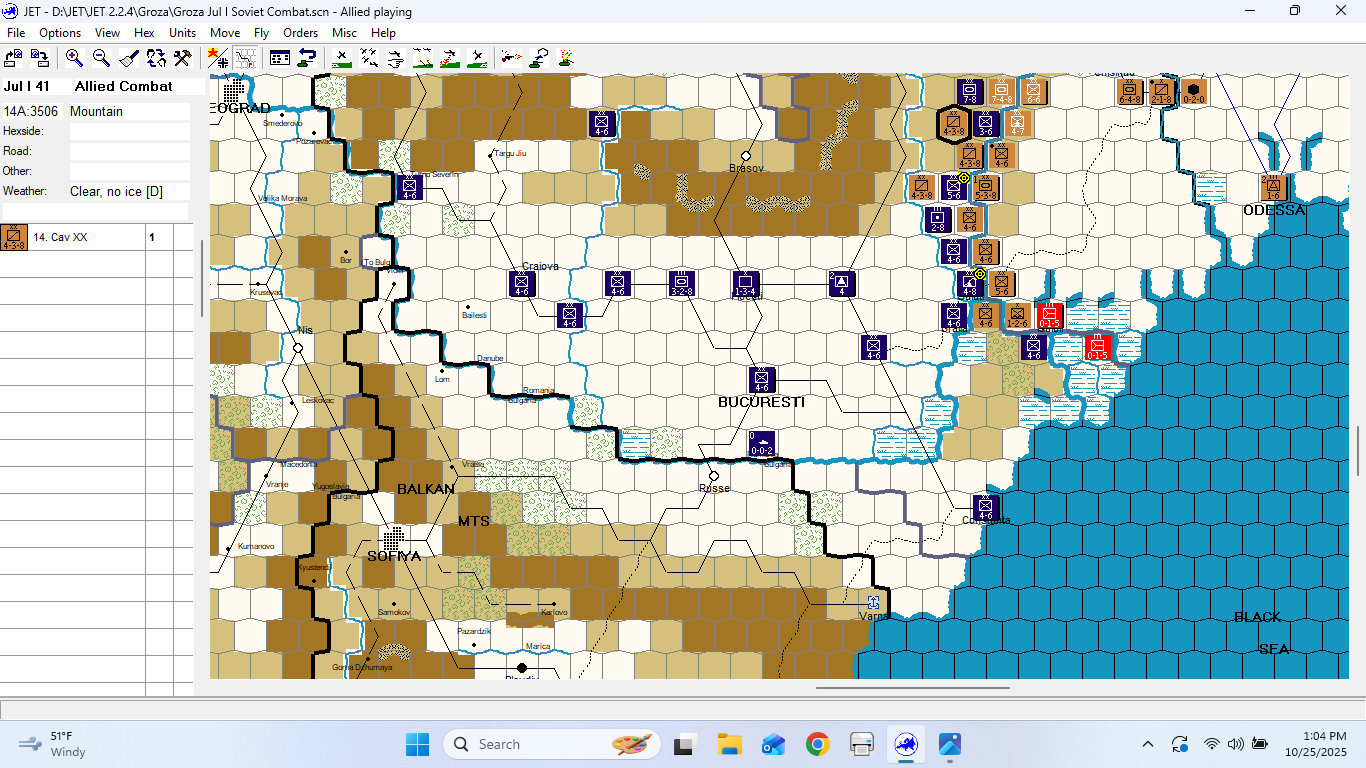
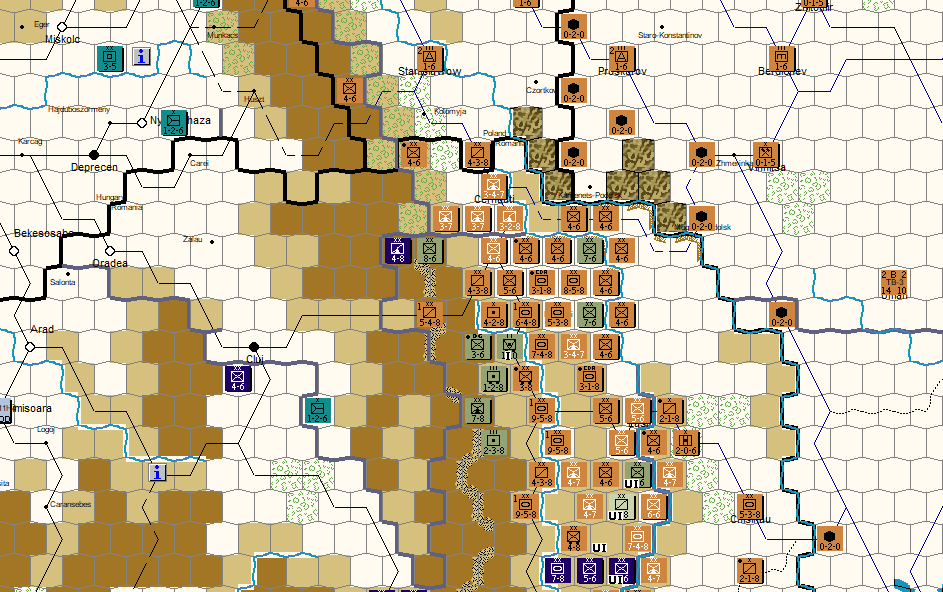
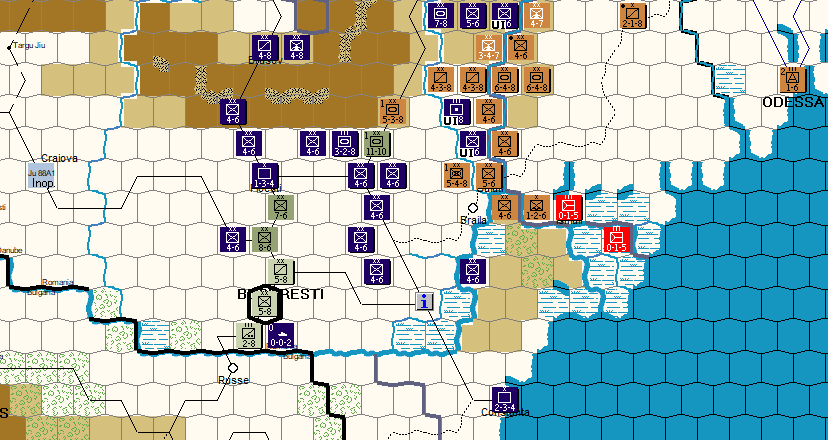
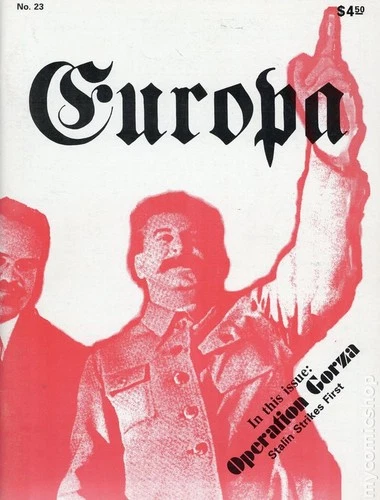
To recap: The Groza scenario was published in The Europa Magazine #23, with many special rules and modifications to the Orders of Battle (OBs) found in the Scorched Earth module. Tim and I wanted to play Europa, were intrigued by the scenario, and anxious to try out the Barbarossa Unleashed draft rules published by John Astell. Tim took on the herculean task of adapting the elderly, but still very serviceable (let’s just leave it there), JET Scorched Earth module for Groza. This involved merging maps and creating supplementary counters. We started play in late Winter 2025.
Might all of this involve confusion, numerous operator errors, and low levels of frustration? Not to mention the usual screwing up? Yes! So, here we go, starting with a summary of special rules with subsequent posts describing game play, observations about the rules, and lessons learned.
BTW…..We have reset, and are in the process of starting a new game. But, back to old business.
The game begins with the Jun II 41 (Soviet) turn. There are several significant factors affecting each side’s initial deployments.
Axis Player –
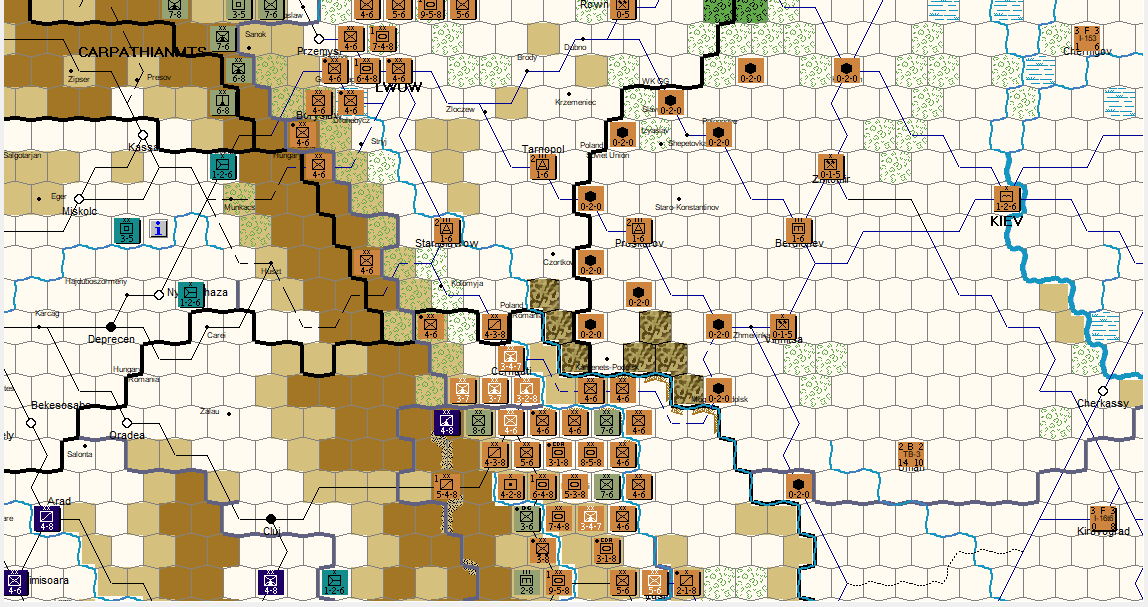
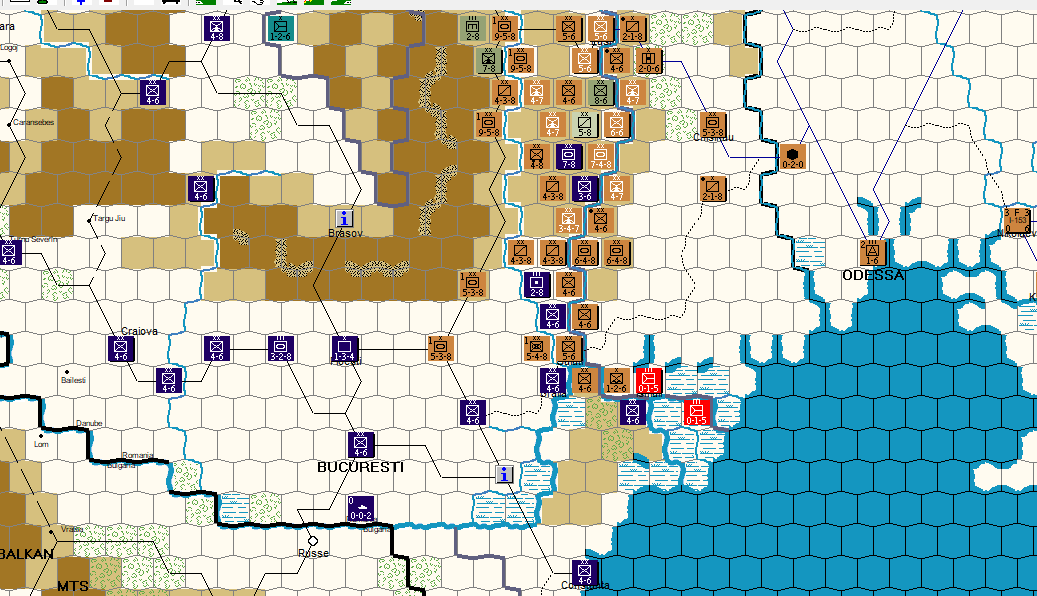
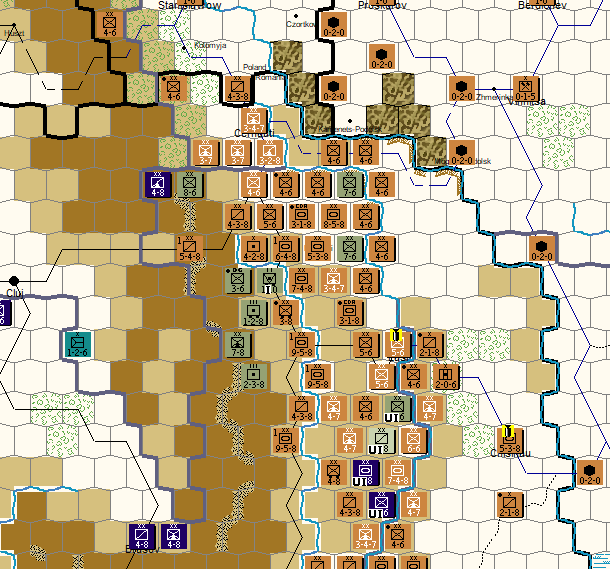
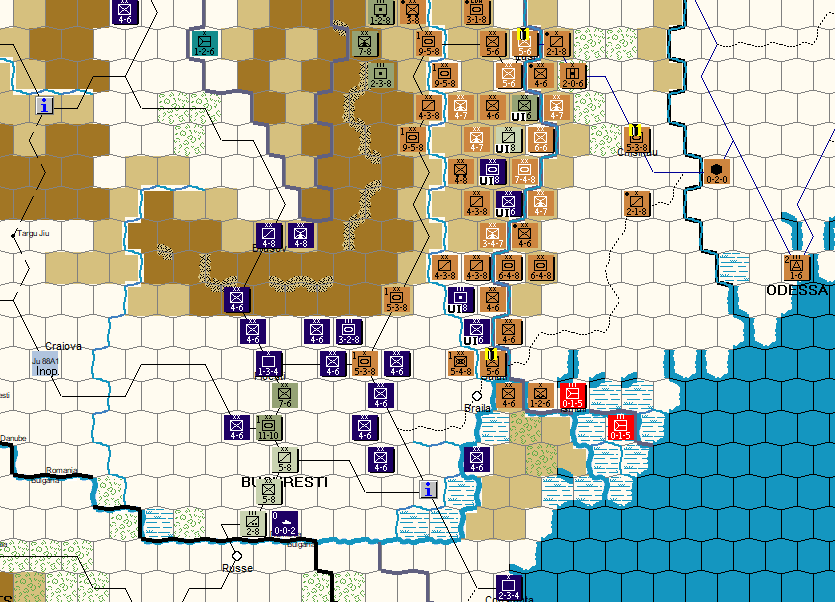
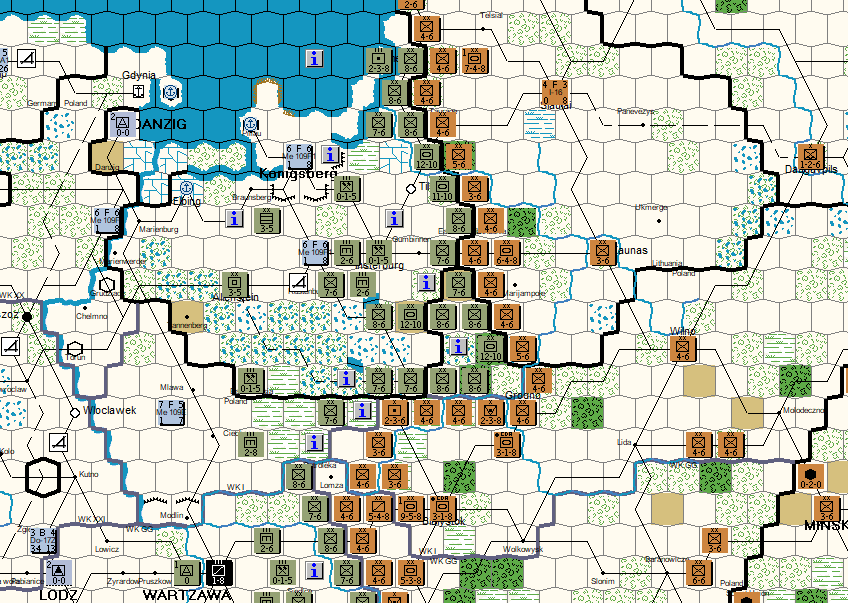
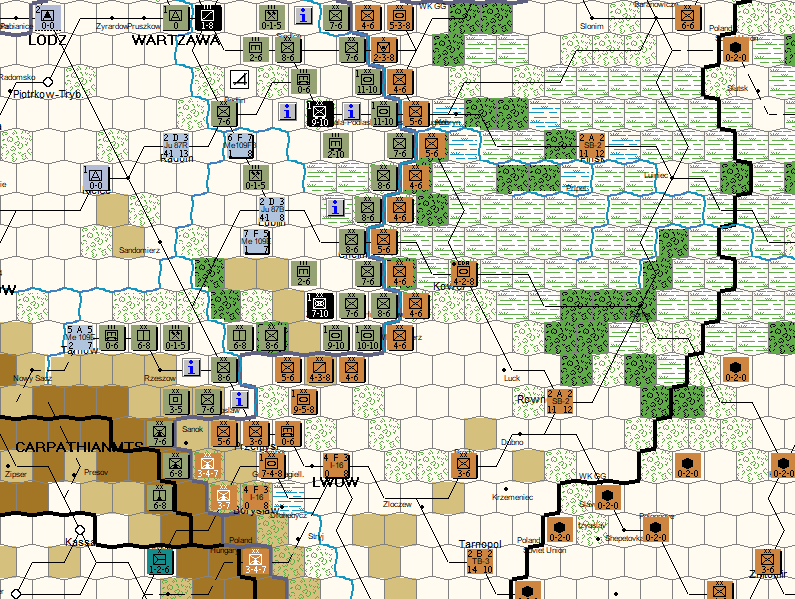
Deploys air and ground units first, with each Army having designated zones of deployment. Units deployed include reinforcements for the Jun II and Jul I turns. This placement simulates their movement during those turns the Axis player cannot move units.
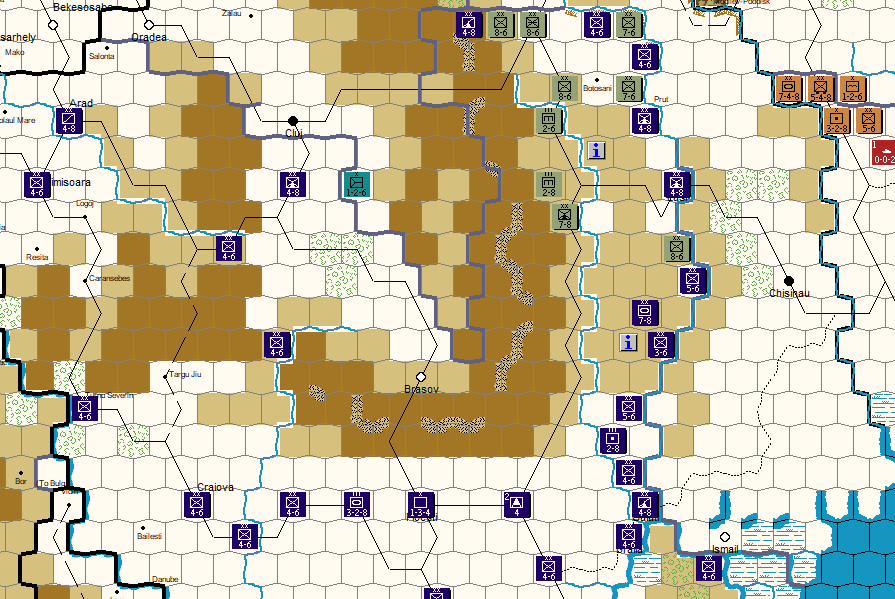
Every hex along the Greater Germany (including occupied Poland) and Romanian borders must be either occupied by, or in the zone of control of, an Axis unit.
Note: Hungary is neutral. However, Axis units can overfly Hungary and use that country’s rail lines.
Soviet Player –
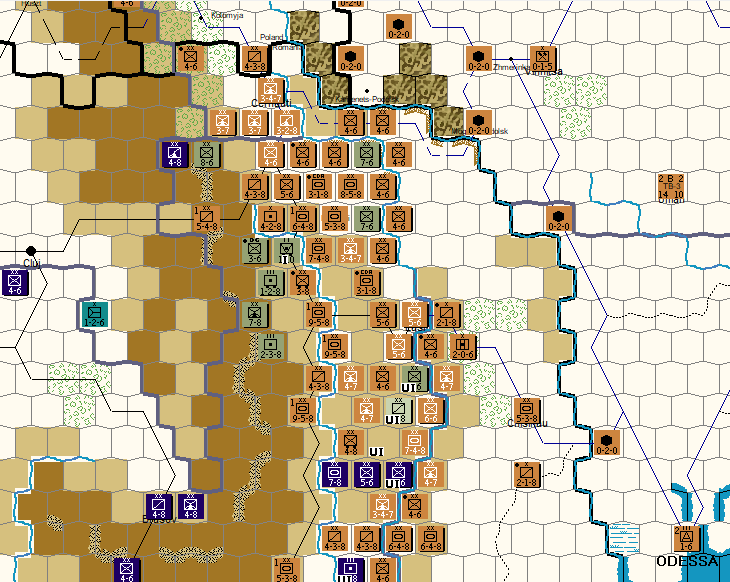
Deploys initial air and ground forces, with special modifications for each Military District (MD). Again, each Army has deployment zones.
Can change four (4) combat/motorized (c/m) cadre units to full strength, and all 3-4 infantry cadre units to their full strength sides.
Places Jun II reinforcements on the map reflecting mobilization.
Game Play –
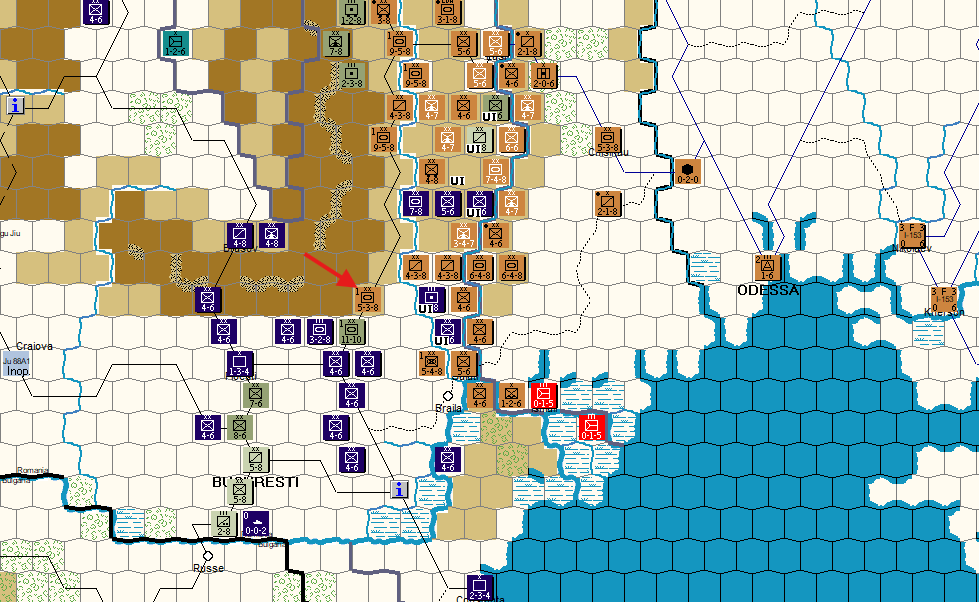
The Soviet player conducts a special Jun II turn limited to movement and exploitation phases (no combat). For those unfamiliar with Europa, c/m units may move during the exploitation phase. Movement is limited to within the Soviet Union (not occupied Poland). Air units may move in either, but not both, phases.
The Soviet may designate NKVD units as Spetsnaz. Ahhhh….Chrome!
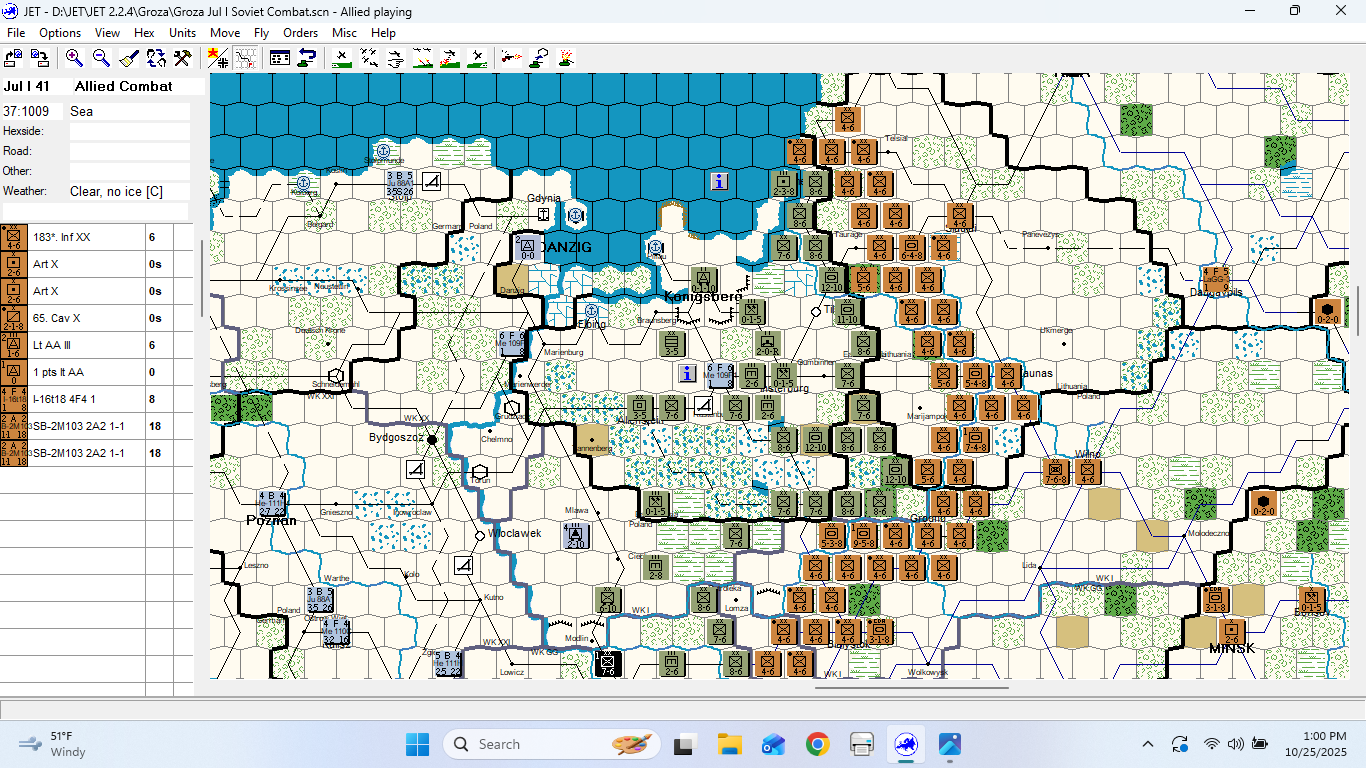
After all Jun II movement/exploitation is finished, the Soviet Player begins a “normal” Jul I turn. But, “normal” applies only to turn sequence as their are several special, and very significant, “benefits” ( per scenario designer) to be used during this turn, only.
The Soviet Player 1) ignores border river hexsides for purposes of combat and overruns (not movement). 2) increases the attack strength of his artillery units by 50 percent. 3) c/m units at full strength have full, not limited, exploitation capabilities. 4) conducts movement as though each Axis unit has a reduced zone of control (ZOC). 5) Spetsnaz units are treated like commando units, and have an attack strength of “1” when used in conjunction with other units. Ahhhh…..Chrome!
The special Jun II move combined with the Jul I rules and inability of Axis forces to react simulates Groza’s surprise attack.
Next up…the game.