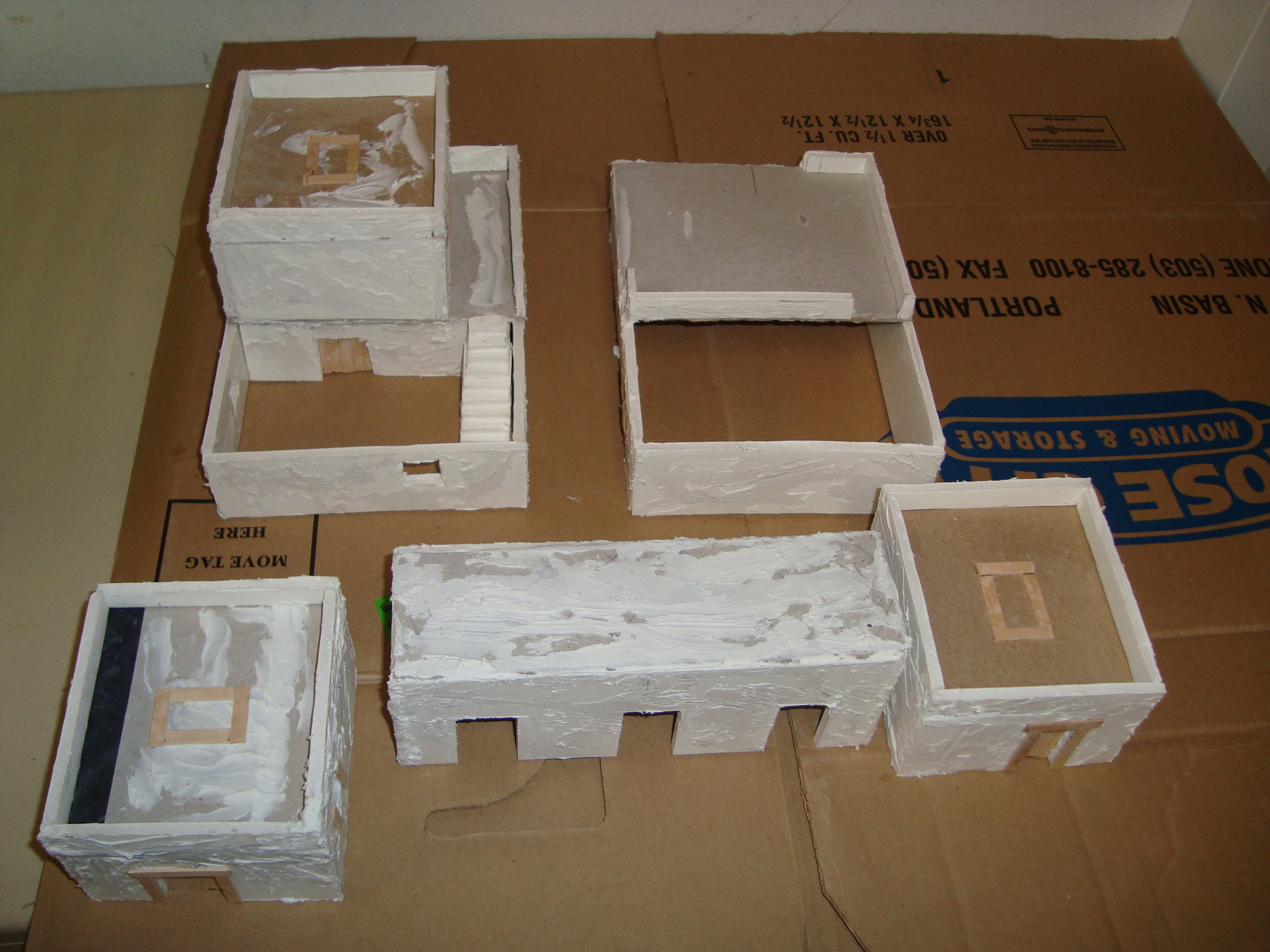
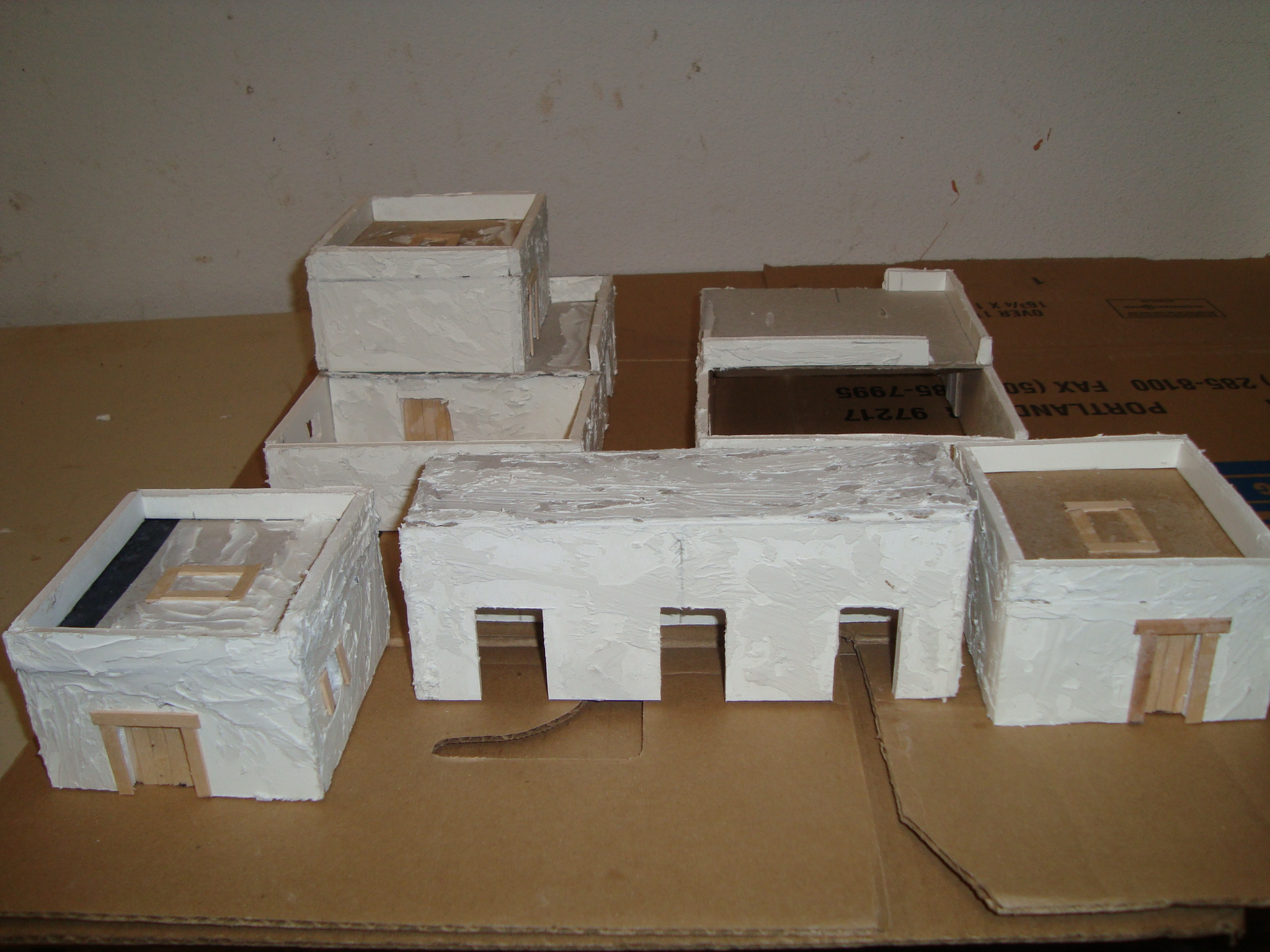
Decided to focus on putting together the ubiquitous Middle Eastern and/or Central Asian town and/or village for Back of Beyond and/or battles with Renaissance Turks and/or Persians. OK, I will not and/or again.
This is a project well suited for my (lack of) modeling capabilities. My architectural models make the town in Cabinet of Dr. Caligari look like the work of Mies Van Der Rohe. No square corners, even walls, or precision cuts required for this one. Just get a sharp skill knife, plenty of foamcore and balsa, lather on the Elmers, cover up most defects with spackle and voila!
Plan to have two large homes, one smaller house, market building and a mosque. Should spruce things up on the table. Won’t terrify you with work in progress photos. However, here’s a couple of shots of things after the carnage of basic construction. Will add domes, awnings and other domestic touches over the next few days.
Since I’m suffering from a bad case of painter’s block, decided to work on a simple Red Actions! scenario.
This will involve a mixed force of Germans, Partisans and Cavalry attacking a Chinese armed convoy, including a reaction force.
To add some randomness and re-playability, I put together three scenarios for the convoy. The convoy is either clueless, cautious, or know something will happen. These readiness states dictate vehicle dispersion, speed and use of the reaction force.
For the attackers, I’ve assigned numbers to each terrain feature for some variability in setup. Some combinations could be tactically ill-advised. We’ll see.
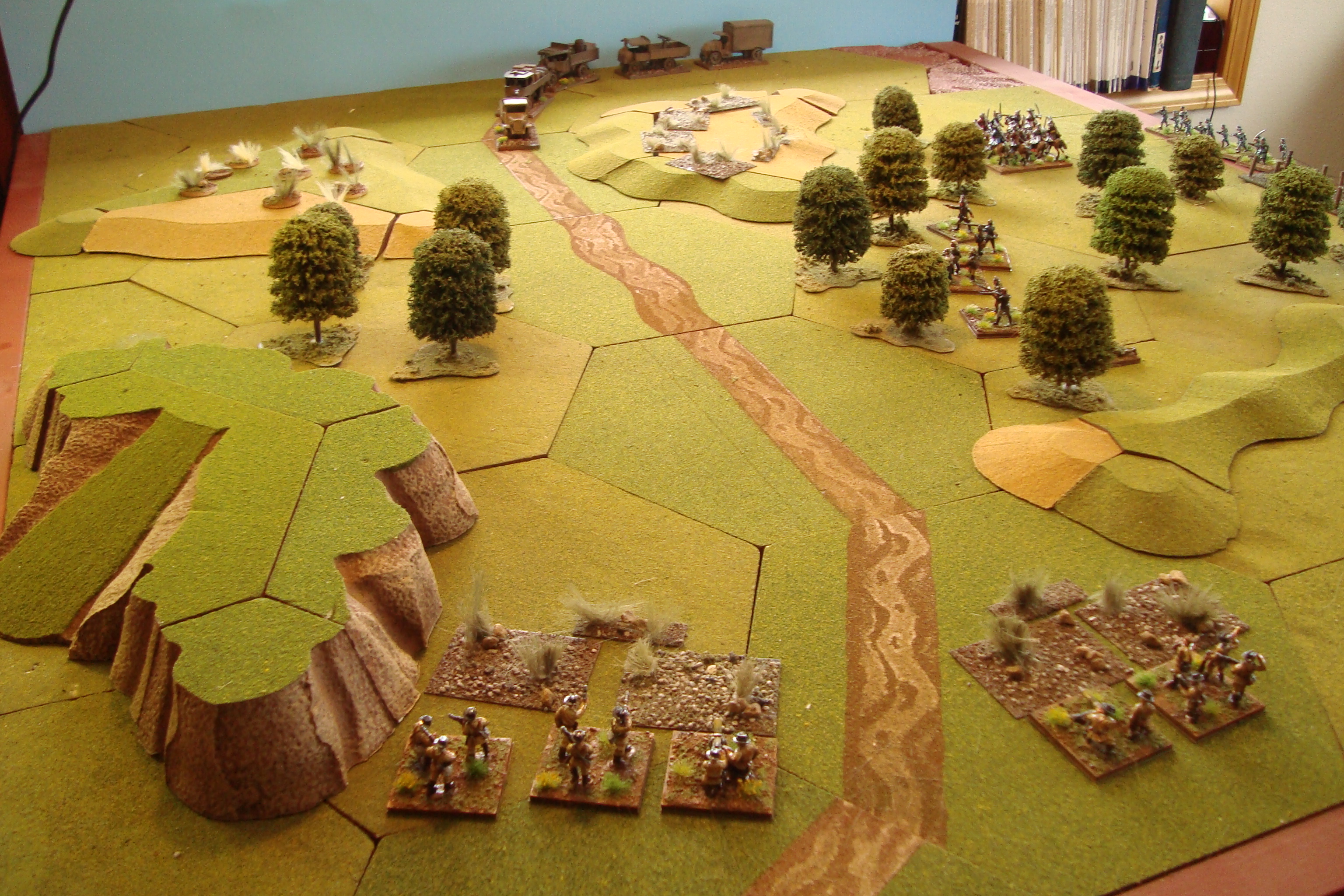
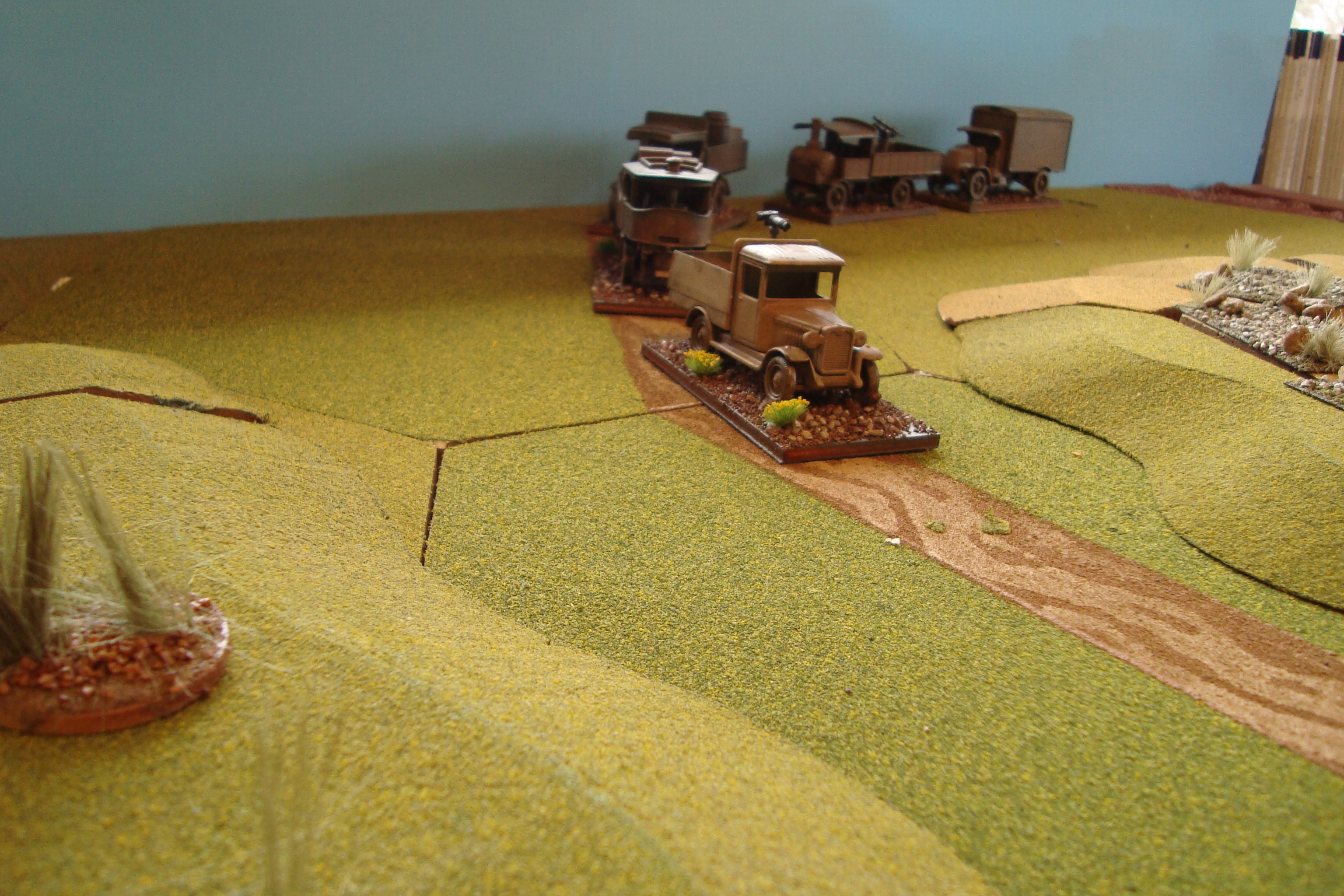
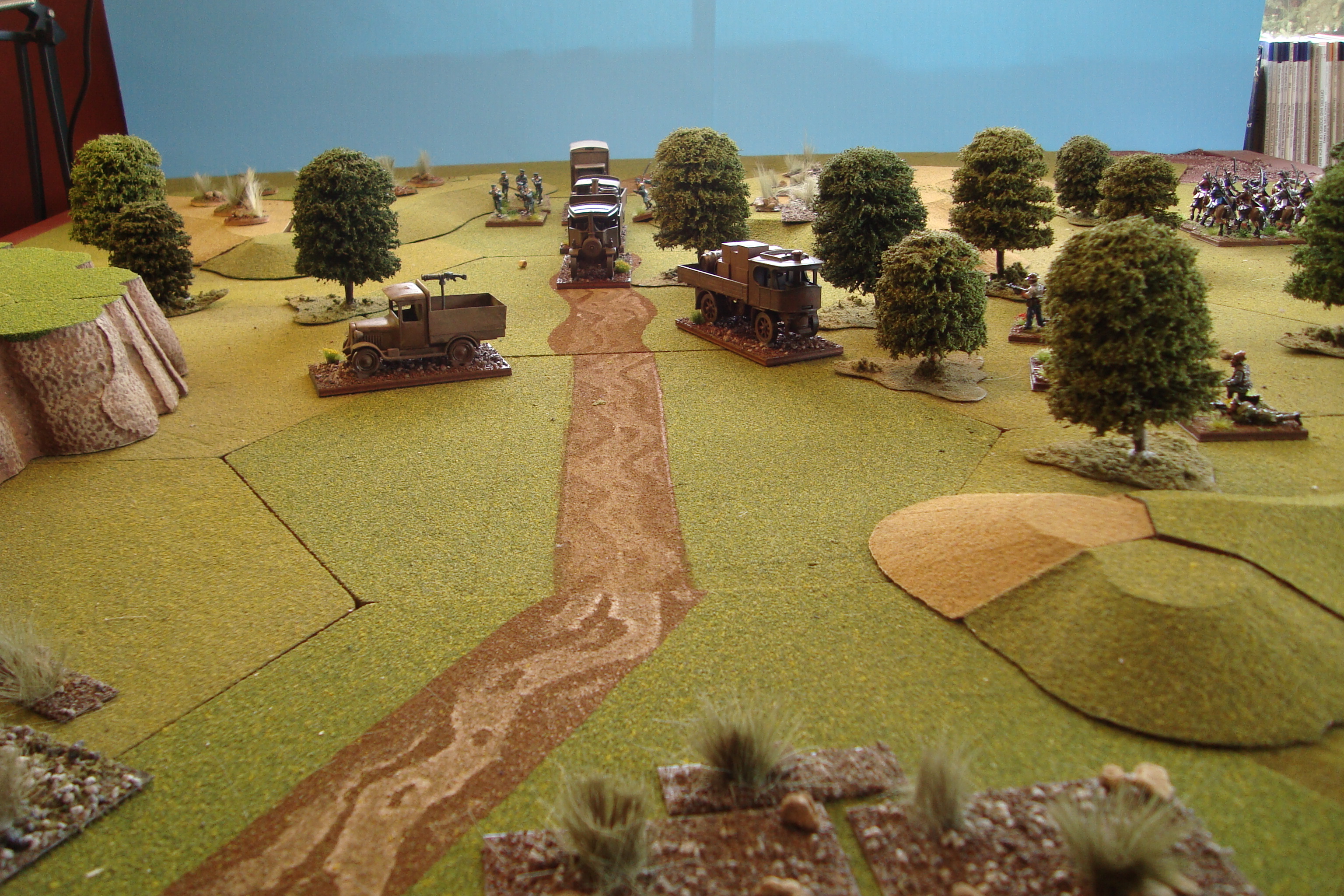
Here’s some photos of the set-up and first time messing around with the action.
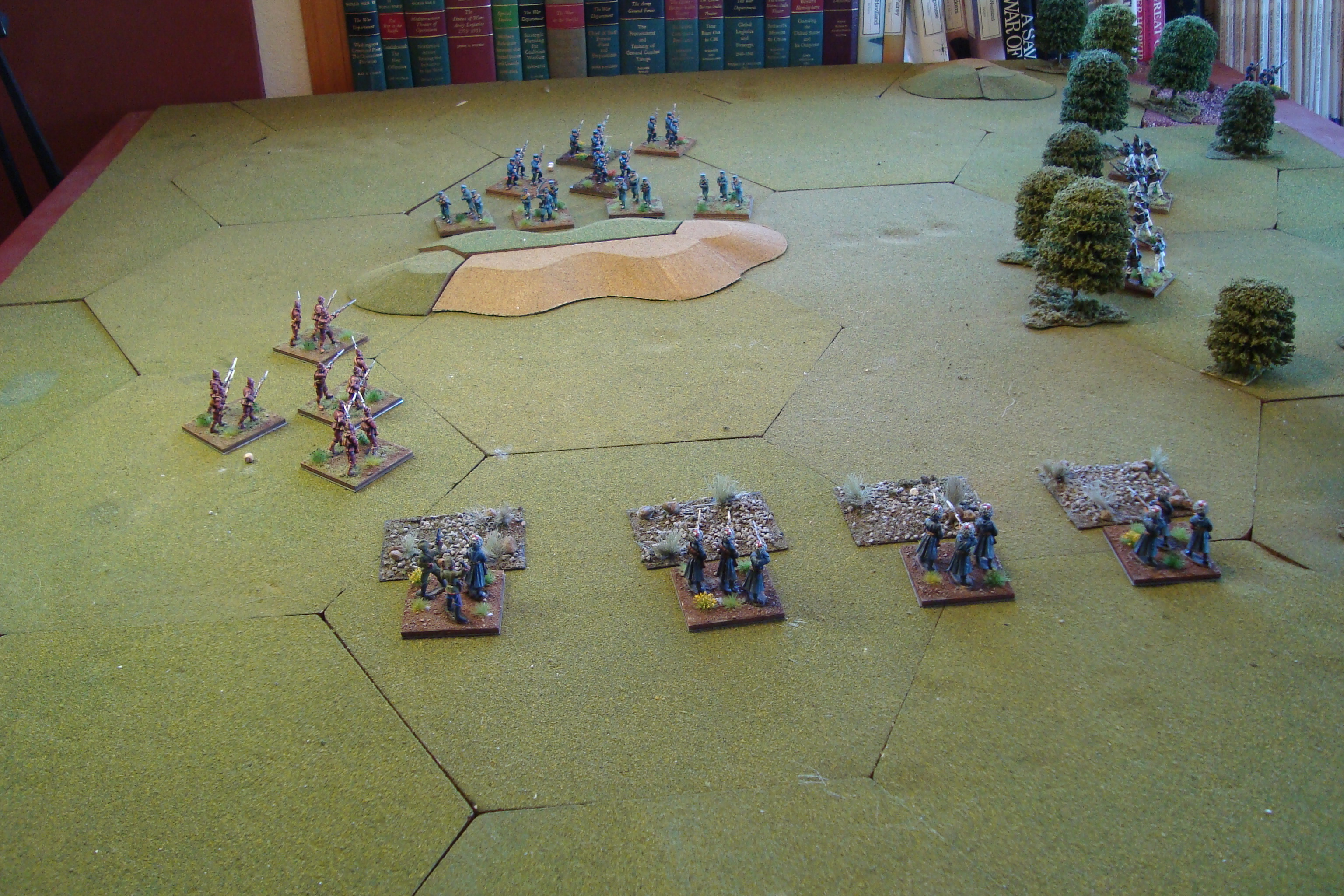
Convoy Approaches. Germans in foreground, Partisans in woods, and Cavalry behind ridge.Convoy Closeup. Need to get a crew for the MG Pickup.Lead vehicles blasted off road by German machine guns. Reaction Force in background.
Now that I have a general grasp of Red Actions!, it’s time to work on game/period specific terrain and buildings to complement my old Geo Hex terrain system (here’s some backstory on what happened to the company).
I’ve messed around with on-line research on Central Asian architecture, but just haven’t been ready to start working on structures. So, I decided to focus on something that has a practical application to tactical situations; a trench system. The challenge with this is GeoHex. When you remove the tiles, you get a lower level of a little over 1/2 inch in depth. Ugh…another design problem.
Seeking a path of least resistance, the decision was made to start work on the barbed wire entanglement placed in front of the trench.
Without going through all the bloody details, the entanglement has to be 36 inches long. The longest available bass wood section is 24 inches by 3 inches. So, two sections, with barely enough room for my troops.
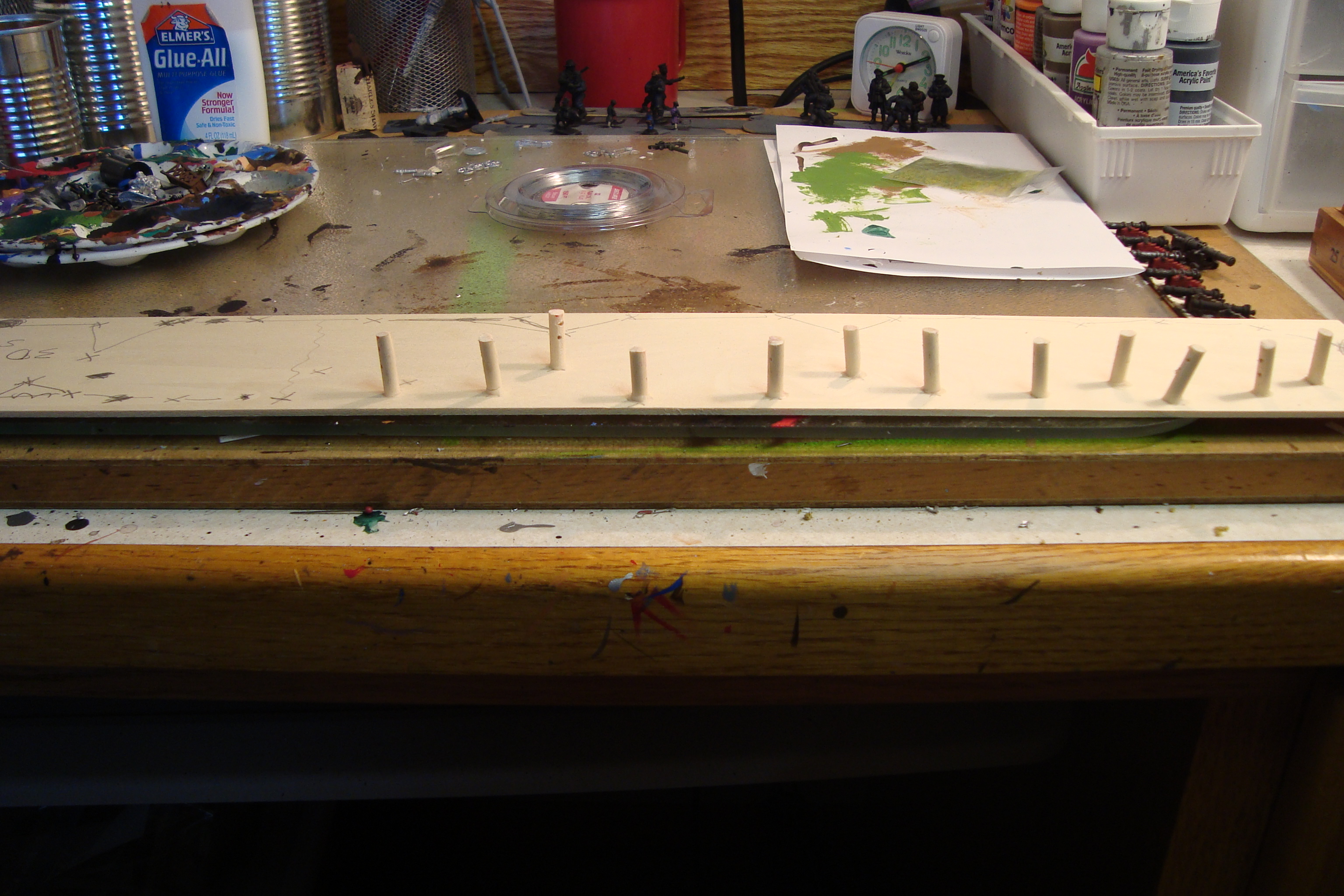
I started by marking 3/4 inch (and later 1 inch) sections on wood dowels. I drilled two holes in each section, intending that wire would be run through each hole. The next step was to cut the dowel sections and mount them on the 24 inch base Beta.
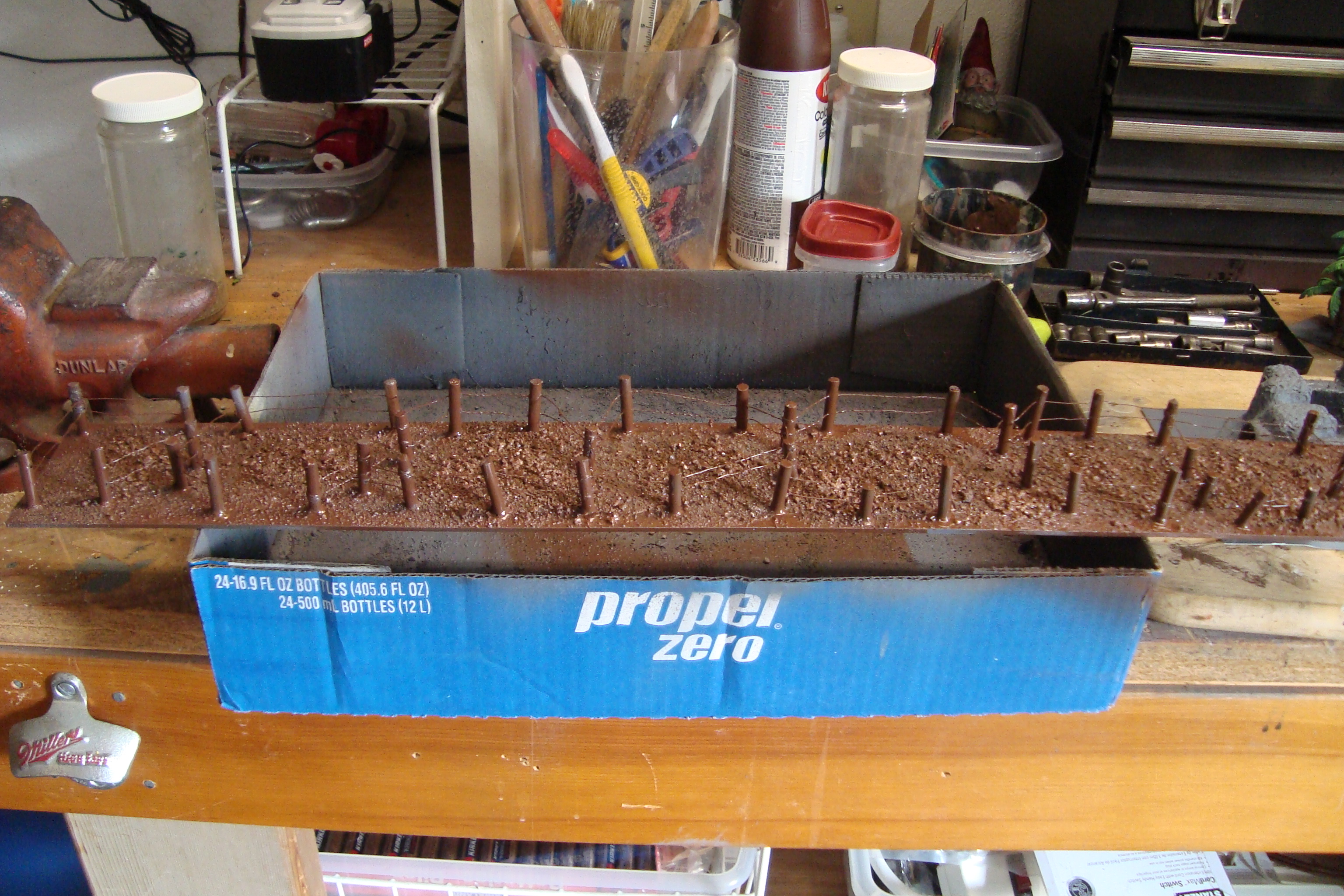
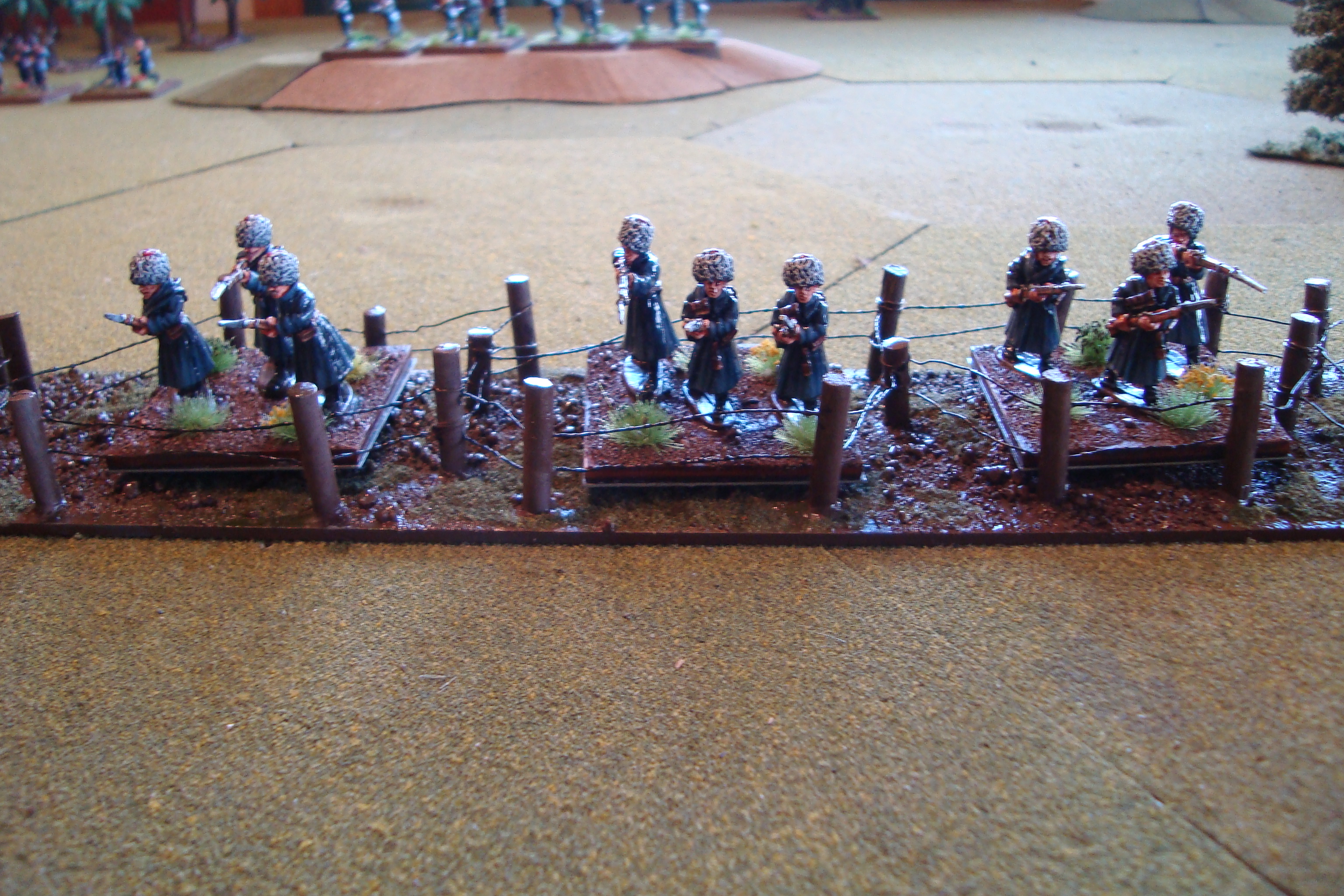
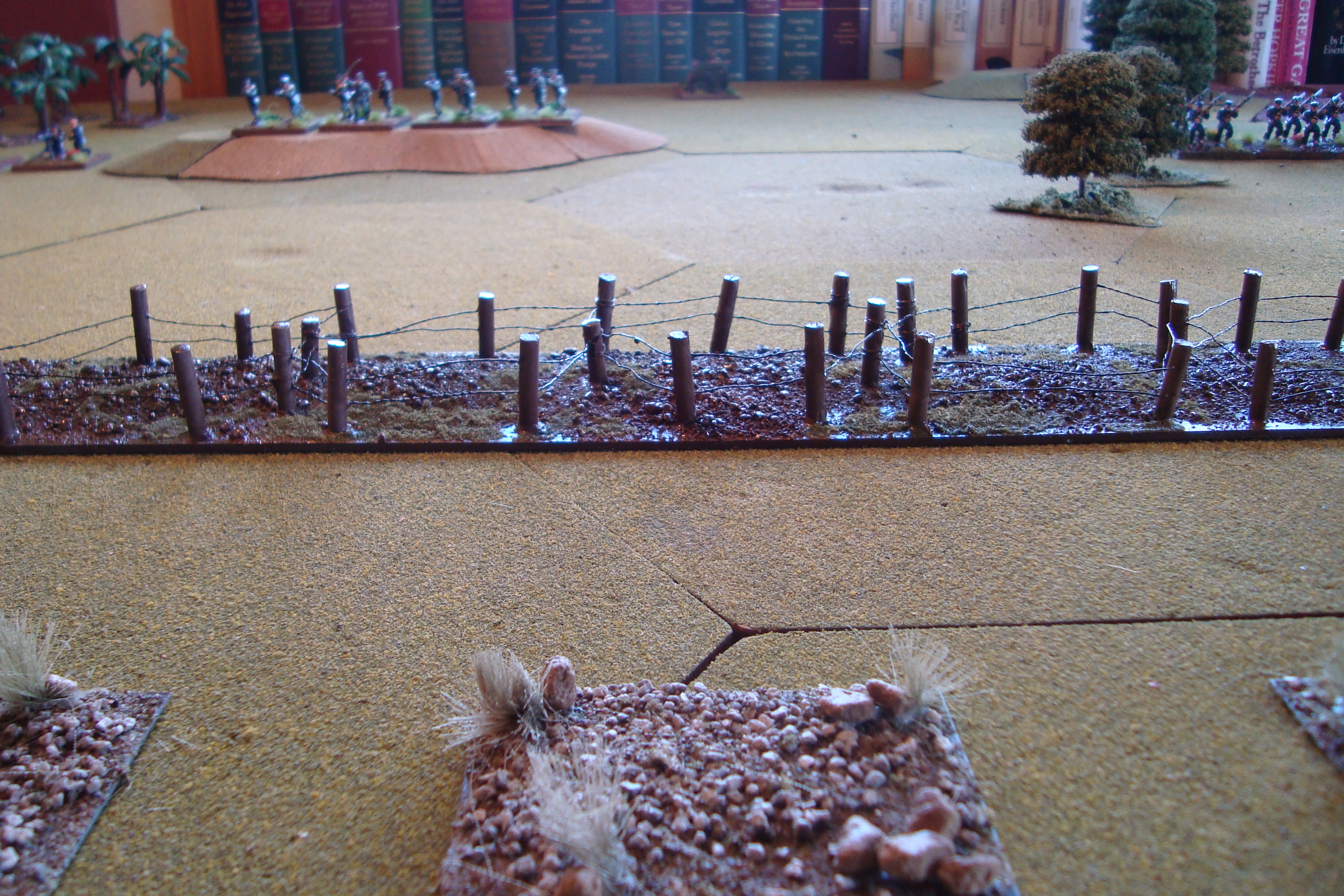
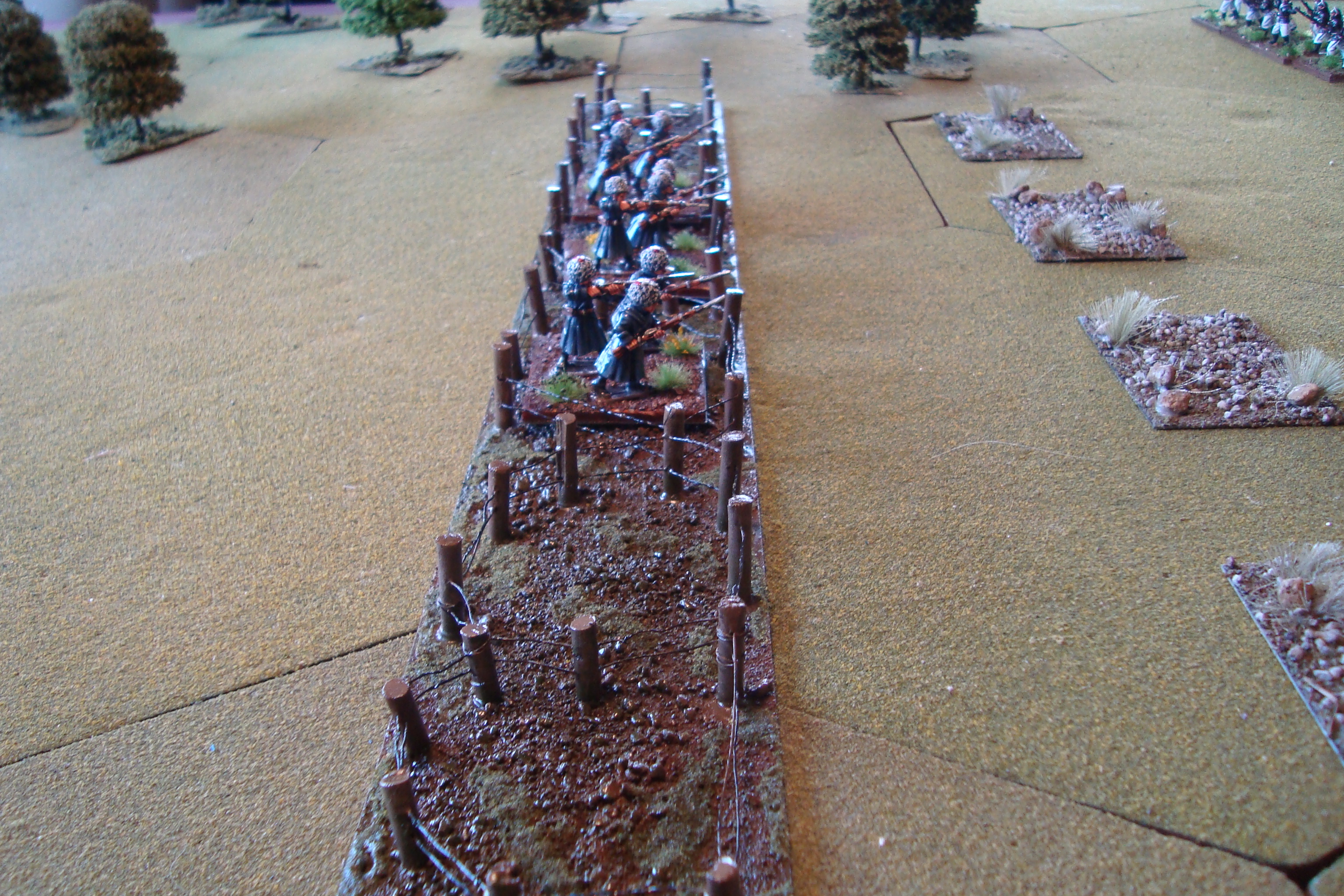
As I was gluing in the second row of posts, I realized that I needed to make room for individual stands. What’s the use of something like this if your troops can’t “use” it? I was able to create separate “sections” of the entanglement by placing posts at intervals connecting each lateral post line. I then ran thin metal wire through the holes. This was tedious and somewhat frustrating – especially when I missed a post and had to restring. Many expletives later, it was time to prime, add ballast and talus, painting all of this with a basic coat of brown and splotches of green.
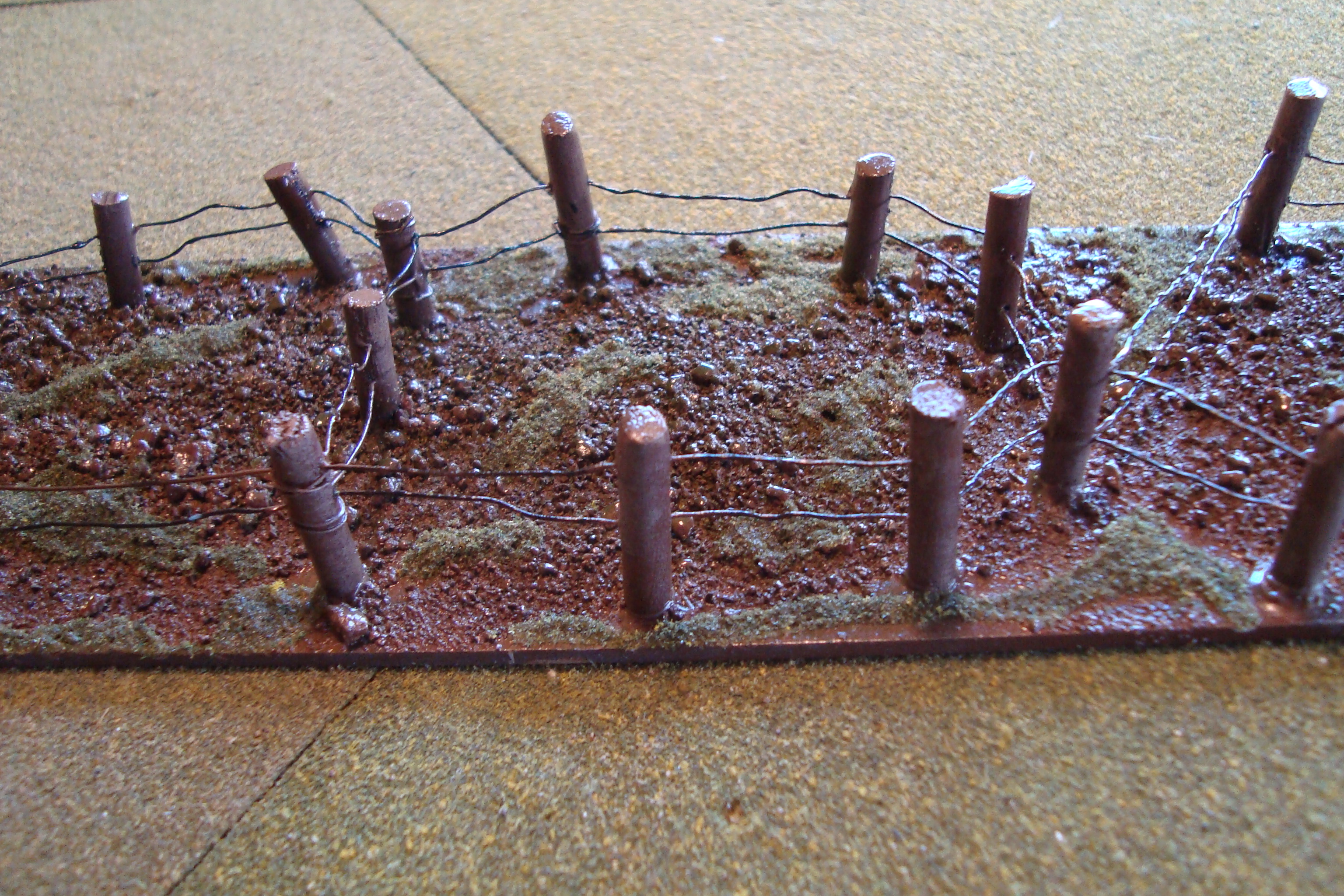
To finish things off, the posts and talus were dry brushed, and fine turf added. Gunmetal was used to paint the wire. Here’s a few shots of the finished product.
New challenge: I have to complete the 12 inch section, and make it look like the 24 incher. Good luck on that! What’s that old saying…”Consistency is the Hobgoblin of Small Minds”
This weekend’s distractions were not limited to Heroes of Normandie (HoN). My new Dirt Devil caused another problem.
I enjoy scratch building items. Not that good at it, but I like doing it and find the cost of purchasing terrain and/buildings can be just too much. After the winter holidays, I haunt stores look for drastically marked down buildings and trees that can be primed and repainted. But, I’m always on the lookout for a piece of styrofoam, balsa, plastic, card, foam, etc. etc. etc. that might be used at some future date to build something.
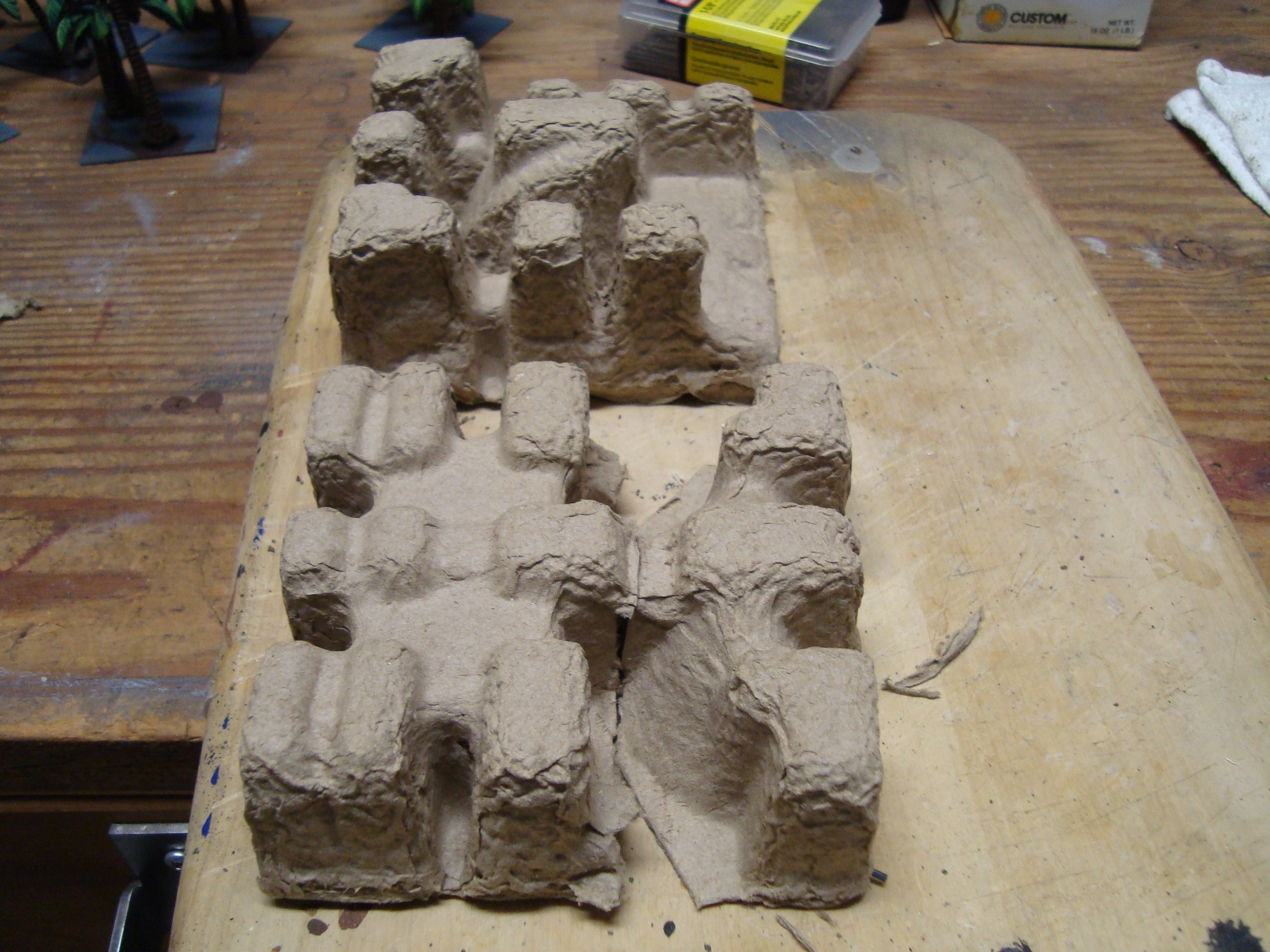
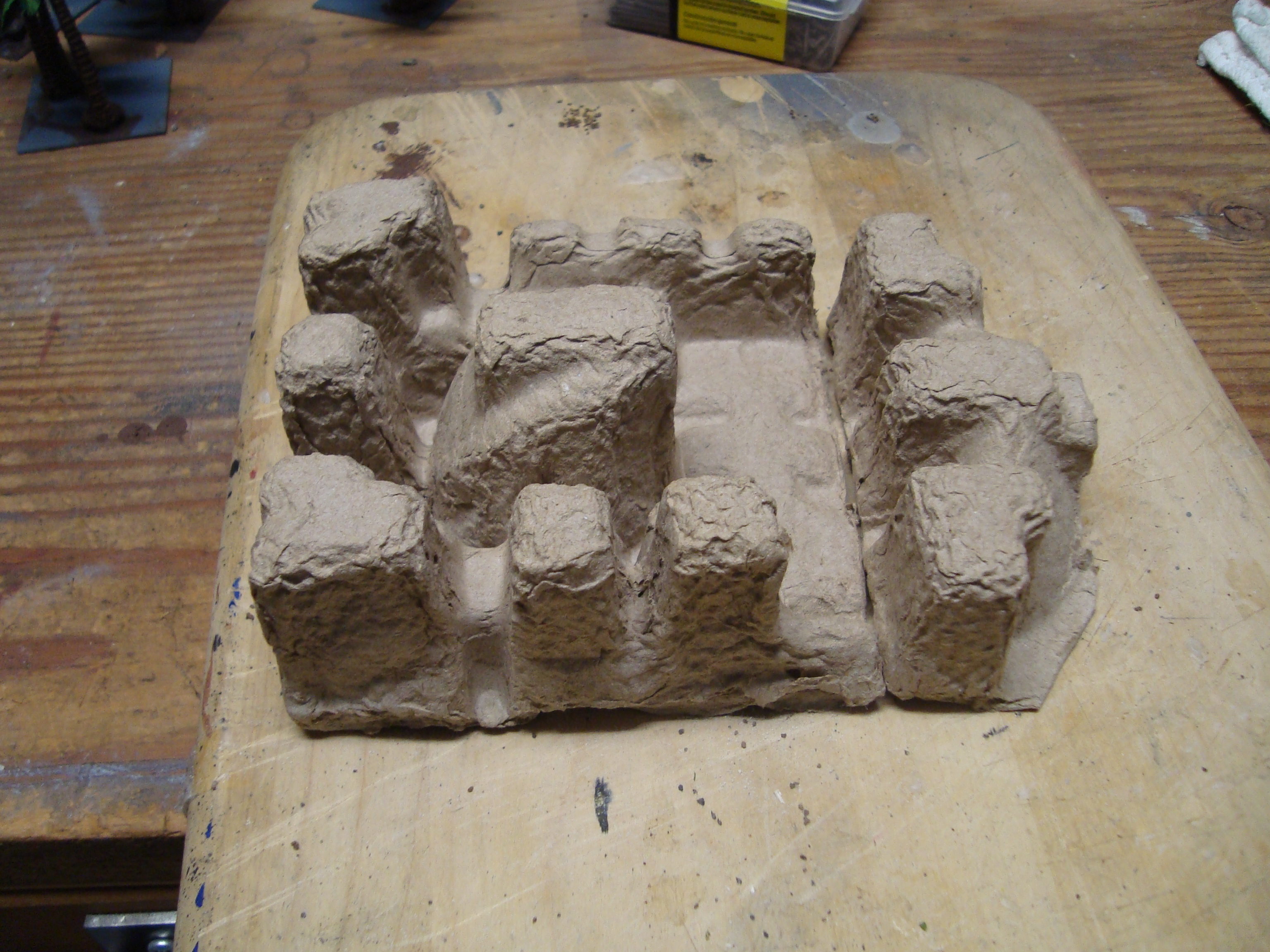
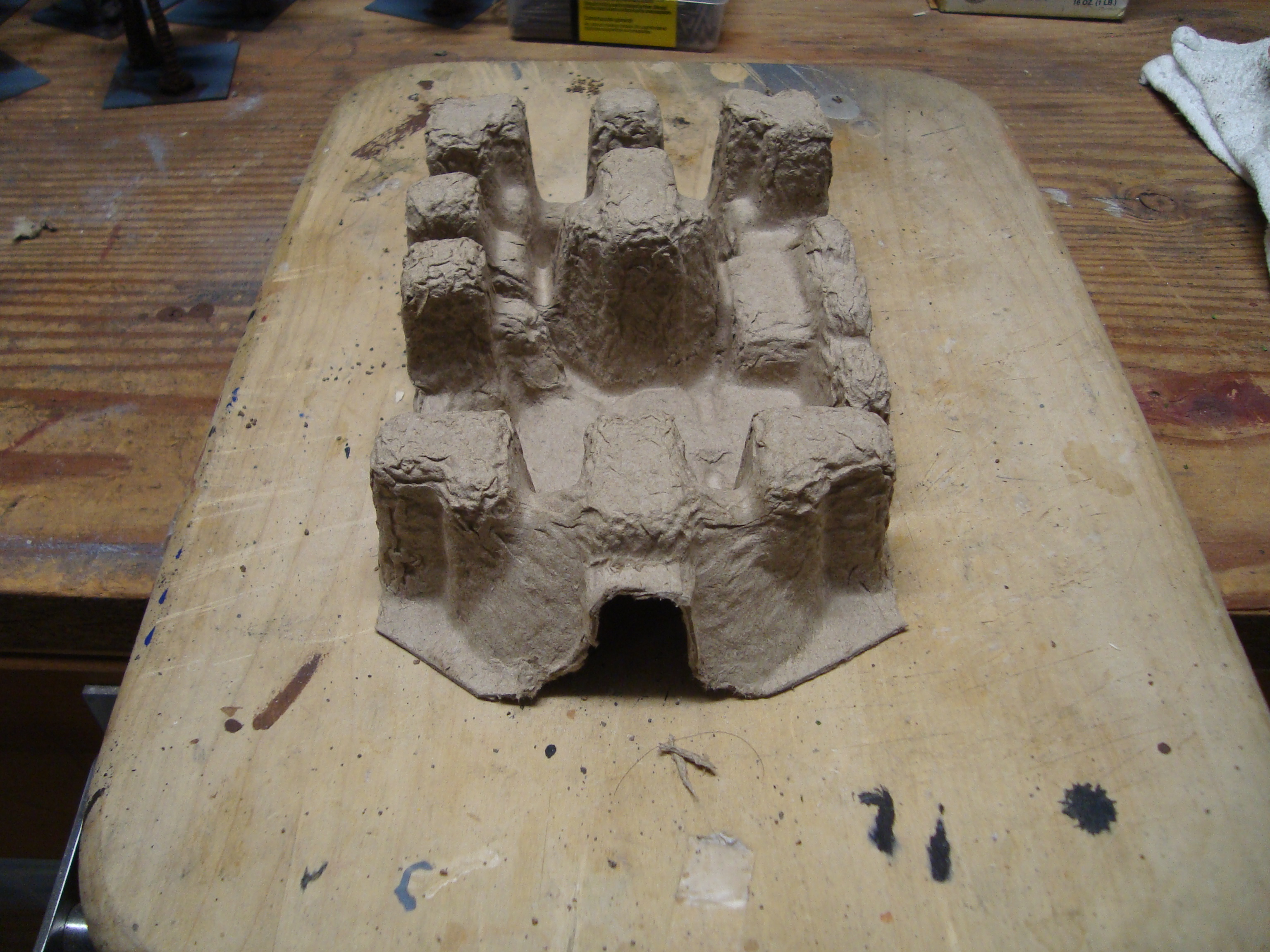
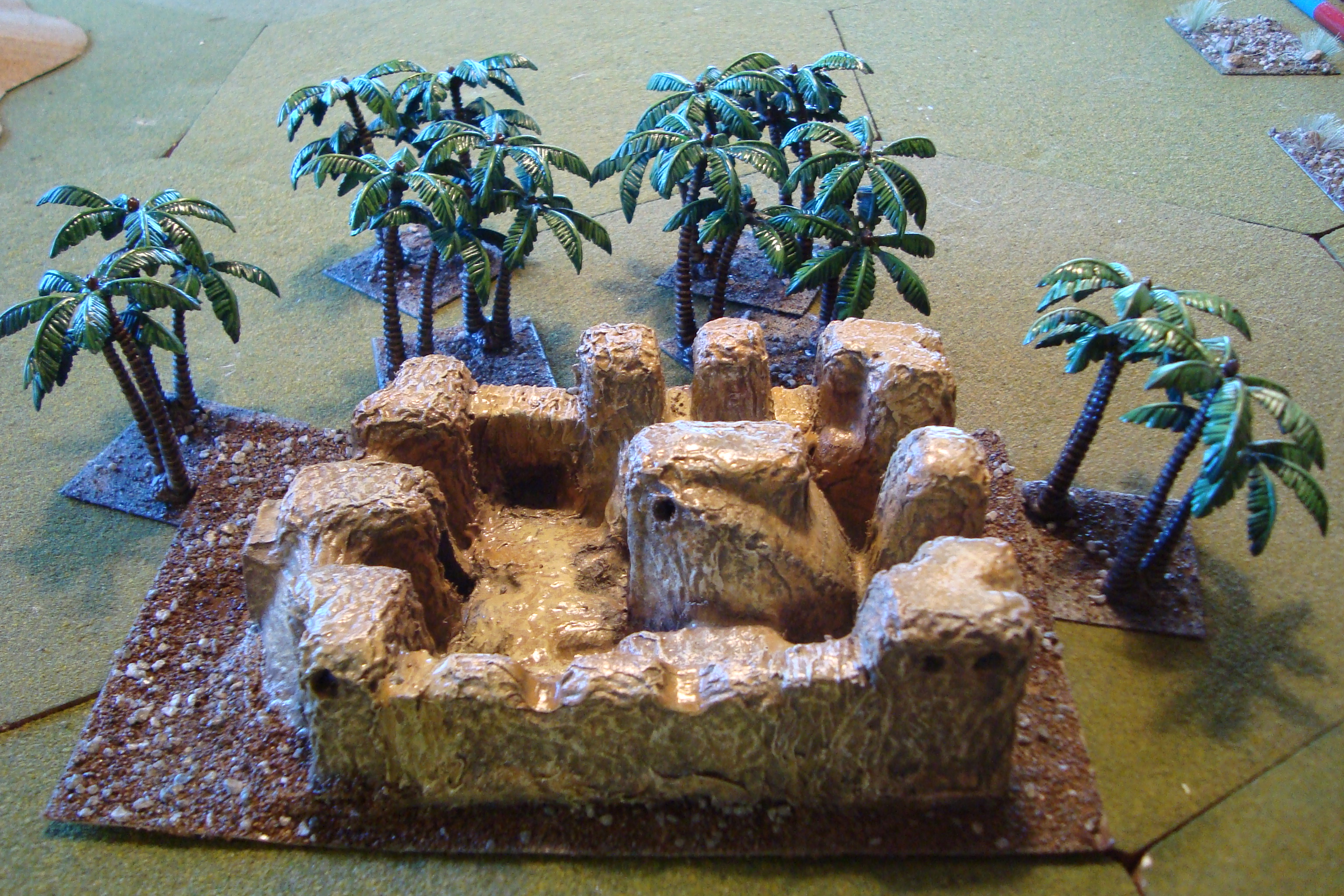
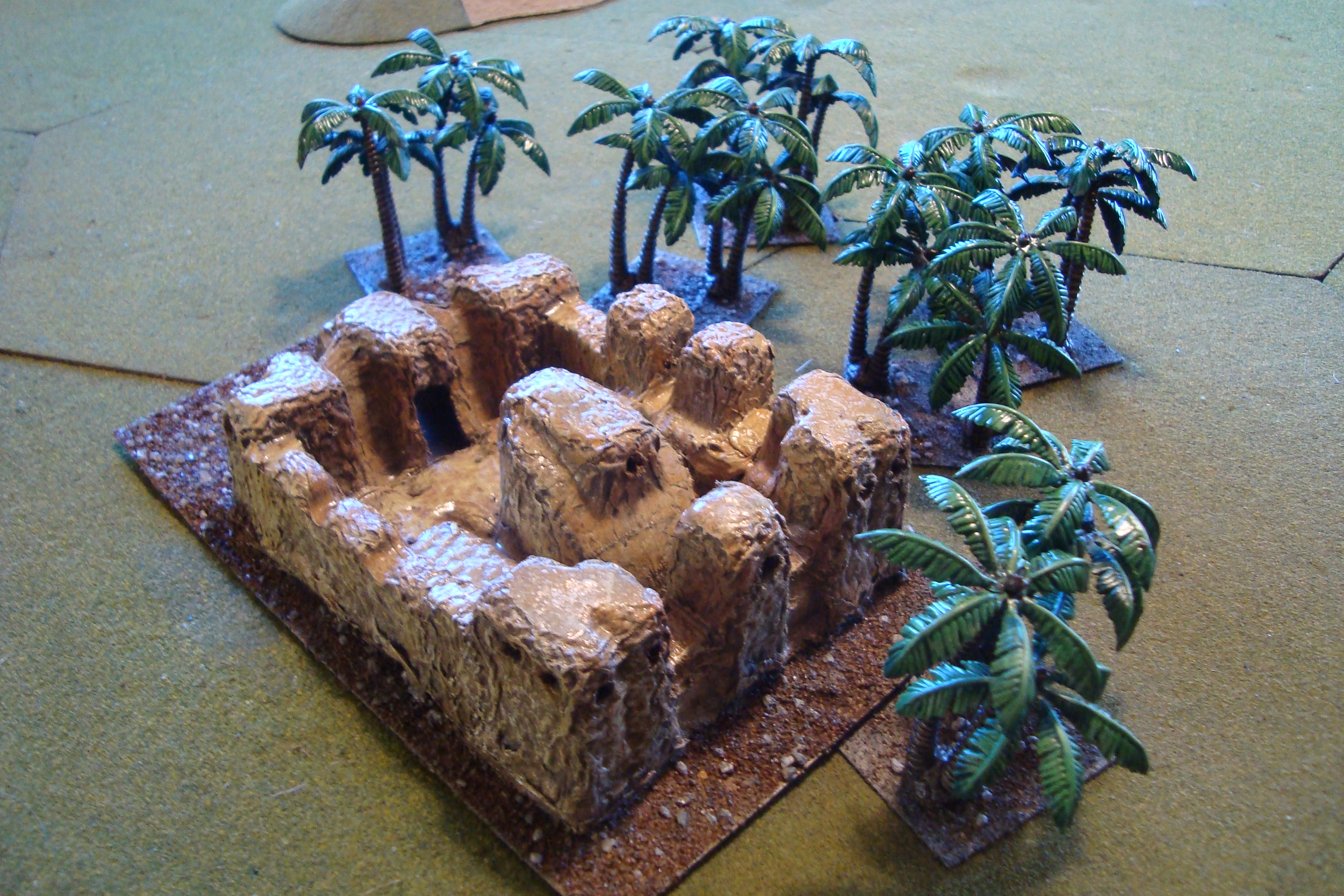
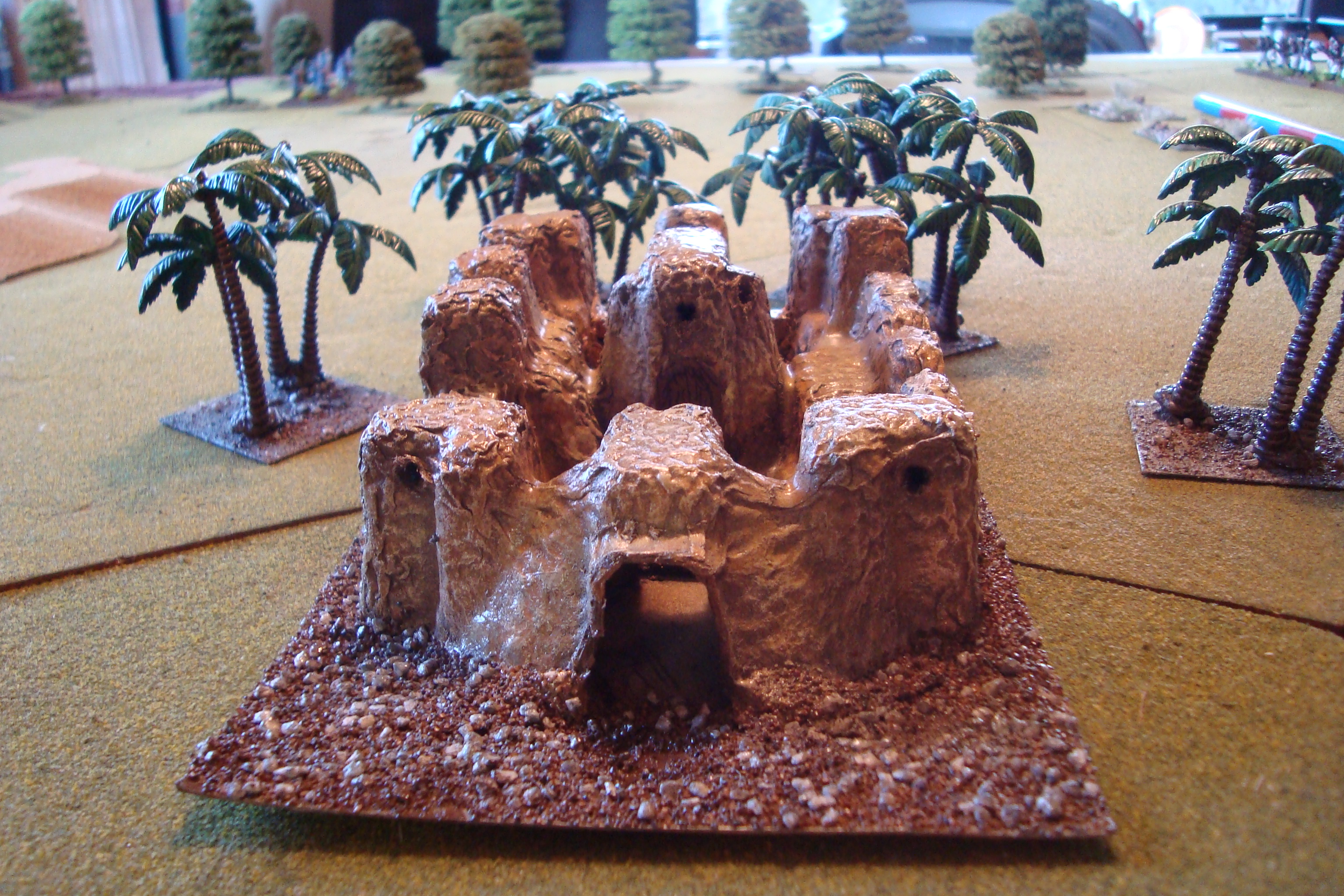
Back to the Dirt Devil. While unpackaging it, I was intrigued by the two corrugated cardboard end caps.
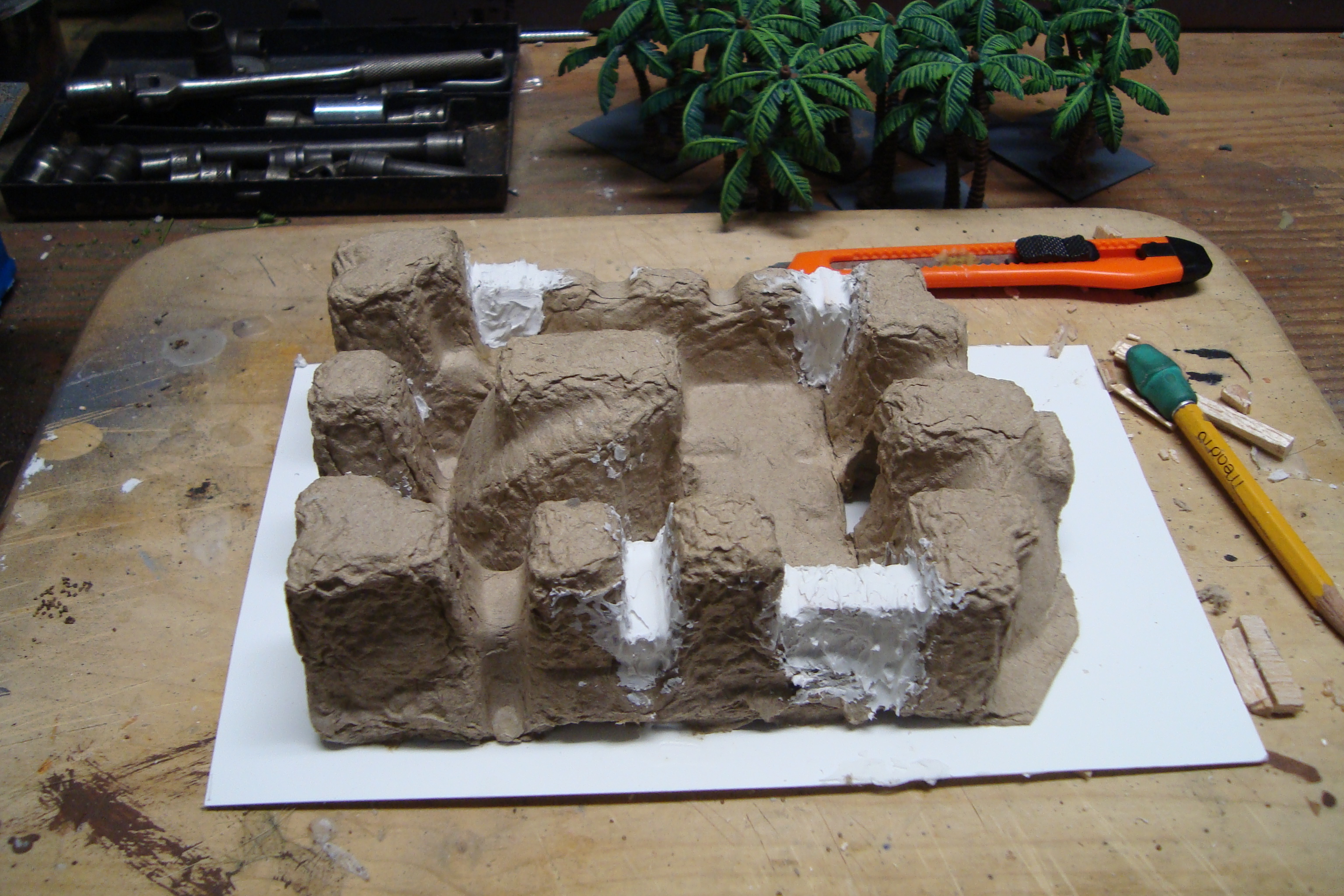
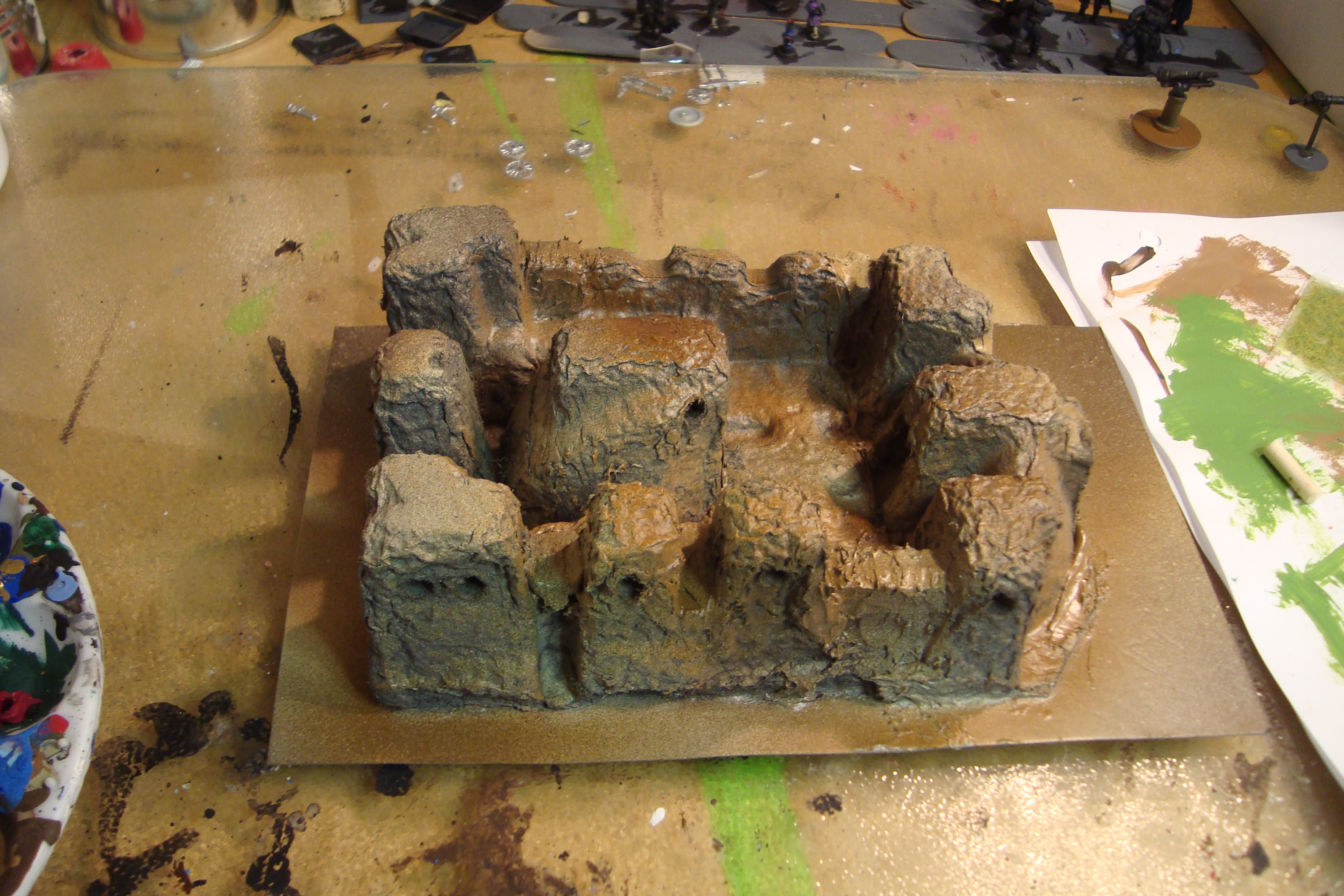
The piece at the top had the general appearance of a castle or fort with a keep. On further study, a part of the bottom piece looked like a fourth wall. By cutting off the end of the second piece, and attaching it, the rough outline of this fortification(?) became clearer.
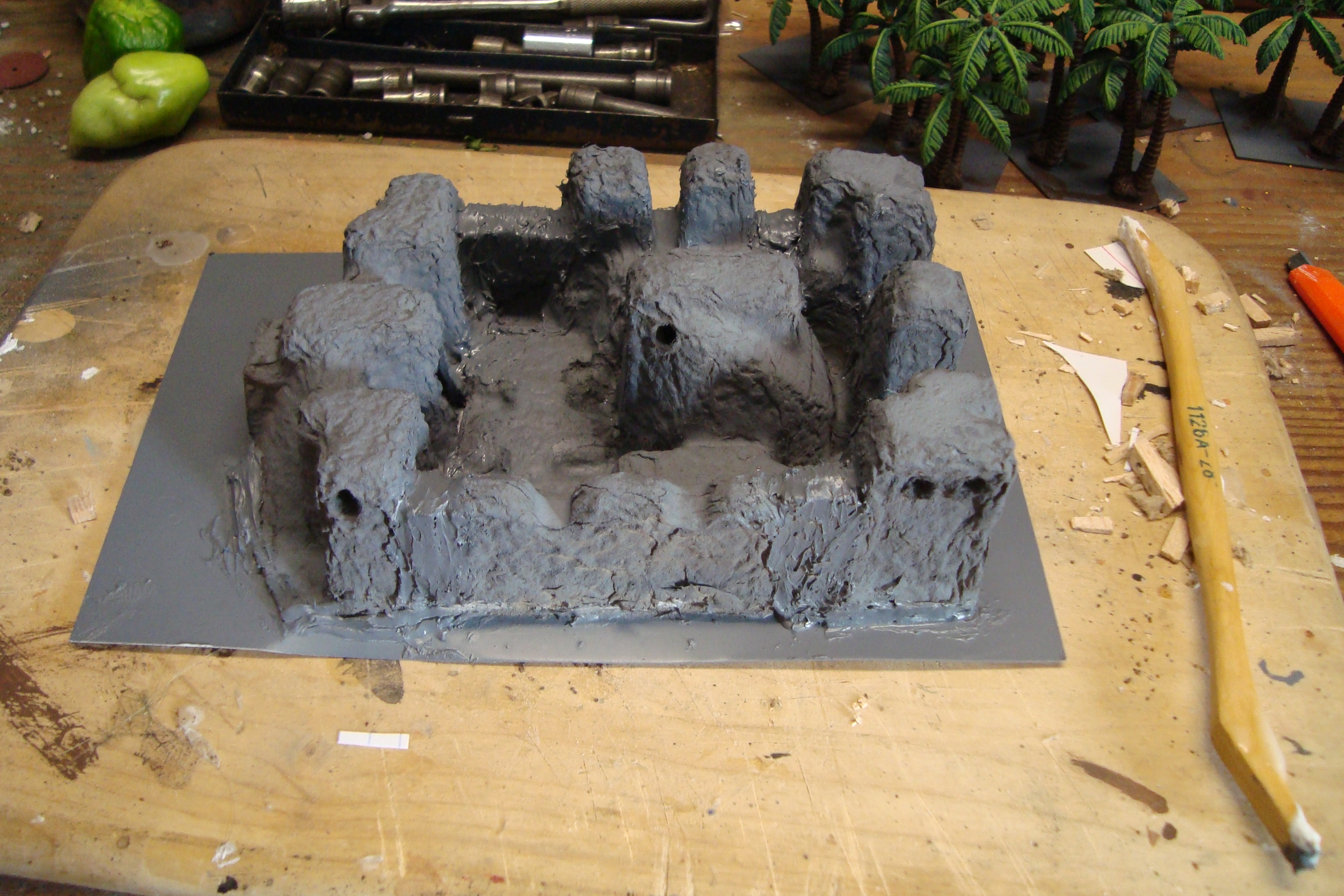
A decision had to be made; keep working with this or throw it away. Oh…..why not? Using left-over balsa bits and spackle, I built up the walls.
Then priming, and punching some holes in the towers to represent windows/firing positions.
Next step was an initial quick random spraying with dark brown, light brown and desert sand. The corrugated cardboard really sucked up the paint.
The final steps were to figure out the dry brushing and flock the base. The first few dry brush attempts seemed to be too dark. So I lightened up the light sand shade even more, and wound up with something that was OK. The flock with ballast, and dry brushing the small rocks was easier.
You’ll notice the base curling up. Used thin card. Mistake.
After all this work, the question is “What is It”? When started, I thought it might be a deteriorating desert citadel. It also looks like a cheap Sci-Fi special effect from the ’50s, or a crude (and discarded) mockup of a set for “Dune“. Too big for DBA, too small for a siege scenario, but maybe a nice item to PUB my Irregular Wars battlefields.
Dunno. Whatever happens it was an interesting little project and it’s finished.
Played Red Actions! with artillery and machine guns earlier this week.
With the exception of the direct hit capability of the artillery, both weapons have the relative firepower of a platoon. My small playing surface (5×5) limits their range and therefore effectiveness.
I’ll probably abstract indirect fire artillery in the future. Any on-table artillery will have a direct fire role.
Machine guns can be killed relatively quickly (my arty wiped out the machine gun section with a direct hit on the very first roll of the game….reset/reboot), so I will allow them three (3) terror markers – treating them like a two (2) platoon company. This makes them a little more resilient
Next game will include an armored car and cavalry.
Really windy here, gusts up at 30 mph. Riding out of the question, college football schedule marginal, and World Series doesn’t start until 1700. Decided to get another game in. Same scenario, and tactics, but with Reds being more aggressive.
An aggressive wargamer really needs good die rolls. That happened for the Soviets.
There was the usual push and shove between the Soviet company providing the base of fire and the Chinese regulars entrenched on the ridge. However, the Soviet Sailor company advanced quickly out of the woods and effectively attacked the Chinese Conscripts in reserve.
The Conscripts acquitted themselves well, maneuvering when called upon (they consistently rolled higher than two (2)), shrugging off terror markers like regulars. However, over time they were pushed back, losing one platoon.
Stolid Conscripts Supporting The Regulars
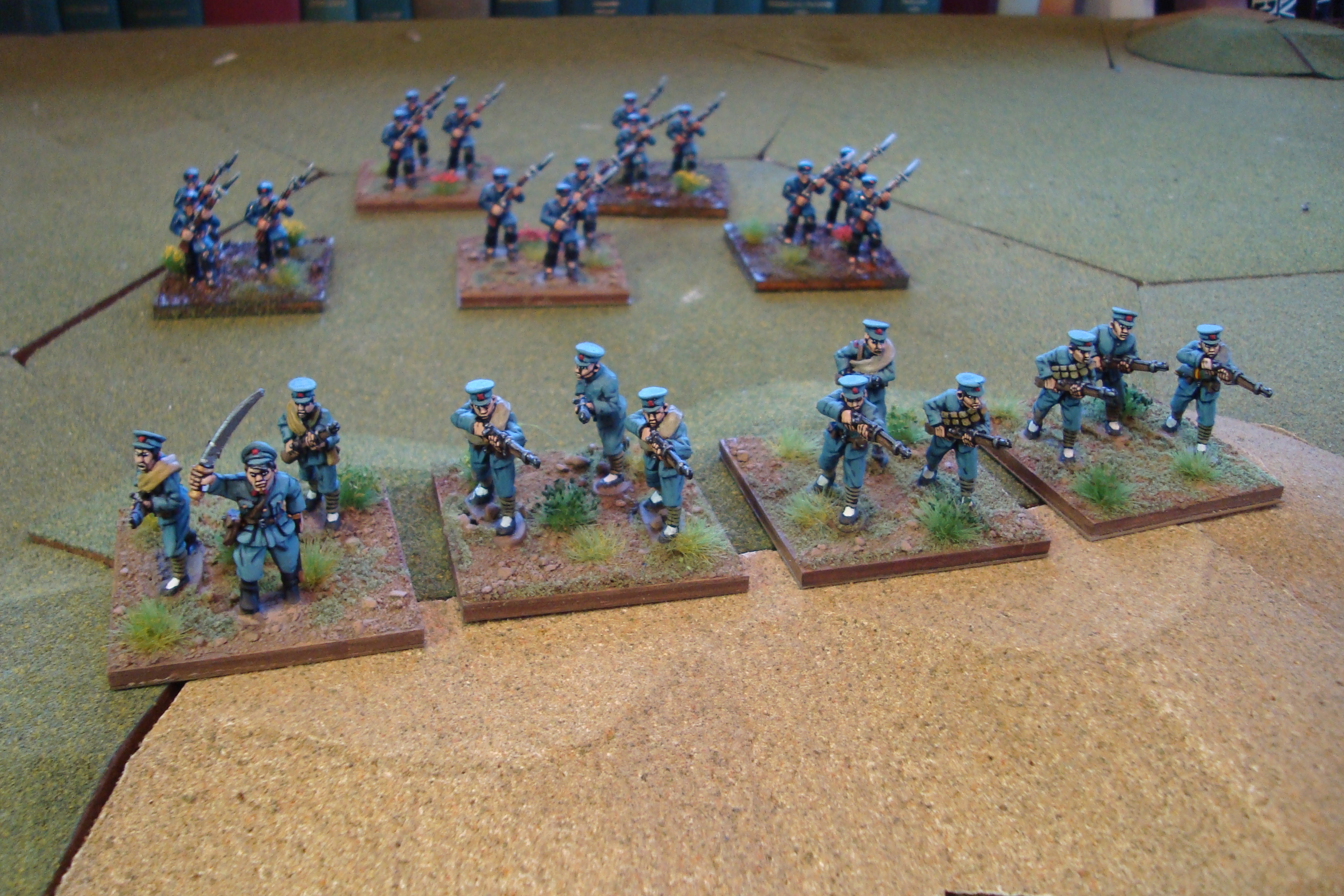
With the Chinese Regulars also pushed back, and with two (2) terror markers halving their fire strength, the Soviet Regulars advanced towards the ridge, supported by the Cheka company, engaging in a firefight with the now weakened Chinese.
Cheka In Support
The overwhelmed Chinese had no choice but to conduct a fighting withdrawal, with the retreating Regulars covered by the Conscripts!
Soviet Leadership Comes From The Barrel Of A GunChinese Withdrawl
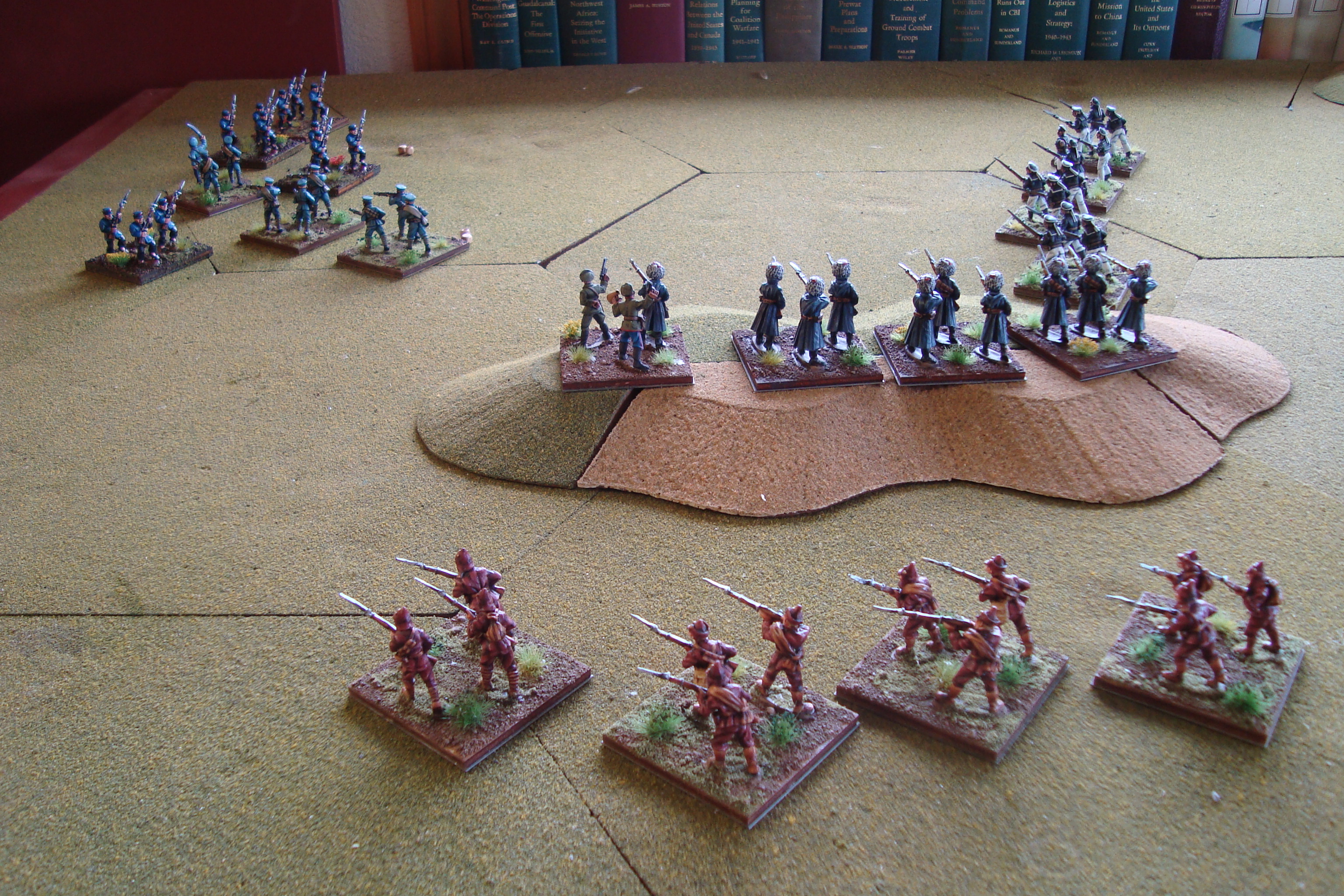
Started playing Red Actions! earlier this week. Since this was my first play-through, the scenario was simple, with just a few units, no machine guns, artillery or AFVs. I wanted to find out how the fire and manuever rules work and what their effects are.
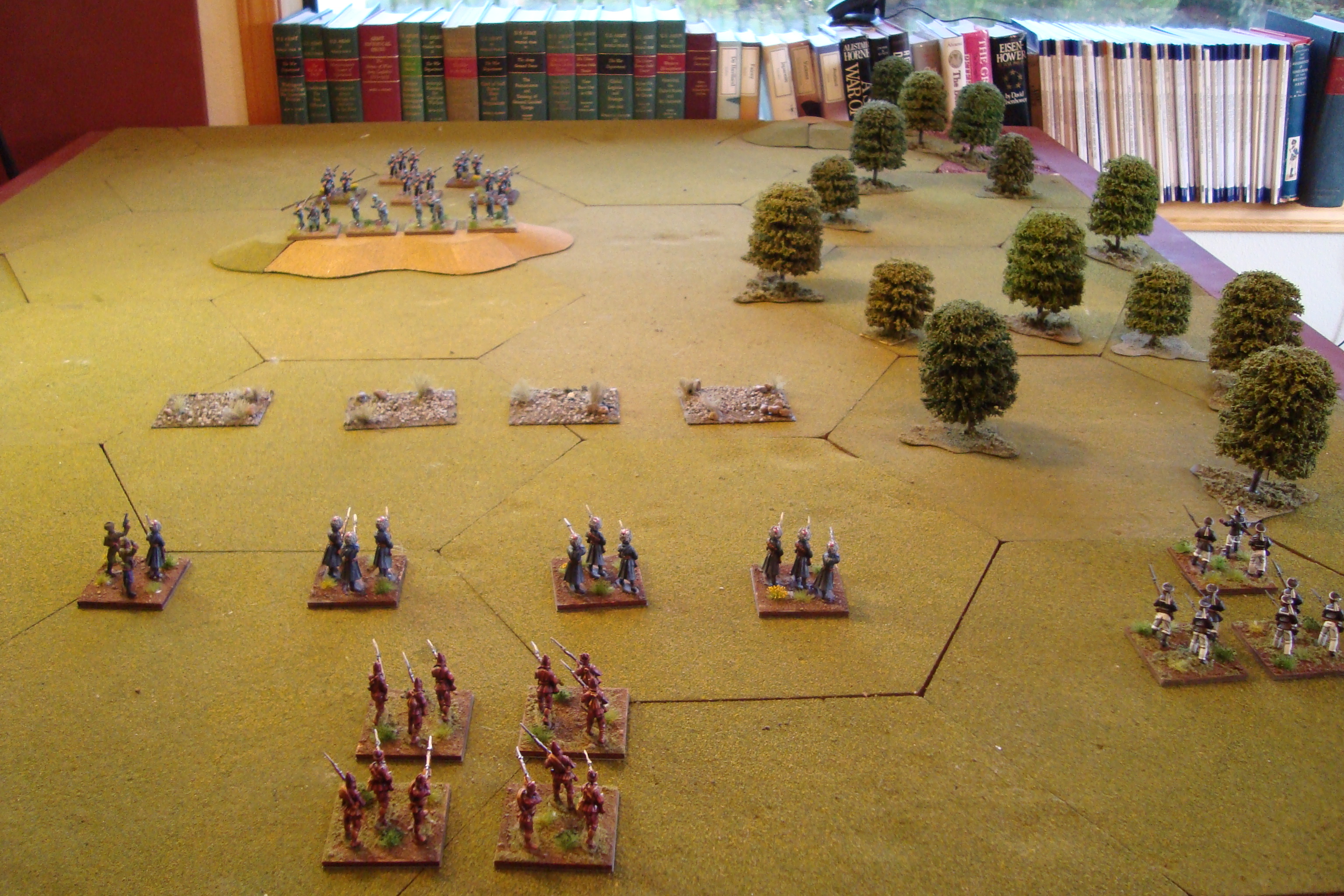
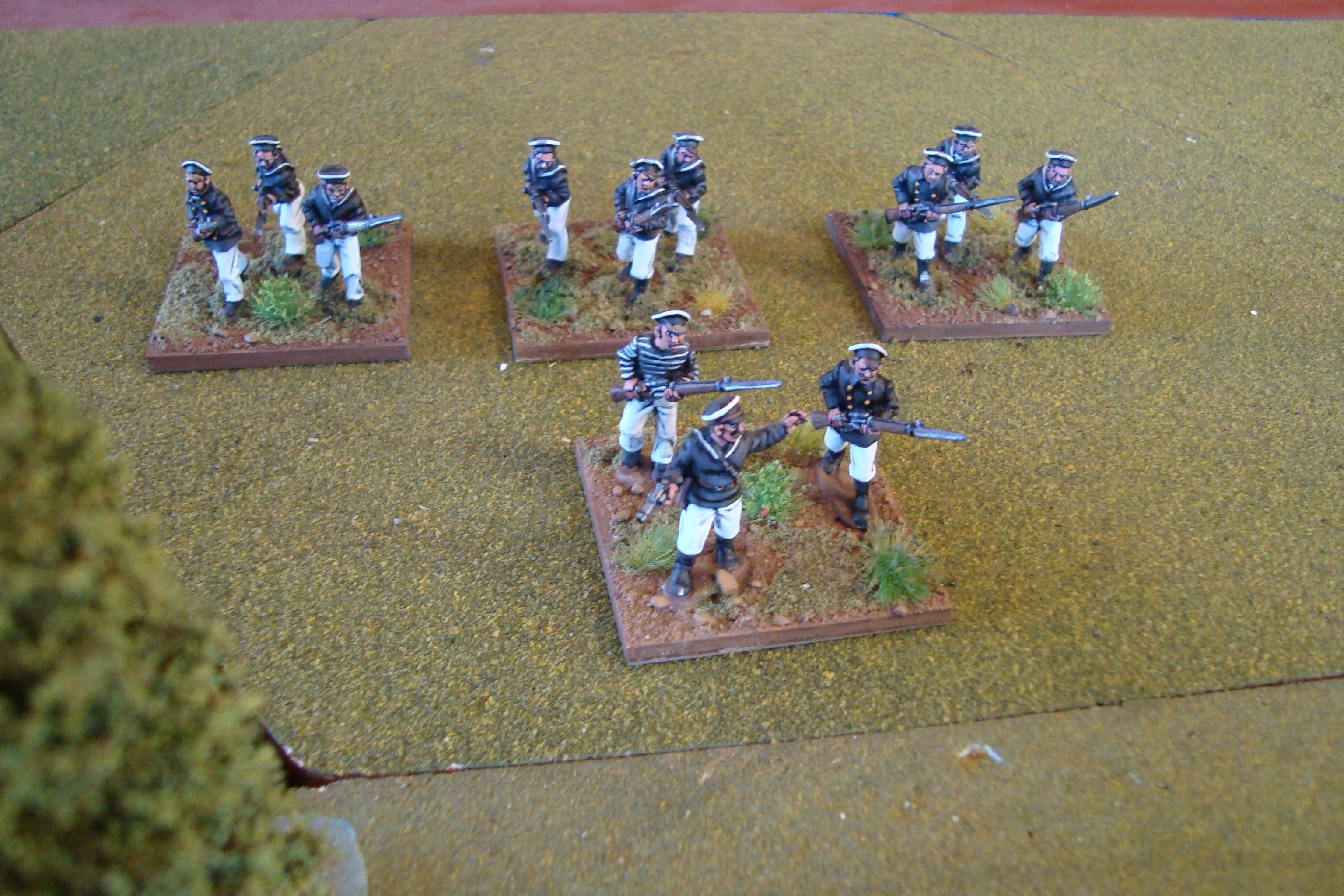
Three Soviet Companies are tasked with taking a entrenched position on a ridge line. The Soviet force is comprised of regular, Cheka, and naval infantry companies. The opposing Chinese force consists of a regular company and conscript company.
The terrain is relatively open, with a wooded area to the east and rough terrain to the south of the ridge. I designated both the entrenched position on the ridge and rough terrain as hard cover, allowing a -1 column shift for the defenders. The intent for the rough terrain is to provide the Soviet force with some cover and concealment. The distance between the ridge and rough terrain allowed for long-range fire at one-half the fire factor.
The tactics are straightforward. The regular Soviet company is to advance and take cover in the rough terrain, and to then provide suppresive fire on the ridge. The naval company is to advance through the wooded area (providing cover and concealment) and attack the ridge from the flank. The Cheka company is in reserve.
The Chinese have their regular company entrenched on the ridge, with the conscripts in reserve behind the ridge. This deployment involved a trade-off. The regular company has a higher fire rating, but the conscripts are rated as a “Mob” and can only charge or fire without taking a special morale check. On a D6 role of 1-2 they will remain in place.
Terrain and Initial Deployments Looking NorthChinese Troops On Objective and In ReserveSoviet Sailors Begin Moving Into The Woods
The first few turns saw sustained firing between the ridge and regular troops in the rough terrain. Both companies were pushed off due to retire results, but quickly returned to their positions. The naval troops worked their way through the woods, and began taking the reserve conscript company under fire. Due to the short range between the units, this developed into a firefight, with both units firing at each other at full strength during each turn, rather than the turn-by-turn long-range fire.
Growing impatient with this back-and-forth, and like an overenthusiastic Lieutenant at The Basic School, I ordered the Checka company to advance along the (Chinese) right flank or west side of the board. Double envelopment Little Schlieffen?
As this advance developed, the Chinese conscripts sustained losses and were in bad shape morale wise, while the regular troops had retreated (again) from their trenches. The question for the Chinese was whether to fight it out, or retreat. Since I had not set this contingency up (delay/defend with turn limit), and had a good initial feel for rules and effects, I stopped the game.
Chinese Have Been Pushed Off Ridge With Cheka Preparing To Assualt
I like this rule set. I think the morale rules using terror markers, as well as other outcomes are very playable. Infantry fire at long range is not particularly bloody, but short range fire – and its accompanying firefights- can decimate a unit quickly. Although using 28mm figuures, I kept the 15mm movement scale because of the small size of my “big board”. This scale seemed to work just fine, and made working with the rules easier. While some folks have mentioned having trouble with the conversational dialogue of the rules, I think they are just fine.
For those of you interested in reading more about Red Actions!, here’s some links that might be of help. I know this is an older system (more on that in another post), but it is good one that can be played without miniatures. The link to the website and rules is here. A couple of viable reviews are here and here. The always entertaining Edinburgh Wargamers have a portions of their site devoted to this period. While they use another rule set, it’s a great source of fun and ideas.
Finished up my last game of Irregular Wars for awhile. Another dust up between the Portuguese and Arabs. This was a followup to an initial game, with the addition of chance cards and disease/mishaps.
The card draw effected the Portuguese. They drew a weak leader, which is a -1 DRM to any rally rolls. The disease and mishaps die rolls that take place for each unit right before the start caused a few units on each side to lose one resolve point.
This time the Arabs used their camel units to attack the crossbowmen manning the Portuguese right flank. The crossbow fire was ineffective, and the camels closed with a +2 DRM for charge. So, contrary to the lessons learned in the initial game, camels can be effective.
The big take-away from this game was how an entire wing of your army can collapse after a series of melees. This is a function of the game’s resolve (morale) mechanics.
When a unit’s resolve reaches one (1), it wavers. A wavering unit must withdraw 1D3. The opponent rolls for pursuit. If allowed, it can contact the wavering unit again, receiving a charge bonus, if applicable. If the wavering unit contacts a friendly unit (no interpenetration in these rules), the contacted unit has an immediate loss of one (1) resolve. When a unit’s resolve reaches 0, it scatters. Any unit within two (2) movement units (2u in game terminology), suffers an immediate loss of one (1) resolve. This can be quite a chain reaction, with waverers withdrawing into friendly units or being hacked at by pursuers. Take a look at what happened to the Portuguese right flank.
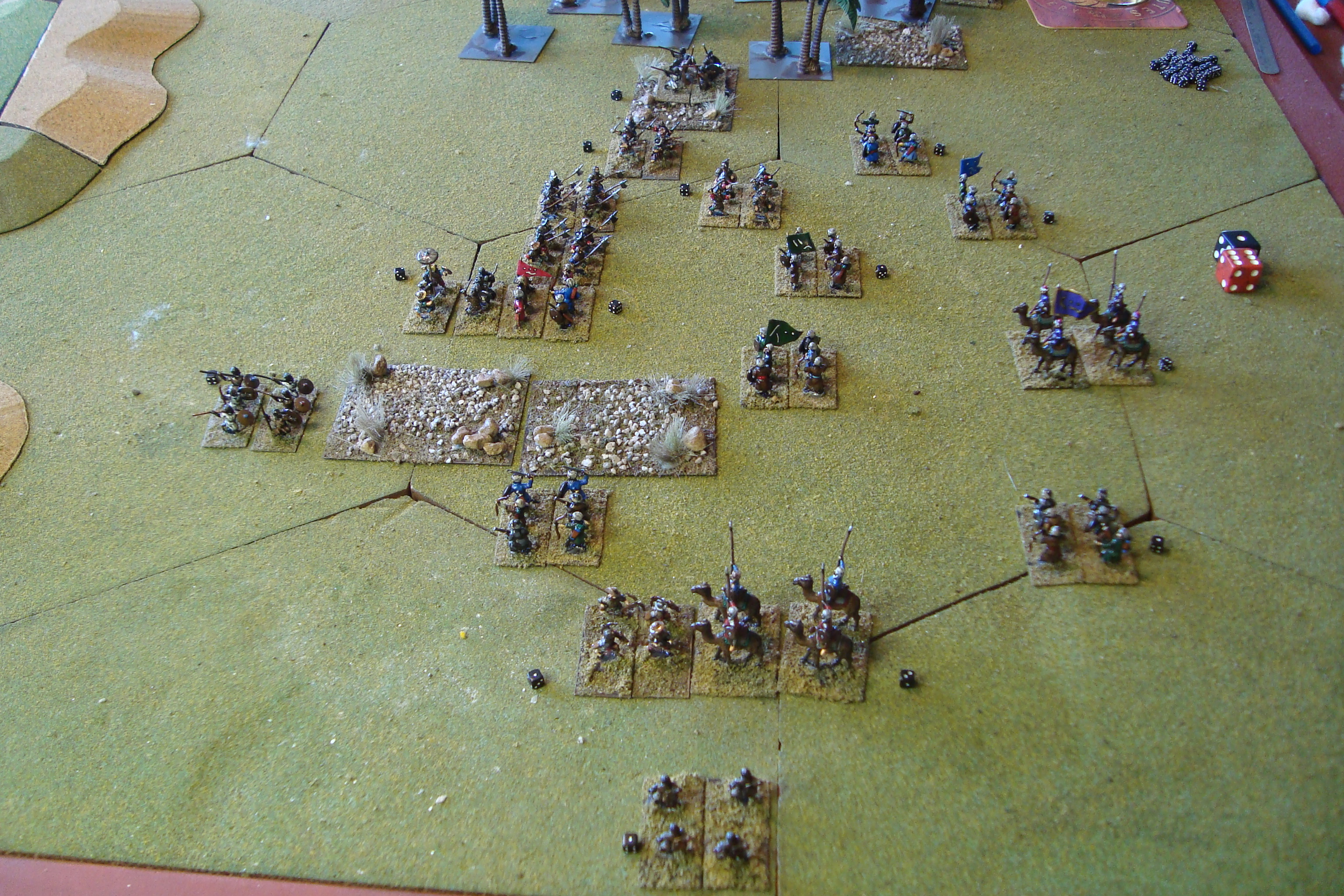
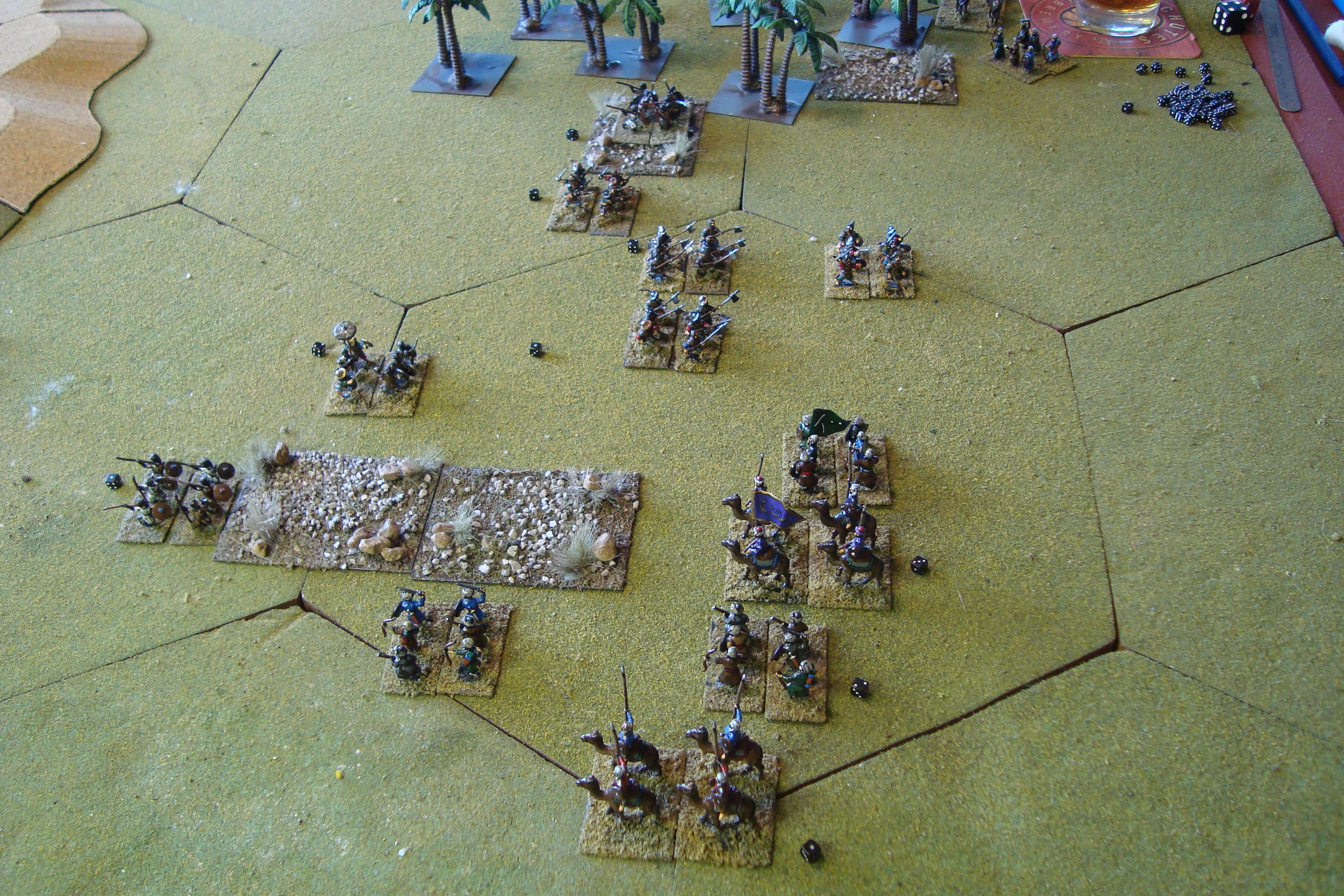
In the top photo, several Portuguese units have already scattered. In the next photo, the entire wing is gone. However, you’ll notice the Arab center is in very bad shape, also. Quite a game!
As reported earlier, Irregular Wars will come off the bigger table to make way for Red Actions! However, it will be played this Winter, because it’s just too much fun.
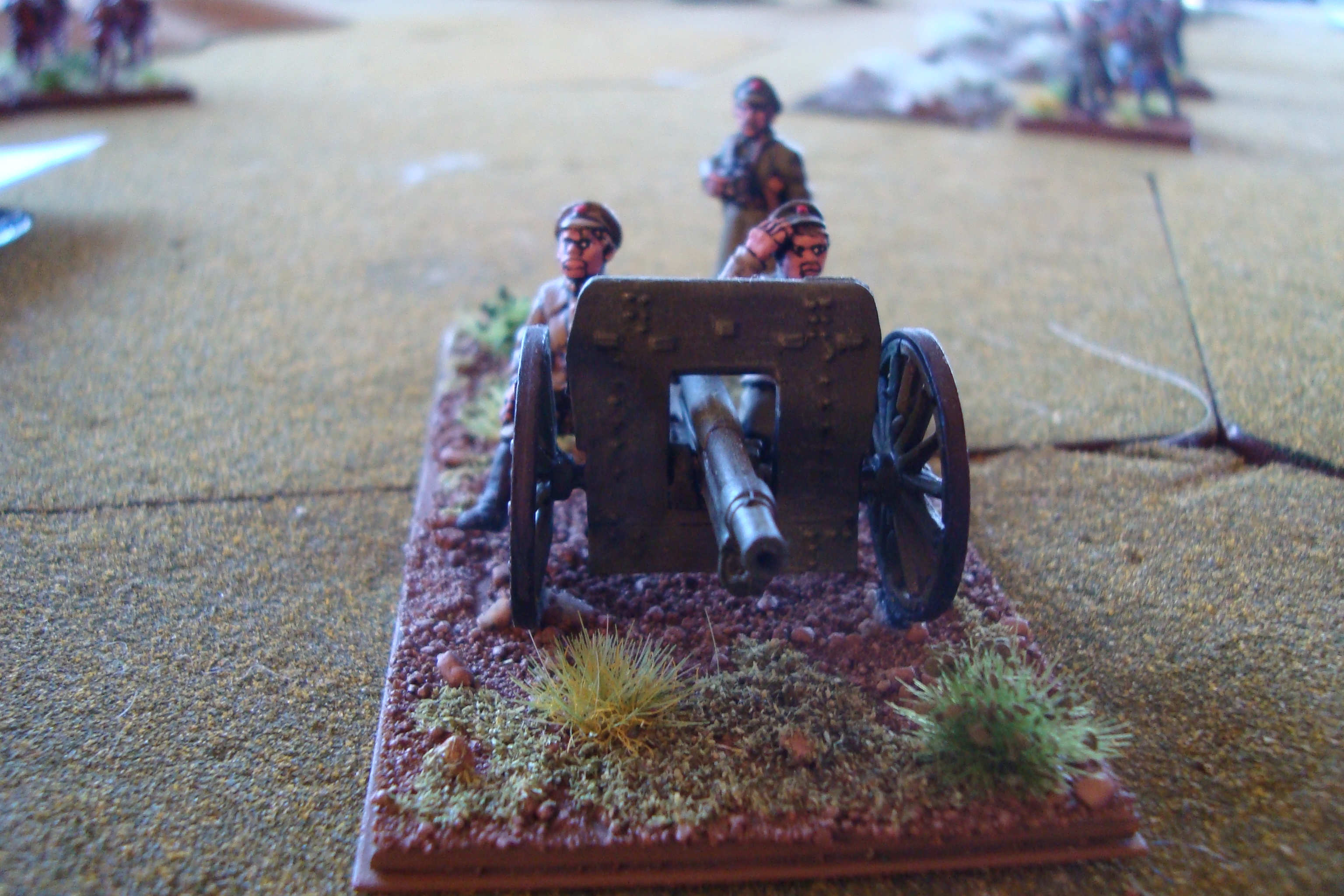
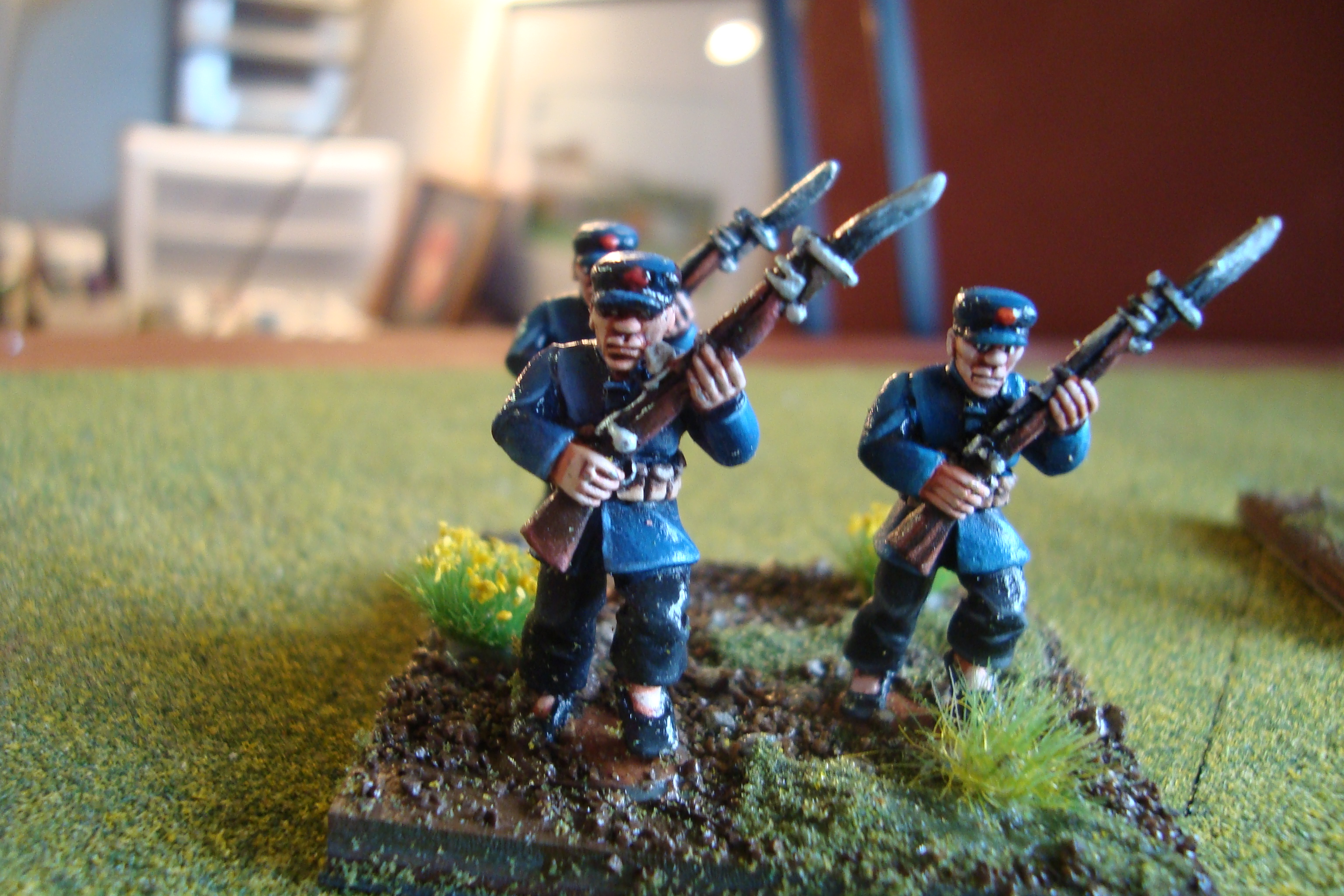
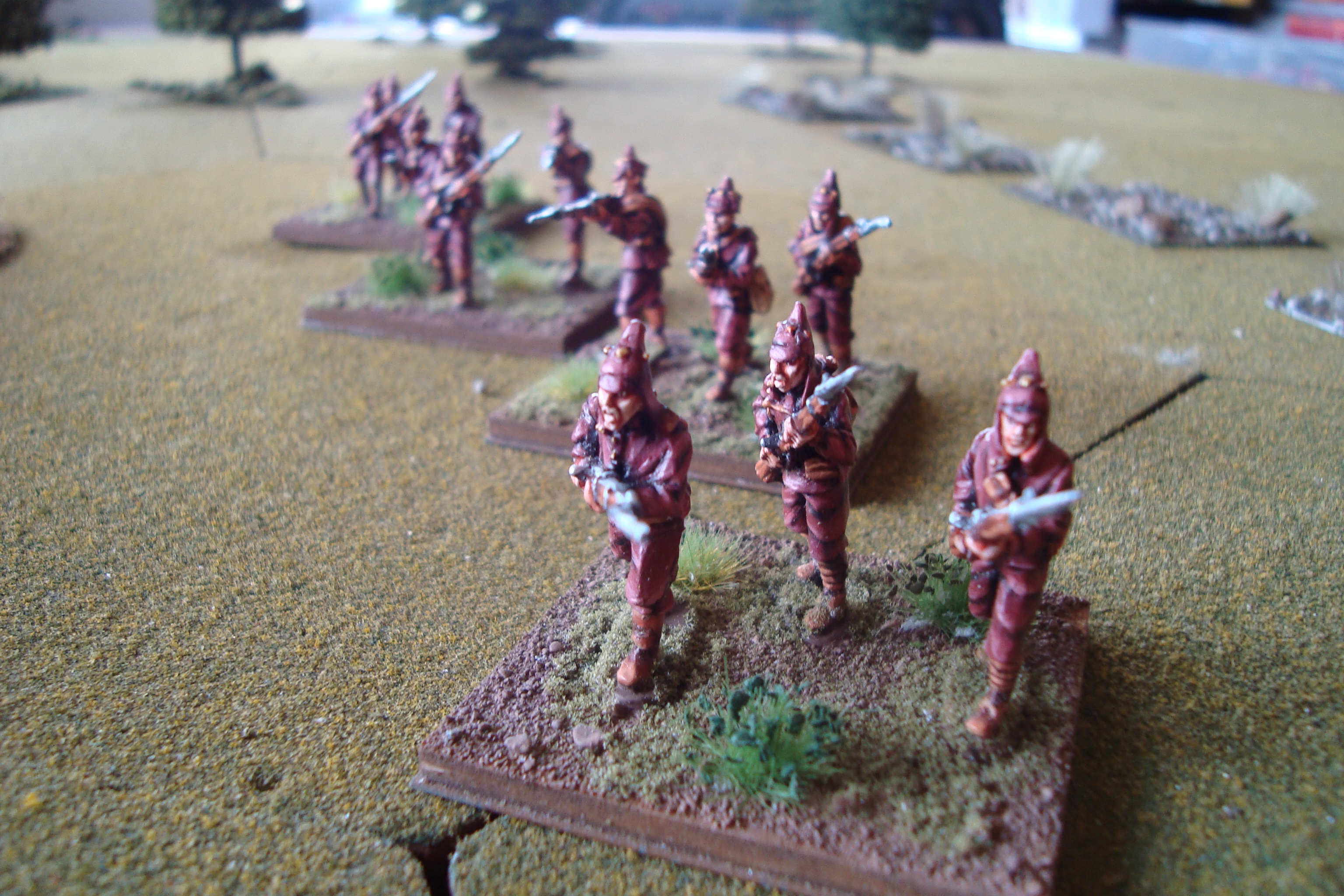
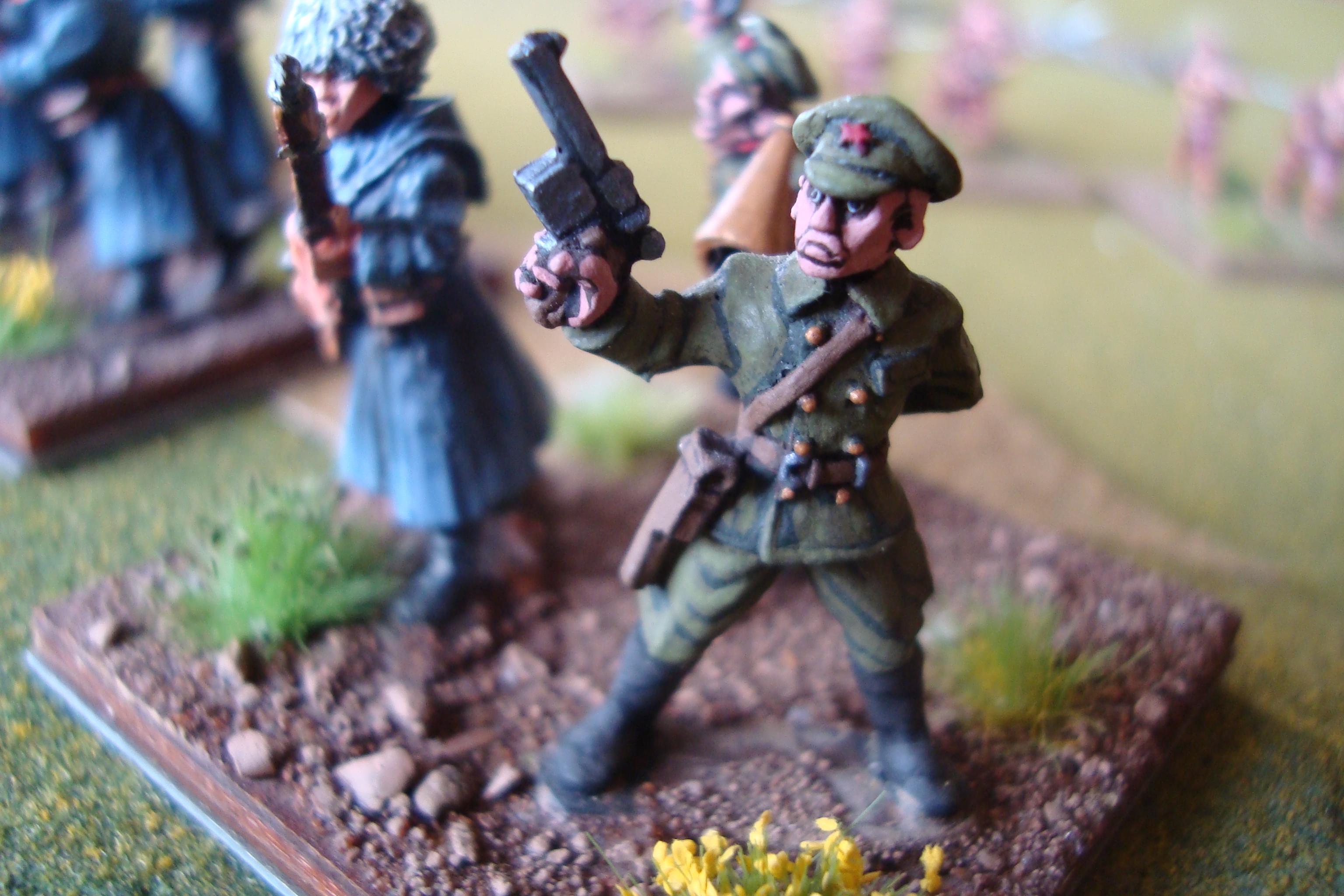
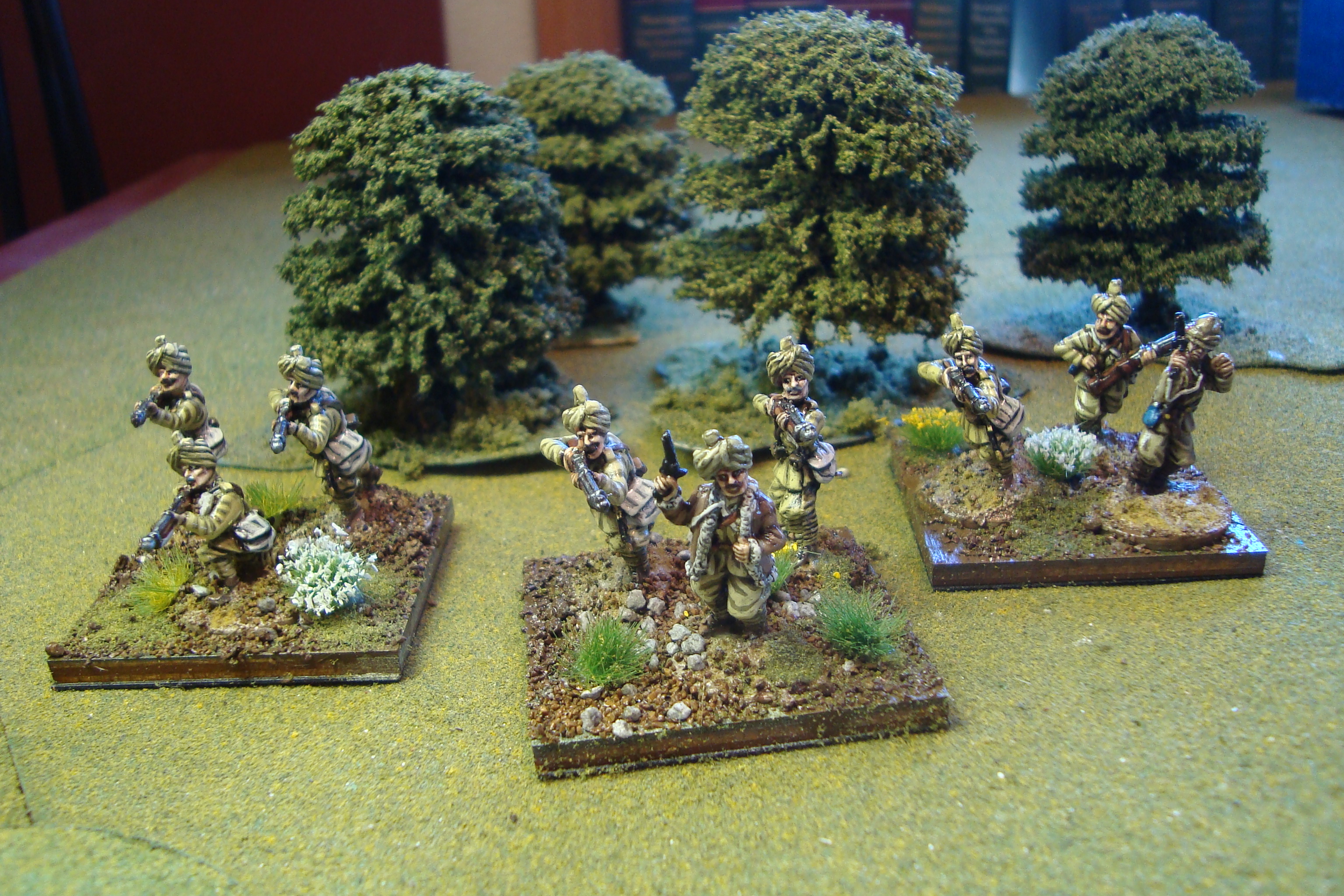
Last week based up the recently purchased Afghan and Indian Army troops, as well as vehicles for the BoB campaign. Relying on input from a helpful war gamer, used Noch flowers and grasses, as well as Woodland Scenics turf and talus. The bases and magnetic base bottoms were from Litko. This is a real upgrade from my usual metal DBA/DBR bases with a mix of green and brown flock. Was it expensive? Yes. Worth it? Think so, especially since this will be a low unit density game.
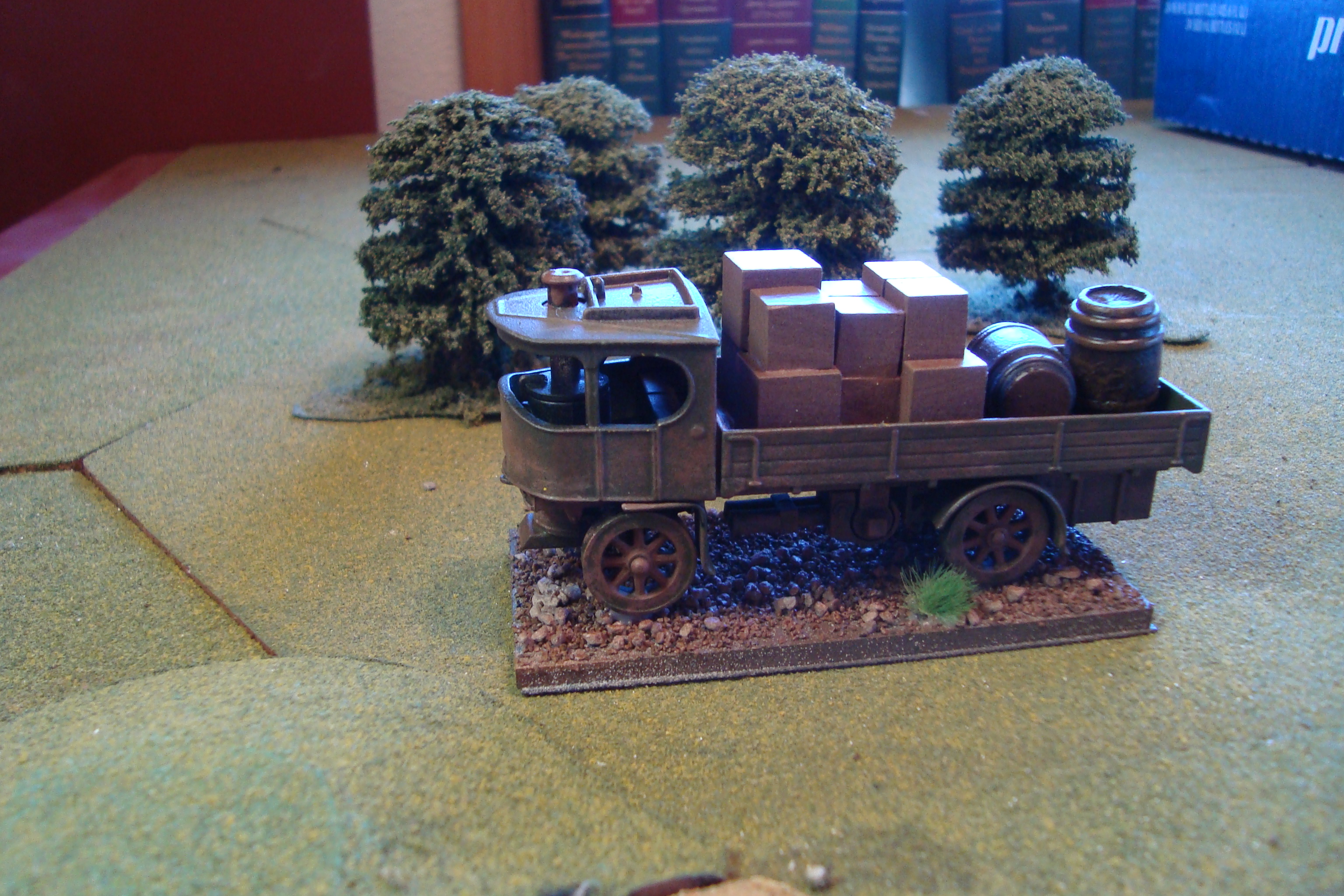
The PKZ-2 tender vehicle in the previous post is one of the Matchbox Models of Yesteryear series. These can be purchased cheaply (if you’re patient) on E-Bay. Bought several for the Back of Beyond Campaign, one of which is shown below.
The problem is that the series is not in a consistent scale. There are a wide variety of vehicles, in a wide variety of scales. This page summarizes them by model number, name and scale. So what scale matches up best with 25/28mm figures? This page from The Miniatures Page really helped.
Once purchased and primed, I sprayed the vehicles a military green, and then just went crazy with brown and green dry brushing. Wood blocks and barrels purchased at Hobby Lobby and mounted on bases – pallets – are cargo used either in vehicles, or on the ground as part of a supply dump. Machine gun and cannons purchased from Pulp Figures (Bob Murch) mounted as required.